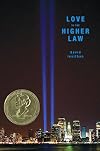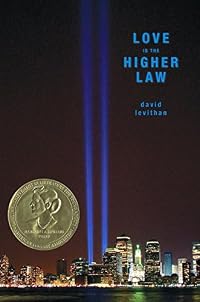
Love is the Higher Law
by David Levithan
On This Page
Description
Three New York City teens express their reactions to the bombing of the World Trade Center on September 11, 2001, and its impact on their lives and the world.Tags
Recommendations










Member Reviews
I did not realize when I read The Lover's Dictionary that David Levithan had written so much young adult (YA) fiction! And what good news this is. I picked up several of his YA books at the ALA Annual Conference (thank you, publishers) and read this one this morning. He writes his characters with tremendous accuracy and emotional truth.
"The people out right now don't want to take cabs. We just want to walk. Our legs need to move to keep our minds from collapsing." (Claire, p. 72)
"Here's what breaks us: Even though we know better, we still want everything to be all right." (Claire, p. 73)
"But I guess the thing about fear is that it defies the laws of rationality. It creates its own laws instead." (Peter, p. 84)
"We knew we wouldn't find show more what we were missing here. We would only find something that was missing more." (Jasper, p. 97)
*
Re-read October 2011:
Love Is The Higher Law is a character-driven novel told from three first-person perspectives: high school seniors Claire and Peter, and college sophomore Jasper. The book begins on September 11, 2001: Claire is in homeroom, Peter is skipping homeroom to wait outside Tower Records to get the new Dylan album, and Jasper is asleep at his family’s apartment in Brooklyn. The first-person narration and multiple perspectives give the story an immediacy and bring the event and its aftermath back to life, as each character describes that day and the days that follow. In the post-9/11 world, Peter, Jasper, and Claire draw close to each other, despite having known each other only slightly before. Nine-eleven occurs at a time in their lives when they are only beginning to form their identities; together and separately, they talk and think and feel through their reactions, feelings, and personal life philosophies. Levithan also uses music references to great effect, describing how Claire and Peter, especially, find new meaning in old songs by Travis and U2.
This is one of my favorite David Levithan novels, for a few reasons. First, it preserves and represents September 11 in a realistic way, and it allows it to be the central event, unlike many adult novels (Falling Man by Don DeLillo, The Emperor’s Children by Claire Messud, The Good Life by Jay McInerney). Second, the characters are in a transitional phase, at the end of high school or beginning of college, rather than firmly inhabiting the high school universe. Thirdly, the story occurs firmly in the real world – Peter and Jasper are both gay, but it’s not the central focus of the story like in Boy Meets Boy, and the setting is Manhattan, not an unnamed suburban utopia. Like other Levithan novels, the characters are perhaps too good: thoughtful and articulate and nearly ideal – but it’s a flaw I’m more than willing to overlook in exchange for a serious work about a real event, written in a way that is relatable for teens, adults, and especially those in the middle.
*
Re-read October 2020 show less
"The people out right now don't want to take cabs. We just want to walk. Our legs need to move to keep our minds from collapsing." (Claire, p. 72)
"Here's what breaks us: Even though we know better, we still want everything to be all right." (Claire, p. 73)
"But I guess the thing about fear is that it defies the laws of rationality. It creates its own laws instead." (Peter, p. 84)
"We knew we wouldn't find show more what we were missing here. We would only find something that was missing more." (Jasper, p. 97)
*
Re-read October 2011:
Love Is The Higher Law is a character-driven novel told from three first-person perspectives: high school seniors Claire and Peter, and college sophomore Jasper. The book begins on September 11, 2001: Claire is in homeroom, Peter is skipping homeroom to wait outside Tower Records to get the new Dylan album, and Jasper is asleep at his family’s apartment in Brooklyn. The first-person narration and multiple perspectives give the story an immediacy and bring the event and its aftermath back to life, as each character describes that day and the days that follow. In the post-9/11 world, Peter, Jasper, and Claire draw close to each other, despite having known each other only slightly before. Nine-eleven occurs at a time in their lives when they are only beginning to form their identities; together and separately, they talk and think and feel through their reactions, feelings, and personal life philosophies. Levithan also uses music references to great effect, describing how Claire and Peter, especially, find new meaning in old songs by Travis and U2.
This is one of my favorite David Levithan novels, for a few reasons. First, it preserves and represents September 11 in a realistic way, and it allows it to be the central event, unlike many adult novels (Falling Man by Don DeLillo, The Emperor’s Children by Claire Messud, The Good Life by Jay McInerney). Second, the characters are in a transitional phase, at the end of high school or beginning of college, rather than firmly inhabiting the high school universe. Thirdly, the story occurs firmly in the real world – Peter and Jasper are both gay, but it’s not the central focus of the story like in Boy Meets Boy, and the setting is Manhattan, not an unnamed suburban utopia. Like other Levithan novels, the characters are perhaps too good: thoughtful and articulate and nearly ideal – but it’s a flaw I’m more than willing to overlook in exchange for a serious work about a real event, written in a way that is relatable for teens, adults, and especially those in the middle.
*
Re-read October 2020 show less
Three teens recount where they were when the planes hit the Twin Towers on 9/11. Claire was in school, Peter was waiting to buy the new Dylan album and was supposed to be in school, and Jasper was sleeping. Peter and Claire know each other from school and live in Manhattan and Jasper met Peter at a party and lives in Brooklyn. They were supposed to have a date on 9/11 but rescheduled for a week later, which turned out to be an uncomfortable meet up. Each describes the pain, rage, confusion, and trauma of that day and the days and months that follow. Levithan captures the myriad, conflicting emotions of that time in three distinct voices and how friends tried to help each other cope and eventually heal. This character driven novel will show more give students some perspective of how not just teens but everyone felt in that terrible time. show less
A deceptively thin novel which packs a huge wallop. A must-read for New Yorkers. A must-read for, well, anyone who remembers 9/11. And anyone who doesn't because they were too little.
One of the things I've liked about Levithan's previous books is his sense of goodness- of the rightness that lies under everything. He's kind of like L'Engle in that way. It's harder to tease out in this book, but it's ultimately a hopeful book, no matter that I wept throughout the whole thing.
'"I think if you were somehow able to measure the weight of human kindness, it would have weighed more on 9/11 than it ever had. On 9/11, all the hatred and murder could not compare with the weight of love, of bravery, of caring. I have to believe that. I honestly show more believe that. I think we saw the way humanity works on that day, and while some of it was horrifying, so much of it was good."
"That's totally fucked up," I said. '
A keeper. show less
One of the things I've liked about Levithan's previous books is his sense of goodness- of the rightness that lies under everything. He's kind of like L'Engle in that way. It's harder to tease out in this book, but it's ultimately a hopeful book, no matter that I wept throughout the whole thing.
'"I think if you were somehow able to measure the weight of human kindness, it would have weighed more on 9/11 than it ever had. On 9/11, all the hatred and murder could not compare with the weight of love, of bravery, of caring. I have to believe that. I honestly show more believe that. I think we saw the way humanity works on that day, and while some of it was horrifying, so much of it was good."
"That's totally fucked up," I said. '
A keeper. show less
n a Nutshell: Claire, Jasper and Peter are teenagers in New York City on 9/11. Confusion, grief, mourning, and learning to live and love again follow.
The Good: Getting 9/11 from an insider perspective. I never thought about two building’s-worth of paperwork fluttering into Brooklyn, re-lighting candles in the park in the rain, not being allowed to return to your downtown home. There’s a great scene where Jasper and Claire are at MSG that October for a U2 concert that showcases music’s power to unite and heal. It’s very cathartic.
The Bad: Levithan’s writing style. I sometimes find it hard to take. It’s like a breathless torrent of teenage “deep thoughts” mixed with over-jaded adolescent angst. His teenagers seem too old show more and too young at the same time. It may be wildly realistic, too, which is why most teenagers frighten me ever so slightly. Also, there is a love story aspect that left me cold.
The Verdict: I had high expectations going into this one, which is probably part of my problem with it. I loved the parts from Claire’s perspective that seemed to focus more on the events and aftermath of 9/11 and disliked the ones from Jasper’s more confused, disconnected perspective. I wanted more emotional kick from this and maybe for Levithan to spread out all the teenage profundities his characters’ internal narratives were constantly spewing. Short answer: I wanted this book to make me cry. Instead, all the words got in the way. show less
The Good: Getting 9/11 from an insider perspective. I never thought about two building’s-worth of paperwork fluttering into Brooklyn, re-lighting candles in the park in the rain, not being allowed to return to your downtown home. There’s a great scene where Jasper and Claire are at MSG that October for a U2 concert that showcases music’s power to unite and heal. It’s very cathartic.
The Bad: Levithan’s writing style. I sometimes find it hard to take. It’s like a breathless torrent of teenage “deep thoughts” mixed with over-jaded adolescent angst. His teenagers seem too old show more and too young at the same time. It may be wildly realistic, too, which is why most teenagers frighten me ever so slightly. Also, there is a love story aspect that left me cold.
The Verdict: I had high expectations going into this one, which is probably part of my problem with it. I loved the parts from Claire’s perspective that seemed to focus more on the events and aftermath of 9/11 and disliked the ones from Jasper’s more confused, disconnected perspective. I wanted more emotional kick from this and maybe for Levithan to spread out all the teenage profundities his characters’ internal narratives were constantly spewing. Short answer: I wanted this book to make me cry. Instead, all the words got in the way. show less
Levithan, David. (2009). Love is the Higher Law. New York: Random House/Knopf 169 pp. ISBN 978-0-375-83468-4 Hard Cover); $15.99
In a very personal (and powerful) book David Levithan shows three very different ways in which the 9/11 attacks changed lives. While, of course, those from New York will have a connection with this book in ways that I will never know, I am reviewing this book because below the surface is an affirmation of what is best about humans—our capacity to create and conceive of a world filled with the sort of love that recognizes and accepts our very different ways of seeing the world. Thinking back to my own teen years and calling to mind what I see with the high school students in our book group, I especially show more appreciate the way Levithan uses music to convey the characters struggles to make sense of something as nonsensical as the 9/tragedy. “We are jumping and dancing and cheering so much we can’t see the empty seats. We can’t hear the silences. We’ve become a part of the music. Not only the music that’s being played. But the music of living. I need that.” (p. 89). That was Peter. Peter is gay and before 9/11 he was anticipating his date with Jasper. Jasper feels rage and guilt that are linked to the fact that he slept through the collapse of the twin towers and had to be told what was happening by his parents who are in Korea. When Jasper tries to donate blood, he discovers the double standard and hypocrisy written into the law. How does one even hope to understand what is going on when one sleeps through the worst tragedy in American history and cannot even help out with a blood donation? Claire, our third protagonist, longs to do something but all of her efforts seem to be pointless. Nevertheless, Claire finds meaning and solace in the attempt: “This, I think is how people survive: Even when horrible things have been done to us, we can still find gratitude in one another.” (p. 76). This novel spans a full year and details how our three very different characters cope with the destruction and hold onto to love in the aftermath. The dialogue sparkles and feels very immediate. While younger readers may not have the background to connect with this novel, it is exactly this fact that makes Love is the Higher Law so worth purchasing for libraries and promoting with students. show less
In a very personal (and powerful) book David Levithan shows three very different ways in which the 9/11 attacks changed lives. While, of course, those from New York will have a connection with this book in ways that I will never know, I am reviewing this book because below the surface is an affirmation of what is best about humans—our capacity to create and conceive of a world filled with the sort of love that recognizes and accepts our very different ways of seeing the world. Thinking back to my own teen years and calling to mind what I see with the high school students in our book group, I especially show more appreciate the way Levithan uses music to convey the characters struggles to make sense of something as nonsensical as the 9/tragedy. “We are jumping and dancing and cheering so much we can’t see the empty seats. We can’t hear the silences. We’ve become a part of the music. Not only the music that’s being played. But the music of living. I need that.” (p. 89). That was Peter. Peter is gay and before 9/11 he was anticipating his date with Jasper. Jasper feels rage and guilt that are linked to the fact that he slept through the collapse of the twin towers and had to be told what was happening by his parents who are in Korea. When Jasper tries to donate blood, he discovers the double standard and hypocrisy written into the law. How does one even hope to understand what is going on when one sleeps through the worst tragedy in American history and cannot even help out with a blood donation? Claire, our third protagonist, longs to do something but all of her efforts seem to be pointless. Nevertheless, Claire finds meaning and solace in the attempt: “This, I think is how people survive: Even when horrible things have been done to us, we can still find gratitude in one another.” (p. 76). This novel spans a full year and details how our three very different characters cope with the destruction and hold onto to love in the aftermath. The dialogue sparkles and feels very immediate. While younger readers may not have the background to connect with this novel, it is exactly this fact that makes Love is the Higher Law so worth purchasing for libraries and promoting with students. show less
This book is valuable in that the immediate aftermath of the World Trade Center being attacked is vividly rendered. I wasn't aware of (or no longer remember) mention of how the air smelled or that random office papers from the towers blew around the city or that many people were taken in when they couldn't get home. The characters' numb shock and mixed emotions reveal how New Yorkers must have stumbled through the days afterward. However I found Peter and Claire's voices as they tried to understand and cope with the impossible, far too articulate and sophisticated for teens to be expressing. Jasper was the most realistic to me, sort of a clueless jerk to begin with but evolving his compassion as the book goes on. The author mentions show more including quotes from emails he sent out during this time; I am guessing the best of his quotes all went to Claire. A valuable title for the history it depicts but overdone emotionally for a good part of it. show less
My Review: First off, I just want to say that what happened in New York on 9/11 was such a tragedy. And writing a book about it like David Levithan did was a very courageous thing to do.
I live in Canada so the events didn't quite affect me the way that it did for the actual New Yorkers involved, but I still remember the day that this happened. I was at school, 13 years old and to be honest, I had no idea what The World Trade Towers were. I heard the news from my sister and her friend at the time, and I probably shrugged my shoulders, thought "that's really awful" and went on with my day. It was just a short while after that than the school turned on the news and I saw the whole thing play out on tv. It was shocking and so unbelivable! show more When I got home that day, my mom had the news on, and we just sat and cried and watched the news wishing that we could do something right then and there. I will never forget that day - and I think that Levithan wrote a great book for those who were around when this happened and for those who weren't. Obviously a book of any kind will never compare to the actual event and severity of it all, but it lets readers understand and remember a little more.
David Levithan has exceptional writing. From the first page of this book, I was hooked. Love Is The Higher Law is so intense and powerful. The characters come to life while reading. Claire, Jasper and Peter are so different, yet they come together because of the events of 9/11. The 3 characters are equally strong and well written. I can't really say much about the 'storyline' - whether it was believable, far-fetched, etc - because I think this wasn't so much a 'story' as it was a look back into the events of 9/11 and the things people did to help one another on this very tragic day, and the friendships/closeness that begun as a result.
Overall, the characters, the writing and the book as a whole was flawless. Devid Levithan outdid himself with Love Is The Higher Law. I think that this book will be read by many in the years to come. Everyone should read this novel, you will cry, you will get emotional and most importantly, you will remember. show less
I live in Canada so the events didn't quite affect me the way that it did for the actual New Yorkers involved, but I still remember the day that this happened. I was at school, 13 years old and to be honest, I had no idea what The World Trade Towers were. I heard the news from my sister and her friend at the time, and I probably shrugged my shoulders, thought "that's really awful" and went on with my day. It was just a short while after that than the school turned on the news and I saw the whole thing play out on tv. It was shocking and so unbelivable! show more When I got home that day, my mom had the news on, and we just sat and cried and watched the news wishing that we could do something right then and there. I will never forget that day - and I think that Levithan wrote a great book for those who were around when this happened and for those who weren't. Obviously a book of any kind will never compare to the actual event and severity of it all, but it lets readers understand and remember a little more.
David Levithan has exceptional writing. From the first page of this book, I was hooked. Love Is The Higher Law is so intense and powerful. The characters come to life while reading. Claire, Jasper and Peter are so different, yet they come together because of the events of 9/11. The 3 characters are equally strong and well written. I can't really say much about the 'storyline' - whether it was believable, far-fetched, etc - because I think this wasn't so much a 'story' as it was a look back into the events of 9/11 and the things people did to help one another on this very tragic day, and the friendships/closeness that begun as a result.
Overall, the characters, the writing and the book as a whole was flawless. Devid Levithan outdid himself with Love Is The Higher Law. I think that this book will be read by many in the years to come. Everyone should read this novel, you will cry, you will get emotional and most importantly, you will remember. show less
Members
- Recently Added By
Lists

School library books removed after TX state legislator inquiry
429 works; 6 members
Author Information

64+ Works 36,137 Members
David Levithan was born in 1972. He graduated from Brown University in 1994 and is a senior editor at Scholastic. He has written numerous books including Boy Meets Boy, The Realm of Possibility, Every Day, and Another Day. (Bowker Author Biography)
Awards and Honors
Awards
Notable Lists
Common Knowledge
- Canonical title
- Love is the Higher Law
- Original publication date
- 2009
- People/Characters
- Peter (in Love Is the Higher Law); Jasper (in Love Is the Higher Law); Claire (in Love Is the Higher Law)
- Important places
- New York, New York, USA
- Important events
- September 11 Attacks
- Dedication
- To Craig Walker (who was next to me on 9/11) and To Eliot Schrefer (who was across the table when I wrote most of this book)
- First words
- My first thought is: My mother is dead.
- Last words
- (Click to show. Warning: May contain spoilers.)This is what a memorial is: Standing still, staring at something that isn't there.
Classifications
Statistics
- Members
- 528
- Popularity
- 56,345
- Reviews
- 29
- Rating
- (3.84)
- Languages
- English, German, Swedish
- Media
- Paper, Ebook
- ISBNs
- 7
- ASINs
- 5