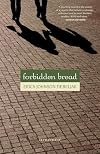
Forbidden Bread
by Erica Johnson Debeljak
On This Page
Description
Forbidden Bread is an unusual love story that covers great territory, both geographically and emotionally. The author leaves behind a successful career as an American financial analyst to pursue Ales Debeljak, a womanizing Slovenian poet who catches her attention at a cocktail party. The story begins in New York City, but quickly migrates, along with the author, to Slovenia. As she struggles to forge an identity in her new home, Slovenia itself undergoes the transformation from a communist show more to a capitalist society. A complicated language, politically incorrect ethnic jokes, and old-fashioned sexism are just a few of the challenges Debeljak faces on her journey. Happily, she marries her poet and comes to love her new husband's family as well as the fast-disappearing rural traditions of this beautiful country. Set against the dramatic backdrop of the Slovenian Ten Day War and the much longer Yugoslav wars of succession, Forbidden Bread shows a worldly and courageous woman coming to grips with her new life and family situation in a rapidly changing European landscape. show lessTags
Recommendations









Member Recommendations
Member Reviews
52/2020. I'm predisposed towards empathy for my fellow human beings and generally enjoy memoirs (provided they don't wilfully twist events to other people's detriment) but this author truly lived down to the worst spoiled wealthy USian stereotypes.
Reading notes: The author comes across as a very parochial USian who is narrow-mindedly accustomed to assuming her class and nation are the bestest evah and is incapable of any wider understanding, which is especially astonishing when one considers that this book was published over fifteen years after the events discussed.
She compares Slovenia to a "totalitarian state" because it takes ten days and several visits to sort out the paperwork for her wedding, as an English-speaking foreign show more national, to a Slovenian. I wonder if she's ever given even one second's thought to the same paperwork in the US, her country of origin, for anyone who can't buy their way through the corrupt bureaucracy by throwing lawyers etc at it. She also complains about not being able to immediately book the precise place and time of her wedding with only a few weeks notice despite New Yorkers who want a particular venue often have to book many months in advance.
She complains about needing thirty hours of driving instruction before she can acquire a driving licence because she believes the zero instruction she claims was required in the US is bettererer, although traffic fatalities in the US are about 50% higher than in comparable countries.
She boggles at the idea of allotments, and urban farms, where people in Ljubljana grow food, because apparently she's never ever encountered this globally widespread practice before. She calls allotment sheds a "shanty town".
Then she expresses her horror at Slovenians' "cruel" eight hour working days from 6am to 2pm when they still have daylight for shopping or leisure (or tending allotments), which is bizarre because if childcare was as available as in Slovenia then I know many people who'd jump at the chance of those working hours. But apparently only the urban USian middle class 9 to 5 is acceptable to her (not that she or her husband are expected to work 6am to 2pm or any eight hour shift).
Neither the author nor her editor know the difference between proscription and conscription. Likewise fauna and flora.
Her frame of reference for the end of the Second World War is "Marshall Plan-bearing Americans or raping and looting Russians", so she appears wholly unaware of US troops famously looting enormous quantities of Nazi gold or the extremely well-known USian movie Kelly's Heroes based on real life looting, and also unaware of the sex-trafficking by USian troops in Europe (including girls under any age of consent), although when I say US troops I of course mean white US troops because African-American troops behaviour was demonstrably superior (presumably due to being under threat from their own nation and military in addition to the official enemy).
Admits she's probably too lazy to spend one day a year tending a few family graves. I mean, congrats on the self-awareness but....
In an extended discussion of health, maternity, and baby care she expresses her laughable belief that US culture's "folk wisdom" is "science and rationality, individual freedom, and the pursuit of happiness." About a country where medical professionals traditionally mutilate baby boys' genitalia on the grounds that USian parents can't be trusted to teach their boy children basic hygiene. She also denigrates Slovenian "folk wisdom" such as the scientifically true understanding that being cold makes humans more vulnerable to viral respiratory infection, and mocks what appear to be measures to prevent congenital hip dysplasia (or something similar) in a susceptible population by using a particular shape of baby clothes. The author apparently thinks she knows better than the medical establishment which, to be fair, could come under "individual freedom" but which is incompatible with her claim to "science and rationality".
I refuse to deconstruct this but she refers to USian-style toilet bowls as "a normal flush toilet".
And the crowning glory of parochial prejudice: "I want my baby to be an optimistic can-do American, not a defeatist death obsessed European".
Imagine having that for a daughter-in-law!
Currently reading my way around the European Union.
Reading: Slovenia.
Read: Austria, Belgium, Bulgaria, Cyprus, Denmark, Estonia, Finland, France, Germany, Greece, Hungary, Ireland, Italy, Lithuania, Luxembourg, Malta, Netherlands, Poland, Portugal, Romania, Slovakia, Spain, Sweden.
Remaining unread countries: Croatia, Czechia, Latvia. show less
Reading notes: The author comes across as a very parochial USian who is narrow-mindedly accustomed to assuming her class and nation are the bestest evah and is incapable of any wider understanding, which is especially astonishing when one considers that this book was published over fifteen years after the events discussed.
She compares Slovenia to a "totalitarian state" because it takes ten days and several visits to sort out the paperwork for her wedding, as an English-speaking foreign show more national, to a Slovenian. I wonder if she's ever given even one second's thought to the same paperwork in the US, her country of origin, for anyone who can't buy their way through the corrupt bureaucracy by throwing lawyers etc at it. She also complains about not being able to immediately book the precise place and time of her wedding with only a few weeks notice despite New Yorkers who want a particular venue often have to book many months in advance.
She complains about needing thirty hours of driving instruction before she can acquire a driving licence because she believes the zero instruction she claims was required in the US is bettererer, although traffic fatalities in the US are about 50% higher than in comparable countries.
She boggles at the idea of allotments, and urban farms, where people in Ljubljana grow food, because apparently she's never ever encountered this globally widespread practice before. She calls allotment sheds a "shanty town".
Then she expresses her horror at Slovenians' "cruel" eight hour working days from 6am to 2pm when they still have daylight for shopping or leisure (or tending allotments), which is bizarre because if childcare was as available as in Slovenia then I know many people who'd jump at the chance of those working hours. But apparently only the urban USian middle class 9 to 5 is acceptable to her (not that she or her husband are expected to work 6am to 2pm or any eight hour shift).
Neither the author nor her editor know the difference between proscription and conscription. Likewise fauna and flora.
Her frame of reference for the end of the Second World War is "Marshall Plan-bearing Americans or raping and looting Russians", so she appears wholly unaware of US troops famously looting enormous quantities of Nazi gold or the extremely well-known USian movie Kelly's Heroes based on real life looting, and also unaware of the sex-trafficking by USian troops in Europe (including girls under any age of consent), although when I say US troops I of course mean white US troops because African-American troops behaviour was demonstrably superior (presumably due to being under threat from their own nation and military in addition to the official enemy).
Admits she's probably too lazy to spend one day a year tending a few family graves. I mean, congrats on the self-awareness but....
In an extended discussion of health, maternity, and baby care she expresses her laughable belief that US culture's "folk wisdom" is "science and rationality, individual freedom, and the pursuit of happiness." About a country where medical professionals traditionally mutilate baby boys' genitalia on the grounds that USian parents can't be trusted to teach their boy children basic hygiene. She also denigrates Slovenian "folk wisdom" such as the scientifically true understanding that being cold makes humans more vulnerable to viral respiratory infection, and mocks what appear to be measures to prevent congenital hip dysplasia (or something similar) in a susceptible population by using a particular shape of baby clothes. The author apparently thinks she knows better than the medical establishment which, to be fair, could come under "individual freedom" but which is incompatible with her claim to "science and rationality".
I refuse to deconstruct this but she refers to USian-style toilet bowls as "a normal flush toilet".
And the crowning glory of parochial prejudice: "I want my baby to be an optimistic can-do American, not a defeatist death obsessed European".
Imagine having that for a daughter-in-law!
Currently reading my way around the European Union.
Reading: Slovenia.
Read: Austria, Belgium, Bulgaria, Cyprus, Denmark, Estonia, Finland, France, Germany, Greece, Hungary, Ireland, Italy, Lithuania, Luxembourg, Malta, Netherlands, Poland, Portugal, Romania, Slovakia, Spain, Sweden.
Remaining unread countries: Croatia, Czechia, Latvia. show less
What a treat this book turned out to be. The only reason I'm not giving it a full 5 stars is because it was slow to grab me. I even put it down once and picked up something else. I was afraid this was going to be a memoir all about emotional turmoil, when, in fact it's more of a love song to Slovenia. There's a lot of wry humor mixed with tenderness as the writer learns not only to live comfortably in her alien surroundings, but also learns to love her new homeland as well. Honestly, this is one region of the world I would never have even considered visiting before reading this book. Now I would love to see it!
 This review was written for LibraryThing Early Reviewers.
Slovenia was a toddler of a country when Erica Johnson arrived there in 1993 to marry her black-haired poet lover, Aleš Debeljak. Slovenia had only won its independence from Yugoslavia two years earlier; war still raged in Croatia and Bosnia to the south. What was she thinking?
Johnson Debeljak answers that question in Forbidden Bread, her engrossing memoir about abandoning the life of a Manhattan commercial banker to move to a nascent post-communist state where most people still grew their own cabbage and considered themselves lucky to have a tiny Soviet car to drive. She uses her own story as the backdrop for Slovenia’s story, with its tumultuous history and rich, poetry-filled culture.
From her battles with power-abusing show more bureaucrats, to worries about bombs falling on her wedding, to ethnic jokes and fussing in-laws, Johnson Debeljak provides layers of detail that let the reader really understand what it would be like to live in a land so foreign. This is arm-chair travel at its best – a trip to the true heart of a country.
Also posted on Rose City Reader. show less
Johnson Debeljak answers that question in Forbidden Bread, her engrossing memoir about abandoning the life of a Manhattan commercial banker to move to a nascent post-communist state where most people still grew their own cabbage and considered themselves lucky to have a tiny Soviet car to drive. She uses her own story as the backdrop for Slovenia’s story, with its tumultuous history and rich, poetry-filled culture.
From her battles with power-abusing show more bureaucrats, to worries about bombs falling on her wedding, to ethnic jokes and fussing in-laws, Johnson Debeljak provides layers of detail that let the reader really understand what it would be like to live in a land so foreign. This is arm-chair travel at its best – a trip to the true heart of a country.
Also posted on Rose City Reader. show less
This review was written for LibraryThing Early Reviewers.A quite good memoir. The author, a financial analyst in New York City, threw caution to the wind when she married a Slovenian poet and moved to his brand-spanking-new country in 1993. She didn't know anyone else there and didn't speak Slovenian, and the war in Bosnia was going on close enough that they could hear it. Nevertheless, the transition was a success.
Debeljak fell in love with her adopted county and writes about it beautifully and with good-natured humor -- both its good parts and its bad. There was, for example, the horrible bureaucracy left over from the Communist days, as well as the hostility Slovenians held towards "southerners" (other Yugoslavs). But there was the gorgeous landscape, and the hardworking and thrifty show more inhabitants, and of course her husband and his family who accepted this foreigner as their own.
This is an awesome book if you want to know about daily life in Slovenia. I think it would also appeal to all immigrants, from and to anywhere. The culture shock is universal. show less
Debeljak fell in love with her adopted county and writes about it beautifully and with good-natured humor -- both its good parts and its bad. There was, for example, the horrible bureaucracy left over from the Communist days, as well as the hostility Slovenians held towards "southerners" (other Yugoslavs). But there was the gorgeous landscape, and the hardworking and thrifty show more inhabitants, and of course her husband and his family who accepted this foreigner as their own.
This is an awesome book if you want to know about daily life in Slovenia. I think it would also appeal to all immigrants, from and to anywhere. The culture shock is universal. show less
Forbidden Bread is Erica Johnson Debeljak's memoir of moving to Slovenia to be with her boyfriend, poet Ales Debeljak. The book follows her journey and their relationship from its beginnings in New York City, when Erica, as an American, was considered "forbidden bread"- someone that Ales wasn't supposed to fall in love with. But fall in love he does, and she does too, and before long she's leaving it all behind to settle into the newly-minted country of Slovenia, fresh from its split from the former Yugoslavia.
The book is pleasant enough; the first few chapters read more like chick lit and it took me a while to settle into the flow of the narrative. Once she moves to Slovenia the book settles down, and we are treated to an entertaining show more if somewhat superficial fish-out-of-water story as Debeljak navigates bureaucracy, language lessons and more. I wouldn't call Forbidden Bread electrifying reading but it's pleasant enough and provides an interesting glimpse into the culture of a little-known country.
You can read my full review at my blog here: http://www.bostonbibliophile.com/2009/06/forbidden-bread-by-erica-johnson.html show less
The book is pleasant enough; the first few chapters read more like chick lit and it took me a while to settle into the flow of the narrative. Once she moves to Slovenia the book settles down, and we are treated to an entertaining show more if somewhat superficial fish-out-of-water story as Debeljak navigates bureaucracy, language lessons and more. I wouldn't call Forbidden Bread electrifying reading but it's pleasant enough and provides an interesting glimpse into the culture of a little-known country.
You can read my full review at my blog here: http://www.bostonbibliophile.com/2009/06/forbidden-bread-by-erica-johnson.html show less
This review was written for LibraryThing Early Reviewers.Erica Johnson Debeljak’s Forbidden Bread is the memoir of a New York financial analyst who leaves home to marry a poet from Slovenia and settle in his newly independent country. Although sometimes a little dry, generally speaking, the book is revealing about life in the tiny Eastern European nation. I particularly liked the description of the day Erica and her fiancé, Ales, decide upon the spot for their upcoming wedding. Hoping to impress Erica’s family, who are less than thrilled with her choice to move to the former Yugoslavia, they find a beautiful, fairytale castle for the wedding ceremony. The reception is to be held in a nearby restaurant. As the couple check out the restaurant by sampling a delicious meal, their romantic show more dinner is suddenly interrupted by shaking ground and loud blasts. When asked, the waiter apologizes profusely – it is the unfortunate and unpredictable war being fought over the border in Croatia, less than an hour away. Erica’s first question: Do they fight on Saturdays, too?
The descriptions of Slovenian bureaucracy, language, beliefs and old world customs make for interesting reading. The historical references interspersed throughout the memoir are fairly confusing, but I imagine that is because of the complexity of the history of the area. In the beginning of the book is a pronunciation guide that is helpful, and throughout the book are photographs that add to the enjoyment of the memoir. Given the fact that she spends pages describing the fact that her New York friends and colleagues had no idea WHERE Slovenia is, let alone anything about its culture, I am very surprised that Debeljak does not include a map or two in the book. That would have been helpful in understanding both her travels and the history of the region. show less
The descriptions of Slovenian bureaucracy, language, beliefs and old world customs make for interesting reading. The historical references interspersed throughout the memoir are fairly confusing, but I imagine that is because of the complexity of the history of the area. In the beginning of the book is a pronunciation guide that is helpful, and throughout the book are photographs that add to the enjoyment of the memoir. Given the fact that she spends pages describing the fact that her New York friends and colleagues had no idea WHERE Slovenia is, let alone anything about its culture, I am very surprised that Debeljak does not include a map or two in the book. That would have been helpful in understanding both her travels and the history of the region. show less
This review was written for LibraryThing Early Reviewers.In 1991, Erica Johnson was an investment analyst living in New York city when she met a dark-haired Slovenian poet, Ales Debeljak. On their first date, Ales made it clear that he intended to return to Slovenia in three-months time, and that he would not let any "forbidden bread" (i.e. forbidden fruit or in this case, Erica) derail his plans. The looming expiration date aside, the two began a relationship, with neither one knowing exactly where it was headed. A break-up and make-up later, Ales, true to his word, returns to Slovenia; Erica promises to call and visit, and take things one step at a time.
Despite the initial pitfalls of very-long distance relationship, Ales proposed in 1993 and Erica made the radical decision to leave her show more job, her family, and her friends and move to Slovenia. In the early 90's, Slovenia was a country that very few Americans ever heard of. Gaining its independence from the former Yugoslavia in a ten-day war, Slovenia was struggling to modernize and enter the twentieth century with meager resources. Not surprisingly, Erica's decision was greeted with puzzled looks, questions like "Where is that?" and warnings from her Eastern European friends about her future husband not lifting a finger.
Married to Ales in October of 1993, Erica embarked on a journey of discovering a radically different culture. With farms in the middle of the city and entertainment consisting of three bars, Ljubjana (the capital of Slovenia) was light years apart from New York City. Erica was often looked at as the silly American who did not understand customs (or more often old wives' tales) like wearing slippers inside a home to prevent ailments, or triple-diapering a baby to avoid strange leg deformities. She often felt lonely and detached from the people around her, but took her new surroundings in stride. Erica learned Slovenian, dealt with the remnants of Soviet bureaucracy and most importantly, came to appreciate and enjoy the country that was now her home.
As described by Publisher's Weekly, "Forbidden Bread" is at once "a love letter to Erica's husband and an introduction to the Slovenian world". Part a reverse mail-order bride story, part a history/geography lesson, and part a family account, "Forbidden Bread" is above all a tribute to the lengths people go to for love. show less
Despite the initial pitfalls of very-long distance relationship, Ales proposed in 1993 and Erica made the radical decision to leave her show more job, her family, and her friends and move to Slovenia. In the early 90's, Slovenia was a country that very few Americans ever heard of. Gaining its independence from the former Yugoslavia in a ten-day war, Slovenia was struggling to modernize and enter the twentieth century with meager resources. Not surprisingly, Erica's decision was greeted with puzzled looks, questions like "Where is that?" and warnings from her Eastern European friends about her future husband not lifting a finger.
Married to Ales in October of 1993, Erica embarked on a journey of discovering a radically different culture. With farms in the middle of the city and entertainment consisting of three bars, Ljubjana (the capital of Slovenia) was light years apart from New York City. Erica was often looked at as the silly American who did not understand customs (or more often old wives' tales) like wearing slippers inside a home to prevent ailments, or triple-diapering a baby to avoid strange leg deformities. She often felt lonely and detached from the people around her, but took her new surroundings in stride. Erica learned Slovenian, dealt with the remnants of Soviet bureaucracy and most importantly, came to appreciate and enjoy the country that was now her home.
As described by Publisher's Weekly, "Forbidden Bread" is at once "a love letter to Erica's husband and an introduction to the Slovenian world". Part a reverse mail-order bride story, part a history/geography lesson, and part a family account, "Forbidden Bread" is above all a tribute to the lengths people go to for love. show less
Members
- Recently Added By
Author Information
3 Works 46 Members
Common Knowledge
- Original publication date
- 2009
- People/Characters
- Erica Johnson Debeljak; Ales Debeljak
- Dedication
- for Tanya
- First words
- "Let's go to the top."
I am standing at the bottom of a cobblestone lane and looking up a steep curving incline towards an unseen castle. My black haired poet-lover stands beside me, scowling up the hill. I travel... (show all)ed halfway across the world to see him. The season is a late gray snowless winter. - Last words
- (Click to show. Warning: May contain spoilers.) But I lean over and kiss him anyways. I get a faint error of cherry, but mostly it's just an ordinary kiss.
"Mmm," I sigh, closing my eyes. "Tastes like love."
Classifications
- Genres
- Nonfiction, Biography & Memoir, History, General Nonfiction, Travel
- DDC/MDS
- 949.7302092 — History & geography History of Europe Greece, Albania, Yugoslavia, Serbia, Romania, Bulgaria Former Yugoslavia (Bosnia and Herzegovina ∙ Croatia ∙ Kosovo ∙ Montenegro ∙ Macedonia ∙ Serbia ∙ Slovenia) [formerly also Bulgaria] Slovenia
- LCC
- CT1448 .J64 .A3 — Auxiliary Sciences of History Biography Biography National biography
- BISAC
Statistics
- Members
- 44
- Popularity
- 672,098
- Reviews
- 12
- Rating
- (3.68)
- Languages
- English
- Media
- Paper
- ISBNs
- 1