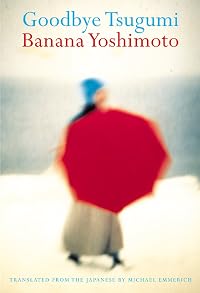
Goodbye Tsugumi
by Banana Yoshimoto
On This Page
Description
Banana Yoshimoto's novels of young life in Japan have made her an international sensation. Goodbye Tsugumi is an offbeat story of a deep and complicated friendship between two female cousins that ranks among her best work. Maria is the only daughter of an unmarried woman. She has grown up at the seaside alongside her cousin Tsugumi, a lifelong invalid, charismatic, spoiled, and occasionally cruel. Now Maria's father is finally able to bring Maria and her mother to Tokyo, ushering Maria into show more a world of university, impending adulthood, and a "normal" family. When Tsugumi invites Maria to spend a last summer by the sea, a restful idyll becomes a time of dramatic growth as Tsugumi finds love and Maria learns the true meaning of home and family. She also has to confront both Tsugumi's inner strength and the real possibility of losing her. Goodbye Tsugumi is a beguiling, resonant novel from one of the world's finest young writers. show lessTags
Recommendations










Member Reviews
The way Banana Yoshimoto writes is all but luminescent. Somehow, even in translation, which is an even more amazing feat, anything she writes moves me, makes me think and often makes me cry. not because it's tearjerking, just because it's true. even a story about a bitchy terminal invalid and a last summer before a seaside inn gets sold escapes the trite and the sentimental and just rings true.
The title character, the friend and cousin of the narrator is talking about her grudging fondness for a dog, Pooch. "It's no joke, kid. This is the pits. I feel like some sort of Don Juan who's gotten himself all tangled up in the passions of one of his young virgins and accidentally ended up married... But you see nasty people have a special kind show more of nasty-people philosophy. This business with the mutt goes against that... The idea is I want to be the kind of jerk who could kill Pooch and eat him if it got like that-to a point where there was really nothing left to eat anymore-and not feel anything. Of course I don't mean one of these half-baked jerks who'd shed a little tear afterward and then go put up a tombstone and whisper to it, 'I'm so sorry it had to be this way, Pooch, but thanks to you maybe the rest of us will survive.' I'm not talking about the kind of person who'd take a little chip of bone and make it into a pendant and wear it wherever she went. I want to be able to just laugh and say, 'Wow, that Pooch sure was delicious!' and i want to be able to feel really calm as I say it, and if possible I don't want to feel any regret or any twinges of conscience, you see? Of course that's just an example."
there's more, i could type half the book out, but i won't. but i am going to go reread all the yoshimoto books i do have looking for a specific quote about family i halfremember. show less
The title character, the friend and cousin of the narrator is talking about her grudging fondness for a dog, Pooch. "It's no joke, kid. This is the pits. I feel like some sort of Don Juan who's gotten himself all tangled up in the passions of one of his young virgins and accidentally ended up married... But you see nasty people have a special kind show more of nasty-people philosophy. This business with the mutt goes against that... The idea is I want to be the kind of jerk who could kill Pooch and eat him if it got like that-to a point where there was really nothing left to eat anymore-and not feel anything. Of course I don't mean one of these half-baked jerks who'd shed a little tear afterward and then go put up a tombstone and whisper to it, 'I'm so sorry it had to be this way, Pooch, but thanks to you maybe the rest of us will survive.' I'm not talking about the kind of person who'd take a little chip of bone and make it into a pendant and wear it wherever she went. I want to be able to just laugh and say, 'Wow, that Pooch sure was delicious!' and i want to be able to feel really calm as I say it, and if possible I don't want to feel any regret or any twinges of conscience, you see? Of course that's just an example."
there's more, i could type half the book out, but i won't. but i am going to go reread all the yoshimoto books i do have looking for a specific quote about family i halfremember. show less
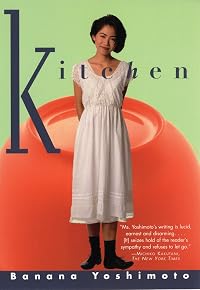
I love Banana Yoshimoto, and not just because she has a great name or because the first picture I saw of her was the best author shot ever (knowing, impish smile; witchy-poo shoes; and on the "backside" of the picture, she was hiding a bouquet of wildflowers in her hands, that you couldn't see from the front. It's on one of the tradepaper editions of Kitchen). I love wheat she writes about: quirky people who are real, but not necessarily likeable and in situations that aren't probable, but ring true. (I'm also told by reviewers that she does this with a "Japanese sensibility, whatever that means.)
Goodbye Tsugumi is certainly like this: an unlikeable girl making those around her miserable(at least when the book starts; part of its beauty show more is that her behavior is no more likeable by the end of the book, but through understanding Tsugumi, I came to like her anyway).
Unfortunately, I feel like the book cheaps out at the end. That last chapter becomes too neat and too nice. What was a book that nods at how human nature is messy and conflicted neatens up the way I'd expect some YA novel to. I liked that I never knew how the book was going to end (I thought I did, but I didn't), but this was not even the far-left-field ending, it was the we-were-playing-field-hockey-but-now-I'm-going-put-the-8- ball-in-the-corner-pocket ending.
Save yourself the pain- read the book (it's a quick read, and takes place at a beach, so maybe nice for summer?) but just skip the last chapter and choose your own ending. show less
Goodbye Tsugumi is certainly like this: an unlikeable girl making those around her miserable(at least when the book starts; part of its beauty show more is that her behavior is no more likeable by the end of the book, but through understanding Tsugumi, I came to like her anyway).
Unfortunately, I feel like the book cheaps out at the end. That last chapter becomes too neat and too nice. What was a book that nods at how human nature is messy and conflicted neatens up the way I'd expect some YA novel to. I liked that I never knew how the book was going to end (I thought I did, but I didn't), but this was not even the far-left-field ending, it was the we-were-playing-field-hockey-but-now-I'm-going-put-the-8- ball-in-the-corner-pocket ending.
Save yourself the pain- read the book (it's a quick read, and takes place at a beach, so maybe nice for summer?) but just skip the last chapter and choose your own ending. show less
This was a disappointing read for me. Although it's a short novel, it felt like a slog. I liked the premise of the book–relationships between teenaged cousins in a Japanese seaside town–but I didn't like any of the characters at all (the narrator Maria is so boring and bland; her cousin Tsugumi is a spoiled sociopath). It's not often that I hope one of the characters in a novel will die, but that's how I felt about Tsugumi.
Maria Shirakawa pasó toda su vida en un pueblo costero, concretamente en el hostal de sus tíos. Ahora, lleva escasos meses viviendo con su familia en Tokio, pero recibe noticias del hostal anunciando que van a cerrar y abrir un albergue de montaña. Es entonces cuando decide pasar un verano más donde pasó los mejores momentos de su vida. Maria rememora ese verano junto a sus primas Tsugumi y Yoko, que rondan su misma edad. Toda la novela, narrada en primera persona por Maria, gira en torno a la figura de Tsugumi, una joven con una enfermedad que no se menciona pero que la obliga a pasar largas estancias en la cama. Tsugumi es una chica muy complicada, con una filosofía de vida propia, con su propia lógica. Es conflictiva, show more sarcástica, respondona, vamos como House pero en adolescente, nada que ver con su delicada hermana Yoko. Pero como está enferma y siempre ha sido así, todos están acostumbrados a su comportamiento.
Banana Yoshimoto empezó a escribir y a publicar muy joven, y ya desde sus inicios comenzó a cosechar premios en su país. 'Tsugumi' es una novela escrita con apenas 25 años pero muy madura. Nos habla del poder de la amistad, la familia y los recuerdos, de aquellos años que ya no volverán pero que siguen frescos en la memoria por lo que significaron. A Tsugumi no sabes si estrangularla o abrazarla muy fuerte, pero terminas cogiéndole cariño. Aun así, me ha gustado más el personaje de Maria, la narradora, sus recuerdos y pensamientos, los paseos con sus primas y su perro por la playa.
Yoshimoto escribe con un lenguaje sencillo y evocador, que comunica perfectamente con el lector. No es su mejor novela, aún ha de escribir su obra maestra, pero contiene frases muy buenas, como por ejemplo:
"[...:] Cada cual tiene que llevar el peso de lo que ha sido en cada momento, un revoltijo de cosas buenas y de cosas no tan buenas, y debe vivir cargando con ese peso a solas. Aunque nos esforcemos por ser agradables con las personas a las que amamos, siempre estamos solos."
"Las noches en que no puedo dormir, me asaltan pesamientos un poco extraños. Las ideas flotan en la oscuridad y desvelan conclusiones inconsistentes como la espuma." show less
Banana Yoshimoto empezó a escribir y a publicar muy joven, y ya desde sus inicios comenzó a cosechar premios en su país. 'Tsugumi' es una novela escrita con apenas 25 años pero muy madura. Nos habla del poder de la amistad, la familia y los recuerdos, de aquellos años que ya no volverán pero que siguen frescos en la memoria por lo que significaron. A Tsugumi no sabes si estrangularla o abrazarla muy fuerte, pero terminas cogiéndole cariño. Aun así, me ha gustado más el personaje de Maria, la narradora, sus recuerdos y pensamientos, los paseos con sus primas y su perro por la playa.
Yoshimoto escribe con un lenguaje sencillo y evocador, que comunica perfectamente con el lector. No es su mejor novela, aún ha de escribir su obra maestra, pero contiene frases muy buenas, como por ejemplo:
"[...:] Cada cual tiene que llevar el peso de lo que ha sido en cada momento, un revoltijo de cosas buenas y de cosas no tan buenas, y debe vivir cargando con ese peso a solas. Aunque nos esforcemos por ser agradables con las personas a las que amamos, siempre estamos solos."
"Las noches en que no puedo dormir, me asaltan pesamientos un poco extraños. Las ideas flotan en la oscuridad y desvelan conclusiones inconsistentes como la espuma." show less
An amazing book full of such beautiful descriptions of nature (the beach, the city, the sun, etc) and feelings.
It speaks of transitions of life and it resounds so deeply within me and I feel like shouting yes, that was exactly how I felt each time there has been a change in my life. Absolutely well written.
As well the above, it is also about life (as opposed to death) and one's will to live and what to make of that life. How life changing a brush with death could be.
It speaks of transitions of life and it resounds so deeply within me and I feel like shouting yes, that was exactly how I felt each time there has been a change in my life. Absolutely well written.
As well the above, it is also about life (as opposed to death) and one's will to live and what to make of that life. How life changing a brush with death could be.
Tsugumi is annoying and her poor sister and mother seem to live exclusively to the rhythm of her selfish moods and actions. She has a life threatening illness that we don’t find out what it is and that’s probably intentional to gather sympathy. There are beautiful passages and interesting themes in the story characteristic of Yoshimoto’s writing. The highlight of the book for me was the narrative of having people coming and going from one’s life. I wish she had explored it more.
Goodbye Tsugumi, originally published in Japanese under the title Tsugumi in 1989, is a charming novelette about bratty girl Tsugumi who lives in a seaside town. Maria Shirakawa, Tsugumi's cousin, is the narrator. She reminisces her childhood when she and her mother lived in Yamamoto Inn owned by her aunt and uncle. Maria was the daughter of an unmarried woman (it was considered a shame to the name of a family in Asian culture). Maria grew up with her two cousins Tsugumi and Yoko. Through a prank Tsugumi played on her, Maria became very close to her cruel and foul-mouthed cousin, to whom everyone in the family spoiled and relented due to some unknown illness that could take her life at any moment.
The actual story begins when Maria, who show more attends university in Tokyo, goes back to visit the seaside town in note of the last summer of the inn before its imminent closure. Through Maria's eyes and reminiscence we see a different Tsugumi, someone who if not in a fits of spleen and cruelty can love and embrace those around her. A dogfight on the embankment chances Tsugumi's encounter with Kyoichi, son of a hotel owner. Together they weave a bittersweet and ephemeral love tale. It is through her capacity of love and the blessing of the relationship that keep Tsugumi alive though she lapses into illness occasionally.
"On rainy days like this both the past and future dissolve quietly into the air and hover there."
"Nighttime turns people into friends in next to no time."
Yoshimoto's prose is subtle, fine-tuned, and beguiling. She shrewdly employs beautiful skeins of words that evoke the peaceful, charming, and yet melancholy atmosphere for her backdrop. Yoshimoto achieves a fine balance between a carefully etched, seemingly unlikable character to which readers will have sympathy and like. Not until the end would the readers fully appreciate the impact Tsugumi has made and the mark she has left in Maria and others' lives.
Maybe it's the cultural difference or language barrier, the English translation, however excellent and thorough, inevitably (as is usual case for translated literature) loses some vernacular essence and connotation. This subtlety, however, should not undermine the pleasant reading experience Yoshimoto has to offer. show less
The actual story begins when Maria, who show more attends university in Tokyo, goes back to visit the seaside town in note of the last summer of the inn before its imminent closure. Through Maria's eyes and reminiscence we see a different Tsugumi, someone who if not in a fits of spleen and cruelty can love and embrace those around her. A dogfight on the embankment chances Tsugumi's encounter with Kyoichi, son of a hotel owner. Together they weave a bittersweet and ephemeral love tale. It is through her capacity of love and the blessing of the relationship that keep Tsugumi alive though she lapses into illness occasionally.
"On rainy days like this both the past and future dissolve quietly into the air and hover there."
"Nighttime turns people into friends in next to no time."
Yoshimoto's prose is subtle, fine-tuned, and beguiling. She shrewdly employs beautiful skeins of words that evoke the peaceful, charming, and yet melancholy atmosphere for her backdrop. Yoshimoto achieves a fine balance between a carefully etched, seemingly unlikable character to which readers will have sympathy and like. Not until the end would the readers fully appreciate the impact Tsugumi has made and the mark she has left in Maria and others' lives.
Maybe it's the cultural difference or language barrier, the English translation, however excellent and thorough, inevitably (as is usual case for translated literature) loses some vernacular essence and connotation. This subtlety, however, should not undermine the pleasant reading experience Yoshimoto has to offer. show less
Members
- Recently Added By
Lists

Japanese Literature
230 works; 40 members
Author Information

98+ Works 15,995 Members
Banana Yoshimoto, 1964 - Novelist Banana Yoshimoto was born Mahoko Yoshimoto on July 24, 1964 in Tokyo, Japan. She is the daughter of poet and commentator Yoshimoto Ryumei, who had an impact on the radical student movement of the late 1960's. She attended Tokyo's Nihon University, where she studied creative writing and won a faculty award for her show more 1987 graduation novel "Moonlight Shadow." While working as a waitress, she took moments out of her day to write a novel and, at the age of 24, the result was "Kitchen" (1988), which is the story of a lonely woman who moves her bed into the kitchen, finding comfort in the humming of the refrigerator. She also wrote "Pineapple Pudding" and "Fruit Basket," which were both bestsellers. Her novel "Lizard" was dedicated to the memory of the late rocker Kurt Cobain and the novel "Long Night of Marika/Bali Dream Diary" (1996) was considered a flop. (Bowker Author Biography) show less
Some Editions
Awards and Honors
Awards
Series
Belongs to Publisher Series
Common Knowledge
- Canonical title
- Goodbye Tsugumi
- Original title
- Tsugumi
- Original publication date
- 1989 (original) (original); 2002 (english translation) (english translation)
- People/Characters*
- Shirakawa Maria; Yamamoto Tsugumi; Yamamoto Yoko; Kyoichi
- Important places*
- Giappone
- Related movies*
- Tugumi (1990 | IMDb)
- First words
- 確かにつぐみは、いやな女の子だっだ。
- Last words
- (Click to show. Warning: May contain spoilers.)元気で。
- Original language
- Japanese
*Some information comes from Common Knowledge in other languages. Click "Edit" for more information.
Classifications
- Genres
- General Fiction, Fiction and Literature
- DDC/MDS
- 813 — Literature & rhetoric American literature in English American fiction in English
- LCC
- PL865 .O7138 .T7613 — Language and Literature Languages and literatures of Eastern Asia, Africa, Oceania Languages of Eastern Asia, Africa, Oceania Japanese language and literature Japanese literature Individual authors and works
- BISAC
Statistics
- Members
- 1,349
- Popularity
- 17,782
- Reviews
- 34
- Rating
- (3.55)
- Languages
- 10 — Catalan, English, German, Hungarian, Italian, Japanese, Polish, Portuguese, Russian, Spanish
- Media
- Paper, Ebook
- ISBNs
- 26
- ASINs
- 8