On This Page
Description
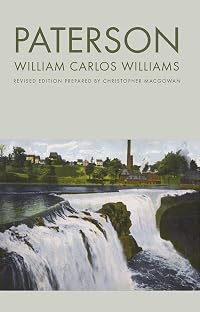
Long recognized as a masterpiece of modern American poetry, William Carlos Williams' Paterson is one man's testament and vision, "a humanist manifesto enacted in five books, a grammar to help us to live" (Denis Donoghue). Paterson is both a place - the New Jersey city near which Williams lived - and a man: the symbolic figure in whom the person (the poet's own life) and the public (the history of the region) are combined. Originally four books (published individually between 1946 and 1951), show more the structure of Paterson (in Dr. Williams' words) "follows the course of the Passaic River, whose life seemed more and more to resemble my own: the river above the Falls, the catastrophe of the Falls itself, the river below the Falls and the entrance at the end into the great sea." Book Five, published in 1958, when the poet was seventy-five, affirms the triumphant life of the imagination, in spite of age and death. This edition has been completely re-edited by noted Williams scholar Christopher MacGowan of the College of William and Mary and, in addition to presenting the most authoritative text possible, contains invaluable notes identifying Williams' sources and references. show lessTags
Recommendations






Member Reviews
Although I don't think it's WCW's greatest work (except in spots, and what spots!), this is kinda beyond any attempt I could make to evaluate it. Like the other great American 'long' poems of the 20th century (Pound, Olson, etc) this work pulls in a lot of stuff ... with which it deals in one way or other. Or doesn't.
If you want to read this, and you should, I recommend getting hold of the newer edition prepped by Christopher MacGowan, because it includes copious notes, which really illuminate some of the chunks that Williams threw in (letters, newspaper articles, etc.)
Bits of this will stay with me forever, but my own humble opinion is that it doesn't really cohere. Maybe it wasn't meant to ... you decide.
If you want to read this, and you should, I recommend getting hold of the newer edition prepped by Christopher MacGowan, because it includes copious notes, which really illuminate some of the chunks that Williams threw in (letters, newspaper articles, etc.)
Bits of this will stay with me forever, but my own humble opinion is that it doesn't really cohere. Maybe it wasn't meant to ... you decide.
Reading Books I-IV (especially Book II) was the most exciting, energetic, and formally refreshing reading experience I've had, I think, ever. I haven't been this convinced on the merits and distinctions of poetry since I read Ondaatje's The Collected Poems of Billy the Kid. Paterson feels like something one re-enters half a dozen times in their lifetime. I feel like carrying it around like a bible.
We know nothing and can know nothing
but the dance, to dance to a measure
contrapuntally,
Satyrically, the tragic foot.
Listen to me as an Everyman. Humble, belabored with a smile and some snark amidst the hopeless. I rise eager each morning, maybe a little fuzzy but poised. I truly lack ambition beyond my wife, my books and my job. Please shield me, my flabby exterior.
A man is indeed a city, and for the poet there are no ideas but in things
I have lived in a smallish river town most of my life. Louisville is just across the bridge. Our falls though mentioned in Paterson are empty of laurels. I can't strive to the Eternal in the night, the labor of the day keeps me weedy---and thirsty. This was a triumph, unexpected to a degree. show more Paterson is an admixture of form, a blurring of geology, human folly and the gleam of the moment. Consider me enriched. show less
but the dance, to dance to a measure
contrapuntally,
Satyrically, the tragic foot.
Listen to me as an Everyman. Humble, belabored with a smile and some snark amidst the hopeless. I rise eager each morning, maybe a little fuzzy but poised. I truly lack ambition beyond my wife, my books and my job. Please shield me, my flabby exterior.
A man is indeed a city, and for the poet there are no ideas but in things
I have lived in a smallish river town most of my life. Louisville is just across the bridge. Our falls though mentioned in Paterson are empty of laurels. I can't strive to the Eternal in the night, the labor of the day keeps me weedy---and thirsty. This was a triumph, unexpected to a degree. show more Paterson is an admixture of form, a blurring of geology, human folly and the gleam of the moment. Consider me enriched. show less
This was difficult certainly, but also beautiful. The images here were memorable and often touching, with fascinating artifacts such as letters and news pieces scattered throughout. I have no doubt that this book is one of the reasons that some people hate poetry, because it is frustrating at many points, but I think it's also worthwhile. It's one I'm going to have to go back and reread in full a few months from now. I should say that some of my classmates found this extremely sexist at points, but for the most part I simply disagreed with that assessment. For me, this is a journey searching for identity, particularly in line with the artist. I enjoyed it verymuch, though I feel Williams should have made it a bit more reader-friendly show more overall. show less
Como boa parte das pessoas que leram este livro no último ano, estou aqui por causa do belíssimo filme do Jim Jarmusch. No Brasil WCW é pouquíssimo conhecido ou editado, sempre à sombra de seus contemporâneos mais célebres Pound e Eliot, WCW trabalhou imagisticamente a poesia e provavelmente tem no longo Paterson a sua obra prima, não só em termos estéticos, como bem sonoros. O grande pulo do gato desta obra é mesclar prosa com poesia, a prosa fica por conta de cartas e notícias sobre a história da cidade de Paterson e tal prosa é vertida em poesia na versão de WCW.
I never know how to review a book of poetry. I learned in the preface that the five books that make up Paterson were originally published in separate volumes in 1946, 1948, 1949, 1951, and 1958, and that through the various printings of the work, the text changed. In this 1992 edition, all five books were collected, and the editor studied all the manuscripts, galleys, and proof pages to decide which versions to include. Anyway, Paterson is a city near me in New Jersey, and also near where William Carlos Williams lived. Its main geographical feature is the Great Falls on the Passaic River, which looms above the city, and the books of the poem metaphorically follow the course of that river as it meanders through northern New Jersey and show more then ultimately out to the sea. The poetry is both about the city of Paterson but also about Williams's life and the history of the whole region. No wonder it is such a masterpiece! This edition, edited by Christopher MacGowan, has lots of interesting footnotes and explanatory material. I first read this poem in my teens before I ever moved to New Jersey and became familiar with these places. My own experiences and the notes helped make it so much more. show less
A splendidly long poem, with (sometimes annoying, but more often fascinating) prose interjections. It's the variable foot--whatever it is--that counts. Just remember:
"I never told you to read it.
let erlone REread it. I didn't
say it wuz ! ! henjoyable readin."
Although, much of it is, in truth, quite henjoyable. Hell, now I'm doing it. What was it with some of the modernists--Pound and Williams especially, I think--and puttin on the dialect?
"I never told you to read it.
let erlone REread it. I didn't
say it wuz ! ! henjoyable readin."
Although, much of it is, in truth, quite henjoyable. Hell, now I'm doing it. What was it with some of the modernists--Pound and Williams especially, I think--and puttin on the dialect?
Members
- Recently Added By
Lists

Poetry Corner
187 works; 15 members

Harold Bloom - The Western Canon: D. The Chaotic Age
833 works; 24 members

Modernism
140 works; 9 members

Recommended Reading : 600 Classics Reviewed, Editors of Salem Press, 2015
634 works; 6 members
Author Information

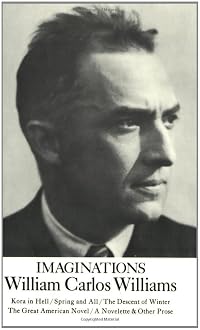
Poet, artist, and practicing physician of Rutherford, New Jersey, William Carlos Williams wrote poetry that was experimental in form, ranging from imagism to objectivism, with great originality of idiom and human vitality. Credited with changing and directing American poetry toward a new metric and language, he also wrote a large number of short show more stories and novels. Paterson (1946--58), about the New Jersey city of that name, was his epic and places him with Ezra Pound of the Cantos as one of the great shapers of the long poem in this century. National recognition did not come early, but eventually Williams received many honors, including a vice-presidency of the National Institute of Arts and Letters (1952); the Bollingen Prize (1953); the $5,000 fellowship of the Academy of American Poets; the Loines Award for poetry of the National Institute of Arts and Letters (1948); and the Brandeis Award (1957). Book II of Paterson received the first National Book Award for poetry in 1949. Williams was named consultant in poetry in English to the Library of Congress for 1952--53. Williams's continuously inventive style anchored not only objectivism, the school to which he most properly belongs, but also a long line of subsequent poets as various as Robert Lowell, Frank O'Hara, and Allen Ginsberg. With Stevens, he forms one of the most important sources of a specifically American tradition of modernism. In addition to his earlier honors, Williams received two important awards posthumously, the Pulitzer Prize for Poetry (1963) and the Gold Medal for Poetry from the National Institute of Arts and Letters (1963). (Bowker Author Biography) show less
Some Editions
Awards and Honors
Awards
Notable Lists
Series

Belongs to Publisher Series
New Directions Paperbook (152)
Common Knowledge
- Original publication date
- 1946 (book I) (book I); 1948 (book II) (book II); 1949 (book III) (book III); 1951 (book IV) (book IV); 1958 (book V) (book V); 1963 (show all 7); 1992 (rev. ed.) (rev. ed.)
- Important places
- Paterson, New Jersey, USA
Classifications
Statistics
- Members
- 1,159
- Popularity
- 21,785
- Reviews
- 11
- Rating
- (3.97)
- Languages
- 5 — English, French, German, Portuguese, Spanish
- Media
- Paper, Ebook
- ISBNs
- 19
- ASINs
- 8