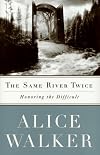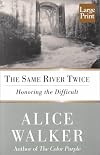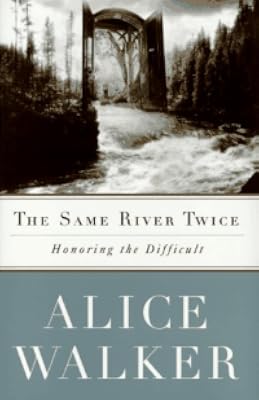
The Same River Twice: Honoring the Difficult
by Alice Walker
On This Page
Description
In the early eighties, the peaceful, reclusive life of poet and writer Alice Walker was interrupted by the appearance of three extraordinary gifts: a widely praised best-selling novel (The Color Purple), the Pulitzer Prize, and an offer from Steven Spielberg to make her novel into a film that would become a major international event. This last gift, which Walker identifies as "the knock at the door," led her into the labyrinth of a never-before-experienced creative collaboration, principally show more with Spielberg and Quincy Jones, and the "magic" and perils of moviemaking. The Same River Twice : Honoring the Difficult chronicles that period of transition, from recluse to public figure, and invites us to contemplate, along with her, the true significance of extraordinary gifts - especially when they are coupled, as in Walker's case, with the most severe criticism, overt hostility, and public censure from one's community of choice. The book is composed of entries from Walker's journals, correspondence - including letters to Spielberg, Jones, and Danny Glover, who played the much reviled Mister in the movie - and essays and articles that document the controversy in the African-American community upon the film's release. It also contains Walker's original screenplay for the film The Color Purple, a screenplay that ultimately was not used by Spielberg and has never been published. In three new essays, Walker looks back at what was taking place in her life at that time: the onset of a debilitating illness, the failing health of her adored mother, and the betrayal by her companion of thirteen years. How do the private and the public mesh, she asks, during periods of intense creativity and stress? In what ways do they support or weaken each other? show lessTags
Recommendations















Member Reviews
This was an interesting look into how 'The Colour Purple' became a movie, and the fallout from it from Alicce Walker's perspective. Full of soruce documents, including magazine articles, letters to the editor, journal entries, and letters, this book reflects the care and heartache in the making of the movie, as well as commenting on the topic in some depth.
Ratings
Members
- Recently Added By
Lists

African American History Month
99 works; 2 members
Author Information

96+ Works 40,776 Members
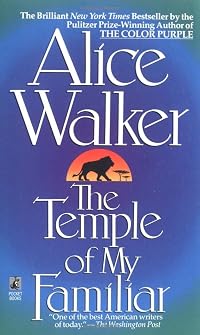
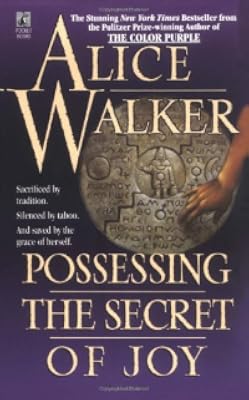
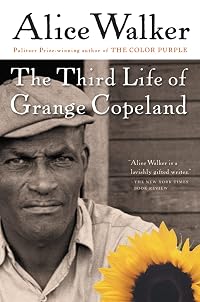
Alice Walker won the Pulitzer Prize and the American Book Award for her novel The Color Purple. Her other bestselling novels include By the Light of My Father's Smile, Possessing the Secret of Joy, and The Temple of My Familiar. She is also the author of two collections of short stories, three collections of essays, five volumes of poetry, and show more several children's books. Her books have been translated into more than two dozen languages. Born in Eaton, Georgia, Walker now lives in Northern California. Like so many characters in her fiction, Alice Walker was born into a family of sharecroppers in Eaton, Georgia. She began Spelman College on a scholarship and graduated from Sarah Lawrence College in 1965. While still in college, Walker became active in the civil rights movement and continued her involvement after she graduated, serving as a voter registration worker in Georgia. She also worked in a Head Start program in Mississippi and was on the staff of the New York City welfare department. She has lectured and taught at several colleges and universities and currently operates a publishing house, Wild Trees Press, of which she is a co-founder. Walker began her literary career as a poet, publishing Once: Poems in 1968. The collection reflects her experiences in the civil rights movement and her travels in Africa. Her second collection of poetry, Revolutionary Petunias and Other Poems (1973), is a celebration of the struggle against oppression and racism. In between these two collections, she published her first novel, The Third Life of Grange Copeland (1970), the story of Ruth Copeland, a young black girl, and her grandfather, Grange, who brutalizes his own family out of the frustrations of racial prejudice and his own sense of inadequacy. Walker's first collection of short stories, In Love and Trouble: Stories of Black Women (1973), established her special concern for the struggles, hardships, loyalties, and triumphs of black women, a powerful force in the rest of her fiction. Meridian (1976), her second novel, is the story of Meridian Hill, a civil rights worker. In her second collection of short stories, You Can't Keep A Good Woman Down (1981), Walker again portrays black women struggling against sexual, racial, and economic oppression. Walker's third novel, The Color Purple (1982), brought her the national recognition denied her earlier works. Through this story of the sharecropper Celie and the abuses she endures, Walker draws together the themes that have run through her earlier work into a concentrated and powerful attack on racism and sexism, and produces a triumphant celebration of the spirit and endurance of black women. The book received the Pulitzer Prize and was made into a successful film. Walker describes her most recent novel, The Temple of My Familiar (1989) as "a romance of the last 500,000 years." The book is a blend of myth and history revolving around three marriages. As the married couples tell their stories, they explore both their origins and the inner life of modern African Americans. (Bowker Author Biography) show less
Work Relationships
Is a supplement to
Common Knowledge
- Canonical title
- The Same River Twice: Honoring the Difficult
- Original publication date
- 1996
- People/Characters
- Alice Walker; Steven Spielberg; Quincy Jones; Rebecca Leventhal Walker; Oprah Winfrey; Whoopi Goldberg (show all 10); Celie; Shug; Mister; Nettie
- Related movies
- The Color Purple (1985 | IMDb)
Classifications
Statistics
- Members
- 479
- Popularity
- 63,135
- Reviews
- 1
- Rating
- (3.48)
- Languages
- English
- Media
- Paper
- ISBNs
- 9
- ASINs
- 4