On This Page
Description
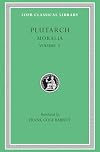
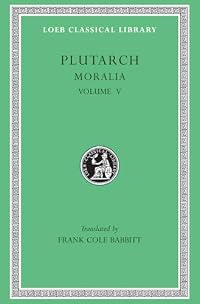
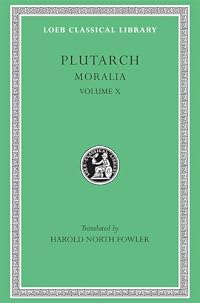
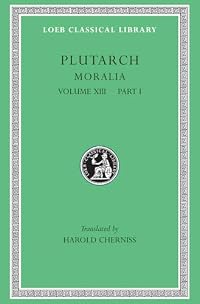
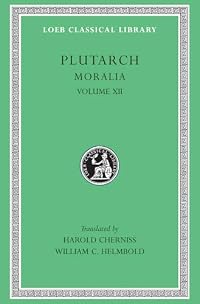
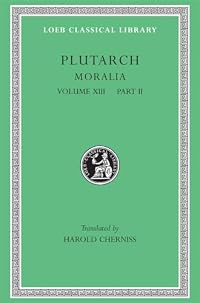
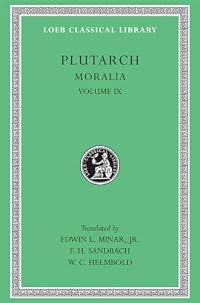
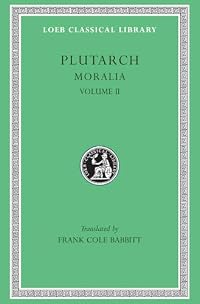
Plutarch (Plutarchus), ca. 45-120 CE, was born at Chaeronea in Boeotia in central Greece, studied philosophy at Athens, and, after coming to Rome as a teacher in philosophy, was given consular rank by the emperor Trajan and a procuratorship in Greece by Hadrian. He was married and the father of one daughter and four sons. He appears as a man of kindly character and independent thought, studious and learned. Plutarch wrote on many subjects. Most popular have always been the 46 Parallel Lives, show more biographies planned to be ethical examples in pairs (in each pair, one Greek figure and one similar Roman), though the last four lives are single. All are invaluable sources of our knowledge of the lives and characters of Greek and Roman statesmen, soldiers and orators. Plutarch's many other varied extant works, about 60 in number, are known as the Moralia or Moral Essays. They are of high literary value, besides being of great use to people interested in philosophy, ethics and religion. The Loeb Classical Library edition of the Moralia is in fifteen volumes, Volume XIII having two parts. show lessTags
Recommendations

Member Reviews
I've read a different edition of "De Iside et Osiride", namely Plutarch, and J. Gwyn Griffiths. 1970. Plutarch's de Iside et Osiride. Cardiff: University of Wales Press, thus omitted Babbitt's translation. This Plutarchian text that I've read in the National Library of Wales as a second year student years ago brightened my mind and opened to a wholly new course of studies in metaphysics, pagan theology and magic that I pursued privately for the next fourteen years. As an advise, if anyone reads the "E at Delphi"; "Delphic oracles no longer given in verse" and "On the obsolence of oracles" it is of dire necessity to understand the neo-platonic schools of thought, knowledge of basic "modus operandi" of ancient mysteries is of great show more significance, otherwise it is quite a fruitless endeavour save for an aesthetical journey in a magnificent classical text. I understand that most people want to read with understanding - not only that, to "acquire the belief-perspective" is enriching, even if for a while, to honour the Eleusia and adorn one's intellect with a true commitment. Plutarch left extremely important matter in his magisterial works, collected and translated in Loeb's volumes, yet to grasp it fully, it is advisable to read, e.g. Iamblichus "On the Mysteries", Chaldean Oracles by Julian the Theurgist, Macrobius commentary to Somnium Scipionis, Hymn to Magna Mater and King Helios by Emperor Julian, Metamorphoses by Apuleius, modern Daniel Ogden's "Greek and Roman Necromancy" to name a few, for background; For whom shall believe it mere tale-tale of ancient past shall never understand the profound truths that are full of vigorous blood: Of prophetissas, of oracles, of Divine transcendent Sun that in the modern world are not only unseen, forgotten, but in the mind's of many descended into mere shadows of shadows, deeper into Platonic cave of apparitions. May the muses guide you. show less
I've read a different edition of "De Iside et Osiride", namely Plutarch, and J. Gwyn Griffiths. 1970. Plutarch's de Iside et Osiride. Cardiff: University of Wales Press, thus omitted Babbitt's translation. This Plutarchian text that I've read in the National Library of Wales as a second year student years ago brightened my mind and opened to a wholly new course of studies in metaphysics, pagan theology and magic that I pursued privately for the next fourteen years. As an advise, if anyone reads the "E at Delphi"; "Delphic oracles no longer given in verse" and "On the obsolence of oracles" it is of dire necessity to understand the neo-platonic schools of thought, knowledge of basic "modus operandi" of ancient mysteries is of great show more significance, otherwise it is quite a fruitless endeavour save for an aesthetical journey in a magnificent classical text. I understand that most people want to read with understanding - not only that, to "acquire the belief-perspective" is enriching, even if for a while, to honour the Eleusia and adorn one's intellect with a true commitment. Plutarch left extremely important matter in his magisterial works, collected and translated in Loeb's volumes, yet to grasp it fully, it is advisable to read, e.g. Iamblichus "On the Mysteries", Chaldean Oracles by Julian the Theurgist, Macrobius commentary to Somnium Scipionis, Hymn to Magna Mater and King Helios by Emperor Julian, Metamorphoses by Apuleius, modern Daniel Ogden's "Greek and Roman Necromancy" to name a few, for background; For whom shall believe it mere tale-tale of ancient past shall never understand the profound truths that are full of vigorous blood: Of prophetissas, of oracles, of Divine transcendent Sun that in the modern world are not only unseen, forgotten, but in the mind's of many descended into mere shadows of shadows, deeper into Platonic cave of apparitions. May the muses guide you. show less
I've read a different edition of "De Iside et Osiride", namely Plutarch, and J. Gwyn Griffiths. 1970. Plutarch's de Iside et Osiride. Cardiff: University of Wales Press, thus omitted Babbitt's translation. This Plutarchian text that I've read in the National Library of Wales as a second year student years ago brightened my mind and opened to a wholly new course of studies in metaphysics, pagan theology and magic that I pursued privately for the next fourteen years. As an advise, if anyone reads the "E at Delphi"; "Delphic oracles no longer given in verse" and "On the obsolence of oracles" it is of dire necessity to understand the neo-platonic schools of thought, knowledge of basic "modus operandi" of ancient mysteries is of great show more significance, otherwise it is quite a fruitless endeavour save for an aesthetical journey in a magnificent classical text. I understand that most people want to read with understanding - not only that, to "acquire the belief-perspective" is enriching, even if for a while, to honour the Eleusia and adorn one's intellect with a true commitment. Plutarch left extremely important matter in his magisterial works, collected and translated in Loeb's volumes, yet to grasp it fully, it is advisable to read, e.g. Iamblichus "On the Mysteries", Chaldean Oracles by Julian the Theurgist, Macrobius commentary to Somnium Scipionis, Hymn to Magna Mater and King Helios by Emperor Julian, Metamorphoses by Apuleius, modern Daniel Ogden's "Greek and Roman Necromancy" to name a few, for background; For whom shall believe it mere tale-tale of ancient past shall never understand the profound truths that are full of vigorous blood: Of prophetissas, of oracles, of Divine transcendent Sun that in the modern world are not only unseen, forgotten, but in the mind's of many descended into mere shadows of shadows, deeper into Platonic cave of apparitions. May the muses guide you. show less
Ratings
Members
- Recently Added By
Author Information

1,618+ Works 25,883 Members
PLUTARCH. c.46--c.125 Considered by many to be the most important Greek writer of the early Roman period, Plutarch was a member of a well-to-do Greek family, a chief magistrate, a priest at Delphi, and an exceptionally well-read individual. His philosophical views were based on those of Plato and, although a Greek, he esteemed the achievements and show more attributes of the Romans. By the time Plutarch's works were published for the first time in the eleventh century, some had already been lost. He wrote innumerable essays on philosophical, historical, political, religious, and literary subjects, 78 of which survive today and are known collectively as the "Moralia." He is known primarily, however, for his Parallel Lives of Greeks and Romans, which consists of 50 biographies---23 of prominent Greeks, 23 of Roman leaders, and 4 separate lives---accompanied at intervals by short comparative essays. Although historical information is included in the work, Plutarch wrote it originally to inspire emulation in youth, so the emphasis is on character, moral choice, and anecdote. Sir Thomas North's 1579 translation into English of Parallel Lives became an important source for William Shakespeare which he used for three plays, Julius Caesar, Antony and Cleopatra, and Coriolanus. (Bowker Author Biography) show less
Some Editions
Series

Belongs to Publisher Series
Loeb Classical Library (306)
Common Knowledge
- Original publication date
- 1936 (translation) (translation)
Classifications
Statistics
- Members
- 144
- Popularity
- 226,599
- Reviews
- 3
- Rating
- (4.07)
- Languages
- English, Greek (Ancient), Spanish
- Media
- Paper
- ISBNs
- 6
- ASINs
- 2