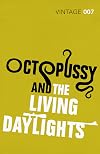
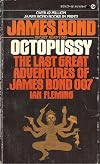
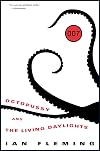
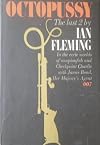
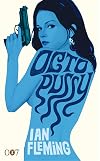
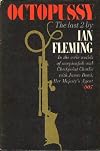
Octopussy and The Living Daylights
by Ian Fleming 
James Bond Novels (14), James Bond novels - Original Series (14)
On This Page
Description
The last book written by Ian Fleming, but by no means the least. In "Octopussy," a talented but wayward British major pays a high price when his wartime past catches up with him, while in "The Property of a Lady," a Fabergé egg leads Bond to a KGB spy. In "The Living Daylights," Bond has a perilous rendezvous in sniper's alley between East and West Berlin, and "007 in New York" (read by Lucy Fleming) sees him sent to America to warn an ex-MI6 operative about a dangerous liaison. All part of show more the job for 007.This audiobook includes an exclusive bonus interview with Tom Hiddleston.
. show less
Tags
Recommendations























Member Reviews
The Flowerpot street, lovingly dubbed that Potty Alley, is home to the charming Sugar family: Candie, Gary and twin sisters Becks and Hyena. Typical upper-middle-class, they live in a nice suburban house, own a lovable elderly dog, boast a foreign (step)father, an ageless sex-bomb of a mother, along with the two most popular middle school girls. Ever.
This sparkling facade crumbles behind closed doors however, where their true nature surfaces.
Candie and Gary are veritable sex maniacs intent on trying out every possible kink one might wish to imagine.
Becks is well on her way to becoming the school slut, although she'll be mortally offended should you (i.e. Hyena) dare to call her out on it. It's not like she's actually done it with show more anyone... well, save forthe family dog , but that's a secret.
Hyena, freshly back from a mental institution, tries her best to fit in, by mostly judging everyone 24/7. Ironically enough, she's the sanest of the family.
This charming little harmony is then rudely interrupted by Uncle Phil, Gary's eccentric older brother, who has the audacity to impose on them... because reasons. Time to grit your teeth and smile Sugars: it's family time!
As the book's 4 and 5-star-reviews didn't seem particularly convincing, while the 1 and 2-star ones made my hands itch for some popcorn, I was expecting to be knocked over by a truckload of faults. Armed with a metaphorical red pen, I had dived in... only to realize that I was still standing upright halfway in. Well, as upright, as one can slouch on a couch, but you get my point.
So, I'm assuming that the general idea was for the reader to slowly get to know each member of the Sugar family, by alternately following them around as a fly on the wall. A particularly gifted fly that is, armed with mind-reading abilities and the occasional psychoanalytical tendency.
This would probably be the part, where a kind reviewer would make allowances for the author's age (16), and the fact that this was her debut novel; alas, that person is not me.
If the author had succeeded in her endeavor of painting a detailed picture of this rather disturbed family, I think the novel could've ended up becoming a decent mystery. Unfortunately my overall impression was: lots and lots of unconventional sex, a narrator that couldn't decide between first person narrative and omniscience, and for bonus points, a literary analysis of the book itself.
Score: 2/5 stars
I wouldn't care to categorize myself as a hater, since I feel that the story may be salvaged in the following books. Well that, and the fact that I bought all 3 novels in the series on a whim... so I'm hoping to get through them with minimal exasperation. *cue shifty look*
In an interview, the author confessed to having wanted to write about the most shocking things that she could imagine. Judging by the amount of pearl-clutching going on in some of the reviews, I'd say she succeeded.
Personally, I was much more bothered by the inconsistent narration, which prevented me from relating to any of the characters. A pity, since I love watching train-wrecks, and this would've been a perfect opportunity to explore one.
On to the next one! show less
This sparkling facade crumbles behind closed doors however, where their true nature surfaces.
Candie and Gary are veritable sex maniacs intent on trying out every possible kink one might wish to imagine.
Becks is well on her way to becoming the school slut, although she'll be mortally offended should you (i.e. Hyena) dare to call her out on it. It's not like she's actually done it with show more anyone... well, save for
Hyena, freshly back from a mental institution, tries her best to fit in, by mostly judging everyone 24/7. Ironically enough, she's the sanest of the family.
This charming little harmony is then rudely interrupted by Uncle Phil, Gary's eccentric older brother, who has the audacity to impose on them... because reasons. Time to grit your teeth and smile Sugars: it's family time!
As the book's 4 and 5-star-reviews didn't seem particularly convincing, while the 1 and 2-star ones made my hands itch for some popcorn, I was expecting to be knocked over by a truckload of faults. Armed with a metaphorical red pen, I had dived in... only to realize that I was still standing upright halfway in. Well, as upright, as one can slouch on a couch, but you get my point.
So, I'm assuming that the general idea was for the reader to slowly get to know each member of the Sugar family, by alternately following them around as a fly on the wall. A particularly gifted fly that is, armed with mind-reading abilities and the occasional psychoanalytical tendency.
This would probably be the part, where a kind reviewer would make allowances for the author's age (16), and the fact that this was her debut novel; alas, that person is not me.
If the author had succeeded in her endeavor of painting a detailed picture of this rather disturbed family, I think the novel could've ended up becoming a decent mystery. Unfortunately my overall impression was: lots and lots of unconventional sex, a narrator that couldn't decide between first person narrative and omniscience, and for bonus points, a literary analysis of the book itself.
Score: 2/5 stars
I wouldn't care to categorize myself as a hater, since I feel that the story may be salvaged in the following books. Well that, and the fact that I bought all 3 novels in the series on a whim... so I'm hoping to get through them with minimal exasperation. *cue shifty look*
In an interview, the author confessed to having wanted to write about the most shocking things that she could imagine. Judging by the amount of pearl-clutching going on in some of the reviews, I'd say she succeeded.
Personally, I was much more bothered by the inconsistent narration, which prevented me from relating to any of the characters. A pity, since I love watching train-wrecks, and this would've been a perfect opportunity to explore one.
On to the next one! show less
Contains:
Octopussy
The Property of a Lady
The Living Daylights
James Bond in New York.
I'm always intrigued at how much more subtle the books are than the films. There's something very understated about these stories, with only the vaguest show of flash - Bond's Bentley, for example. They are a mixture, with Octopussy being the remebrances of a Major who went off the rails on one occasion in the war and has been living off the proceeds ever since. He is given time to "consider his position" and so the book ends in not the manner one might expect. Bond acts merely as the catalyst for the tale to unfold. IN Portrait of a Lady, a valuable piece of Faberge art is sent to a double agent, and so begins a tense auction room scene where Bond has show more to uncover the russian bidder jacking up the price. The Living Daylights sees Bond on a shoot to kill mission which doesn't go entirely according to plan. He's torn in this one, between being good at his job and not wanting to be the one doing his job. You can see it tearing him in two, if this level of tension were to continue. Finally he spends a mere 24 hours in New York, in an attempt to warn a former colleague about a situation she finds herself in, only to discover that the rendezvous does not exist. The tone turns from self congratulatory to very very cross in a moment and manages to be quite farcical!.
They are very much set in the early 60s, when the world was a bit more drab and Bond provided an element of escapism. The world is no less dangerous, but Bond of the books has certainly been locked in a past time. It is an enjoyable way to while away a few hours, but I wouldn't want to be in his shoes. show less
Octopussy
The Property of a Lady
The Living Daylights
James Bond in New York.
I'm always intrigued at how much more subtle the books are than the films. There's something very understated about these stories, with only the vaguest show of flash - Bond's Bentley, for example. They are a mixture, with Octopussy being the remebrances of a Major who went off the rails on one occasion in the war and has been living off the proceeds ever since. He is given time to "consider his position" and so the book ends in not the manner one might expect. Bond acts merely as the catalyst for the tale to unfold. IN Portrait of a Lady, a valuable piece of Faberge art is sent to a double agent, and so begins a tense auction room scene where Bond has show more to uncover the russian bidder jacking up the price. The Living Daylights sees Bond on a shoot to kill mission which doesn't go entirely according to plan. He's torn in this one, between being good at his job and not wanting to be the one doing his job. You can see it tearing him in two, if this level of tension were to continue. Finally he spends a mere 24 hours in New York, in an attempt to warn a former colleague about a situation she finds herself in, only to discover that the rendezvous does not exist. The tone turns from self congratulatory to very very cross in a moment and manages to be quite farcical!.
They are very much set in the early 60s, when the world was a bit more drab and Bond provided an element of escapism. The world is no less dangerous, but Bond of the books has certainly been locked in a past time. It is an enjoyable way to while away a few hours, but I wouldn't want to be in his shoes. show less
In these shorter works, Fleming's mastery at creating suspense even without a complex plot or much action is on display.
"Octopussy" is the story of a British major who stole some Nazi gold during the war, committing murder in the process. Bond is sent to investigate, and basically shows up in the story just to inform the major that the jig is up. The story is basically a morality tale about how crime doesn't pay, truth will out, and all those sorts of clichés...but Fleming does an excellent job of showing why they are actually true---and more profoundly, how good ends cannot be achieved by evil means, and an action such as this results not in happiness but misery, even while one may (temporarily) "get away with it". A really show more interesting character study, and quite philosophically and psychologically astute.
In "The Living Daylights", Bond is sent to snipe a sniper...an assignment about which neither he nor M is thrilled. It's not quite murder, he knows, but almost...close enough from his perspective as the man who has to do it, at any rate. Lots of interesting characterization of Bond himself in this story.
"The Property of a Lady" is about a triple agent---a Soviet spy turned double, but actually still working for Moscow---being used by British intelligence to unwittingly pass on false information to her Russian spymasters. This part of the story is hardly fictionalized, and was much more interesting to read after learning about similar real-life espionage activities (see, for example, Agent Zigzag by Ben Macintyre). But when an unusual payoff reveals her true allegiance, Bond sees an opportunity to uncover her boss, the head of Soviet espionage activities in Britain. Again, for a story with basically no action (in the form of physical peril to Bond), this is surprisingly suspenseful. show less
"Octopussy" is the story of a British major who stole some Nazi gold during the war, committing murder in the process. Bond is sent to investigate, and basically shows up in the story just to inform the major that the jig is up. The story is basically a morality tale about how crime doesn't pay, truth will out, and all those sorts of clichés...but Fleming does an excellent job of showing why they are actually true---and more profoundly, how good ends cannot be achieved by evil means, and an action such as this results not in happiness but misery, even while one may (temporarily) "get away with it". A really show more interesting character study, and quite philosophically and psychologically astute.
In "The Living Daylights", Bond is sent to snipe a sniper...an assignment about which neither he nor M is thrilled. It's not quite murder, he knows, but almost...close enough from his perspective as the man who has to do it, at any rate. Lots of interesting characterization of Bond himself in this story.
"The Property of a Lady" is about a triple agent---a Soviet spy turned double, but actually still working for Moscow---being used by British intelligence to unwittingly pass on false information to her Russian spymasters. This part of the story is hardly fictionalized, and was much more interesting to read after learning about similar real-life espionage activities (see, for example, Agent Zigzag by Ben Macintyre). But when an unusual payoff reveals her true allegiance, Bond sees an opportunity to uncover her boss, the head of Soviet espionage activities in Britain. Again, for a story with basically no action (in the form of physical peril to Bond), this is surprisingly suspenseful. show less
I liked Octopussy, the least Bond-centric of the stories. It is a character study of a retired British soldier whose past catches up to haunt him. The other two stories, "Living Daylights" and "Property of a Lady" are fairly quotidian Bond stories without much drama or character. In Living Daylights Bond has to kill a sniper to save an informant crossing from East to West Berlin, and he makes much of the fact that the sniper was a beautiful lady he saw in an orchestra. In Property of a Lady Bond has to subvert an auction of a Faberge egg, the proceeds of which will go to pay a double agent with the ridiculous name of "Freudenstein" in MI6 (which everyone knew about, so she was just fed bad intel which she passed on to the KGB). These show more latter two stories are not memorable and kind of just end. show less
James Bond started out as a literary character and soon turned into a movie franchise, becoming a “pop culture” icon in the process. I have watched a few Bond movies, discreetly enjoying them, without really becoming a fan. Perhaps that is why I was never really tempted to explore Fleming’s originals. I now realise that this slim volume of four posthumously published short stories are quite atypical of the Bond oeuvre and possibly not the best introduction to Fleming’s work. In “Octopussy”, Bond is almost a marginal presence, with the real protagonist being the “villian”, one Major Dexter Smythe. There is a good attempt at characterisation of Smythe, but I found the alternations between 1960s Jamaica and post-war Alps show more clunky, the ending contrived and the whole narrative style somewhat approximate. I liked the writing in “Property of a Lady” better, but this tale of an unusual auction (the only element from this whole collection reprised in the 1983 “Octopussy” movie) lacks the thrill and titillation one would associate with Bond. “007 in New York” is little more than a divertissement verging on self-parody, even includng a recipe for “Scrambled Eggs James Bond”. It was in The Living Daylights that I caught a glimpse of the author who has been described as “the best thriller writer since Buchan”. Nominally a description of a sniping assignment Bond undertakes on the East-West Berlin border, it involves days of waiting for the prey. It could easily have become a boring story but, instead, Fleming manages to ratchet up the tension, giving us a taste of what his character must have felt in his vigils in a blacked-out apartment. It also shows us a Bond who battles with his conscience and who, behind a cool exterior, can also be romantic and chivalric. In other words, The Living Daylight is a little gem, on the strength of which I’ll be happy to give Bond another chance. Any suggestions welcome.
This Vintage edition includes an introduction by Sam Leith, who not only explains what he owes to Bond (his life, no less) but also delves into what these short stories tell about who Bond is (and who or what he’s not). show less
This Vintage edition includes an introduction by Sam Leith, who not only explains what he owes to Bond (his life, no less) but also delves into what these short stories tell about who Bond is (and who or what he’s not). show less
The last of Fleming’s 007 books, and that means I’ve now read the lot. I can now cross them off the list. Yay. Although, to be honest, I’m not entirely sure why I decided I had to read them all – because it turned out they were all pretty terrible. Octopussy & The Living Daylights is, as the title might suggest, a collection – and both story titles have been used for Bond movies, although the films bear zero resemblance to the source material (as usual). In ‘Octopussy’, an ex-SOE man who was a bit naughty with some gold in Italy just after the war finished is visited at his home in Jamaica by Bond. Certain hints are dropped, but the man accidentally gets stung by a stonefish while feeding it to an octopus he has sort of show more adopted. In ‘The Living Daylights’, Bond has been charged with killing a sniper who they’ve learnt will make an attempt on a defector who’s making a run for it from East to West Berlin. Bond has always been brutal, but this one is more brutal than most. ‘The Property of a Lady’ sees Bond trying to flush out a Soviet spy during an auction for a Fabergé globe. The last story is a squib in which Bond flies to New York, daydreams about the day ahead… only to cock up the reason he’s been sent there. Meh. show less
It's funny to read this, as the title story has almost NOTHING to do with the movie of the same name, except that it is the background story of the title character and is recounted by her! But, it's a good short story, with very little of Bond in it. He pays a visit to a Major Dexter Smythe in Jamaica to go over a case from the war. And that visit changes things. Smythe is also on the search for a scorpionfish, and wanting it for an experiment with an octopus. The plot is almost all about Smythe, though it has a personal place in Bond's life, one that is hit upon in the movie "Spectre". I liked the way things turned out at the end.
The other story in this collection is "The Living Daylights", another title that was turned into a movie show more with the relation to the story only being that it is part of the beginning of the film. Bond acts as a counter-sniper to protect a Soviet defector along the West/East Berlin border. It is Bond vs. Trigger for the life of Agent 272, and again the ending has a nice twist, just like "Octopussy".
2 good, short stories about my favorite spy, 007! show less
The other story in this collection is "The Living Daylights", another title that was turned into a movie show more with the relation to the story only being that it is part of the beginning of the film. Bond acts as a counter-sniper to protect a Soviet defector along the West/East Berlin border. It is Bond vs. Trigger for the life of Agent 272, and again the ending has a nice twist, just like "Octopussy".
2 good, short stories about my favorite spy, 007! show less
Members
- Recently Added By
Author Information

253+ Works 56,041 Members
Ian Lancaster Fleming was born on May 28, 1908, in London, England. He attended Eton College and then the Royal Military College at Sandhurst. He left there after a year to go study languages in Munich and Geneva. Fleming served as the Moscow correspondent for the Reuters News Agency from 1929 till 1933. he then became a banker and a stockholder show more in London until the beginning of World War II. When the war began, Fleming became the personal assistant to the Director of British Naval Intelligence, where he learned most of his espionage terms. When the war was over, he worked as the foreign manager of The Sunday Times in London. Fleming wrote twelve James Bond novels, nearly all of which were made into Motion Pictures. His works included: Casino Royale, Live and Let Die, Moonraker, Diamonds Are Forever, Dr. No, Goldfinger, Thunderball, Chitty-Chitty-Bang-Bang, and For Your eyes Only. He of died of a heart attack on August 12, 1964. (Bowker Author Biography) show less
Ian Fleming has a Legacy Library. Legacy libraries are the personal libraries of famous readers, entered by LibraryThing members from the Legacy Libraries group.
Some Editions
Series


Work Relationships
Is contained in
Casino Royale / Live and Let Die / Moonraker / Diamonds Are Forever / From Russia with Love / Dr. No / Goldfinger / For Your Eyes Only / Thunderball / The Spy Who Loved Me / On Her Majesty's Secret Service / You Only Live Twice / The Man with the Golden Gun / Octopussy and The Living Daylights by Ian Fleming
Common Knowledge
- Canonical title
- Octopussy and The Living Daylights
- Original title
- Octopussy and The Living Daylights
- Alternate titles
- Octopussy & The Living Daylights; Octopussy
- Original publication date
- 1962 (The Living Daylights) (The Living Daylights); 1965 (Octopussy) (Octopussy); 1966-06-23
- People/Characters
- James Bond; Major Dexter-Smythe; Captain Sender; Miss Moneypenny; Kenneth Snowman
- Important places
- Berlin, Germany; Caribbean Region; Germany; Kingston, Jamaica; Jamaica; London, England, UK
- Related movies
- Octopussy (1983 | IMDb); The Living Daylights (1987 | IMDb)
- First words
- "You know what? said Major Dexter Smythe to the octopus.
- Last words
- (Click to show. Warning: May contain spoilers.)"Headquarters please."
(Click to show. Warning: May contain spoilers.)One can hardly credit the deficiency, but there is no Reptile House at the Central Park Zoo - Original language
- English
- Disambiguation notice
- This anthology contains two shorter works only, "Octopussy" and "The Living Daylights." Please distinguish between it and any editions that also include "The Property of a Lady" or "007 in New York." Thank you.
Classifications
Statistics
- Members
- 764
- Popularity
- 36,879
- Reviews
- 13
- Rating
- (3.32)
- Languages
- 7 — Danish, Dutch, English, French, German, Polish, Spanish
- Media
- Paper, Audiobook, Ebook
- ISBNs
- 42
- UPCs
- 1
- ASINs
- 42