
Ford County: Stories
by John Grisham
On This Page
Description
John Grisham returns to Ford County, Mississippi, the setting of his immensely popular first novel, "A Time to Kill," with this wholly surprising collection of stories.Tags
Recommendations











Member Reviews
Although all stories have some sort of legal angle to them, this collection is really about human nature, broaching themes from friendship, hope, freedom, ethics, and justice. Most of them are powerful tales, some of which had me laugh or cry, a testimony to Grisham's writing ability, especially when it comes to casting rich and relatable characters. I also loved the setting of Clanton, Mississippi, showcasing a small town with its uncomfortable relationship to the past, mix of Indigenous, European and Afro-American populations, and unique customs. Overall a fantastic collection.
I’ve read (or listened to) every John Grisham book that has been published. I can remember reading The Firm, then A Time to Kill. Each succeeding novel, though perhaps not entirely original, was nevertheless entertaining and plausible. Once Grisham attained superstar status, however, the content began to change. It was no longer necessary to write a compelling or enjoyable novel in order to sell books; his name alone did that. Now, Grisham could use his name to advance his political agenda and he has done so with a vengeance.
Everything is now black and white in Grisham’s world. There is no room for interpretation, compromise or misunderstanding. You are either as pure as the driven snow or as evil as Lucifer. If you are a show more corporation, you are greedy, conniving, criminal beyond redemption. There is no limit to how far you will stoop to poison, defraud or murder your innocent victim, as long as there is a dollar in it for you or your accomplices.
If you are a criminal defendant, it goes without saying that you are innocent. You are faced with police and prosecutors who are not only inept and laughably incompetent, but invariably crooked and criminal.
Now, it is entirely Grisham’s right to publish anything he wants, to oppose the death penalty and to despise police, prosecutors, conservative judges and businessmen. Some would applaud his activism and his willingness to fight for what he believes. And it is my right to observe that the quality of his novels and my enjoyment of his work have declined with his conversion to sainthood. His writing lacks subtlety and his sneering and condescending tone (most glaring in The Innocent Man, a polemic on the death penalty posing as a non-fiction work) do not make for compelling reading in my opinion. In this respect, Grisham is marginalizing himself in much the same way as political writers and commentators named Beck and Limbaugh.
All of that to say that I found Ford County to be refreshing break in Grisham’s slide from entertaining novelist to political hack. It is a collection of short stories centered upon Clanton, Mississippi, the locale for Grisham’s first novel, A Time to Kill. Each story is a take on an aspect of small town life in the rural south. It reminded me of the Grisham I used to enjoy prior to his conversion from novelist to political activist. show less
Everything is now black and white in Grisham’s world. There is no room for interpretation, compromise or misunderstanding. You are either as pure as the driven snow or as evil as Lucifer. If you are a show more corporation, you are greedy, conniving, criminal beyond redemption. There is no limit to how far you will stoop to poison, defraud or murder your innocent victim, as long as there is a dollar in it for you or your accomplices.
If you are a criminal defendant, it goes without saying that you are innocent. You are faced with police and prosecutors who are not only inept and laughably incompetent, but invariably crooked and criminal.
Now, it is entirely Grisham’s right to publish anything he wants, to oppose the death penalty and to despise police, prosecutors, conservative judges and businessmen. Some would applaud his activism and his willingness to fight for what he believes. And it is my right to observe that the quality of his novels and my enjoyment of his work have declined with his conversion to sainthood. His writing lacks subtlety and his sneering and condescending tone (most glaring in The Innocent Man, a polemic on the death penalty posing as a non-fiction work) do not make for compelling reading in my opinion. In this respect, Grisham is marginalizing himself in much the same way as political writers and commentators named Beck and Limbaugh.
All of that to say that I found Ford County to be refreshing break in Grisham’s slide from entertaining novelist to political hack. It is a collection of short stories centered upon Clanton, Mississippi, the locale for Grisham’s first novel, A Time to Kill. Each story is a take on an aspect of small town life in the rural south. It reminded me of the Grisham I used to enjoy prior to his conversion from novelist to political activist. show less
Loved it. He makes the people he writes about in Mississippi so believable. Several weeks after reading it, I am still thinking of some of the portraits he gives us:
- the impoverished mother and her two grown sons traveling to the state prison for the third son's execution for murder. She's in a wheelchair strapped to the floor of a van they had to borrow from the older son's boss. The family's last meeting before the prisoner enters the gas chamber is quite poignant. This is the most tragic story in the book. It's about poverty, class, broken homes, alcoholism, and many other things. More than anything, it's about dealing with the cards you're given, even when they're all low numbers and jokers.
- the professional swindler who show more befriends residents of an inhumane nursing home. He's there to trick them out of their money - and the way he goes about this is quite clever - but he also provides companionship and empathy to a group of very lonely people whose own families have long since stopped caring.
- the litigation lawyer looking for his next big break. He finally gets one, but not before revealing his shady character and, ultimately, a pretty shallow life.
I'm not normally a Grisham fan, although I love the films that have been made out of his books, especially Runaway Jury and The Firm. This rare short story collection may just make me go back and check out the rest of Grisham's wo show less
- the impoverished mother and her two grown sons traveling to the state prison for the third son's execution for murder. She's in a wheelchair strapped to the floor of a van they had to borrow from the older son's boss. The family's last meeting before the prisoner enters the gas chamber is quite poignant. This is the most tragic story in the book. It's about poverty, class, broken homes, alcoholism, and many other things. More than anything, it's about dealing with the cards you're given, even when they're all low numbers and jokers.
- the professional swindler who show more befriends residents of an inhumane nursing home. He's there to trick them out of their money - and the way he goes about this is quite clever - but he also provides companionship and empathy to a group of very lonely people whose own families have long since stopped caring.
- the litigation lawyer looking for his next big break. He finally gets one, but not before revealing his shady character and, ultimately, a pretty shallow life.
I'm not normally a Grisham fan, although I love the films that have been made out of his books, especially Runaway Jury and The Firm. This rare short story collection may just make me go back and check out the rest of Grisham's wo show less
I have said often, around here, even, that I wish John Grisham would slow down a little; take some time with his books and his characters. His early works show that he is well in possession of the ability to write great characters and plots. I felt like he was leaving that behind with some of his latest legal novels.
With Ford County: Stories, I see that he has left nothing behind. I know that he has said that these were mostly stories that would not flesh themselves out into full length novels, but I am so glad they didn't. Seven stories; all taking place or at least originating in Ford County Mississippi.
The most profound: Funny Boy. I am from the south, lived in various small towns, and am in the medical profession. I didn't need show more anyone to tell me what happened in the earliest days of the AIDS epidemic; I watched it. But Grisham evokes the fear, the panic, and the despair of the time with this story. The simple story of a man dying of a disease no one understood, and his small partnership of sorts with a woman who just wants to secure her home as her own brought me to tears in the end. And if anyone had told me even two weeks ago that a Grisham story would bring me to tears, I would have told them they were out of their tree.
There's also a couple of legal stories, done in the well-known Grisham style. Fish Files brings the back the only character I remember from his previous work (Hello again, Harry Rex!) . A lawyer sees a way out of his bleak existence and takes it and runs. In Michael's Room, another lawyer is forced at gunpoint to lay witness to the human cost of his actions.
Blood Drive is a classic telling of the "no good deed goes unpunished" mantra. Casino is a revenge tale with flair. Fetching Raymond shows us a side of capital punishment that evokes Grisham's The Chamber. My second favorite, Quiet Haven, shows us a man who slides into retirement homes with a dual purpose; avenge poor care and make a little scratch while he's at it. At its beginning, I was afraid where he was going with it, afraid he might decide to relieve the residents' suffering in a different manner. I was relieved and elated to see the protagonist was mainly benign.
Frankly, I would rather see many, many more short stories of this caliber than a poorly thought out complete novel from Mr. Grisham. Very well done.
I listened to this as an author - read audiobook. At first, Grisham's reading felt stilted and choppy. But I acknowledged that they were his stories, he could read them in any manner he pleased. I rapidly got used to it, and to be honest, missed the style when I moved on to my next book. As an audiobook, I give this an A as well.
Highly, highly recommended. show less
With Ford County: Stories, I see that he has left nothing behind. I know that he has said that these were mostly stories that would not flesh themselves out into full length novels, but I am so glad they didn't. Seven stories; all taking place or at least originating in Ford County Mississippi.
The most profound: Funny Boy. I am from the south, lived in various small towns, and am in the medical profession. I didn't need show more anyone to tell me what happened in the earliest days of the AIDS epidemic; I watched it. But Grisham evokes the fear, the panic, and the despair of the time with this story. The simple story of a man dying of a disease no one understood, and his small partnership of sorts with a woman who just wants to secure her home as her own brought me to tears in the end. And if anyone had told me even two weeks ago that a Grisham story would bring me to tears, I would have told them they were out of their tree.
There's also a couple of legal stories, done in the well-known Grisham style. Fish Files brings the back the only character I remember from his previous work (Hello again, Harry Rex!) . A lawyer sees a way out of his bleak existence and takes it and runs. In Michael's Room, another lawyer is forced at gunpoint to lay witness to the human cost of his actions.
Blood Drive is a classic telling of the "no good deed goes unpunished" mantra. Casino is a revenge tale with flair. Fetching Raymond shows us a side of capital punishment that evokes Grisham's The Chamber. My second favorite, Quiet Haven, shows us a man who slides into retirement homes with a dual purpose; avenge poor care and make a little scratch while he's at it. At its beginning, I was afraid where he was going with it, afraid he might decide to relieve the residents' suffering in a different manner. I was relieved and elated to see the protagonist was mainly benign.
Frankly, I would rather see many, many more short stories of this caliber than a poorly thought out complete novel from Mr. Grisham. Very well done.
I listened to this as an author - read audiobook. At first, Grisham's reading felt stilted and choppy. But I acknowledged that they were his stories, he could read them in any manner he pleased. I rapidly got used to it, and to be honest, missed the style when I moved on to my next book. As an audiobook, I give this an A as well.
Highly, highly recommended. show less
I read "Michael's Room" before loaning it out. Very intense, hard-hitting indictment of showboat lawyers who put their pride before the needs of the people involved in their cases, on both sides.
I'm a huge fan of John Grisham and have read all of his books. I was excited to read his short stories and was, generally speaking, not disappointed. The stories were all well written and had great set-ups. I think what kept these stories from being great were the ways in which Grisham tended to end them. For the most part, the stories end exactly the way you knew they would when the story began and were somewhat anti-climactic. I found myself wishing (hoping) each story would end with a "blow your mind" moment. We don't get that which isn't unexpected but is slightly disappointing.
Short stories are weird. More often than not, I find myself questioning everything I’ve just read as I close the book and set it down. Mainly, I question why the story was written, what point was possibly trying to be made, and why I should care.
Luckily, John Grisham is good enough to silence the inquisitions. Grisham’s ante-courtroom fiction is always a nice change of pace from the nail-biters he usually serves up. And, as with every legal thriller he’s written, "Ford County" sucked me in from page one. This collection of seven short fiction tales all focus on characters from Ford County, Mississippi – the setting of many of the former lawyer’s bestsellers, beginning with "A Time to Kill."
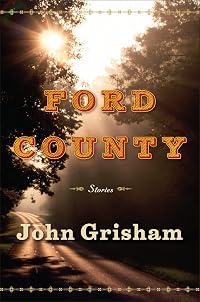
The cover shows a two-lane country show more road curving up a hill and into the horizon, and it’s a fitting image as many of the stories center around a trip of some sort. First off is one of my favorites, Blood Drive, a tale of three good ole’ Ford County boys heading to the big city. In a situation as realistic as if it happened in my stomping grounds of Mitchell County, Ga., a juicy story gets bigger and more convoluted as it passes from person to person. A hometown boy, Bailey, has been in an accident in Memphis, and though he’s only suffered a few minor breaks and scrapes, by the time the story makes its way across town, poor Bailey is barely clinging to life.
Facts fall by the wayside as rumor and supposition take charge. It’s decided that, due to Bailey’s fading condition, the three brave young men should embark on the two-hour drive to Memphis to donate their blood. A simple task turns into a saga, however, as the boys end up outrunning the law, and shortly thereafter, a shotgun-wielding homeowner. A beer or two for the road turns into a six-pack or two, and by the time they reach the Memphis city limits, the plans include a short stop at the friendly local strip club. And then, of course, straight to the hospital they will go.
Except that one of them gets lost in an inner-city gang shootout, and the other two end up on the wrong side of a rumble involving strippers, the Memphis vice squad, and some rowdy bikers. And poor Bailey never gets his blood donations, which is just as well since he ends up safely at home long before anyone else.
The best part about Grisham’s Ford County characters is how real they feel. Someone who wasn’t born in the South or who hasn’t spent a good deal of time here might perhaps think characters like this couldn’t truly exist. I beg to differ. I know these people. I went to school with these guys, I’ve worked with these folks, or my friends are related to them. People like Aggie and Calvin, who, when they finally reach the information desk at the first hospital they could find in the city, tell the clerk they need to find Bailey. The problem is, they don’t know his full name. And they couldn’t imagine why the hospital wouldn’t just list patients by their first names.
Calvin- “I thought Bailey was his first name.”
Aggie- “I thought it was his last name. They used to call him Buck, didn’t they?”
Calvin- “Yeah, but his Momma’s last name is Caldwell.”
Aggie- “How many times has she been married?”
It is in dialogue like this that Grisham makes me feel at home. He’s not an outsider mocking the South, he’s just a guy telling a story that is funny and down-to-earth and, most of all, very probable.
One reason short stories can be difficult is that there is an inherently short amount of time to develop a character. Many end up feeling aimless. But Grisham is in control at all times, telling simple stories about hometown people going about life. You may not know which direction you’re heading, but you know that you’ll enjoy the ride. show less
Luckily, John Grisham is good enough to silence the inquisitions. Grisham’s ante-courtroom fiction is always a nice change of pace from the nail-biters he usually serves up. And, as with every legal thriller he’s written, "Ford County" sucked me in from page one. This collection of seven short fiction tales all focus on characters from Ford County, Mississippi – the setting of many of the former lawyer’s bestsellers, beginning with "A Time to Kill."
The cover shows a two-lane country show more road curving up a hill and into the horizon, and it’s a fitting image as many of the stories center around a trip of some sort. First off is one of my favorites, Blood Drive, a tale of three good ole’ Ford County boys heading to the big city. In a situation as realistic as if it happened in my stomping grounds of Mitchell County, Ga., a juicy story gets bigger and more convoluted as it passes from person to person. A hometown boy, Bailey, has been in an accident in Memphis, and though he’s only suffered a few minor breaks and scrapes, by the time the story makes its way across town, poor Bailey is barely clinging to life.
Facts fall by the wayside as rumor and supposition take charge. It’s decided that, due to Bailey’s fading condition, the three brave young men should embark on the two-hour drive to Memphis to donate their blood. A simple task turns into a saga, however, as the boys end up outrunning the law, and shortly thereafter, a shotgun-wielding homeowner. A beer or two for the road turns into a six-pack or two, and by the time they reach the Memphis city limits, the plans include a short stop at the friendly local strip club. And then, of course, straight to the hospital they will go.
Except that one of them gets lost in an inner-city gang shootout, and the other two end up on the wrong side of a rumble involving strippers, the Memphis vice squad, and some rowdy bikers. And poor Bailey never gets his blood donations, which is just as well since he ends up safely at home long before anyone else.
The best part about Grisham’s Ford County characters is how real they feel. Someone who wasn’t born in the South or who hasn’t spent a good deal of time here might perhaps think characters like this couldn’t truly exist. I beg to differ. I know these people. I went to school with these guys, I’ve worked with these folks, or my friends are related to them. People like Aggie and Calvin, who, when they finally reach the information desk at the first hospital they could find in the city, tell the clerk they need to find Bailey. The problem is, they don’t know his full name. And they couldn’t imagine why the hospital wouldn’t just list patients by their first names.
Calvin- “I thought Bailey was his first name.”
Aggie- “I thought it was his last name. They used to call him Buck, didn’t they?”
Calvin- “Yeah, but his Momma’s last name is Caldwell.”
Aggie- “How many times has she been married?”
It is in dialogue like this that Grisham makes me feel at home. He’s not an outsider mocking the South, he’s just a guy telling a story that is funny and down-to-earth and, most of all, very probable.
One reason short stories can be difficult is that there is an inherently short amount of time to develop a character. Many end up feeling aimless. But Grisham is in control at all times, telling simple stories about hometown people going about life. You may not know which direction you’re heading, but you know that you’ll enjoy the ride. show less
Members
- Recently Added By
Published Reviews
ThingScore 63
The intermittent bursts of genuine thought and originality in “Ford County” show us how good [Grisham] might be if he weren’t so content to coast.
added by Shortride
Full of strong characters, simple but resonant plotlines, and charming Southern accents, this collection is solid throughout; though his literary aspirations may seem quaint, Grisham succeeds admirably in his crowd-pleasing craft while avoiding pat endings or oversimplifying (perhaps best exemplified in ""Michael's Room,"" which finds a lawyer facing the consequences of successfully defending show more a doctor against a malpractice suit). show less
added by a.thomerson
Mr. Grisham can give his story an unexpected twist without need of a heavy hand. His novels sometimes moralize; these short stories don’t need to because they transform their agendas into pure, vigorous plot.
added by Shortride
Lists

Jarett's Books
86 works; 1 member

To Read
617 works; 7 members
Author Information

323+ Works 291,026 Members
John Grisham was born in Jonesboro, Arkansas on February 8, 1955. He received a bachelor's degree in accounting from Mississippi State University. He was admitted to the bar in Mississippi in 1981 after receiving a law degree from the University of Mississippi, specializing in criminal law. While a lawyer in private practice in Southaven, show more Mississippi, Grisham served as a Democrat in the Mississippi House of Representatives from 1983 until 1990. He left the law and politics to become a full-time author. His first novel, A Time to Kill, was published in 1989. His other novels include The Partner, The Street Lawyer, The Testament, The Brethren, The Summons, The King of Torts, Bleachers, The Last Juror, The Broker, Playing for Pizza, The Appeal, Calico Joe, The Racketeer, Gray Mountain, Rogue Lawyer, The Confession, The Litigators, The Whistler, Camino Island, The Rooster Bar, and the Theodore Boone series. Several of his novels were adapted into films including The Firm, The Pelican Brief, The Client, A Time to Kill, The Rainmaker, The Chamber, A Painted House, The Runaway Jury, and Skipping Christmas. (Bowker Author Biography) show less
Awards and Honors
Work Relationships
Contains
Common Knowledge
- Canonical title*
- De Wettelozen
- Original title
- Ford County: Stories
- Original publication date
- 2009-11-03
- People/Characters
- Wayne "Aggie" Agnor; Leon Graney; Jacob McKinley; Bobby Carl Leach; Stanley Wade; Gilbert Griffin (show all 23); Adrian Keane; Calvin Marr; Roger Tucker; Butch Graney; Inez Graney; Raymond Graney; Lisa McKinley; Harry Rex Vonner; Chief Larry; Sidney Lewis; Stella Lewis; Jim Cranwell; Doyle Cranwell; Michael Cranwell; Wilma Drell; Lyle Spurlock; Emporia
- Important places
- Mississippi, USA; Ford County, Mississippi, USA; Clanton, Mississippi, USA
- Dedication
- To Bobby Moak
- First words
- By the time the news of Bailey's accident spread through the rural settlement of Box Hill, there were several versions of how it happened.
- Last words
- (Click to show. Warning: May contain spoilers.)Then she collected herself and went to the kitchen, where she threw the letter in the trash and picked up the phone.
- Original language
- English US
*Some information comes from Common Knowledge in other languages. Click "Edit" for more information.
Classifications
Statistics
- Members
- 3,312
- Popularity
- 5,120
- Reviews
- 91
- Rating
- (3.55)
- Languages
- 11 — Czech, Danish, Dutch, English, Finnish, French, German, Hungarian, Italian, Polish, Spanish
- Media
- Paper, Audiobook, Ebook
- ISBNs
- 55
- UPCs
- 1
- ASINs
- 25