On This Page
Description
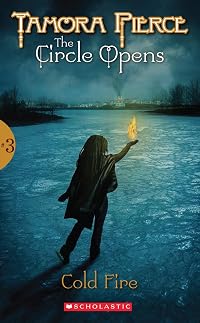
While studying with her teacher Frostpine in the northern land of Namorn, Daja helps the twin daughters of her host family discover their own magic and uses her powers to track an deadly arsonist.Tags
Recommendations












Member Reviews
Hell. Yes.
Daja's book in the original Circle books was probably my favorite of the series, and her book in the second series is equally excellent. Just to give you some idea: I started this book when I got on the elliptical, and didn't get off until I was finished. Even for me, reading an entire novel takes awhile, but I was too wrapt to notice the time going by. That's how enthralling this book is.
Daja Kisubu and her teacher Frostpine have come to a series of islands to learn more metal magic. The islands are frozen most of the year, and Frostpine spends most of the book kvetching about the cold (even going so far as to meditate naked in the kitchen hearth fire, much to the kitchen staffs' amazement). Amusingly, it seems he chose his show more name without realizing quite how cold it gets where frostpines live. Daja is having the time of her life learning to iceskate and make metal filigree. Like the other members of the Circle, she stumbles upon an undiscovered ambient mage--and her equally magical twin sister. Unlike her friends, she manages to find teachers for their cooking and carpentry magic, but still takes on teaching them meditation. Unfortunately, what works for one twin is precisely the wrong method for the other, and vice versa. But Daja grits her teeth and bends to the task--even though it takes her away from her other interest, creating protective metal gloves for the city's head fire-fighter. Her work is particularly important, because an escalating series of fires has begun to strike the islands, and the firefighters and she are called upon to increasing heroics.
And wow, but Daja is a heroine for the ages.
review tbc show less
Daja's book in the original Circle books was probably my favorite of the series, and her book in the second series is equally excellent. Just to give you some idea: I started this book when I got on the elliptical, and didn't get off until I was finished. Even for me, reading an entire novel takes awhile, but I was too wrapt to notice the time going by. That's how enthralling this book is.
Daja Kisubu and her teacher Frostpine have come to a series of islands to learn more metal magic. The islands are frozen most of the year, and Frostpine spends most of the book kvetching about the cold (even going so far as to meditate naked in the kitchen hearth fire, much to the kitchen staffs' amazement). Amusingly, it seems he chose his show more name without realizing quite how cold it gets where frostpines live. Daja is having the time of her life learning to iceskate and make metal filigree. Like the other members of the Circle, she stumbles upon an undiscovered ambient mage--and her equally magical twin sister. Unlike her friends, she manages to find teachers for their cooking and carpentry magic, but still takes on teaching them meditation. Unfortunately, what works for one twin is precisely the wrong method for the other, and vice versa. But Daja grits her teeth and bends to the task--even though it takes her away from her other interest, creating protective metal gloves for the city's head fire-fighter. Her work is particularly important, because an escalating series of fires has begun to strike the islands, and the firefighters and she are called upon to increasing heroics.
And wow, but Daja is a heroine for the ages.
review tbc show less
Substance: Excellent depiction of the progression of a hero to mass-murderer. The villain shows far more depth than the heroine.
Oddity: Pierce apologizes to PETA-friends who might be offended that the novel's characters wear furs in a pseudo-medieval northern climate. She does not apologize to anyone for executing a rather horrible death penalty.
In the other novels of this series, she has no qualms about letting the protagonists decide unilaterally to execute malefactors (nevermind that the villains unquestionably deserve their fates). Seems a tad unbalanced to me.
Oddity: Pierce apologizes to PETA-friends who might be offended that the novel's characters wear furs in a pseudo-medieval northern climate. She does not apologize to anyone for executing a rather horrible death penalty.
In the other novels of this series, she has no qualms about letting the protagonists decide unilaterally to execute malefactors (nevermind that the villains unquestionably deserve their fates). Seems a tad unbalanced to me.
A good story, except for a major flaw in the foreshadowing too early in the narrative. Aware readers can easily see where the plot is going in realizing who is the fire-setting culprit.
Pierce's narrative tale lost its momentum, since suspense and thrilling eagerness in reading her novel was derailed. Enjoyment withered since I couldn't shake off the angst (perhaps disappointment?) in knowing who was orchestrating set fires.
The book finished on a somewhat satisfactory ending, but closer to feeling this is a 3-star book, even though the characterizations are strong and the newly-discovered young children with magical gifts are charming.
Pierce's narrative tale lost its momentum, since suspense and thrilling eagerness in reading her novel was derailed. Enjoyment withered since I couldn't shake off the angst (perhaps disappointment?) in knowing who was orchestrating set fires.
The book finished on a somewhat satisfactory ending, but closer to feeling this is a 3-star book, even though the characterizations are strong and the newly-discovered young children with magical gifts are charming.
Daja travels north where she discovers two young mages and helps in a series of dangerous fires.
I hadn't realized just how violent this series was until this book made me think about all of them together. So far all of the children have had not only to deal with personal deaths among their families and friends, but also with serious questions about dealing with battle and dangerous criminals. For a series that I had really considered to be a children's adventure series that made me happy, it can be fairly dark. Still, the relationships that pull the kids through these times are what makes the series still full of love. I'll read the final book of this quartet now, and the following books are for audiences who are a bit older. I'm show more looking forward to them, as well. show less
I hadn't realized just how violent this series was until this book made me think about all of them together. So far all of the children have had not only to deal with personal deaths among their families and friends, but also with serious questions about dealing with battle and dangerous criminals. For a series that I had really considered to be a children's adventure series that made me happy, it can be fairly dark. Still, the relationships that pull the kids through these times are what makes the series still full of love. I'll read the final book of this quartet now, and the following books are for audiences who are a bit older. I'm show more looking forward to them, as well. show less
Oh man this was one very intense! I think this was less mystery and more thriller, which is a cool kind of genre change up here. It also meant I personally was so much more tense and screaming at the book at certain points. But if you want Criminal Minds for kids, this is right up your alley I think. (The cop/carcerality stuff uh bugged me but ymmv, most kids books are not written for prison abolitionists.)
This is the most creepy and twisted Pierce book I've read so far. Daja and Frostpine are in the cold, cold north, where most of the houses are built from wood. Daja finds magic in the twin daughters of the family they're staying with and must teach them how to meditate and find teachers for them in town. She also befriends a local, Ben, who is teaching about firefighting in their country. But he's also a twisted, diseased man who is deliberately setting fires to teach his townsfolk the importance of his techniques. Didn't realize Tamora could write like that. Compelling.
Quick GR Review
Cold Fire reads on the slow side. The first half is more character driven, and the plot keeps a low profile until the second half. The second half is great. Daja is a sturdy, considerate character, but is too "normal" for my taste. At least she has her magic and willingness to dive into flames going for her. Some of those scenes are epic. But in between the story lags. The setting is like a winter romance, complete with scenes with hearths, ice skating, and horse sleighs. The characters build a tight-nit community and Christmas-y warmth in their homes. I wish Frostpine, Daja's mentor, was more prominent.
Daja and Frostpine stay at the home of one of Frostpine's old friends. Two of the daughters are twins and not much show more younger than Daja, so they hang out. Daja catches one of them using magic and must teach her meditation to control her magic. Naturally, the twin has magic too, so Daja has two students. In addition to meditation she must find them teachers with the same type of magic. In between this work she designs a pair of fire-proof gloves for a fire-fighting friend.
But Kugisko doesn't stay peaceful. An arson is one the loose, and Daja's fire magic is ideal for saving people caught in buildings, for discerning how the fire got started, and who did it.
Full Review
In Kugisko, people ride sleighs and skate to get around the port of the city's islands. Daja is a fire mage, and stays in Kugisko during a winter riddled with arson. Many characters behave convincingly opposite of who they really are. As befitting a world and plot of oxymorons, Tamora Pierce dubbed this novel "Cold Fire."
Early in the winter, Daja and her mentor, Frostpine, take residence with the family of one of Frostpine's old friends. The family has four children, but the oldest twice girls teach Daja how to skate. Before long Daja notices they have magic, and it's her job to teach them meditation and find them instructors with the same kinds of magic. Like the other books in this series, the main character's mentor becomes unavailable. In Frostpine's case, he chases a coin counterfeiter.
Before long, Pierce introduces fire. All of the city's buildings are made of wood, besides those belonging to the wealthiest and most politically important. Fire happens. Fire happens less often thanks to a man that trains the city's servants how to fight the flames. Despite their efforts, fire becomes a major problem this winter. Daja seeks to help by crafting fire-resistant gloves for a firefighting friend, and sometimes by getting directly involved herself.
My library doesn't have the first three of The Magic Circle series, including Daja's Book, so this was my first look at Daja's character. Quickly I drew connections between her, her mentor Frostpine, and their dynamic to that of Keladry and Raoul from the author's Protector of the Small series. Incidentally, the Protector of the Small was published snugly in the years between the first book Daja appeared in--Sandry's Book--and Cold Fire. It would seem Tamora Pierce took a liking to the steadfast personality type. Also, compared to the other mentors in The Circle Opens series, Frostpine actually gets involved with the plot. Perhaps Pierce can't get enough of him. I don't mind.
Cold Fire reads more like book one of the series than books two and four. The story progresses slowly, and dare I say Sandry and Daja are more ordinary in temperament than Briar and Tris. Sandry and Daja also partake in stories that have the mentorship of newly found students and the actual plot on two mostly separate lines. Briar and Tris had students that were more directly involved with the plot, and certainly this showed early on. Maybe it's merely the difference between character-leaning drive versus plot-leaning drive, but I prefer the Briar and Tris books more. The involvement made the stories more intimate and emotionally intense.
Daja is dutiful. She does all the practical and honorable things others expect of her and she expects of herself. Usually I like these kinds of characters. Maybe it's because the plot was drawn out and the first half or so was more daily activities--even placing mage students with mages seemed as mundane as taking a real life student to talk to teachers--but Daja seemed boring. At least Keladry, from my comparison to another series, has lofty goals, awkward humor, and had a knack for disrupting routines and perceptions of other.
I think Daja was meant to exemplify the ordinary: Trader, works with hammers (what's more ordinary than smithing?), complies with social norms, almost always keeps quiet about her mage license. She dislikes how others treat her due to her age, but her tone sounds cool--not as heated as other Pierce characters. Daja does meet the goal of portraying an ordinary person, just caught in a magical story.
What I love about Daja though is, as a firefighter put it, she "firewalks." Often. She gets really confident with it during the course of the story. Somehow Pierce makes every firewalk incredible and not seeming like, "Oh, this type of scene again." There's no monotony.
This is a major reason why the second half of the book picks up. That, and midway is when the characters become aware random events are a part of a plot. Essentially, the first half is the character drive and world building, and the second half is the plot.
A lot of popular authors do this. I don't particularly care that method--I prefer to meld it all smoothly together--but certainly others love it, or the first Harry Potter wouldn't have done well, or Kristen Britain's fourth and fifth books wouldn't have sold, or, let's face it, the Hunger Games of The Hunger Games didn't start until half way. Given these examples, I'd say stories that need good world building often spend the first half with immersion and diluted plot elements.
Overall enjoyable. Kigusko is a unique creation--one, I assume, has a lot of fresh water leave the river into the port and sea, is extremely north, or has brutally cold air and ocean currents to create the reliably frozen canals. Something about winter scenes, Nordic house styles, families by the hearth, and ice skating is homely and peaceful to read about. Daja is like an older sister teaching her younger sisters meditation and helps the neighbors (from fire). Frostpine is like a quirky uncle who favors the oldest sister. The story flows slowly, but has a distinct feel that kept me interested enough to read to the end. show less
Cold Fire reads on the slow side. The first half is more character driven, and the plot keeps a low profile until the second half. The second half is great. Daja is a sturdy, considerate character, but is too "normal" for my taste. At least she has her magic and willingness to dive into flames going for her. Some of those scenes are epic. But in between the story lags. The setting is like a winter romance, complete with scenes with hearths, ice skating, and horse sleighs. The characters build a tight-nit community and Christmas-y warmth in their homes. I wish Frostpine, Daja's mentor, was more prominent.
Daja and Frostpine stay at the home of one of Frostpine's old friends. Two of the daughters are twins and not much show more younger than Daja, so they hang out. Daja catches one of them using magic and must teach her meditation to control her magic. Naturally, the twin has magic too, so Daja has two students. In addition to meditation she must find them teachers with the same type of magic. In between this work she designs a pair of fire-proof gloves for a fire-fighting friend.
But Kugisko doesn't stay peaceful. An arson is one the loose, and Daja's fire magic is ideal for saving people caught in buildings, for discerning how the fire got started, and who did it.
Full Review
In Kugisko, people ride sleighs and skate to get around the port of the city's islands. Daja is a fire mage, and stays in Kugisko during a winter riddled with arson. Many characters behave convincingly opposite of who they really are. As befitting a world and plot of oxymorons, Tamora Pierce dubbed this novel "Cold Fire."
Early in the winter, Daja and her mentor, Frostpine, take residence with the family of one of Frostpine's old friends. The family has four children, but the oldest twice girls teach Daja how to skate. Before long Daja notices they have magic, and it's her job to teach them meditation and find them instructors with the same kinds of magic. Like the other books in this series, the main character's mentor becomes unavailable. In Frostpine's case, he chases a coin counterfeiter.
Before long, Pierce introduces fire. All of the city's buildings are made of wood, besides those belonging to the wealthiest and most politically important. Fire happens. Fire happens less often thanks to a man that trains the city's servants how to fight the flames. Despite their efforts, fire becomes a major problem this winter. Daja seeks to help by crafting fire-resistant gloves for a firefighting friend, and sometimes by getting directly involved herself.
My library doesn't have the first three of The Magic Circle series, including Daja's Book, so this was my first look at Daja's character. Quickly I drew connections between her, her mentor Frostpine, and their dynamic to that of Keladry and Raoul from the author's Protector of the Small series. Incidentally, the Protector of the Small was published snugly in the years between the first book Daja appeared in--Sandry's Book--and Cold Fire. It would seem Tamora Pierce took a liking to the steadfast personality type. Also, compared to the other mentors in The Circle Opens series, Frostpine actually gets involved with the plot. Perhaps Pierce can't get enough of him. I don't mind.
Cold Fire reads more like book one of the series than books two and four. The story progresses slowly, and dare I say Sandry and Daja are more ordinary in temperament than Briar and Tris. Sandry and Daja also partake in stories that have the mentorship of newly found students and the actual plot on two mostly separate lines. Briar and Tris had students that were more directly involved with the plot, and certainly this showed early on. Maybe it's merely the difference between character-leaning drive versus plot-leaning drive, but I prefer the Briar and Tris books more. The involvement made the stories more intimate and emotionally intense.
Daja is dutiful. She does all the practical and honorable things others expect of her and she expects of herself. Usually I like these kinds of characters. Maybe it's because the plot was drawn out and the first half or so was more daily activities--even placing mage students with mages seemed as mundane as taking a real life student to talk to teachers--but Daja seemed boring. At least Keladry, from my comparison to another series, has lofty goals, awkward humor, and had a knack for disrupting routines and perceptions of other.
I think Daja was meant to exemplify the ordinary: Trader, works with hammers (what's more ordinary than smithing?), complies with social norms, almost always keeps quiet about her mage license. She dislikes how others treat her due to her age, but her tone sounds cool--not as heated as other Pierce characters. Daja does meet the goal of portraying an ordinary person, just caught in a magical story.
What I love about Daja though is, as a firefighter put it, she "firewalks." Often. She gets really confident with it during the course of the story. Somehow Pierce makes every firewalk incredible and not seeming like, "Oh, this type of scene again." There's no monotony.
This is a major reason why the second half of the book picks up. That, and midway is when the characters become aware random events are a part of a plot. Essentially, the first half is the character drive and world building, and the second half is the plot.
A lot of popular authors do this. I don't particularly care that method--I prefer to meld it all smoothly together--but certainly others love it, or the first Harry Potter wouldn't have done well, or Kristen Britain's fourth and fifth books wouldn't have sold, or, let's face it, the Hunger Games of The Hunger Games didn't start until half way. Given these examples, I'd say stories that need good world building often spend the first half with immersion and diluted plot elements.
Overall enjoyable. Kigusko is a unique creation--one, I assume, has a lot of fresh water leave the river into the port and sea, is extremely north, or has brutally cold air and ocean currents to create the reliably frozen canals. Something about winter scenes, Nordic house styles, families by the hearth, and ice skating is homely and peaceful to read about. Daja is like an older sister teaching her younger sisters meditation and helps the neighbors (from fire). Frostpine is like a quirky uncle who favors the oldest sister. The story flows slowly, but has a distinct feel that kept me interested enough to read to the end. show less
Members
- Recently Added By
Lists

Books Read in 2016
110 works; 1 member
Author Information

83+ Works 121,966 Members
Author Tamora Pierce was born in South Connellsville, Pennsylvania on December 13, 1954. She received a Bachelor of Arts degree from the University of Pennsylvania. Her first book, Alanna: The First Adventure, was published in 1983 and she became a full-time author in 1992. She writes fantasy books, mainly involving young heroines, for young show more adults. She is the author of numerous series including Song of the Lioness; The Immortals; Circle of Magic; Protector of the Small; The Circle Opens; Daughter of the Lioness; The Circle Reforged; Beka Cooper; and The Numair Chronicles. Her novel Battle Magic was a New York Times bestseller. (Bowker Author Biography) show less
Some Editions
Series


Work Relationships
Is contained in
Common Knowledge
- Canonical title
- Cold Fire
- Original publication date
- 2002-04-01
- People/Characters
- Daja Kisubo; Dedicate Frostpine
- Important places
- Kugisko (fictional)
- Dedication
- To the firefighters, policemen, rescue workers and medical personnel of New York City, our truest heros in our darkest time
- First words
- In the city of Kugisko, in Namorn: Niamara Bancanor, twelve and sometimes too helpful in Daja Kisubo's opinion, gripped Daja's left hand and elbow.
- Last words
- (Click to show. Warning: May contain spoilers.)"Gods be thanked," Frostpine replied with feeling. They set their horses forward on the road south.
Classifications
- Genres
- Fiction and Literature, Fantasy, Teen, Young Adult
- DDC/MDS
- 813.54 — Literature & rhetoric American literature in English American fiction in English 1900-1999 1945-1999
- LCC
- PZ7 .P61464 .C — Language and Literature Fiction and juvenile belles lettres Fiction and juvenile belles lettres Juvenile belles lettres
- BISAC
Statistics
- Members
- 2,638
- Popularity
- 7,124
- Reviews
- 26
- Rating
- (3.94)
- Languages
- English
- Media
- Paper, Ebook
- ISBNs
- 17
- ASINs
- 11