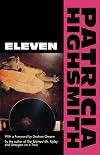
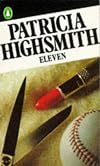
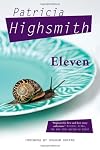
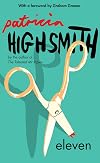
Eleven: Short Stories
by Patricia Highsmith
On This Page
Description
The legendary writer Patricia Highsmith is best remembered today for her chilling psychological thrillers The Talented Mr. Ripley and Strangers on a Train. A critically acclaimed, bestselling author in Europe, Highsmith has for too long been underappreciated in the United States. Eleven is Highsmith's first collection of short stories, an arresting group of dark masterpieces of obsession and foreboding, violence and instability. Here naturalists meet gruesome ends and unhinged heroes disturb show more our sympathies. show lessTags
Recommendations














Member Reviews
This is a remarkable collection of short stories, written at various times between 1945 and 1970. As always with Highsmith, we know from the first page of each that there is something badly wrong with the world we are in. If we had any sense, we would stop reading there and then, but we don't, we're drawn in, and we soon find that it's worse than we thought. Highsmith was a writer who could exploit the possibilities of short and long forms equally well: in these stories she takes full advantage of technical possibilities like calculated departures from strict realism ("The quest for blank Claveringi", "The empty birdhouse"), or plot elements left entirely unexplained ("Mrs Afton, among thy green braes", "The Heroine").
Graham Greene's show more introduction to this collection compares Highsmith to Saki, and there is definitely something in that: both tend to use animals as a metaphor for the dark, irrational side of life, and in both cases it has a tendency to triumph over civilised, rational human efforts. Maybe Saki never thought of using invertebrates, but Highsmith makes up for that here by having not one, but two stories in which humans are overpowered by snails. Even when the animals are killed, they seem to triumph ("The Terrapin", "The empty birdhouse").
Definitely recommended: but you might not want to read it just before going to bed! show less
Graham Greene's show more introduction to this collection compares Highsmith to Saki, and there is definitely something in that: both tend to use animals as a metaphor for the dark, irrational side of life, and in both cases it has a tendency to triumph over civilised, rational human efforts. Maybe Saki never thought of using invertebrates, but Highsmith makes up for that here by having not one, but two stories in which humans are overpowered by snails. Even when the animals are killed, they seem to triumph ("The Terrapin", "The empty birdhouse").
Definitely recommended: but you might not want to read it just before going to bed! show less
She is a writer who has created a world of her own – a world claustrophobic and irrational which we enter each time with a sense of personal danger, with the head half turned over the shoulder, even with a certain reluctance, for these are cruel pleasures we are going to experience, until somewhere about the third chapter the frontier is closed behind us, we cannot retreat, we are doomed to live till the story’s end with another of her long series of wanted men.
Graham Greene hit the nail on the head with his observation about Highsmith's stories. They are not comfortable, not predictable, not following the scripts of the ordinary.
As with all collections of short stories, some works are stronger than others. It is the same with show more Eleven. Adding to that, the collection starts off with the remarkably weird story of The Snail Watcher, and is followed by a handful of gripping stories full of suspense and, well, weirdness.
The second half of the collection is not quite as high on octane as the first half, but still shows Highsmith's ability to write well-plotted stories.
The Snail Watcher - 5*
The Birds Poised to Fly - 4*
The Terrapin - 5* (This one was horrific, and yet, I loved it. Stay clear if you have issues with descriptions of food preparation that involves animals.)
When the Fleet was In at Mobile - 5* (Dark, dark, but quite moving.)
The Quest for Blank Claveringi - 5* (Awesome. Gotta love the idea of man-eating snails.)
The Cries of Love - 2*
Mrs Afton, Among Thy Green Braes - 3*
The Heroine - 3.5*
Another Bridge to Cross - 3.5*
The Barbarians - 4*
The Empty Bird House - 3*
Graham Greene called Highsmith "the poet of apprehension rather than fear", and each one of these stories shows how he arrived at this conclusion. You just never know what to expect. show less
Graham Greene hit the nail on the head with his observation about Highsmith's stories. They are not comfortable, not predictable, not following the scripts of the ordinary.
As with all collections of short stories, some works are stronger than others. It is the same with show more Eleven. Adding to that, the collection starts off with the remarkably weird story of The Snail Watcher, and is followed by a handful of gripping stories full of suspense and, well, weirdness.
The second half of the collection is not quite as high on octane as the first half, but still shows Highsmith's ability to write well-plotted stories.
The Snail Watcher - 5*
The Birds Poised to Fly - 4*
The Terrapin - 5* (This one was horrific, and yet, I loved it. Stay clear if you have issues with descriptions of food preparation that involves animals.)
When the Fleet was In at Mobile - 5* (Dark, dark, but quite moving.)
The Quest for Blank Claveringi - 5* (Awesome. Gotta love the idea of man-eating snails.)
The Cries of Love - 2*
Mrs Afton, Among Thy Green Braes - 3*
The Heroine - 3.5*
Another Bridge to Cross - 3.5*
The Barbarians - 4*
The Empty Bird House - 3*
Graham Greene called Highsmith "the poet of apprehension rather than fear", and each one of these stories shows how he arrived at this conclusion. You just never know what to expect. show less
Four stories in and I'm hooked! "The Snail Watcher" creeped me out so much, I had to physically put the book down! And "The Terrapin" did the same, so much so that I have a hard time looking at the book cover now! "When the Fleet Was In at Mobile" had the kind of ending that I LOVE, very Twilight Zone-y with the perfect amount of despair/terror! Another snail terror, a crazy nurse maid, and an evil yuma round out a truly creepy collection!
Patricia Highsmith's first collection of little masterpieces on this brilliant but unlikable woman favorite subject: obsession; is as unsettling as any of her novels. Her prose is carefully planned, no word is wasted or misplaced, and the result are stories of such disturbing intensity that they engulf the reader to the point that they feel a sense of mounting horror, despite the often very mundane subject matter.
Graham Greene describes Highsmith’s forte better than I ever could in his excellent introduction:
“Miss Highsmith is the poet of apprehension rather than fear. Fear after a time, as we all learned in the blitz, is narcotic, it can lull one by fatigue into sleep, but apprehension nags at the nerves gently and inescapably. We show more have to learn to live with it.”
Highly recommended for someone wishing to start on Highsmith's world, "a world claustrophobic and irrational which we enter each time with a sense of personal danger."
The Snail Watcher – 5*
The Birds Poised to Fly – 4*
The Terrapin – 5*
When the Fleet was In at Mobile – 5*
The Quest for Blank Claveringi – 5*
The Cries of Love – 2*
Mrs Afton, Among Thy Green Braes – 3*
The Heroine – 3.5*
Another Bridge to Cross – 3.5*
The Barbarians – 4*
The Empty Bird House – 4* show less
Graham Greene describes Highsmith’s forte better than I ever could in his excellent introduction:
“Miss Highsmith is the poet of apprehension rather than fear. Fear after a time, as we all learned in the blitz, is narcotic, it can lull one by fatigue into sleep, but apprehension nags at the nerves gently and inescapably. We show more have to learn to live with it.”
Highly recommended for someone wishing to start on Highsmith's world, "a world claustrophobic and irrational which we enter each time with a sense of personal danger."
The Snail Watcher – 5*
The Birds Poised to Fly – 4*
The Terrapin – 5*
When the Fleet was In at Mobile – 5*
The Quest for Blank Claveringi – 5*
The Cries of Love – 2*
Mrs Afton, Among Thy Green Braes – 3*
The Heroine – 3.5*
Another Bridge to Cross – 3.5*
The Barbarians – 4*
The Empty Bird House – 4* show less
Como indica el título del libro, se trata de una recopilación de once relatos de la estadounidense Patricia Highsmith, conocida sobre todo por la adaptación al cine por parte de Alfred Hitchcock de ‘Extraños en un tren’, así como por las novelas de Tom Ripley, ese “simpático” asesino. ‘Once’ me apeteció leerlo tras ver la película ‘Perfect Days’, de Wim Wenders, libro que el protagonista tiene entre sus lecturas. Y es curioso, porque Wenders ya dirigió ‘El amigo americano’, tercera de las novelas de Ripley.
Se trata de relatos de terror psicológico, crueles y pesimistas, en los que la autora era una consumada experta. Justamente los dos cuentos más fantásticos, que tienen que ver con caracoles (!), son los show more más flojos. Como pasaba con las historias de Ripley, la escritora logra hacer que el lector empatice con el asesino o con los actos de los protagonistas, por muy deleznables que sean. Estás deseando que se salgan con la suya (no en todos los cuentos, claro), y esto no es fácil de lograr. Muchos critican los finales abruptos de los cuentos de Patricia Highsmith, pero a mí me han convencido, no necesito que me lo den todo masticado, está bien dejar algo a la imaginación del lector.
El observador de caracoles (1964) (***). Un buen día, el protagonista descubre el placer de la cría de caracoles. El final del pobre idiota se ve venir, y casi aplaudes.
Los pájaros a punto de emprender el vuelo (1969) (*****). El protagonista le pidió matrimonio por carta a una chica, que se encuentra fuera del país por trabajo, y espera impaciente su respuesta. Pasan los días y ésta no llega, así que se le ocurre que tal vez el cartero se equivocó de buzón y la carta deseada esté en el de su vecino. Cuando lo revisa, comprobando que no hay nada para él, se lleva una de sus cartas, descubriendo que la novia de su vecino se encuentra en la misma situación. Gran relato. Aquí te enganchas definitivamente a la narrativa de Highsmith.
La tortuga de agua dulce (1962) (*****). Un chico vive oprimido por su abusiva madre, pero todo cambiará para él cuando ésta traiga a casa una tortuga para cocinarla. Inquietante relato.
Cuando la escuadra llegó a Mobile (1970) (*****). Nada más comenzar el relato, la joven protagonista tiene un paño con cloroformo en sus manos para asesinar a su marido. Tras esto, escapa, y vamos conociendo más de su triste pasado. Magnífico cuento.
En busca del “Tal o cual Claveringi” (1970) (***). Un investigador decide averiguar por su cuenta si es verdad que existen los famosos caracoles asesinos (esto es casi un oxímoron) de cierta isla, que pueden llegar a medir más de cinco metros. Otro final predecible, pero no por ello disfrutable por la estupidez del protagonista.
Gritos de amor (1970) (***). Dos ancianas llevan viviendo juntas en una residencia desde hace años, y una de ellas le hace contínuas trastadas a la otra. Así que busca su particular venganza.
Señora Afton, entre tus verdes laderas (1962) (***). Una mujer acude a un psiquiatra para pedir consejo para su marido, que no quiere ir en persona. Pero las cosas no son lo que parecen.
La heroína (1945) (****). La joven protagonista es contratada como niñera de dos niños. Su obsesión por este trabajo será desastroso.
Otro puente por cruzar (1964) (*****). Un hombre maduro, de viaje por Europa, asiste al suicidio de un hombre que se lanza desde un puente a la carretera. Pero el viaje sigue, y sabremos que perdió a su mujer e hijo en un accidente. Gran relato, en el que parece que no sucede nada, pero sólo lo parece.
Los bárbaros (1968) (****). Unos tipos vienen siempre a incordiar los domingos con su béisbol. Pese a las protestas de los vecinos, por el barullo que arman abajo, ellos se ríen de todos. Hasta que al protagonista se le calienta la sangre un día.
La pajarera vacía (1969) (****). Una mujer ve una extraña cara en su pajarera vacía, y el bicho o lo que sea, sale rápidamente hacia la casa. Su marido piensa que son imaginaciones suyas, hasta que también ve a la extraña criatura. No sabiendo qué hacer, piden prestado un gato que acabe con la ardilla, hurón o lo que sea. Inquietante. show less
Se trata de relatos de terror psicológico, crueles y pesimistas, en los que la autora era una consumada experta. Justamente los dos cuentos más fantásticos, que tienen que ver con caracoles (!), son los show more más flojos. Como pasaba con las historias de Ripley, la escritora logra hacer que el lector empatice con el asesino o con los actos de los protagonistas, por muy deleznables que sean. Estás deseando que se salgan con la suya (no en todos los cuentos, claro), y esto no es fácil de lograr. Muchos critican los finales abruptos de los cuentos de Patricia Highsmith, pero a mí me han convencido, no necesito que me lo den todo masticado, está bien dejar algo a la imaginación del lector.
El observador de caracoles (1964) (***). Un buen día, el protagonista descubre el placer de la cría de caracoles. El final del pobre idiota se ve venir, y casi aplaudes.
Los pájaros a punto de emprender el vuelo (1969) (*****). El protagonista le pidió matrimonio por carta a una chica, que se encuentra fuera del país por trabajo, y espera impaciente su respuesta. Pasan los días y ésta no llega, así que se le ocurre que tal vez el cartero se equivocó de buzón y la carta deseada esté en el de su vecino. Cuando lo revisa, comprobando que no hay nada para él, se lleva una de sus cartas, descubriendo que la novia de su vecino se encuentra en la misma situación. Gran relato. Aquí te enganchas definitivamente a la narrativa de Highsmith.
La tortuga de agua dulce (1962) (*****). Un chico vive oprimido por su abusiva madre, pero todo cambiará para él cuando ésta traiga a casa una tortuga para cocinarla. Inquietante relato.
Cuando la escuadra llegó a Mobile (1970) (*****). Nada más comenzar el relato, la joven protagonista tiene un paño con cloroformo en sus manos para asesinar a su marido. Tras esto, escapa, y vamos conociendo más de su triste pasado. Magnífico cuento.
En busca del “Tal o cual Claveringi” (1970) (***). Un investigador decide averiguar por su cuenta si es verdad que existen los famosos caracoles asesinos (esto es casi un oxímoron) de cierta isla, que pueden llegar a medir más de cinco metros. Otro final predecible, pero no por ello disfrutable por la estupidez del protagonista.
Gritos de amor (1970) (***). Dos ancianas llevan viviendo juntas en una residencia desde hace años, y una de ellas le hace contínuas trastadas a la otra. Así que busca su particular venganza.
Señora Afton, entre tus verdes laderas (1962) (***). Una mujer acude a un psiquiatra para pedir consejo para su marido, que no quiere ir en persona. Pero las cosas no son lo que parecen.
La heroína (1945) (****). La joven protagonista es contratada como niñera de dos niños. Su obsesión por este trabajo será desastroso.
Otro puente por cruzar (1964) (*****). Un hombre maduro, de viaje por Europa, asiste al suicidio de un hombre que se lanza desde un puente a la carretera. Pero el viaje sigue, y sabremos que perdió a su mujer e hijo en un accidente. Gran relato, en el que parece que no sucede nada, pero sólo lo parece.
Los bárbaros (1968) (****). Unos tipos vienen siempre a incordiar los domingos con su béisbol. Pese a las protestas de los vecinos, por el barullo que arman abajo, ellos se ríen de todos. Hasta que al protagonista se le calienta la sangre un día.
La pajarera vacía (1969) (****). Una mujer ve una extraña cara en su pajarera vacía, y el bicho o lo que sea, sale rápidamente hacia la casa. Su marido piensa que son imaginaciones suyas, hasta que también ve a la extraña criatura. No sabiendo qué hacer, piden prestado un gato que acabe con la ardilla, hurón o lo que sea. Inquietante. show less
Eleven (1970) by Patricia Highsmith. This was Ms. Highsmith’s first collection of short fiction and it is great. The eleven stories all feature some growing terror that threatens to smother the players. The reader is left with a growing sense of, not fear, but something more akin to apprehension. You know something terrible is going to happen, but you can’t look away.
There are two stories concerning snails. The snail is an animal which Ms. Highsmith had made a collection of and it appears she wanted to share her joy of the animal, but in her own odd fashion. One story features a terrapin, a turtle-like creature. A young boy, deprived in so many ways by his tyrannical mother thinks she has brought it home as a present for him. He is show more not happy when he discovers he has been playing with his food.
When The fleet Was In At Mobile is a subtle look at spousal abuse, a desperate attempt at freedom, and how hopes can cloud our vision. At first I didn’t like it much but, over time, I found myself drifting back to it, almost in a reminiscent fashion. The woman’s life kept playing out again and again, and each time I was rooting for her.
There are seven more tales that range from very good to okay. All have the hallmarks of compulsion and obsession that is a constant part of her writing. She manages to strike a nervous chord in the reader. You may find yourself extremely uncomfortable while reading these pieces. If so, Ms. Highsmith did her job well. show less
There are two stories concerning snails. The snail is an animal which Ms. Highsmith had made a collection of and it appears she wanted to share her joy of the animal, but in her own odd fashion. One story features a terrapin, a turtle-like creature. A young boy, deprived in so many ways by his tyrannical mother thinks she has brought it home as a present for him. He is show more not happy when he discovers he has been playing with his food.
When The fleet Was In At Mobile is a subtle look at spousal abuse, a desperate attempt at freedom, and how hopes can cloud our vision. At first I didn’t like it much but, over time, I found myself drifting back to it, almost in a reminiscent fashion. The woman’s life kept playing out again and again, and each time I was rooting for her.
There are seven more tales that range from very good to okay. All have the hallmarks of compulsion and obsession that is a constant part of her writing. She manages to strike a nervous chord in the reader. You may find yourself extremely uncomfortable while reading these pieces. If so, Ms. Highsmith did her job well. show less
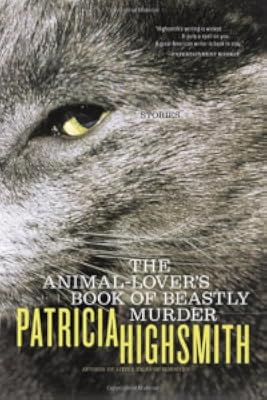
I think I may like Highsmith's short stories better than her novels, but I guess I haven't read enough of her fiction to make a proper judgment. This collection was quite good though, and I believe it was also her first. I often find myself wondering what mental processes led to the plots of some of her stories, but less so in this collection than in "Tales of Misogyny" or "The Animal-Lover's Book of Beastly Murder."
Surprisingly, two of the stories are about the protagonists eventually fighting for their lives against snails, which isn't a topic I would expect to run across anywhere once, let alone twice. Not all the stories in this volume are as outrageous as the other two collections I mentioned earlier though, and most of the show more stories are downright normal, if more than a little dark. One of the more disturbing stories is about a little boy who is psychologically abused by his deranged mother, who eventually cooks a turtle he took a liking to. That one will probably stay with me awhile. One of the other stories was about two old women who constantly tortured one another by destroying each other's favorite possessions, which I didn't quite understand until I reread the title, "Cries of Love" or something like that. Another excellent story fell at the end of the volume about a woman and her husband being annoyed by what is possibly an imaginary creature. I think I disliked the overall message of that story, but the surreal way it unfolds and ends was quite good.
I enjoyed all the stories in the volume quite a bit, and I would have an easier time recommending this as a bizarre collection of short stories over the other two, which fit my tastes perfectly, but are perhaps a bit too deranged or weird for a lot of other people. show less
Surprisingly, two of the stories are about the protagonists eventually fighting for their lives against snails, which isn't a topic I would expect to run across anywhere once, let alone twice. Not all the stories in this volume are as outrageous as the other two collections I mentioned earlier though, and most of the show more stories are downright normal, if more than a little dark. One of the more disturbing stories is about a little boy who is psychologically abused by his deranged mother, who eventually cooks a turtle he took a liking to. That one will probably stay with me awhile. One of the other stories was about two old women who constantly tortured one another by destroying each other's favorite possessions, which I didn't quite understand until I reread the title, "Cries of Love" or something like that. Another excellent story fell at the end of the volume about a woman and her husband being annoyed by what is possibly an imaginary creature. I think I disliked the overall message of that story, but the surreal way it unfolds and ends was quite good.
I enjoyed all the stories in the volume quite a bit, and I would have an easier time recommending this as a bizarre collection of short stories over the other two, which fit my tastes perfectly, but are perhaps a bit too deranged or weird for a lot of other people. show less
Members
- Recently Added By
Lists

Recommend the 20 best books you've read in the last five years
2,168 works; 606 members
Author Information

301+ Works 32,856 Members
Patricia Highsmith wrote twenty-one novels including "Strangers on a Train" & the "Ripley" series. She died in 1995 in Switzerland, where she resided much of her life. (Publisher Provided) Patricia Highsmith (January 19, 1921 -- February 4, 1995) was an American novelist and short story writer, most widely known for her psychological thrillers, show more which led to more than two dozen film adaptations. She was born in Fort Worth, Texas. Highsmith grew up with her maternal grandmother in Astoria, Queens, and attended Barnard College. Her first novel, Strangers on a Train (1950), was adapted for stage and screen numerous times, notably by Alfred Hitchcock in 1951. In addition to her acclaimed series about murderer Tom Ripley, which was made into a film in 1955, she wrote many short stories, often macabre, satirical or tinged with black humor. Highsmith liked to examine the ways in which people can get to the point where they are capable of murder, as well as who they become after they have committed a crime. In carefully constructed stories and novels, she integrated this scrutiny of the human psyche into complex plots that often took unexpected twists. In Strangers on a Train, architect Guy Haines meets Charles Bruno on a train. Bruno conceives a plan to have Haines kill Bruno's father, while Bruno will kill Haines's wife. The effect that this plan has on Haines is the focus of the story. Highsmith's awards include: O. Henry Award for best publication of first story, for "The Heroine" in Harper's Bazaar (1946), Grand Prix de Littérature Policière, for The Talented Mr. Ripley (1957), and the Dagger Award -- Category Best Foreign Novel, for The Two Faces of January from the Crime Writers' Association of Great Britain (1964). Highsmith died of aplastic anemia and cancer in Locarno, Switzerland, at age 74. Her last novel, Small G: A Summer Idyll, was published one month after her death in 1995. (Bowker Author Biography) show less
Some Editions
Awards and Honors
Awards
Distinctions
Series
Belongs to Publisher Series
detebe (20347)
El balancí [Edicions 62] (190)
Work Relationships
Common Knowledge
- Canonical title
- Eleven: Short Stories
- Original title
- The Snail-Watcher and other Stories; Eleven
- Alternate titles
- Gesammelte Geschichten; L'amateur d'escargots et autres nouvelles... (french) (french); L'amateur d'escargots et autres nouvelles
- Original publication date
- 1970
- Dedication
- For Alex Szogyi
- First words
- When Mr Peter Knoppert began to make a hobby of snail-watching, he had no idea that his handful of specimens would become hundreds in no time.
- Last words
- (Click to show. Warning: May contain spoilers.)But Edith clamped her teeth to repress a scream.
- Blurbers
- Michael Dirda
- Original language
- English
- Canonical DDC/MDS
- 813.54
- Canonical LCC
- PS3558.I366
Classifications
Statistics
- Members
- 391
- Popularity
- 79,551
- Reviews
- 11
- Rating
- (4.06)
- Languages
- 9 — Catalan, Dutch, English, French, German, Hungarian, Italian, Japanese, Spanish
- Media
- Paper, Audiobook, Ebook
- ISBNs
- 33
- ASINs
- 9