On This Page
Description
Maigret dismantles an intricate network of lies stretching from Paris to Nice in book twenty-three of the new Penguin Maigret series. A small, thin man, rather dull to look at, neither young nor old, exuding the stale smell of a bachelor who does not look after himself. He pulls his fingers and cracks his knuckles and tells his tale the way a schoolboy recites his lesson. A mysterious note predicting the murder of a fortune-teller; a confused old man locked in a Paris apartment; a financier show more who goes fishing; a South American heiress ... Maigret must make his way through a frustrating maze of clues, suspects and motives to find out what connects them. Penguin is publishing the entire series of Maigret novels in new translations. This novel has been published in previous translations as To Any Lengths and Maigret and the Fortuneteller. 'Compelling, remorseless, brilliant' John Gray 'One of the greatest writers of the twentieth century . . . Simenon was unequalled at making us look inside, though the ability was masked by his brilliance at absorbing us obsessively in his stories' Guardian 'A supreme writer . . . unforgettable vividness' Independent %%%Maigret dismantles an intricate network of lies stretching from Paris to Nice in book twenty-three of the new Penguin Maigret series. A small, thin man, rather dull to look at, neither young nor old, exuding the stale smell of a bachelor who does not look after himself. He pulls his fingers and cracks his knuckles and tells his tale the way a schoolboy recites his lesson. A mysterious note predicting the murder of a fortune-teller; a confused old man locked in a Paris apartment; a financier who goes fishing; a South American heiress ... Maigret must make his way through a frustrating maze of clues, suspects and motives to find out what connects them. Penguin is publishing the entire series of Maigret novels in new translations. This novel has been published in previous translations as To Any Lengths and Maigret and the Fortuneteller. 'Compelling, remorseless, brilliant' John Gray 'One of the greatest writers of the twentieth century . . . Simenon was unequalled at making us look inside, though the ability was masked by his brilliance at absorbing us obsessively in his stories' Guardian 'A supreme writer . . . unforgettable vividness' Independent show lessTags
Recommendations































Member Reviews
A man comes to see Maigret to report that he's seen the image of the words "The fortune-teller will be killed at five tomorrow, Signed, Picpus" soaked into a café blotter(*). Unfortunately, it doesn't say which fortune-teller (or indeed which "tomorrow" or which "five", but those points don't seem to have occurred to Simenon either...). So there's no obvious way to prevent a crime, and the fortune-teller herself doesn't seem to have been able to benefit from her own skills, so at ten past five the report of a murder comes in to police headquarters, and an investigation is launched, soon finding that there's a disoriented elderly man locked in Mlle Jeanne's kitchen. Is he the killer or a witness?
This is a satisfyingly complex Maigret, show more in which a whole web of different misdeeds comes together in the one central crime, and almost everyone in the cast is guilty of something. And it must have been a nice bit of escapism for Simenon's wartime readers, with no mention of the occupation, of course, and idyllic angling and boating scenes set in a country inn on the Seine. Very nice.
(*)Try explaining to a millennial why anyone would need a blotter in a café: there are layers upon layers of technological and social change packed into that simple detail! show less
This is a satisfyingly complex Maigret, show more in which a whole web of different misdeeds comes together in the one central crime, and almost everyone in the cast is guilty of something. And it must have been a nice bit of escapism for Simenon's wartime readers, with no mention of the occupation, of course, and idyllic angling and boating scenes set in a country inn on the Seine. Very nice.
(*)Try explaining to a millennial why anyone would need a blotter in a café: there are layers upon layers of technological and social change packed into that simple detail! show less
French police are informed that someone’s going to kill a clairvoyant at 5 o’clock on a certain day. Despite the best precautions, one Madame Jeanne is stabbed to death at that precise moment. Locked in Madame Jeanne’s kitchen is a doddering old man, one Octave Le Cloaguen. What’s his real connection to the young fortuneteller? And who killed her?
Detective Chief Inspector Maigret is frustrated both by the many pieces of this puzzle that don’t fit and by an ignoramus of an examining magistrate who tries to push Maigret in the wrong direction. Needless to say, Maigret will solve the case; however, watching how masterfully Maigret navigates the many twists of this case will delight readers even before the novel’s most show more satisfactory end.
Although Signed, Picpus is the 23rd novel in the series, it’s set before Pietr the Latvian, the first-ever Maigret novel.Sergeant Torrence, killed in that first novel, is alive and well in this novel. show less
Detective Chief Inspector Maigret is frustrated both by the many pieces of this puzzle that don’t fit and by an ignoramus of an examining magistrate who tries to push Maigret in the wrong direction. Needless to say, Maigret will solve the case; however, watching how masterfully Maigret navigates the many twists of this case will delight readers even before the novel’s most show more satisfactory end.
Although Signed, Picpus is the 23rd novel in the series, it’s set before Pietr the Latvian, the first-ever Maigret novel.
Lost me a bit at the end but otherwise this is a pretty perfect investigative crime story, pared down to the bare essentials. As always it's such a pleasure to stomp around Paris in the rain with Maigret while he eats, smokes his pipe, and drinks so much beer. It's obvious Simenon knew these neighborhoods backwards and forwards, and the setting as always is so welcoming and enjoyable to read about.
This is a rather busy and self aware Maigret, which made it somewhat less enjoyable for me. Simenon usually shows us scenes and lets the reader assess, especially when it comes to M.'s "method" (0f observing). In this book, we are often told that M. is doing some amazing thing by actions he is taking and especially at the end when he is solves it all and keeps everyone waiting … for him to come in described a bit like a super hero! This is not what I go to Simenon for. Plus the plot... very busy … pretty great actually but almost like a Christie like puzzle with multiple players and the reader is trying to figure it all out. Again, not really Simenon-like … but ok. Still full of great vignettes... the frustration with the M. show more Cloagnon and his very bad "wife" and daughter. The almost completely honest clerk who is drawn into the lie to support his sister. show less
By no means one of my favourite Maigrets. There is an aimlessness to the book -- the characterizations seem forced with the audience being told how to feel about people rather than have those feelings evoked through descriptions of words or actions. This book appears to have been written during WWII (copyright is 1944) and the strangely rootless feeling may arise from the difficulty of writing a police procedural that takes place in Paris when at the moment of the writing Paris was occupied. The book may be timeless (in the sense of being set at no particular moment in time) because Simenon wanted not to deal with the war directly (by showing an occupied Paris) or indirectly (by acknowledging the now by setting the book in the then).
I'm not sure about this.... A man reports that a fortuneteller will be murdered on a specific day & time... When the book opens, Maigret is waiting or this to happen..... Thinking how foolish he will seem if his pronouncement (from another source) is incorrect.....
The fortuneteller is indeed murdered, but she is one who is not known to the French constabulary, as she was not registered as such.
When Maigret and the Police arrive, they find a "simple" man locked in her kitchen and as the story unwinds Maigret looks to find his relationship to the dead woman.....
There are many ins & outs to this story, many seemingly innocuous, but all related in one form or another....
Although the story moved slowly, I read the book rather quickly as I show more was in need of entertainment.
Maigret really gives no clues or connections until the end... He slow & deliberate, but the reader never really knows what he is thinking...
I would have liked a bit more excitement as this seemed to drag a bit, when dealing with the "simple" man's family. show less
The fortuneteller is indeed murdered, but she is one who is not known to the French constabulary, as she was not registered as such.
When Maigret and the Police arrive, they find a "simple" man locked in her kitchen and as the story unwinds Maigret looks to find his relationship to the dead woman.....
There are many ins & outs to this story, many seemingly innocuous, but all related in one form or another....
Although the story moved slowly, I read the book rather quickly as I show more was in need of entertainment.
Maigret really gives no clues or connections until the end... He slow & deliberate, but the reader never really knows what he is thinking...
I would have liked a bit more excitement as this seemed to drag a bit, when dealing with the "simple" man's family. show less
Can't say I especially liked the way the story was put together -- not just the plot and resolution, which didn't make much sense, but the way the narrating voice would change. This was made into one of the French Maigret TV series (with Bruno Cremer) and I thought their scaling down of the plot and their resolution was better and more coherent.
Members
- Recently Added By
Lists

Reading LIst
648 works; 1 member
Author Information

1,336+ Works 63,366 Members
The prolific Belgian-born writer Georges Simenon produced hundreds of fictional works under his own name and 17 pseudonyms, in addition to more than 70 books about Inspector Maigret, long "the favorite sleuth of highbrow detective-story readers" (SR). More than 50 "Simenons" have been made into films. In addition to his mystery stories, he wrote show more what he called "hard" books, the serious psychological novels numbering well over 100. The autobiographical Pedigree, set in his native town of Liege, is perhaps his finest work. The publication of Simenon's intimate memoirs also attracted considerable attention. Simenon himself once said that he would never write a "great novel." Yet Gide called him "a great novelist, perhaps the greatest and truest novelist we have in French literature today," and Thornton Wilder (see Vol. 1) found that Simenon's narrative gift extends "to the tips of his fingers." The following are some of Simenon's novels, exclusive of the Maigret detective stories, that are in print. (Bowker Author Biography) Georges Simenon was born on February 13, 1903 in Liege, Belgium. He wrote more than 200 fiction works under 16 different pseudonyms. His first book, The Case of Peter the Lent led to 80 more of the like including the main character, Inspector Maigret. He published over 400 books that were translated into 50 different languages and sold by the millions. He also wrote psychological novels, including The Man Who Watched the Train Go By. He died on September 4, 1989 in Lausanne. (Bowker Author Biography) show less
Some Editions
Series

Belongs to Publisher Series
Work Relationships
Common Knowledge
- Canonical title
- Signed, Picpus
- Original title
- Signé Picpus, 1941
- Alternate titles
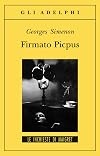
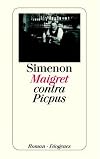
- Maigret e l'affare Picpus; Firmato Picpus; To Any Lengths; Maigret and the Fortuneteller
- Original publication date
- 1944
- People/Characters*
- Jules Maigret
- Important places*
- Parigi, Francia; Francia; Morsang, Francia
- Related movies*
- The Crystal Ball (1962 | IMDb); L'affare Picpus (1965 | IMDb); Signé Picpus (1968 | IMDb); Signé Picpus (2003 | IMDb); Picpus (1943 | IMDb)
- First words
- Three minutes to five.
- Last words
- (Click to show. Warning: May contain spoilers.)"Still, if they weren't so stupid, there'd be no need for policemen . . ."
- Original language*
- Francese
- Disambiguation notice
- In the French original,
Signé Picpus (1944, with earlier serial publication (December 1941-January 1942).
Variously published in English as:
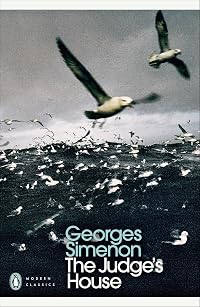
(i) To Any Lengths (1950) (trans. Geoffre... (show all)y Sainsbury). The same translation was published as Maigret and Fortuneteller (1989) in the USA;
(ii) Signed, Picpus (2015) (trans. David Coward).
*Some information comes from Common Knowledge in other languages. Click "Edit" for more information.
Classifications
Statistics
- Members
- 403
- Popularity
- 77,329
- Reviews
- 15
- Rating
- (3.62)
- Languages
- 11 — Catalan, Czech, Danish, Dutch, English, Finnish, French, German, Italian, Spanish, Swedish
- Media
- Paper, Audiobook, Ebook
- ISBNs
- 25
- ASINs
- 17