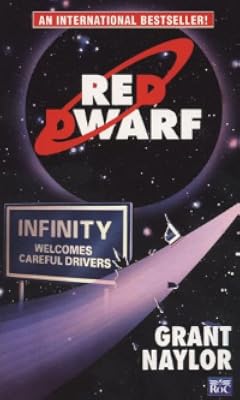
Red Dwarf: Infinity Welcomes Careful Drivers
by Grant Naylor (Author), Rob Grant (Author), Doug Naylor (Author)
Red Dwarf Books (1)
On This Page
Description
A novel based on BBC2's cult comedy series written by the writers of the Spitting Image Book. Its humour features the epic adventures of a huge clapped-out old space ship with an equally clapped-out crew.Tags
Recommendations
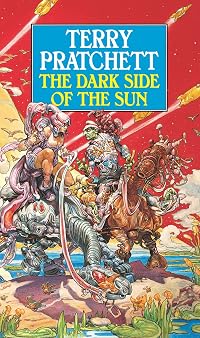

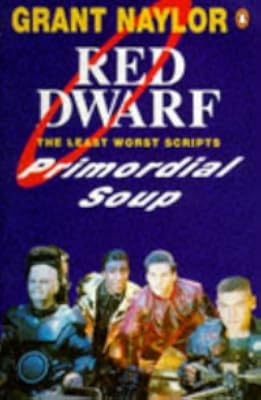
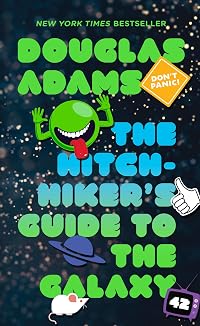
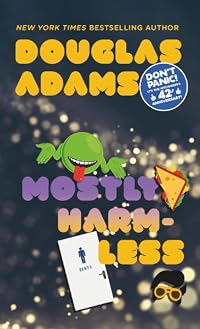




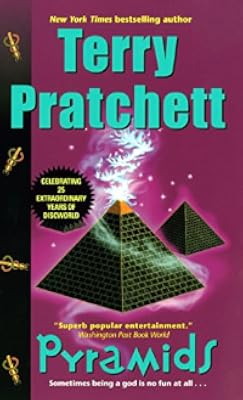
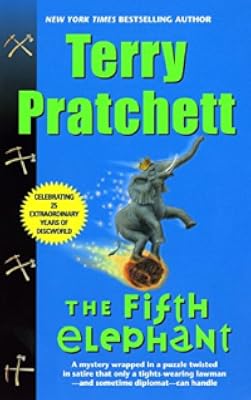

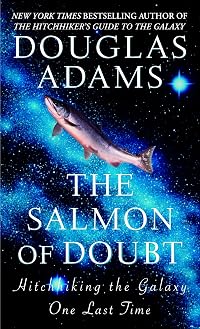
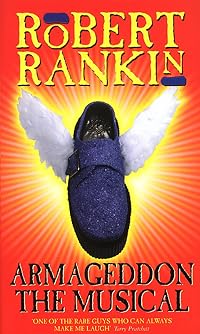
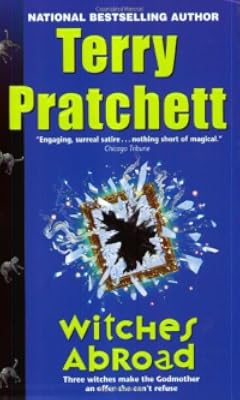
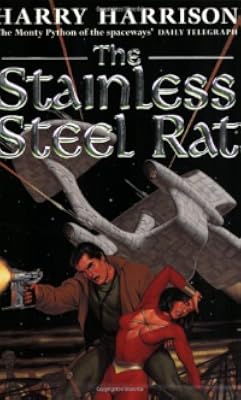


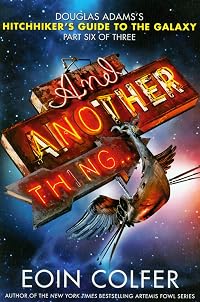
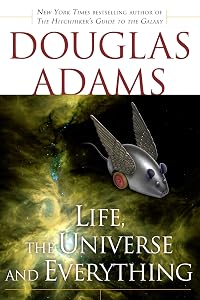
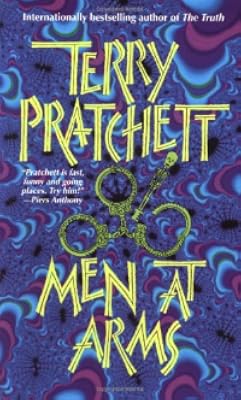
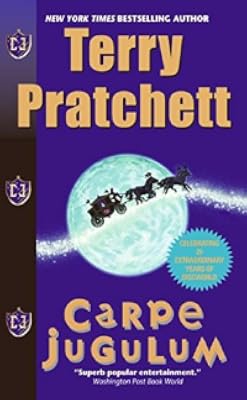
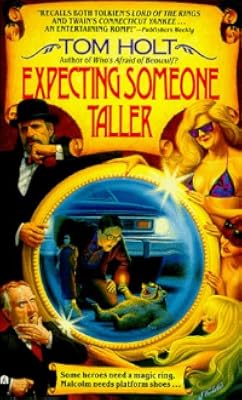

Member Recommendations
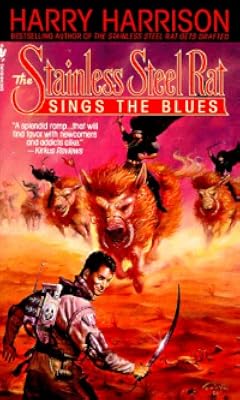
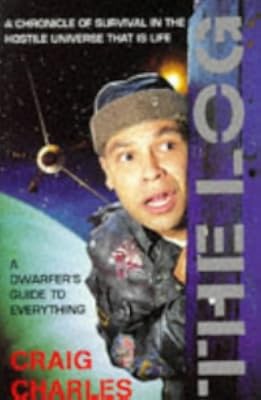
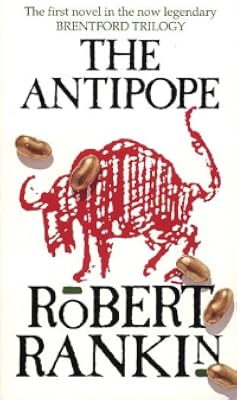
MrBuch Red Dwarf is the first, Better Than Life is the sequel and just as good. Also Red Dwarf ends on a cliffhanger, so you just have to read both!
30
Member Reviews
“Red Dwarf” is quite possibly the funniest novel I have ever read. I had never heard about the “Red Dwarf” tv show when I read this, so I was unencumbered by previous knowledge of the show and how the characters were displayed.
Indeed, when I watched a “Red Dwarf” episode a few years later I all but burst into tears at the thought of such a horrible adaption of a hilarious book. I eventually came to lose my hatred for the show but it never equalled the book.
The adventures of a slacker who comes to be the last human ever, sharing a vessel in deep space with a hologram of the man he hated with a passion, a robot, an inbred cat that acts like a human and the all but sentient vessel; a set up for laughs if I ever saw one, and show more not only does “Red Dwarf” hold the unique claim of being the only book I’ve read twice in a row, it was also my go to book whenever I needed a laugh. I’d just open a page at random and be laughing in moments.
The only drawback I have for “Red Dwarf” is its ending; it’s just too dark against the lighter tone of the rest of the book (if you can call humanity being reduced to just one person a lighter tone). show less
Indeed, when I watched a “Red Dwarf” episode a few years later I all but burst into tears at the thought of such a horrible adaption of a hilarious book. I eventually came to lose my hatred for the show but it never equalled the book.
The adventures of a slacker who comes to be the last human ever, sharing a vessel in deep space with a hologram of the man he hated with a passion, a robot, an inbred cat that acts like a human and the all but sentient vessel; a set up for laughs if I ever saw one, and show more not only does “Red Dwarf” hold the unique claim of being the only book I’ve read twice in a row, it was also my go to book whenever I needed a laugh. I’d just open a page at random and be laughing in moments.
The only drawback I have for “Red Dwarf” is its ending; it’s just too dark against the lighter tone of the rest of the book (if you can call humanity being reduced to just one person a lighter tone). show less
If you live in America, chances are you've only seen Red Dwarf if (a) you've stayed up late one night watching PBS, or (b) you know somebody who has watched Red Dwarf and liked it.
For everybody else out there: Red Dwarf is a sci-fi British television program(me), set in the very, very distant future. The universe's slobbiest man, Dave Lister, is placed in a time stasis field. When he awakens, he finds that he is millions of years in the future. His only companions are the batty ship's computer, Holly; his dead bunkmate, now an annoying hologram, Arnold Rimmer; a descendant of his cat, evolved into a human-like creature, Cat; and the beloved mechanoid whipping-boy, Kryten.
Red Dwarf failed to make it very well in the United States. To show more date, there have been two failed US attempts at porting the program over with a mostly American cast (Once by Malcolm in the Middle creator Linwood Boomer). Such talents originally considered involved multiple Tony Award-recipient, Hinton Battle. Why the US ports failed (one such theory involves the "whitewashing" of the crew for the second pilot), or why the UK show failed to gain significant traction in the US are subjects of debate. I believe that when pitted against shows like Star Trek: The Next Generation, it looked like a goofy parody versus the humorous, underrated sci-fi show it was. Also the limited number of episodes (each series (what we call "seasons") had only a handful of episodes, and some series were separated by gaps of years, if not a decade, so the US crowd, aside from die-hards, would lose interest in it, especially with a NEW SEASON OF AMERICAN IDOL, OMGz!
But what does the show have to do with this book with the same title, and written by the show's creators? Well, if you're unable to watch the first series of Red Dwarf (though, I don't see why, as all the real series have been released on DVD.), you may be happy to know that it has been novelized by Grant Naylor, the entity behind the show's creation. The novelization provides more backstory, and changes a few plot elements to make each episode flow into the next. While I usually avoid novelizations, I tend to make an exception if it's written by someone whom I consider an authority (such as Neil Gaiman writing the novelization for Neverwhere).
You may find yourself only "getting" this book (as in, understanding it, not purchasing it), if you have some familiarity already with the program. If you're a Red Dwarf noob, you may be baffled or befuddled. So, before you do venture towards reading this book, I would recommend watching something Dwarf-y. And until then, rest assured: this is one of those few great phenomena you've never heard of before. show less
For everybody else out there: Red Dwarf is a sci-fi British television program(me), set in the very, very distant future. The universe's slobbiest man, Dave Lister, is placed in a time stasis field. When he awakens, he finds that he is millions of years in the future. His only companions are the batty ship's computer, Holly; his dead bunkmate, now an annoying hologram, Arnold Rimmer; a descendant of his cat, evolved into a human-like creature, Cat; and the beloved mechanoid whipping-boy, Kryten.
Red Dwarf failed to make it very well in the United States. To show more date, there have been two failed US attempts at porting the program over with a mostly American cast (Once by Malcolm in the Middle creator Linwood Boomer). Such talents originally considered involved multiple Tony Award-recipient, Hinton Battle. Why the US ports failed (one such theory involves the "whitewashing" of the crew for the second pilot), or why the UK show failed to gain significant traction in the US are subjects of debate. I believe that when pitted against shows like Star Trek: The Next Generation, it looked like a goofy parody versus the humorous, underrated sci-fi show it was. Also the limited number of episodes (each series (what we call "seasons") had only a handful of episodes, and some series were separated by gaps of years, if not a decade, so the US crowd, aside from die-hards, would lose interest in it, especially with a NEW SEASON OF AMERICAN IDOL, OMGz!
But what does the show have to do with this book with the same title, and written by the show's creators? Well, if you're unable to watch the first series of Red Dwarf (though, I don't see why, as all the real series have been released on DVD.), you may be happy to know that it has been novelized by Grant Naylor, the entity behind the show's creation. The novelization provides more backstory, and changes a few plot elements to make each episode flow into the next. While I usually avoid novelizations, I tend to make an exception if it's written by someone whom I consider an authority (such as Neil Gaiman writing the novelization for Neverwhere).
You may find yourself only "getting" this book (as in, understanding it, not purchasing it), if you have some familiarity already with the program. If you're a Red Dwarf noob, you may be baffled or befuddled. So, before you do venture towards reading this book, I would recommend watching something Dwarf-y. And until then, rest assured: this is one of those few great phenomena you've never heard of before. show less
The origin of Red Dwarf is the 1944 play “No Exit” (“Huis Clos” in French), by Jean-Paul Sartre. This remains little known amongst its sci-fi comedy devotees, even though they do occasionally recognise it as existentialist thought.
The influence of this school of philosophy on British and Irish writers has snuck through on rare occasions, e.g. the television series “The Prisoner” and from, less surprisingly, Samuel Beckett, who was living in Paris and surrounded there by bubbling existential ideas. Red Dwarf isn’t just existential in the form of asking “what are the components of an individual?” or addressing questions of free will, decisions are not free choices etc., but it also takes its core theme from No Exit, show more Sartre’s play: Hell is being locked forever in a room with your friends. "L'enfer, c'est les autres" is the more quoted and detached angle, i.e. how your persona appears externally to other minds. Who goes mad first? As reflected in “The Prisoner”, individuality depends on challenge, defence, questioning and refusal to conform.
Although Dark Star also gave the writers a nudge, the prototype of Red Dwarf was the sketch "Dave Hollins: Space Cadet" in the Radio 4 show "Son of Cliche", by the same authors. Alone, the crew all dead, lost in space, only the computer to talk to and going crazy.
Just as in Sartre’s play, Red Dwarf begins with three characters who can’t escape each other’s company. There’s been a radioactive accident on a deep-space mining vessel, a several million year pause to let the half-life of that quarter, eighth and sixteenth-out to safe background levels, then three characters emerge as the last representatives of life from our planet (which is now a huge bundle of consumer garbage).
Character 1 is Dave Lister, a Liverpudlian slob who had no idea what to do with his life and spends most of it eating super-hot curry and drinking lager. He has depth of romantic soul, sarcastic wit and a few other attractive qualities like a warm smile and dreadlocks but his main attribute is a complete lack of respect for authority. Character 2 is Arnold Rimmer, who died and returned as a hologram. Psychiatrists and psychologists could unite their disciplines with this missing link of a mind. Aside from the projection aspect, he’s hardly corporeal at all because he’s built out of pre-silicon chips on his shoulders, prejudices, petty squabbles, false ego, an insane devotion to the chain of command (they’re all dead), obsessive compulsive disorder, need for control and some very immature hang-ups. Character 3 is Holly, the ship’s computer, who has brought Rimmer back as Dave’s companion (many other hologramatic crewmates were available) for a reason that makes perfect sense in existential logic: They are complete opposites, have nothing in common, will detest each other, focus each other’s attention as a rival or opponent and, therefore, this is a strategy to keep Dave Lister sane. Rimmer is already quite mad but Dave can be saved. Holly also pretends to be senile, so Dave has something else to adapt to and deal with. Grow up Dave, we’re all rooting for you.
After some time, Character 4 shows up – an irritatingly subservient mechanoid called Kryten, soon followed by a humanoid descended from the ship’s cat. Dave tries to teach Kryten to challenge authority (Rimmer) and refuse to conform, using existentialism to turn a paper or plastic man into a genuine individual, making him more human. The cat is a superficial being, preening, a contrast to any deep trends in these characters’ thinking. It plays out the characteristics of being a cat (disloyal, selfish, vain). It’s as if the writers wrote thirty character flaws and two assets on playing cards and divided them up amongst the characters. Rimmer got the epic tragic complexity, Lister is despondent that he won’t get any hearts and Holly pretends to forget the rules but is actually a secret Svengali who sees all, sits tight and knows everyone’s game.
T.S. Elliott, a fan of cats and hopelessness (Old Possum/Thomas Becket), produced the famous quote: “This is how the world ends; not with a bang, but with a whimper.” Other visions of the final scenes exist. In “Beyond the Thunderdome”, the world ended with no consumer products at all except, strangely, an awful lot of hair mousse. Red Dwarf (infinity welcomes careful drivers) is deliberately, shocklingly, devoid of all hope in this matter. Not only are the crew without a chance because they’re on a space ship approaching light-speed so far from Earth that they can’t even turn around but they are also all exclusively men, so that’s loneliness… to be followed unavoidably by the end of the species. I wonder, would they trade what’s left of our planet and species for a sympathetic hand job? Some questions should be left unanswered. In a black hole, even physics breaks down.
Sexual tension appears a lot in Red Dwarf, sometimes as the butt of the humour but usually it manifests as Dave’s yearning for the sassy girl he cannot be with, Christine Kochanski (Claire Grogan in the TV series, who is responsible for a version of “Happy Birthday” which will also outlive us). Dave would much prefer to talk to her than he would to Rimmer, but Holly, mortality, different ranks and about seven million years have intervened to keep them apart. This is a very unlikely love story across time and space, like falling in love with a dead person’s image. However, the inviable need for Kochanski is forged into how Dave defines himself as an individual and sum of his experiences (vindaloo, lager, making a rude crevice in a golf bunker, cartoons and the London Jets zero-g sports team). As Claire is kind of my doppelganger, it’s probably a good thing this is no longer on television.
Red Dwarf is designed to be a boys only club, which is necessary to twist the tension to have them bouncing off the walls with no way to release their pent up frustration, although when Norman Lovett (Holly) quit the TV series to go and live in Scotland he was replaced by an actress who tilted the gender balance whilst still being unavailable to Dave because, you’ve guessed it, Holly is short for hologram.
This book is really an amalgam of the first two television series. The first was the best of all, philosophically, then the second had a bigger budget, some outside locations and occasional pretty CGI. When converting it into a book though, the story was laid out in series one and the mind games come from there. There were also only two writers behind this. “Only two” seems odd for a book but ten TV series and one radio series came from just two minds, whereas Star Trek and The Simpsons are both written from a pool of up to three hundred contributors. That’s a feat of imaginative endurance, right there.
This is supposed to be fun but, structurally, the setting is a depressing image, so how does that work? It’s what the British call “black humour”, the wit and absurdity that exists on the brink of oblivion, skating around the plug hole of death. It brings out the best in us – not a clue why. Death concentrates existential ideas beautifully because there’s no more personal or individual thing than death, especially dying alone when the struggle is useless. Making jokes on the steps of the guillotine (the service around here is terrible) is not a very French thing to do, it’s a British thing, so that is the north’s contribution to this cross-channel spectacle.
The TV series might be sweet and sour, the book sad, entropy inevitable and the crew we’ve got to know fated to die but the fun they’ve made to keep them going in this vision of hell is the stuff eternal. That’s it, I’ve sussed it, this book is a failed vision of hell. It would work every time on left-bank intellectuals (now a reflection of their thoughtful forebears and sadly more often concerned with self-aggrandisement). The design flaw in this infernal design was incarcerating comedians because that’s the one unique sub-set of our species who would thrive and make the most of it. Red Dwarf is unmissable stuff. I would give it five stars if the mood at the end hadn’t been dragged down quite to my ankles. show less
The influence of this school of philosophy on British and Irish writers has snuck through on rare occasions, e.g. the television series “The Prisoner” and from, less surprisingly, Samuel Beckett, who was living in Paris and surrounded there by bubbling existential ideas. Red Dwarf isn’t just existential in the form of asking “what are the components of an individual?” or addressing questions of free will, decisions are not free choices etc., but it also takes its core theme from No Exit, show more Sartre’s play: Hell is being locked forever in a room with your friends. "L'enfer, c'est les autres" is the more quoted and detached angle, i.e. how your persona appears externally to other minds. Who goes mad first? As reflected in “The Prisoner”, individuality depends on challenge, defence, questioning and refusal to conform.
Although Dark Star also gave the writers a nudge, the prototype of Red Dwarf was the sketch "Dave Hollins: Space Cadet" in the Radio 4 show "Son of Cliche", by the same authors. Alone, the crew all dead, lost in space, only the computer to talk to and going crazy.
Just as in Sartre’s play, Red Dwarf begins with three characters who can’t escape each other’s company. There’s been a radioactive accident on a deep-space mining vessel, a several million year pause to let the half-life of that quarter, eighth and sixteenth-out to safe background levels, then three characters emerge as the last representatives of life from our planet (which is now a huge bundle of consumer garbage).
Character 1 is Dave Lister, a Liverpudlian slob who had no idea what to do with his life and spends most of it eating super-hot curry and drinking lager. He has depth of romantic soul, sarcastic wit and a few other attractive qualities like a warm smile and dreadlocks but his main attribute is a complete lack of respect for authority. Character 2 is Arnold Rimmer, who died and returned as a hologram. Psychiatrists and psychologists could unite their disciplines with this missing link of a mind. Aside from the projection aspect, he’s hardly corporeal at all because he’s built out of pre-silicon chips on his shoulders, prejudices, petty squabbles, false ego, an insane devotion to the chain of command (they’re all dead), obsessive compulsive disorder, need for control and some very immature hang-ups. Character 3 is Holly, the ship’s computer, who has brought Rimmer back as Dave’s companion (many other hologramatic crewmates were available) for a reason that makes perfect sense in existential logic: They are complete opposites, have nothing in common, will detest each other, focus each other’s attention as a rival or opponent and, therefore, this is a strategy to keep Dave Lister sane. Rimmer is already quite mad but Dave can be saved. Holly also pretends to be senile, so Dave has something else to adapt to and deal with. Grow up Dave, we’re all rooting for you.
After some time, Character 4 shows up – an irritatingly subservient mechanoid called Kryten, soon followed by a humanoid descended from the ship’s cat. Dave tries to teach Kryten to challenge authority (Rimmer) and refuse to conform, using existentialism to turn a paper or plastic man into a genuine individual, making him more human. The cat is a superficial being, preening, a contrast to any deep trends in these characters’ thinking. It plays out the characteristics of being a cat (disloyal, selfish, vain). It’s as if the writers wrote thirty character flaws and two assets on playing cards and divided them up amongst the characters. Rimmer got the epic tragic complexity, Lister is despondent that he won’t get any hearts and Holly pretends to forget the rules but is actually a secret Svengali who sees all, sits tight and knows everyone’s game.
T.S. Elliott, a fan of cats and hopelessness (Old Possum/Thomas Becket), produced the famous quote: “This is how the world ends; not with a bang, but with a whimper.” Other visions of the final scenes exist. In “Beyond the Thunderdome”, the world ended with no consumer products at all except, strangely, an awful lot of hair mousse. Red Dwarf (infinity welcomes careful drivers) is deliberately, shocklingly, devoid of all hope in this matter. Not only are the crew without a chance because they’re on a space ship approaching light-speed so far from Earth that they can’t even turn around but they are also all exclusively men, so that’s loneliness… to be followed unavoidably by the end of the species. I wonder, would they trade what’s left of our planet and species for a sympathetic hand job? Some questions should be left unanswered. In a black hole, even physics breaks down.
Sexual tension appears a lot in Red Dwarf, sometimes as the butt of the humour but usually it manifests as Dave’s yearning for the sassy girl he cannot be with, Christine Kochanski (Claire Grogan in the TV series, who is responsible for a version of “Happy Birthday” which will also outlive us). Dave would much prefer to talk to her than he would to Rimmer, but Holly, mortality, different ranks and about seven million years have intervened to keep them apart. This is a very unlikely love story across time and space, like falling in love with a dead person’s image. However, the inviable need for Kochanski is forged into how Dave defines himself as an individual and sum of his experiences (vindaloo, lager, making a rude crevice in a golf bunker, cartoons and the London Jets zero-g sports team). As Claire is kind of my doppelganger, it’s probably a good thing this is no longer on television.
Red Dwarf is designed to be a boys only club, which is necessary to twist the tension to have them bouncing off the walls with no way to release their pent up frustration, although when Norman Lovett (Holly) quit the TV series to go and live in Scotland he was replaced by an actress who tilted the gender balance whilst still being unavailable to Dave because, you’ve guessed it, Holly is short for hologram.
This book is really an amalgam of the first two television series. The first was the best of all, philosophically, then the second had a bigger budget, some outside locations and occasional pretty CGI. When converting it into a book though, the story was laid out in series one and the mind games come from there. There were also only two writers behind this. “Only two” seems odd for a book but ten TV series and one radio series came from just two minds, whereas Star Trek and The Simpsons are both written from a pool of up to three hundred contributors. That’s a feat of imaginative endurance, right there.
This is supposed to be fun but, structurally, the setting is a depressing image, so how does that work? It’s what the British call “black humour”, the wit and absurdity that exists on the brink of oblivion, skating around the plug hole of death. It brings out the best in us – not a clue why. Death concentrates existential ideas beautifully because there’s no more personal or individual thing than death, especially dying alone when the struggle is useless. Making jokes on the steps of the guillotine (the service around here is terrible) is not a very French thing to do, it’s a British thing, so that is the north’s contribution to this cross-channel spectacle.
The TV series might be sweet and sour, the book sad, entropy inevitable and the crew we’ve got to know fated to die but the fun they’ve made to keep them going in this vision of hell is the stuff eternal. That’s it, I’ve sussed it, this book is a failed vision of hell. It would work every time on left-bank intellectuals (now a reflection of their thoughtful forebears and sadly more often concerned with self-aggrandisement). The design flaw in this infernal design was incarcerating comedians because that’s the one unique sub-set of our species who would thrive and make the most of it. Red Dwarf is unmissable stuff. I would give it five stars if the mood at the end hadn’t been dragged down quite to my ankles. show less
Punase Kääbuse 1. raamat.
...Kui Lister end purju jõi, siis ikka päris põhjalikult. Olles tähistanud oma sünnipäeva Monopoli-teemalise kõrtsituuriga mööda Londonit, lõpetas ta oma rännakud ühel Saturni kaaslasel, peas naiste roosa krimpleenkübar ja jalas kollased kalavintskid. Raha tal polnud, aga taskus oli pass Emily Berkensteini nimele. Kosmosekorpusesse astumine näis ainsa sobiva lahendusena. Punane Kääbus, vana kobakas kosmoselaev, pidi peatselt alustama teed Maale. Sinna see aga ei jõudnud. Selle asemel leidis Lister end kolme miljoni aasta kauguselt Maast. Ta oli inimkonna viimane elusolev esindaja. Tema seltsilisteks olid surnud mees, hullunud arvuti ning kõrgelt arenenud kass. Koduteel ületasid nad valguse show more kiiruse, kohtusid Einsteini, Archimedese ja Norman Wisdomiga ning avastasid... alternatiivse reaalsuse. show less
...Kui Lister end purju jõi, siis ikka päris põhjalikult. Olles tähistanud oma sünnipäeva Monopoli-teemalise kõrtsituuriga mööda Londonit, lõpetas ta oma rännakud ühel Saturni kaaslasel, peas naiste roosa krimpleenkübar ja jalas kollased kalavintskid. Raha tal polnud, aga taskus oli pass Emily Berkensteini nimele. Kosmosekorpusesse astumine näis ainsa sobiva lahendusena. Punane Kääbus, vana kobakas kosmoselaev, pidi peatselt alustama teed Maale. Sinna see aga ei jõudnud. Selle asemel leidis Lister end kolme miljoni aasta kauguselt Maast. Ta oli inimkonna viimane elusolev esindaja. Tema seltsilisteks olid surnud mees, hullunud arvuti ning kõrgelt arenenud kass. Koduteel ületasid nad valguse show more kiiruse, kohtusid Einsteini, Archimedese ja Norman Wisdomiga ning avastasid... alternatiivse reaalsuse. show less
Audiobook version. A reread from... at least ten years ago, I think. While I generally find it quite cringey to listen to Chris Barrie doing all the voices for extended periods of time, the chapters of this audiobook are only about six minutes long so I managed to deal with it (also the Cat doesn't have too much dialogue...) I enjoyed this a lot. I'd forgotten a lot of the BTL stuff (Juanita Chicata... lol what a "Brazilian" name wow). I knew the books were more depressing than the series, but this was about 1000 times more depressing than I remembered as well. But interesting!
I actually read the Red Dwarf books before I watched any of the tv series, and I must say that I prefer the books. Don’t get me wrong, the tv show is brilliant, but I think that the books offer a more satisfying depth and continuity.
I have chosen to review ‘Infinity welcomes careful drivers’ and ‘Better than life’ together as they were written by the same two-person team who also created the tv series: Rob Grant and Doug Naylor. Scenes and episode ideas from the series are used throughout both books, and in a lot of cases these are built upon to expand them beyond the original scope. Regular viewers will recognise sections interwoven into the prose, as well as the familiar cast of characters, but the books also serve as an show more excellent introduction to the series for those who have no idea what I’m talking about. (For those people: Red Dwarf is a science fiction comedy set in the future where the moons of the solar system are colonised and space travel is commonplace.) I find it is satisfyingly similar to Douglas Adams’ style in that I can open the book at a random page and find something that will make me smile. show less
I have chosen to review ‘Infinity welcomes careful drivers’ and ‘Better than life’ together as they were written by the same two-person team who also created the tv series: Rob Grant and Doug Naylor. Scenes and episode ideas from the series are used throughout both books, and in a lot of cases these are built upon to expand them beyond the original scope. Regular viewers will recognise sections interwoven into the prose, as well as the familiar cast of characters, but the books also serve as an show more excellent introduction to the series for those who have no idea what I’m talking about. (For those people: Red Dwarf is a science fiction comedy set in the future where the moons of the solar system are colonised and space travel is commonplace.) I find it is satisfyingly similar to Douglas Adams’ style in that I can open the book at a random page and find something that will make me smile. show less
Infinity Welcomes Careful Drivers by Rob Grant and Doug Naylor is a novel based on the British sci-fi comedy show Red Dwarf. Dave Lister, a lowly technician on the mining spaceship Red Dwarf, gets put into stasis as a punishment for smuggling a cat on board. When he emerges from stasis he finds that a nuclear accident wiped out the rest of the crew and it is now three million years in the future. The only other survivors are a feline-humanoid life form that evolved from his cat, and his bunk mate who died but was revived as a hologram. Tensions are high as they do their best to survive and navigate the various obstacles they must face as they try to make their way back to earth.
This was a quick but fun read. The ending wasn't exactly a show more cliffhanger, but it did make me want to read the next book right away. I'd definitely recommend this book to anyone who enjoyed The Hitchhiker's Guide to the Galaxy or anyone that just enjoys British humor. Though I did enjoy the book a lot, I thought the show was funnier. I think this is mostly due to the fact that sometimes humor translates better in an audio-visual format than the written word and for this reason I also found The Hitchhiker's Guide to the Galaxy radio plays to be funnier than the books. I don't think it's necessary to watch the show before you read the books, but it's more fun that way because it's easier to imagine the character's voices and what they look like. The book does give some background story to the show, but it's different in a lot of ways. Some events happen in a different order than they do in the show and many plot details are different. If you do decide to watch the show before reading the book, I'd recommend watching the entire series before starting the book. I started reading the book after I'd only watched most of the second season and then started going back and forth between the show and the book. I started to find this rather confusing due to the differences between the show and the book and it became harder to keep the storylines of each one straight in my mind. I'm hooked now though and I definitely couldn't wait to finish watching the entire series before starting the next book. show less
This was a quick but fun read. The ending wasn't exactly a show more cliffhanger, but it did make me want to read the next book right away. I'd definitely recommend this book to anyone who enjoyed The Hitchhiker's Guide to the Galaxy or anyone that just enjoys British humor. Though I did enjoy the book a lot, I thought the show was funnier. I think this is mostly due to the fact that sometimes humor translates better in an audio-visual format than the written word and for this reason I also found The Hitchhiker's Guide to the Galaxy radio plays to be funnier than the books. I don't think it's necessary to watch the show before you read the books, but it's more fun that way because it's easier to imagine the character's voices and what they look like. The book does give some background story to the show, but it's different in a lot of ways. Some events happen in a different order than they do in the show and many plot details are different. If you do decide to watch the show before reading the book, I'd recommend watching the entire series before starting the book. I started reading the book after I'd only watched most of the second season and then started going back and forth between the show and the book. I started to find this rather confusing due to the differences between the show and the book and it became harder to keep the storylines of each one straight in my mind. I'm hooked now though and I definitely couldn't wait to finish watching the entire series before starting the next book. show less
Members
- Recently Added By
Lists

Genre Benders: Comic Science Fiction
37 works; 5 members
Author Information


Some Editions
Series

Work Relationships
Is contained in
Is abridged in
Common Knowledge
- Canonical title
- Red Dwarf: Infinity Welcomes Careful Drivers
- Alternate titles
- Infinity Welcomes Careful Drivers
- Original publication date
- 1989-11-02
- People/Characters
- Dave Lister; Arnold Judas Rimmer; Holly [in Red Dwarf]; The Cat; Kryten 2X4B-523P; Kristine Kochanski (show all 15); Petersen; Petrovich; Frankenstein (cat); Captain Hollister; Clister; Cloister; Bexley Lister; Jim Lister; Juanita Chicata
- Important places
- Earth; Saturn; Mimas; London, England, UK; Red Dwarf; Triton (show all 12); Io; Miranda; Nova 5; Bedford Falls; Paris, France; Denmark
- Important events
- Christmas
- Dedication
- To Kath and Linda. Special thanks to Paul Jackson for everything, to Ed Bye for everything else, and to Chris Barrie, Craig Charles, Danny John-Jules, Norman Lovett, Peter Risdale-Scott, Roger Bolton, Peter Wragg and all the... (show all) Red Dwarf backstage crew.
- First words
- 'Describe, using diagrams where appropriate, the exact circumstances leading to your death.'
- Last words
- (Click to show. Warning: May contain spoilers.)But, of course, in Bedford Falls it was always Christmas Eve...
- Disambiguation notice
- Sometimes referred to by just the subtitle "Infinity Welcomes Careful Drivers".
Classifications
Statistics
- Members
- 2,186
- Popularity
- 9,289
- Reviews
- 30
- Rating
- (3.88)
- Languages
- 5 — Czech, English, Estonian, German, Spanish
- Media
- Paper, Audiobook, Ebook
- ISBNs
- 12
- ASINs
- 10