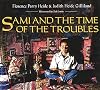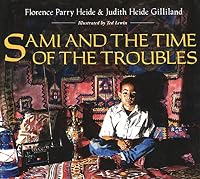
Sami and the Time of the Troubles
by Florence Parry Heide
On This Page
Description
A ten-year-old Lebanese boy goes to school, helps his mother with chores, plays with his friends, and lives with his family in a basement shelter when bombings occur and fighting begins on his street.Tags
Recommendations








Member Reviews
I liked this book for different reasons. The first being the illustrations were so realistic, they felt like they were pulling me into the book. For example there was a picture of the destruction that had taken place with buildings destroyed. It felt like I was standing with Sami there. Another reason I liked it was because it was a window book. I know of the current situation in the Middle East but entering the book from Sami’s perspective lets me understand and gave me insight how the people living in those countries feel about the current chaos. For example Sami tells the struggle of not remembering the “blueness” of the skies. I cannot relate to that but with this book I could understand. I also liked how the father dreamed of show more an end to the fighting and encouraged Sami to help when he suggested the children protest.
The big idea is children can make an impact and have a voice if they all come together. show less
The big idea is children can make an impact and have a voice if they all come together. show less
I enjoyed this book, however it was quite sad to read. One reason I enjoyed this book was because of the realistic illustrations. The different pictures of buildings being destroyed and showing the family in hiding really made an impact as I read and allowed me to see a clear timeline of what was happening as the story unfolded. Another aspect of the book I enjoyed was the language the author used. She describes the sounds of gunshots and describes the ongoing days of darkness in great detail, making you feel as though you are experiencing living through the war with Sami. The big idea of the story is that change can be made if everyone comes together, children included, just as Sami and his family did by striking against the war.
This book although it distresses the reader, ends on an emotional and educational message. The aspect of this book that interests me the most is the vivid description of war. Many readers have never experienced war and therefore those war details are necessary, such as the sound of gunfire and the complete darkness that comes from hiding. The author describes those both through language and illustration. The images in this book look as if they are watercolor. He uses this strategy to create the impeding darkness that hovers over the children throughout war, then the glimpses of color on the good days such as his father’s peach trees. Finally the overall message of this book is what makes it so special. In the last couple pages of the show more book it shows the little boy and his family striking against the idea of war, just as the author is doing through this book showing how war riddles lives, even children and must be stopped. show less
This is a realistic fiction story about a ten year old boy named, Sami who lived his whole life in the basement of his home with his grandpa, mom, and sister. They lived everyday in darkness and fear of being attacked; listening to bombs and gunshots. Evryday they listened to the radio hoping for an "all clear" to enable them to go outside and get some fresh air. One day the go ahead did arrive. It was safe for them to go to the beach. The family sat on the beach enjoying nature, and the grandpa and mother argued about the intent of Sami's father's death. He was shot during the war. The discssion left everyone feeling uneasy. Sami couldn't stop thinking about promoting peace and ending this awful war. He decided to form a children's show more march with kids his age. They marched protesting the war and it was quite powerful coming from the eyes of children. show less
In my opinion, this is a good book for young readers. I feel this way for a couple of reasons, first, I feel that this pushes readers to think about tough issues and broadens perspectives. For example, the entire book is based of a child who is living through the war in Lebanon. Since it is told from his perspective, young readers can gain insight on what it is like to live through war as young child. Which is another reason I like this book, the point of view was in first person. Hearing raw and specific details from Sami such as him not remembering the sky being blue is very powerful. For young readers to read this book in the perspective of a 10-year- old boy could allow for them really connect with the story. Overall, the big idea show more could be just raising awareness and gaining empathy towards what is going on around the world. Also, since this event is older, it could also teach readers a part of history they might not have known about. show less
I did like this book because of the perspective that it made me think about. The story was during a war time in Lebanon. 10 year old Sami and his family all live in the basement of his uncle’s house. Throughout the story the reader is drawn in through descriptive language. For example, it is mentioned that the family can hear bombs dropping outside. Sami also mentions that he does not remember the blueness of the sky. Through these simple descriptive words the reader is able to use their senses and relate to the story. That is just one example of why I like the story. I also liked the story because the illustrations were able to add another powerful element to the story. Some of scenes depicted could just not be described as well as show more the illustrations did. For example, the day after the bombs had stopped Sami and his family go outside. They are going out the market, and getting some fresh air. But in the illustration the reader is able to see the ruins of the city that was bombarded just the day before. The reader is also able to see how the city came together to clean up the city that they called home. Another aspect that I liked about the story is that the perspective was from a 10 year old boy. The themes in this story are quite sophisticated for a reader who has not grown up during a war time. But the fact that the story was told from the perspective of a young boy helps young students to better relate to the story. A fourth and fifth grader can now better relate to the 10 year old boy better than if the story was told from the perspective of the uncle. From reading this story students will get a little insight to what it would be like to live during a war time. This is a difficult thing for people to think about if they are never faced with the immediate danger of a war, but it is important perspective that people have to think about. I think an important message from the story is that war does not just effect soldiers. War effects families as well, and often time these families are defenseless and innocent. show less
I enjoyed this book but it made me sad because the kids were confined to a basement for so long. It made me realize how war really affects a country and makes me grateful for the life I live. This books purpose was to inform about how war affects families and towns alike. The books illustrations added to the meaning because none of the pictures were completely clear. It showed how the family and others were feeling because they wanted to be happy but they couldn’t be happy due to outside factors they could not control. They felt in the middle which made sense why the pictures were a bit blurred. I also noticed the illustrations differed between the outside and inside. Inside they were dark and Outside they were brighter but more show more blurred in my opinion. show less
Members
- Recently Added By
Published Reviews
ThingScore 100
With a child's frankness, Sami tells of life in war-torn Beirut.... Sami's poignant and appealing narrative is imbued with a wisdom far beyond his years. Left fatherless by a bomb blast, he has boyish yearnings to play at soldiers and build a sandcastle, but these are tempered by ever-present reality. ... Lewin's brooding watercolors dramatically depict the contrast between cellar-bound days show more and rare moments of eye-squinting sunshine. ... This uncommon picture book, valuable for its portrait of children caught in modern-day conflicts, is sure to lead to thought-provoking discussions. Ages 5-9. show less
added by CourtyardSchool
Author Information

94+ Works 5,303 Members
Florence Parry Heide was born in Pittsburgh, Pennsylvania on February 27, 1919. She studied at Wilson College before transferring to the University of California at Los Angeles, where she received a B.A. in English. She worked in advertising and public relations in New York City before returning to Pittsburgh during World War II. She moved to show more Wisconsin with her husband after the war and started writing books at the age of 48. She wrote or co-wrote over 100 children's books including the Treehorn series, Princess Hyacinth: The Surprising Tale of a Girl who Floated, and The One and Only Marigold. She also wrote under the pseudonyms Alex B. Allen and Jamie McDonald. Heide received numerous awards and honors including having The Shrinking of Treehorn named by the New York Times as the Best Illustrated Children's Book of 1971 and winning the Jugendbuchpreis for the Best Children's Book of Germany in 1977; The Day of Ahmed's Secret received the Editors' Choice Award from Booklist in 1991, and Sami and the Time of the Troubles received the Editors' Choice Award from Booklist in 1992. She died on October 24, 2011 at the age of 92. (Bowker Author Biography) show less
Awards and Honors
Awards
Common Knowledge
- Important places
- Lebanon
Classifications
Statistics
- Members
- 336
- Popularity
- 93,688
- Reviews
- 15
- Rating
- (3.92)
- Languages
- English
- Media
- Paper
- ISBNs
- 7
- UPCs
- 3
- ASINs
- 1