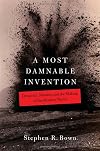
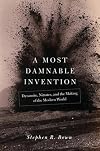
A Most Damnable Invention: Dynamite, Nitrates, and the Making of the Modern World
by Stephen R. Bown 
On This Page
Description
"Humanity's desire to harness the destructive capacity of fire is a saga that extends back to the dawn of civilization. The true age of explosives, when they radically and irrevocably changed the world, however, began in the 1860s with the remarkable intuition of a sallow Swedish chemist named Alfred Nobel." "As the use of explosives soared and growing populations consumed more food, nations scrambled for the scarce yet vital organic ingredient needed for both. The quest for nitrates takes show more us from the rural stables and privies of preindustrial Europe to the monopoly trading plantations in India and to the Atacama Desert in South America. Nitrates were as valuable in the nineteenth century as oil is in the twenty-first and were the cause of similar international jockeying and power politics." "A Most Damnable Invention is a human tale of scientific obsession, shadowy immorality, and historical irony, and a testament to the capacity for human ingenuity during times of war. It is also a cautionary reminder of the cyclical nature of history, showing how the solutions of yesterday eventually give rise to the problems of today."--BOOK JACKET. show lessTags
Recommendations






















Member Reviews
'Bown follows his well-recieved Scurvy with another sedulously researched and well-written popular history...(He) has a good eye for the unintended consequences, ironies, and contradictions that are the product of social and technological forces of great magnitude.'-Publishers Weekly
Humanit's desrie to harness the destructive capacity of fire is a saga that extends back to the dawn of civilizatin. The true age of explosives, when they radically and irrevocably changed the world, however, began in the 1860s with the remarkable intuition of a sallow Swedish chemist named Alfred Nobel.
His discovery of dynamite made possible the famous industrial megaprojects that transformed the countryside and defines the era, icluding the St. Gothard show more rail tunnel through the Alps, the clearing of New York Harbor, the Panama Canal, and countless others. Dynamite also caused terrible injuries and great loss of life, and, in some cases, incalculable and irreparable environmental damage. Nobel was one of the richest men in a society rapidly transforming under the power of his inventions, but with a troubled conscience, he left his estate to the establshment of the world-famous prizes that bear his name.
As the use of explosives soared and growing populations consumed more food, nations scrambled for the scarce yet vital organic ingredient needed for both. The quest for nitrates takes us from the rural stables and privies of preindustrial Europe to the monopoly trading plantations in India and to the Atacama Desert in South America. Nitrates were as valuable in the nineteenth century as oil is in the twenty-first and were the cause of similar international jockeying and power politics.
The 'nitrogen problem' of creating inorganic nitrates was solved by an enigmatic German scientist named Fritz Haber. HIs breakthrough not only prolonged the First World War but became the foundation of the green revolution and the tripling of world population since then. Haber is also known as the 'father of gas warfare' for his work ion poison gas. When he was awarded a Nobel Prize for his work in chemistry, it sparked international outrage and condemnation.
A Most Damnable Invention is a human tale of scientific obsession, shadowy immorality, and historical irony, and a testament to the capacity of human ingenuity during times of war. It is also a cautionary reminder of the cyclical nature of history, showing how the solutions of yesterday eventually give rise to the problems of today.
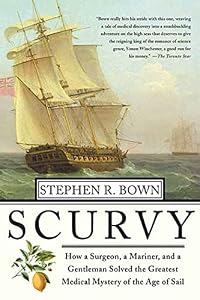
Stephen R. Bown was born in Ottawa, Canada, and graduated in history from the University of Alberta. He has a special interest in the history of science and exploration. His previoius books are The Naturalists: Scientific Travelers in the Golden Age of Natural History and the internationally successful Scurvy: How a Surgeon, a Mariner, and a
Gentleman Solved the Greatest Medical Mystery of the Age of Sail. He lives in the Canadian Rockies with his wife and two young children. Further information about the author can be found at www.stephenrbown.net.
Contents
Acknowledgments
Time line
Prologue: An epic quest
Chapter 1 Playing with fire: A thousand years of explosives
Chapter 2 Black powder's soul: The quest for the elusive saltpeter
Chapter 3 Blasting oil and the blasting cap: Alfred Nobel and the terrible power of nitroglycerin
Chapter 4 Construction and destruction: Dynamite and the engineering revolution
Chapter 5 The great equalizer: Explosives and social change
Chapter 6 Inventions, patents, and lawsuits: The golden age of explosives
Chapter 7 The Guano trade: The toil for Chilean saltpeter and the war of the pacific
Chapter 8 The profits of dynamite: A gift to science and civilization
Chapter 9 Battle of the Falklands: The struggle for the global nitrate supply
Chapter 10 The father of the war: Fritz Habor's world-changing discovery
Epilogue: War and the green revolution
A note on sources and further reading
Bibliography
Index show less
Humanit's desrie to harness the destructive capacity of fire is a saga that extends back to the dawn of civilizatin. The true age of explosives, when they radically and irrevocably changed the world, however, began in the 1860s with the remarkable intuition of a sallow Swedish chemist named Alfred Nobel.
His discovery of dynamite made possible the famous industrial megaprojects that transformed the countryside and defines the era, icluding the St. Gothard show more rail tunnel through the Alps, the clearing of New York Harbor, the Panama Canal, and countless others. Dynamite also caused terrible injuries and great loss of life, and, in some cases, incalculable and irreparable environmental damage. Nobel was one of the richest men in a society rapidly transforming under the power of his inventions, but with a troubled conscience, he left his estate to the establshment of the world-famous prizes that bear his name.
As the use of explosives soared and growing populations consumed more food, nations scrambled for the scarce yet vital organic ingredient needed for both. The quest for nitrates takes us from the rural stables and privies of preindustrial Europe to the monopoly trading plantations in India and to the Atacama Desert in South America. Nitrates were as valuable in the nineteenth century as oil is in the twenty-first and were the cause of similar international jockeying and power politics.
The 'nitrogen problem' of creating inorganic nitrates was solved by an enigmatic German scientist named Fritz Haber. HIs breakthrough not only prolonged the First World War but became the foundation of the green revolution and the tripling of world population since then. Haber is also known as the 'father of gas warfare' for his work ion poison gas. When he was awarded a Nobel Prize for his work in chemistry, it sparked international outrage and condemnation.
A Most Damnable Invention is a human tale of scientific obsession, shadowy immorality, and historical irony, and a testament to the capacity of human ingenuity during times of war. It is also a cautionary reminder of the cyclical nature of history, showing how the solutions of yesterday eventually give rise to the problems of today.
Stephen R. Bown was born in Ottawa, Canada, and graduated in history from the University of Alberta. He has a special interest in the history of science and exploration. His previoius books are The Naturalists: Scientific Travelers in the Golden Age of Natural History and the internationally successful Scurvy: How a Surgeon, a Mariner, and a
Gentleman Solved the Greatest Medical Mystery of the Age of Sail. He lives in the Canadian Rockies with his wife and two young children. Further information about the author can be found at www.stephenrbown.net.
Contents
Acknowledgments
Time line
Prologue: An epic quest
Chapter 1 Playing with fire: A thousand years of explosives
Chapter 2 Black powder's soul: The quest for the elusive saltpeter
Chapter 3 Blasting oil and the blasting cap: Alfred Nobel and the terrible power of nitroglycerin
Chapter 4 Construction and destruction: Dynamite and the engineering revolution
Chapter 5 The great equalizer: Explosives and social change
Chapter 6 Inventions, patents, and lawsuits: The golden age of explosives
Chapter 7 The Guano trade: The toil for Chilean saltpeter and the war of the pacific
Chapter 8 The profits of dynamite: A gift to science and civilization
Chapter 9 Battle of the Falklands: The struggle for the global nitrate supply
Chapter 10 The father of the war: Fritz Habor's world-changing discovery
Epilogue: War and the green revolution
A note on sources and further reading
Bibliography
Index show less
5315. A Most Damnable Invention Dynamite, Nitrates, and the Making of the Modern World, by Stephen R. Bown (read 2 Oct 2015) This 2005 book by a Canadian author is a non-academic history of explosives, gunpowder. dynamite, Nobel, guano, World War One, Fritz Haber, and fertilizer. There are no footnotes, and it really is totally drawn from other books--which the author tells of but we have to rely on his accurately setting out his research since there are no specific citations. That is all right and in the later chapters of the book I found what he talked about of much interest. He points out that the development of fertilizer and its affect on our food supply is essential to the fact that the world population can be so much greater than show more it was in 1900, to the extent of 4 billion greater in 100 years and cogently submits that artificial fertilizer is far more important than inventions such as airplanes or the computer. show less
Нобеловата награда е учредена според завещанието на Алфред Нобел - един от най-богатите хора в Европа края на 19 в., който е натрупал своето състояние благодарение на своето изобретение: динамита.
Малко хора знаят това, а още по-малко хора знаят, че значителна част от усилията на човечеството по време на индустриалната епоха са насочени към сдобиване с нитрати в големи количества за двете основни дейности, show more за които те се използват: земеделско наторяване и направа на експлозиви и барут и навлизането на нововъведенията в тези области значително допринася, а в някои случаи направо е директна причина, за прогресът в много области на обществото и икономиката.
Всичко започва с навлизането на първите огнестрелни оръжия, ползващи черен барут, които макар да са опасни (избухвали са) и скъпи, и да отстъпват значително на лъкове и арбалети както по скорострелност така и по далекобойност, притежават несъмненото предимство да позволят на обикновен селянин-войник след 1-2 седмично обучение да повали отдалеч благородник-рицар, дал цяло състояние за броня и боен кон и посветил живота си на обучение в бойното дело. Последвалата от това централизация на властта в европейските държави и практическото западане на феодалната система дава началото на ренесанса и неспирната от тогава надпревара на държави и хора по пътя на индустриализацията и прогреса.
Битката с природата, физиката и другите държави за източници на нитрати - селитра, събирана от оборите в Европа, после в Индия, копана като гуано в Латинска Америка и накрая произвеждана по химичен път е брутална, буквално за оцеляване (без селитра няма барут и се губят войни, няма наторяване и има глад) и обуславя духа на цялата епоха. show less
Малко хора знаят това, а още по-малко хора знаят, че значителна част от усилията на човечеството по време на индустриалната епоха са насочени към сдобиване с нитрати в големи количества за двете основни дейности, show more за които те се използват: земеделско наторяване и направа на експлозиви и барут и навлизането на нововъведенията в тези области значително допринася, а в някои случаи направо е директна причина, за прогресът в много области на обществото и икономиката.
Всичко започва с навлизането на първите огнестрелни оръжия, ползващи черен барут, които макар да са опасни (избухвали са) и скъпи, и да отстъпват значително на лъкове и арбалети както по скорострелност така и по далекобойност, притежават несъмненото предимство да позволят на обикновен селянин-войник след 1-2 седмично обучение да повали отдалеч благородник-рицар, дал цяло състояние за броня и боен кон и посветил живота си на обучение в бойното дело. Последвалата от това централизация на властта в европейските държави и практическото западане на феодалната система дава началото на ренесанса и неспирната от тогава надпревара на държави и хора по пътя на индустриализацията и прогреса.
Битката с природата, физиката и другите държави за източници на нитрати - селитра, събирана от оборите в Европа, после в Индия, копана като гуано в Латинска Америка и накрая произвеждана по химичен път е брутална, буквално за оцеляване (без селитра няма барут и се губят войни, няма наторяване и има глад) и обуславя духа на цялата епоха. show less
Ratings
Members
- Recently Added By
Lists

Chemistry
53 works; 3 members
Author Information

24 Works 1,786 Members
Stephen R. Bown is the author of ten books on the history of exploration, science and ideas. His works have been published in many territories and translated into nine languages. He has won the BC Book Prize, the Alberta Book Award and the William Mills Prize for Polar Books, and his book Island of the Blue Foxes, for shortlisted for the RBC show more Taylor Prize. Born in Ottawa, he now live near Banff in the Canadian Rockies. show less
Stephen R. Bown is a LibraryThing Author, an author who lists their personal library on LibraryThing.
Common Knowledge
- Original publication date
- 2005
- People/Characters
- Alfred Nobel; Fritz Haber
- Important places
- Bolivia; Chile; Peru
- Important events
- War of the Pacific (1879 | 1883); World War I
- First words
- Prologue: An Epic Quest -- Fritz Haber was in Stockholm to receive a lucrative and prestigious prize.
Classifications
Statistics
- Members
- 118
- Popularity
- 274,806
- Reviews
- 4
- Rating
- (3.50)
- Languages
- English
- Media
- Paper, Ebook
- ISBNs
- 5
- ASINs
- 2