A Scent of New-Mown Hay
by John Blackburn
On This Page
Description
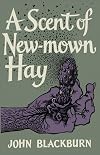
"The story has a nightmarish excitement and maintains a brilliant pace . . . the best of its kind this season." - "Detroit News" " S]pine-chilling . . . a far-reaching plot linking the horror camps of the Nazis, the frozen wastes of Russia and the work of British Secret Intelligence. . . . T]his is 'must' reading for horror fans." - "Calgary Herald" "I began to read: and then read and read and read." - John Creasey, "Books of the Month" "Good, insomniac science-fiction." - "Listener" With a show more plot featuring Cold War intrigue, Nazi mad scientists, and a pandemic that threatens to destroy humanity by mutating people into fungoid monsters, it is not hard to see why "A Scent of New-Mown Hay" (1958) became a bestseller on both sides of the Atlantic and an instant science-fiction classic. After a British ship's crew and a remote Russian village are wiped out in mysterious and horrible fashion, General Charles Kirk of British Foreign Intelligence sets out to investigate. As the plague spreads to England, Kirk's frantic search leads him from the desolate tundra of Russia to the ruins of a Nazi camp, the site of unthinkable wartime atrocities. But who is responsible? Is it a Soviet experiment gone horribly wrong, the work of a depraved madman, or something else entirely? And can it be stopped? In this, his first and still best-known novel, the prolific John Blackburn (1923-1993) introduced the formula he was to employ so successfully in his career, seamlessly blending mystery, horror, and science fiction to create a thrilling bestseller that readers found impossible to put down. This edition, the first in more than thirty years, includes a new introduction by Prof. Darren Harris-Fain and a reproduction of the scarce original jacket art by Peter Curl. show lessTags
Recommendations
















Member Reviews
This is Blackburn's debut and sets the template for much of his subsequent work - Cold War era thrillers which combine spy fiction with horror, mystery and a bit of science as well. And he does it seamlessly and more effectively than almost anyone else.
This story of a Nazi bio-super weapon unleashed in the years after WWII, veers towards pulp storytelling, but if you are looking for action there is very little of it. In fact Blackburn's skill is not in action, deep character work or rich ambience, but in the spareness of his writing that conjures up a greater level of horror than the need to be explicitly graphic or descriptive. That will jar with modern readers who will likely crave more gore, more violence and more horrific imagery. show more I, however prefer this way. The horror exists in the reactions and the fear of the characters in what they see and is much more effective. Partly it's because this was written in the 1950's, but the best weird horror is often implied rather than shown.
The main narrative of the book focuses on an investigation as several people under the command of dominating presence of recurring character General Kirk, seek out the missing scientist who unleashed the plague. We move from rural Russia, to post-War Germany slums and back to rural -often gothic - England. Most of the characters aren't too deep and the attitudes towards women are as dated as you expect for the '50s, but the avoidance of too many stereotypes - especially with the Russians - works pretty well (until the end anyway). The spy fiction side of things keeps more to desk work investigation than field work and the latter is only employed as the final means to trigger the final unravelling of the plot which is satisfactory.
There's not a lot of twists most modern readers wont see coming, but it's a fun pulpish read and a great introduction to the works of a sadly neglected British writer who was allowed to go out of print for far too long. show less
This story of a Nazi bio-super weapon unleashed in the years after WWII, veers towards pulp storytelling, but if you are looking for action there is very little of it. In fact Blackburn's skill is not in action, deep character work or rich ambience, but in the spareness of his writing that conjures up a greater level of horror than the need to be explicitly graphic or descriptive. That will jar with modern readers who will likely crave more gore, more violence and more horrific imagery. show more I, however prefer this way. The horror exists in the reactions and the fear of the characters in what they see and is much more effective. Partly it's because this was written in the 1950's, but the best weird horror is often implied rather than shown.
The main narrative of the book focuses on an investigation as several people under the command of dominating presence of recurring character General Kirk, seek out the missing scientist who unleashed the plague. We move from rural Russia, to post-War Germany slums and back to rural -often gothic - England. Most of the characters aren't too deep and the attitudes towards women are as dated as you expect for the '50s, but the avoidance of too many stereotypes - especially with the Russians - works pretty well (until the end anyway). The spy fiction side of things keeps more to desk work investigation than field work and the latter is only employed as the final means to trigger the final unravelling of the plot which is satisfactory.
There's not a lot of twists most modern readers wont see coming, but it's a fun pulpish read and a great introduction to the works of a sadly neglected British writer who was allowed to go out of print for far too long. show less
A science fiction story which also feels like horror. Set during the cold war, an engineered disease escapes from the Soviet Union. The disease only affects women, and changes them into monsters (it's not as daft as it sounds). It haunted me for ages after I read it.
This link gives a bit more info, and a picture of the cover of the book I have. I note that it is classified as horror here:
http://www.trashfiction.co.uk/blackburn_hay.html
(I wouldn't classify this as trash).
This link gives a bit more info, and a picture of the cover of the book I have. I note that it is classified as horror here:
http://www.trashfiction.co.uk/blackburn_hay.html
(I wouldn't classify this as trash).
It's a fun read. I do like the author's writing style. It's a different type of sci-fi. The spy / horror/ sci-fi elements blend very well.
One of my favorite books of all time. Read it in the early 60's and still enjoy rereading it from time to time. Although it was written during the Cold War era, with the many threats to the world today it still feels up to date. It keeps the tension building throughout as the race is on to keep the horror contained and to save all life on earth. Contains some really scary moments. A short first novel but dense and effective -- Mr. Blackburn doesn't waste words in telling this compelling, suspenseful tale. Truly, this is his masterpiece.
A good idea but the coincidences were too much to make this even remotely believable
A good thriller nevertheless
Bigship
17/Nov/2013
A good thriller nevertheless
Bigship
17/Nov/2013
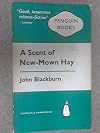
John Blackburn's first novel 'A Scent of New-Mown Hay' written in 1958. Insomniac indeed, as the cover says - I think the style is John Wyndham meets Edgar Wallace.
In an imperfect parallel to 'Aliens' the story revolves around three women, the good, the bad, and the extremely ugly.
A later NEL cover refers to a BBC radio series of the book - I'd like to hear that!
In an imperfect parallel to 'Aliens' the story revolves around three women, the good, the bad, and the extremely ugly.
A later NEL cover refers to a BBC radio series of the book - I'd like to hear that!
Don't know if I even finished it, but somewhat tedious
Members
- Recently Added By
Lists

Best Horror Mega-List
342 works; 6 members

Jones and Newman's Horror: Another 100 Best Books
100 works; 7 members
Author Information

27+ Works 598 Members
Some Editions
Awards and Honors
Notable Lists
Common Knowledge
- Original publication date
- 1958
- People/Characters
- Marcia Heath; Tony Heath; General Kirk; Igor Trubenof; Mrs. Bates; Professor Roberts
- Important places
- London, England, UK
- First words
- Although London was at its hottest in July, the office windows were tightly closed and an electric fire glowed in the grate.
At the corner of the old cathedral building he turned right and began to walk up the long slope towards the station. - Last words
- (Click to show. Warning: May contain spoilers.)But not as far as the way that Rosa Steinberg had gone.
- Original language
- English
Classifications
Statistics
- Members
- 152
- Popularity
- 216,014
- Reviews
- 9
- Rating
- (3.50)
- Languages
- English
- Media
- Paper, Ebook
- ISBNs
- 5
- ASINs
- 15