On This Page
Description
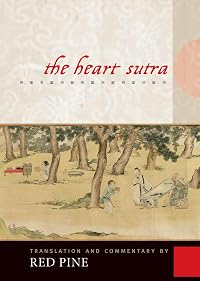
The Heart Sutra is Buddhism in a nutshell. It has had the most profound and wide-reaching influence of any text in Buddhism. This short text covers more of the Buddha's teachings than any other scripture, and it does so without being superficial or hurried. Although the original author is unknown, he was clearly someone with a deep realization of the Dharma. For this new English translation, Red Pine, award-winning translator of Chinese poetry and religious texts, has utilized various show more Sanskrit and Chinese versions, refining the teachings of dozens of ancient teachers together with his own commentary to offer a profound word-for-word explication. Divided into four parts and broken into thirty-five lines to make it easier to study or chant, and containing a glossary of names, terms, and texts, The Heart Sutra is a wise book of deep teaching destined to become the standard edition of this timeless statement of Mahayana truth. This audiobook is masterfully read by Brian Arens, and was produced and published by Echo Point Books & Media, an independent bookseller in Brattleboro, Vermont. Audio engineering by Blake Rook. show lessTags
Recommendations





Member Reviews
I've rated this as 5⭐, but could just as easily have rated it 1, being the difference between what it probably means and what I understand of its meaning. I found it interesting while elusive, engaging while tiring.
I definitely gleaned some things from it, on an intellectual rather than a spiritual level, but as others have mentioned Red Pine's commentary is dense and certainly beyond my severely limited understanding of Buddhist thought.
However, if there's one thing I've taken from it, it's that the meaning of the sutra and the mantra are beyond intellectual understanding, but if I've understood this I can't have really understood it, so I seem to have got myself into something of a state of spiritual indeterminacy (I don't show more understand quantum physics either, but then if I said I did ...) show less
I definitely gleaned some things from it, on an intellectual rather than a spiritual level, but as others have mentioned Red Pine's commentary is dense and certainly beyond my severely limited understanding of Buddhist thought.
However, if there's one thing I've taken from it, it's that the meaning of the sutra and the mantra are beyond intellectual understanding, but if I've understood this I can't have really understood it, so I seem to have got myself into something of a state of spiritual indeterminacy (I don't show more understand quantum physics either, but then if I said I did ...) show less
The Heart Sūtra is one of the most-studied scriptures in Zen Buddhism; while it’s one of the shortest, it’s packed with references to overloaded terms like emptiness. Red Pine unpacks a lot of the baggage, examining the original Sanskrit writings (and tracking down their variations) and creating his own translation from scratch, then going over it line by line in as much detail as needed to give the context of the words. His perspective seems generally Mahāyāna rather than particularly Zen.
I quite like how he’ll dig into Sanskrit etymology when he feels it’s necessary to examine the details of a verb conjugation to try and get at the original meaning intended by the unknown writer of the sūtra. He also provides the context show more necessary to see that the Heart Sūtra is as much an academic manifesto as it is a work of Buddhist scripture, and includes historical commentary as well as his own. (He even brings in some of the 7th century monastic infighting, which hilariously look a lot like modern academic pissing contests— I can see why Eihei Dōgen was inspired to start a back-to-basics movement!)
This is an excellent look at the scholarly underpinnings of the Heart Sūtra. It does a fairly good job of not requiring a background in academic Buddhism to understand it, though I want to grab a kyôsaku and smack a lot of these ancient scholars he quotes when they take the logical equivalent of a running broad jump with the word “thus”. show less
I quite like how he’ll dig into Sanskrit etymology when he feels it’s necessary to examine the details of a verb conjugation to try and get at the original meaning intended by the unknown writer of the sūtra. He also provides the context show more necessary to see that the Heart Sūtra is as much an academic manifesto as it is a work of Buddhist scripture, and includes historical commentary as well as his own. (He even brings in some of the 7th century monastic infighting, which hilariously look a lot like modern academic pissing contests— I can see why Eihei Dōgen was inspired to start a back-to-basics movement!)
This is an excellent look at the scholarly underpinnings of the Heart Sūtra. It does a fairly good job of not requiring a background in academic Buddhism to understand it, though I want to grab a kyôsaku and smack a lot of these ancient scholars he quotes when they take the logical equivalent of a running broad jump with the word “thus”. show less
Six-word review: Enlightening explication of Prajnaparamita Hridaya Sutra.
Comments:
"Emptiness means indivisibility." (page 77)
"...ignorance includes not only the absence of knowledge but also the presence of delusion" (page 110)
When I listen to dharma talks, I often feel as if I understood everything while the teacher was speaking, and afterward I don't remember anything. I just have a recollection of some momentary passing light. This is what the teacher wants, I think: I'm not supposed to hoard the words, much less take notes. Still, while reading this book I didn't even feel as if I were getting whatever I wasn't getting.
Still--still. Something may have seeped through.
Here's why I love Buddhism:
"Fa-tsang says, 'Although the absolute show more and provisional are both submerged, their two truths are permanently present. Although emptiness and existence are both denied, their one meaning shines forever. True emptiness has never not existed, but by means of existence it is distinguished from emptiness. Illusory existence has been empty from time without beginning, but by means of emptiness it is seen as existing. Because existence is an empty existence, it does not exist. And because emptiness is an existent emptiness, it is not empty. Emptiness which is not empty, does not stop being empty. And existence which does not exist, exists but not forever.'" (pages 69-70) show less
Comments:
"Emptiness means indivisibility." (page 77)
"...ignorance includes not only the absence of knowledge but also the presence of delusion" (page 110)
When I listen to dharma talks, I often feel as if I understood everything while the teacher was speaking, and afterward I don't remember anything. I just have a recollection of some momentary passing light. This is what the teacher wants, I think: I'm not supposed to hoard the words, much less take notes. Still, while reading this book I didn't even feel as if I were getting whatever I wasn't getting.
Still--still. Something may have seeped through.
Here's why I love Buddhism:
"Fa-tsang says, 'Although the absolute show more and provisional are both submerged, their two truths are permanently present. Although emptiness and existence are both denied, their one meaning shines forever. True emptiness has never not existed, but by means of existence it is distinguished from emptiness. Illusory existence has been empty from time without beginning, but by means of emptiness it is seen as existing. Because existence is an empty existence, it does not exist. And because emptiness is an existent emptiness, it is not empty. Emptiness which is not empty, does not stop being empty. And existence which does not exist, exists but not forever.'" (pages 69-70) show less
Accessible enough and possibly definitive. Goes line-by-line, which entices psychos like me until you’re reading an inordinate number of ancient Chinese commentaries on each phrase.
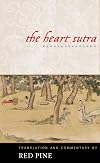
The short text of The Heart Sutra is Buddhism in a nutshell. It has had the most profound and wide-reaching influence of any text in Buddhism. Its full title, Prajna Paramita Hrdaya Sutra, "The Sutra of the Heart of the Perfection of Wisdom," explains that this sutra contains the essence of the Buddha’s teaching, the core of perfect enlightenment. It is the source of the famous and puzzling declaration, "form is emptiness, emptiness is form."
For this new translation into English, Red Pine, award-winning translator of Chinese poetry and religious texts, has utilized various Sanskrit and Chinese versions, refining the teachings of dozens of ancient teachers together with his own commentary to offer a profound word-for-word explication. show more The result is a wise book of deep teaching destined to become the standard edition of this timeless statement of Mahayana truth. show less
For this new translation into English, Red Pine, award-winning translator of Chinese poetry and religious texts, has utilized various Sanskrit and Chinese versions, refining the teachings of dozens of ancient teachers together with his own commentary to offer a profound word-for-word explication. show more The result is a wise book of deep teaching destined to become the standard edition of this timeless statement of Mahayana truth. show less
MAHAYANA
GATE GATE PARAGATE PARASANGATE BODHI SVAHA
Members
- Recently Added By
Lists

Books Read in 2023
5,547 works; 145 members

Books About Non-Abrahamic Religions
98 works; 2 members
Author Information

Red Pine (the pen name of Bill Porter) is an acclaimed translator and interpreter of Chinese and Sanskrit texts, primarily Buddhist, including poetry and sutras. Previous works he has translated into English include The Platform Sutra, The Heart Sutra, The Diamond Sutra, Lao-tzu's Taoteching, Guide to Capturing a Plum Blossom, The Zen Works of show more Stonehouse, and The Collected Songs of Cold Mountain. He is also the author of Road to Heaven: Encounters with Chinese Hermits and Zen Baggage: A Pilgrimage to China. He has lived in Taiwan and Hong Kong, and has traveled extensively in China, visiting Zen temples and the graves of poets, and seeking out hermits. He lives in Port Townsend, Washington. show less

Common Knowledge
- People/Characters
- Avalokiteśvara; Śariputra; Shakyamuni
- Canonical DDC/MDS
- 294.38
Classifications
Statistics
- Members
- 435
- Popularity
- 70,711
- Reviews
- 8
- Rating
- (4.36)
- Languages
- English
- Media
- Paper, Ebook
- ISBNs
- 5
- ASINs
- 2