On This Page
Description
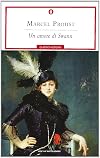
Swann in Love Swann's Way , the first part of Marcel Proust's monumental cycle Remembrance of Things Past. It tells the story of man-about-town Charles Swann's passionate, tormented love affair with the courtesan Odette de Crécy, and of its surprising outcome. Set in the degenerate demi-monde of 19th century Paris as well as in the fashionable drawingrooms of the aristocracy, this new audiobook vividly brings to life the descriptive genius of the original novel.Music: David, Fauré, Debussy
.
Tags
Recommendations




















Member Reviews
Swann in Love is not Proust-Lite.
No, Swann in Love is a multi-facetted novel complete with Proust’s themes of time, art, love, jealousy and imagination, along with the syntactic complexity of his style, his elaborate constructions and his beautiful clarity and precision. Proust’s famously long sentences show the shape of the thoughts and sensibilities of a mind in the grip of obsession, fantasy and uncertainty. It is also one of the funniest novels in French literature, satirising French society and its social pretensions. And the love story, a tale of Swann’s obsession with a stupid, shallow former courtesan called Odette de Crecy, is full of irony and bathos, complete with a jealous Swann spying on the wrong bedroom in the show more middle of the night because the hapless inhabitants just happened to have the lights on.
Swann’s problem is that he projects onto Odette, his own self. He is struck by her resemblance to the Biblical figure of Zipporah, Jethro’s Daughter, as painted by Botticelli in the Sistine Chapel.
To read the rest of my review please visit https://anzlitlovers.com/2018/08/04/swann-in-love-by-marcel-proust-a-new-transla... show less
No, Swann in Love is a multi-facetted novel complete with Proust’s themes of time, art, love, jealousy and imagination, along with the syntactic complexity of his style, his elaborate constructions and his beautiful clarity and precision. Proust’s famously long sentences show the shape of the thoughts and sensibilities of a mind in the grip of obsession, fantasy and uncertainty. It is also one of the funniest novels in French literature, satirising French society and its social pretensions. And the love story, a tale of Swann’s obsession with a stupid, shallow former courtesan called Odette de Crecy, is full of irony and bathos, complete with a jealous Swann spying on the wrong bedroom in the show more middle of the night because the hapless inhabitants just happened to have the lights on.
Swann’s problem is that he projects onto Odette, his own self. He is struck by her resemblance to the Biblical figure of Zipporah, Jethro’s Daughter, as painted by Botticelli in the Sistine Chapel.
To read the rest of my review please visit https://anzlitlovers.com/2018/08/04/swann-in-love-by-marcel-proust-a-new-transla... show less
Review of Swann in Love; Novella into Film
Author: Marcel Proust/ Volker Schlondorff
Publication Date: 1913/1984
Swan in Love was published in 1913. It was the first novel of Marcel Proust’s monumental elegy to the Belle Epoque In Search of Lost Time. French Literature would never be the same. Much has been written about Swann in Love. It’s frank discussion of sex and sexuality has been well documented. For it’s time it was very progressive, even bordering on vulgarity. These are the qualities which make it a classic of not only French Literature, but of World Literature as well. Marcel Proust was of Jewish descent in a time when anti-Semitiism was widespread in Europe. Improvements had been made and Proust, like his main show more character in Swann was accepted into some high circles of French Society. Swann is of the Upper Class, but will he maintain his social position? That is a central question of Swann in Love.
This review will discuss the Novella and the film adaptation of the book made into a film in 1984 under the direction of Volker Schlondorff. I will discuss the novel separately, then talk about the differences between the film and Novella. Lastly I will recommend this book to certain readers and conclude with which material I liked better; the Novella or the Film.
The Novella is rather short and can be read in a few sittings. The structure is rather long winded. Proust indulges in long sentences of description throughout the book. Often times it leads to great descriptions and long dialogue scenes set in ornate settings that reflect the opulence of the Belle Epoque.
The story is rather small. Monsieur Swann is an Upper Class Society man about town. He attends all the big soirees, knows the Prince of Wales, and is a member of exclusive cliques like the Verdurins. It is through the Verdurins that Swann meets Odette de Crecy. Madame Crecy is a woman of beauty. Not much is known about her background. A love affair ignites between them and Swann slowly falls deliriously in love with Odette.
The theme of the Novella centers around desire and it’s negative consequences. As the predicament of Swann illustrates, desire can lead to bad situations and, as in the case of Monsieur Swann, a fall from grace. For indeed, Odette is not a “kept” woman as Swaan thinks. She is a prostitute with whom he falls deeply and madly in love. Can Swann continue this love affair and maintain his high social status which he values so deeply? Will high society allow one of it’s own to marry a prostitute and still be accepted? Swann obsesses over these questions until the last few pages of a novella that satirizes the Upper Class in a way similar to other works of literature that followed in the 20th Century.
The writing is excellent. The descriptions sparkle with detail and the Upper Class society meetings are expertly written with dialogue that captures how the Upper crest speak to one another in formal engagements. I found it very revealing to see this part of the Parisian Upper Class of the 1890’s laid bare in all it’s luminescence. I felt like I was at the party seeing things through Swann’s point of view. A fly on the wall if there ever was one.
Swann is also a treat for the imagination. His appreciation for art and the finer things in life knows no limit. He fits perfectly into his place in society. He is reflective. He does everything to repress and conceal his emotions lest they cause him a scandal. Perhaps he is the first main character in a novel to be an Upper Class Jew? It is his Jewishness which is referred to at times. It is his Jewish background which keeps him separate from others. He is a member of the Upper Class, but like Jay Gatsby, never feels completely accepted by them. He is an outsider on the inside. It creates situations where conflict grows easily. And deal with it Monsieur Swann must. He is, perhaps, the most Class obsessed character in French Literature. Always making sure he looks right, attends the best party, and knows the most important people.
The adaptation of the Novella into the film was brought about, in part, by Jean-Claude Carriere. That is the reason why I chose to study the Novella and the film. I had seen the film years ago and was impressed with it as a film. I decided to go deeper and study how the Novella was brought to the big screen.
There are many significant differences between the film and the Novella. Some are good. Some are bad. The film picks up about half way through the novel. Swann is on the verge of losing Odette and falling out with the Verdurins. The major scene is when Swann follows Odette to the Opera one night. She is going to the Opera with the Verdurins who have become cold to Swann. There Madame Verdurin invites Odette to ride with Monsieur Forchville. This proves Swann’s undoing in the book. From here on out Swann grows further and further apart from Odette.
The film is different. Swann reunites with Odette. He consummates his love for her. They have a daughter and are married. By doing this Swann loses his status. He falls from grace. It seems there are consequences for violating the rules of class in French 19th Century Society. The film goes more into Marcel Proust as reflected in the character of Monsieur Swann. Proust was in bad health from childhood and died rather young because of it. Monsieur Swann by the end of the film is in ill health as well. I thought the film made allusions to this similarity in a vague way. It was only after I read the Novella that these parts were made clear to me.
In the Novella Swann chooses his class over his love for Odette. In the film he loses his class position, but he marries Odette who has become a famous prostitute. The ending to the book is rather low key. The film ending takes on the mythology of Proust and blends it into an ending that veers into Hollywood ending territory. The film ends on a positive note. The book’s ending is rather melancholy.
I think to understand the film you have to read the novel and be familiar with Proust. The introduction to the Novella warns readers that Proust isn’t for everyone. His long sentences and attention to superficial things may turn off some readers. I don’t think Proust is in anyway like Hemingway. He does resemble some of the fiction of Fitzgerald who mythologized the Jazz Age in a similar way to Proust. Anthony Powell, who also wrote a very monumental work A Dance to The Music of Time, has been called the English Proust has similar themes in his novels.
I would recommend Swann in Love for those readers who like Romance and High Society. For readers or viewers who like action and masculinity, I would look elsewhere. The book’s style and subject matter reflect The Belle Epoque better than other works of French Literature. Proust was the great Novelist of that era. He is the opposite of Zola. Instead of the sufferings of the working class in Germinal, Prous chronicles the overly mannered, overly cultured Aristocracy and grand bourgeoisie. Proust is a unique stylist. He cannot be neglected to understand French Literature and Society as a whole. show less
Author: Marcel Proust/ Volker Schlondorff
Publication Date: 1913/1984
Swan in Love was published in 1913. It was the first novel of Marcel Proust’s monumental elegy to the Belle Epoque In Search of Lost Time. French Literature would never be the same. Much has been written about Swann in Love. It’s frank discussion of sex and sexuality has been well documented. For it’s time it was very progressive, even bordering on vulgarity. These are the qualities which make it a classic of not only French Literature, but of World Literature as well. Marcel Proust was of Jewish descent in a time when anti-Semitiism was widespread in Europe. Improvements had been made and Proust, like his main show more character in Swann was accepted into some high circles of French Society. Swann is of the Upper Class, but will he maintain his social position? That is a central question of Swann in Love.
This review will discuss the Novella and the film adaptation of the book made into a film in 1984 under the direction of Volker Schlondorff. I will discuss the novel separately, then talk about the differences between the film and Novella. Lastly I will recommend this book to certain readers and conclude with which material I liked better; the Novella or the Film.
The Novella is rather short and can be read in a few sittings. The structure is rather long winded. Proust indulges in long sentences of description throughout the book. Often times it leads to great descriptions and long dialogue scenes set in ornate settings that reflect the opulence of the Belle Epoque.
The story is rather small. Monsieur Swann is an Upper Class Society man about town. He attends all the big soirees, knows the Prince of Wales, and is a member of exclusive cliques like the Verdurins. It is through the Verdurins that Swann meets Odette de Crecy. Madame Crecy is a woman of beauty. Not much is known about her background. A love affair ignites between them and Swann slowly falls deliriously in love with Odette.
The theme of the Novella centers around desire and it’s negative consequences. As the predicament of Swann illustrates, desire can lead to bad situations and, as in the case of Monsieur Swann, a fall from grace. For indeed, Odette is not a “kept” woman as Swaan thinks. She is a prostitute with whom he falls deeply and madly in love. Can Swann continue this love affair and maintain his high social status which he values so deeply? Will high society allow one of it’s own to marry a prostitute and still be accepted? Swann obsesses over these questions until the last few pages of a novella that satirizes the Upper Class in a way similar to other works of literature that followed in the 20th Century.
The writing is excellent. The descriptions sparkle with detail and the Upper Class society meetings are expertly written with dialogue that captures how the Upper crest speak to one another in formal engagements. I found it very revealing to see this part of the Parisian Upper Class of the 1890’s laid bare in all it’s luminescence. I felt like I was at the party seeing things through Swann’s point of view. A fly on the wall if there ever was one.
Swann is also a treat for the imagination. His appreciation for art and the finer things in life knows no limit. He fits perfectly into his place in society. He is reflective. He does everything to repress and conceal his emotions lest they cause him a scandal. Perhaps he is the first main character in a novel to be an Upper Class Jew? It is his Jewishness which is referred to at times. It is his Jewish background which keeps him separate from others. He is a member of the Upper Class, but like Jay Gatsby, never feels completely accepted by them. He is an outsider on the inside. It creates situations where conflict grows easily. And deal with it Monsieur Swann must. He is, perhaps, the most Class obsessed character in French Literature. Always making sure he looks right, attends the best party, and knows the most important people.
The adaptation of the Novella into the film was brought about, in part, by Jean-Claude Carriere. That is the reason why I chose to study the Novella and the film. I had seen the film years ago and was impressed with it as a film. I decided to go deeper and study how the Novella was brought to the big screen.
There are many significant differences between the film and the Novella. Some are good. Some are bad. The film picks up about half way through the novel. Swann is on the verge of losing Odette and falling out with the Verdurins. The major scene is when Swann follows Odette to the Opera one night. She is going to the Opera with the Verdurins who have become cold to Swann. There Madame Verdurin invites Odette to ride with Monsieur Forchville. This proves Swann’s undoing in the book. From here on out Swann grows further and further apart from Odette.
The film is different. Swann reunites with Odette. He consummates his love for her. They have a daughter and are married. By doing this Swann loses his status. He falls from grace. It seems there are consequences for violating the rules of class in French 19th Century Society. The film goes more into Marcel Proust as reflected in the character of Monsieur Swann. Proust was in bad health from childhood and died rather young because of it. Monsieur Swann by the end of the film is in ill health as well. I thought the film made allusions to this similarity in a vague way. It was only after I read the Novella that these parts were made clear to me.
In the Novella Swann chooses his class over his love for Odette. In the film he loses his class position, but he marries Odette who has become a famous prostitute. The ending to the book is rather low key. The film ending takes on the mythology of Proust and blends it into an ending that veers into Hollywood ending territory. The film ends on a positive note. The book’s ending is rather melancholy.
I think to understand the film you have to read the novel and be familiar with Proust. The introduction to the Novella warns readers that Proust isn’t for everyone. His long sentences and attention to superficial things may turn off some readers. I don’t think Proust is in anyway like Hemingway. He does resemble some of the fiction of Fitzgerald who mythologized the Jazz Age in a similar way to Proust. Anthony Powell, who also wrote a very monumental work A Dance to The Music of Time, has been called the English Proust has similar themes in his novels.
I would recommend Swann in Love for those readers who like Romance and High Society. For readers or viewers who like action and masculinity, I would look elsewhere. The book’s style and subject matter reflect The Belle Epoque better than other works of French Literature. Proust was the great Novelist of that era. He is the opposite of Zola. Instead of the sufferings of the working class in Germinal, Prous chronicles the overly mannered, overly cultured Aristocracy and grand bourgeoisie. Proust is a unique stylist. He cannot be neglected to understand French Literature and Society as a whole. show less
It's nice to have more Proust translations, and Nelson's version of this bit of Swann's Way is nicely done. I'm still not sure this is really the best way to introduce someone to the work as a whole, but if you're not ready to dive into volume one, I guess it makes sense. The major drawback here is that OUP has crammed so many words onto each page; the reading experience is far less pleasant than the Modern Library's spacious layout.
Very solid introduction, too.
Very solid introduction, too.
Un amore di Swann è una sorta di "romanzo nel romanzo": si inserisce come un lungo flash back nella prima delle sette parti di "Alla ricerca del tempo perduto", rievocando la passione travolgente, dolorosa ed esclusiva di Charles Swann - alter ego dell'io narrante - per la bella Odette de Grécy, enigmatica demi-mondaine, sospesa tra pretese di raffinatezza e freddo opportunismo. Raffinato esteta, al tempo stesso seducente e sterile, Swann sposa Odette quando ormai non l'ama più. Maestro dell'introspezione psicologica, Proust disegna la parabola del loro tormentato rapporto dalla cieca infatuazione al graduale spegnimento, facendo di questo amore la storia paradigmatica di qualsiasi amore. Vero o presunto che sia, perché, come show more osserva il filosofo Ortega y Gasset, in questo excursus "c'è dentro di tutto: punti di sensualità calda, pigmenti paonazzi di sospetto, grigi di abitudine, chiari di stanchezza vitale. L'unica cosa che non c'è è l'amore". show less
Feb 7, 2012Italian
Swann ist hoffnungslos verliebt. Seit er festgestellt hat,
dass die schöne Odette einer Figur in einem Gemälde
Botticellis gleicht, kann er seine Augen nicht mehr von ihr
abwenden. Seine Aufmerksamkeit schmeichelt ihr zunächst,
und sie führt ihn in Verdurins Salon ein. Doch nach und
nach verliert sie das Interesse an Swann, der ihr aber nur
noch um so bedingungsloser verfällt. Als er jedoch eines
Tages mit ihrer Untreue konfrontiert wird und feststellen
muss, dass Odette eigentlich eine Dame aus der Halbwelt von
zweifelhaftem Ruf ist, scheint er aus einem bösen Traum zu
erwachen und erkennt mit einem Mal, dass er Jahre seines
Lebens mit der Liebe zu einer Frau verbracht hat, die es
nicht wert war, so vergöttert zu werden. "Eine show more Liebe
Swanns" (1913) ist eine psychologische Studie, die Prousts
Meisterschaft verrät, feinste Nuancen des Seelenlebens in show less
dass die schöne Odette einer Figur in einem Gemälde
Botticellis gleicht, kann er seine Augen nicht mehr von ihr
abwenden. Seine Aufmerksamkeit schmeichelt ihr zunächst,
und sie führt ihn in Verdurins Salon ein. Doch nach und
nach verliert sie das Interesse an Swann, der ihr aber nur
noch um so bedingungsloser verfällt. Als er jedoch eines
Tages mit ihrer Untreue konfrontiert wird und feststellen
muss, dass Odette eigentlich eine Dame aus der Halbwelt von
zweifelhaftem Ruf ist, scheint er aus einem bösen Traum zu
erwachen und erkennt mit einem Mal, dass er Jahre seines
Lebens mit der Liebe zu einer Frau verbracht hat, die es
nicht wert war, so vergöttert zu werden. "Eine show more Liebe
Swanns" (1913) ist eine psychologische Studie, die Prousts
Meisterschaft verrät, feinste Nuancen des Seelenlebens in show less
Jan 6, 2012German
Uno de los clásicos de la literatura universal.
Sep 16, 2010Spanish
NBB-3
May 12, 2021Catalan
Members
- Recently Added By
Lists

Favorite Literary Love Stories
182 works; 100 members

1910s
90 works; 16 members
Author Information

872+ Works 47,917 Members
Proust is one of the seminal figures in modern literature, matched only in stature by Joyce, Woolf, Mann and Kafka. By the last decade of the 19th century, the charming and ambitious Proust, born into a wealthy bourgeois family, was already a famous Paris socialite who attended the most fashionable salons of the day. The death of his parents in show more the early years of the 20th century, coupled with his own increasingly ill health, made of Proust a recluse who confined himself to his cork-lined bedroom on the Boulevard Haussmann. There he concentrated on the composition of his great masterpiece, Remembrance of Things Past (1913-27). In recent years, it was discovered that he had already prepared a first draft of the work in the 1890s in Jean Santeuil, which was only published posthumously in 1952. Remembrance of Things Past resists summary. Seeming at turns to be fiction, autobiography, and essay, Remembrance is a vast meditation on the relationship between time, memory, and art. In it the narrator, who bears the same first name as the author, attempts to reconstruct his life from early childhood to middle age. In the process, he surveys French society at the turn of the century and describes the eventual decline of the aristocracy in the face of the rising middle class. The process of reconstruction of Marcel's past life is made possible by the psychological device of involuntary memory; according to this theory, all of our past lies hidden within us only to be rediscovered and brought to the surface by some unexpected sense perception. In the final volume of the work, the narrator, who has succeeded in recapturing his past, resolves to preserve it through the Work of Art, his novel. He died of pneumonia and a pulmonary abscess in 1922. He was buried in the Père Lachaise Cemetery in Paris. (Bowker Author Biography) show less
Some Editions
Awards and Honors
Series


Belongs to Publisher Series
El cercle de Viena (20)
Work Relationships
Is contained in
Has as a student's study guide
Common Knowledge
- Canonical title
- Swann In Love
- Original title
- Un amour de Swann
Classifications
Statistics
- Members
- 926
- Popularity
- 28,834
- Reviews
- 11
- Rating
- (4.11)
- Languages
- 13 — Catalan, Dutch, English, Estonian, Finnish, French, German, Italian, Lithuanian, Norwegian (Bokmål), Farsi/Persian, Serbian, Spanish
- Media
- Paper, Audiobook, Ebook
- ISBNs
- 97
- ASINs
- 37