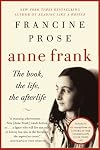
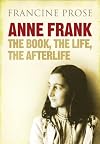
Anne Frank: The Book, The Life, The Afterlife
by Francine Prose
On This Page
Description
Francine Prose argues that the diary of Anne Frank is as much a deliberate work of art as it is an historical record, noting its literary merits and thoroughly investigating the diary's unique afterlife as one of the world's most read, and banned, books.Tags
Recommendations




Member Recommendations
Member Reviews
Where to begin? An amazing book about an amazing person. This book brings me to think far more deeply about a book that is a childhood favorite. The author examines Anne's family and times, the diary and it's various incarnations, the play, the movie, and the treatment of the book in American classrooms.
It is the author's contention that Anne is rarely credited with a depth of character, and breadth of talent that she rightly deserves. So many critics see a child spontaneously pouring out her thoughts, and don't give her the credit for editing herself, working hard to develop her characters, choosing the right words and shades of meaning, in short being an enormously talented writer. Now that several versions of her writing are publicly show more accessible, it is possible to trace her thought processes, her editing, and the extent to which her father edited and even censored her writing.
In addition, the author takes to task the playwrights and screenwriters who adapted the Diary to the stage and the screen. In their search for a "universally appealing" story, and a money-maker, the writers stripped a lot of the Jewishness from Anne, a lot of her maturing philosophical attitudes, and her grasp of the enormity of the Holocaust. Anne comes across as a giddy, high-spirited adolescent largely unaware of the dangers of Hitler's programs. Anne's ultimate fate is glossed over too much.
I have read the Diary many times, and assisted teachers in using it in the classroom. I think now I would have some different ideas of approach and emphasis. I found this book thought-provoking and highly worthy of recommendation. show less
It is the author's contention that Anne is rarely credited with a depth of character, and breadth of talent that she rightly deserves. So many critics see a child spontaneously pouring out her thoughts, and don't give her the credit for editing herself, working hard to develop her characters, choosing the right words and shades of meaning, in short being an enormously talented writer. Now that several versions of her writing are publicly show more accessible, it is possible to trace her thought processes, her editing, and the extent to which her father edited and even censored her writing.
In addition, the author takes to task the playwrights and screenwriters who adapted the Diary to the stage and the screen. In their search for a "universally appealing" story, and a money-maker, the writers stripped a lot of the Jewishness from Anne, a lot of her maturing philosophical attitudes, and her grasp of the enormity of the Holocaust. Anne comes across as a giddy, high-spirited adolescent largely unaware of the dangers of Hitler's programs. Anne's ultimate fate is glossed over too much.
I have read the Diary many times, and assisted teachers in using it in the classroom. I think now I would have some different ideas of approach and emphasis. I found this book thought-provoking and highly worthy of recommendation. show less
In this latest book on the life and diaries of Anne Frank, Prose challenges the idea that the diaries were simply the immediate outpouring of a young teen. She takes on the diaries as literature, written by an author who had an eye toward a future audience, and who showed growth and development as a writer as she revised her work over time. Prose illustrates the refinement of Anne Frank's skill, showing us versions of the same entries, which almost always show a more mature and literary eye, and emphasize her skill at dialogue and humor.
Prose describes how the members of the annex gathered around the radio, listening to the exiled Dutch Minister of Education who calls for the "establishment of a national archive to house the 'ordinary show more documents' - diaries, letters...and so forth - written by Dutch citizens during the war." The members of the annex are suddenly aware of the importance of Anne and her diary, and Anne "took his speech as a personal directive," (pp. 11-12).
She also shows how the diaries served as Anne's safety valve: her release from the pent up energy and emotion and stress of living in a small, cramped space where she could never be alone.
Prose describes the awful scene in which the Franks are discovered and taken away, delves briefly into the questions of who betrayed them, and then moves on to discuss the life of the diaries following the war, when Otto Frank returned, the only member of his family to survive the concentration camps. Prose discusses the various versions of the diary that have been published, the editing, the restoration of edited parts, and the controversies surrounding these decisions. She then goes on to discuss the diary as a play, as the movie featuring the memorable performance by Shelley Winters, and the less than memorable portayal of Anne by Millie Perkins.
Finally, Prose looks at how the book has been taught in school, discussing the difficulties of presenting it with enough context for students to grasp the importance of the the diary given a 2008 study that showed only 25% of students could identify Hitler (p.254). She reviews the study and classroom aids available to teachers, and finds them wanting, and then discusses how she would approach teaching the diary, ending with descriptions of her experience doing so at Bard College, and the responses of some of the students.
For those readers who have turned back to the diary at various times, and who have poured over the definitive edition in which all three versions of the diary are laid out side-by-side, Prose's work is a welcome addition to our understanding of Anne as a writer, and of the work she left behind her. show less
Prose describes how the members of the annex gathered around the radio, listening to the exiled Dutch Minister of Education who calls for the "establishment of a national archive to house the 'ordinary show more documents' - diaries, letters...and so forth - written by Dutch citizens during the war." The members of the annex are suddenly aware of the importance of Anne and her diary, and Anne "took his speech as a personal directive," (pp. 11-12).
She also shows how the diaries served as Anne's safety valve: her release from the pent up energy and emotion and stress of living in a small, cramped space where she could never be alone.
Prose describes the awful scene in which the Franks are discovered and taken away, delves briefly into the questions of who betrayed them, and then moves on to discuss the life of the diaries following the war, when Otto Frank returned, the only member of his family to survive the concentration camps. Prose discusses the various versions of the diary that have been published, the editing, the restoration of edited parts, and the controversies surrounding these decisions. She then goes on to discuss the diary as a play, as the movie featuring the memorable performance by Shelley Winters, and the less than memorable portayal of Anne by Millie Perkins.
Finally, Prose looks at how the book has been taught in school, discussing the difficulties of presenting it with enough context for students to grasp the importance of the the diary given a 2008 study that showed only 25% of students could identify Hitler (p.254). She reviews the study and classroom aids available to teachers, and finds them wanting, and then discusses how she would approach teaching the diary, ending with descriptions of her experience doing so at Bard College, and the responses of some of the students.
For those readers who have turned back to the diary at various times, and who have poured over the definitive edition in which all three versions of the diary are laid out side-by-side, Prose's work is a welcome addition to our understanding of Anne as a writer, and of the work she left behind her. show less
The author's intent here is to explore Anne Frank's book as a work of literature. In contrast to what is possibly a general view that part of its appeal is that Anne Frank was a little girl writing a diary for no one but herself, there is documented evidence that Anne Frank indeed intended to seek publication of her diary, and in anticipation of that, started editing her previous entries. Even as a young person, she saw herself as a writer and comparing her original entries against those she revised do show a very skillful, committed, and reflective approach to her own work.
There are several sections focusing on different aspects of the book as a literary work, including its creation, its publication, the play, the movie, and how it is show more taught in schools. The information was very, very interesting Francine Prose does a great job of putting it all together.
My one (small) quibble with this is the author's conviction that her approach, the "work of literature" approach is the right approach. Now, she doesn't come out and say this, because I'm not sure she's aware of it, because OF COURSE you have to say (and she does) that it's also valid to use the diary as a tool for teaching social justice and humanitarian issues -- but her heart just doesn't seem in it. It was actually funny to me how she would use examples of students' responses to the diary in a social justice setting to show how earnestly trite they are, and then show similar examples of students responding in a literary instruction setting and they were just as earnest and just as trite. She however seemed to see those as examples of earnestly insightful. I think the take-away is not so much that a literary approach makes for better understanding, I think it's that teens (and others) are earnest and sincere and often come across as goofy no matter what lens you are using to present the diary. And that's okay.
Grade: A-
Recommended: To anyone who has vivid memories of their first reading of The Diary and even the vaguest interest in thinking about it as literature as opposed to a strict historical document. show less
There are several sections focusing on different aspects of the book as a literary work, including its creation, its publication, the play, the movie, and how it is show more taught in schools. The information was very, very interesting Francine Prose does a great job of putting it all together.
My one (small) quibble with this is the author's conviction that her approach, the "work of literature" approach is the right approach. Now, she doesn't come out and say this, because I'm not sure she's aware of it, because OF COURSE you have to say (and she does) that it's also valid to use the diary as a tool for teaching social justice and humanitarian issues -- but her heart just doesn't seem in it. It was actually funny to me how she would use examples of students' responses to the diary in a social justice setting to show how earnestly trite they are, and then show similar examples of students responding in a literary instruction setting and they were just as earnest and just as trite. She however seemed to see those as examples of earnestly insightful. I think the take-away is not so much that a literary approach makes for better understanding, I think it's that teens (and others) are earnest and sincere and often come across as goofy no matter what lens you are using to present the diary. And that's okay.
Grade: A-
Recommended: To anyone who has vivid memories of their first reading of The Diary and even the vaguest interest in thinking about it as literature as opposed to a strict historical document. show less
An excellent book in need of an editor to reduce the repetition and rein in some of the more overwrought phrasing.
The basic premise -- that young Anne Frank took her work very seriously and was not writing a private diary of a young girl but a public book for future generations -- is well documented with comparisons among the various versions of the diary. Those are the original, the one Anne laboriously reworked in the months before the discovery of the Jews in hiding, and the one her father edited and that formed the basis of the Anne Frank "brand" that grew to include a Broadway play and the film by George Stevens.
Francine Prose zeros in on a literary paradox: "There is in the library of materpieces, an entire subcategory of books show more whose authors coud be said to have been forced into a collaboration with misfortune....These are books that came into being at a personal cost that no one would be willing to pay. It is likely that none of them would have written their novels and poems and memoirs if they could have avoided their subjects, if their subjects had not sought them out, or hunted them down. All of which makes it problematic for us to say how good the books are, and how grateful we are that they exist."
Eye-opening and shocking is the account of one challenge in particular out of the many challenges to teaching Anne Frank's diary in the schools. In Mozert v. Hawkins County Board of Education, the plaintiffs were offended by the assertion -- taken from the play, not Anne's diary -- that belief in any god is better than no belief at all. The plaintiffs also claimed "the readings fostered rebellion and anarchy, and that both parents and children could face eternal damnation as a result of merely coming into contact with the 'evil,' 'polluted,' and 'heathen' texts. More shocking: a court ordered the school board to pay the families more than $50,000 in damages, a ruling reversed on appeal.
The very people who most need to read Anne Frank, to understand the enormity of what was lost in the hatred of the Holocaust, are those who "reject for their children any concept of world community ... or human interdependency," as did the Mozert plaintiffs. show less
The basic premise -- that young Anne Frank took her work very seriously and was not writing a private diary of a young girl but a public book for future generations -- is well documented with comparisons among the various versions of the diary. Those are the original, the one Anne laboriously reworked in the months before the discovery of the Jews in hiding, and the one her father edited and that formed the basis of the Anne Frank "brand" that grew to include a Broadway play and the film by George Stevens.
Francine Prose zeros in on a literary paradox: "There is in the library of materpieces, an entire subcategory of books show more whose authors coud be said to have been forced into a collaboration with misfortune....These are books that came into being at a personal cost that no one would be willing to pay. It is likely that none of them would have written their novels and poems and memoirs if they could have avoided their subjects, if their subjects had not sought them out, or hunted them down. All of which makes it problematic for us to say how good the books are, and how grateful we are that they exist."
Eye-opening and shocking is the account of one challenge in particular out of the many challenges to teaching Anne Frank's diary in the schools. In Mozert v. Hawkins County Board of Education, the plaintiffs were offended by the assertion -- taken from the play, not Anne's diary -- that belief in any god is better than no belief at all. The plaintiffs also claimed "the readings fostered rebellion and anarchy, and that both parents and children could face eternal damnation as a result of merely coming into contact with the 'evil,' 'polluted,' and 'heathen' texts. More shocking: a court ordered the school board to pay the families more than $50,000 in damages, a ruling reversed on appeal.
The very people who most need to read Anne Frank, to understand the enormity of what was lost in the hatred of the Holocaust, are those who "reject for their children any concept of world community ... or human interdependency," as did the Mozert plaintiffs. show less
The first section of this book looks at the life of Anne Frank. In part two, Prose takes a critical look at Frank as a writer and addresses the reception history of Frank’s diary. In part three, Prose examines the way that the diary has been taught at levels from elementary school through university. Prose concludes with her own experience teaching a seminar on Anne Frank at Bard College. The controversy over the play and film versions of the diary was new to me. Prose does a thorough job of analyzing the controversy and the personalities involved. This book belongs in all libraries that own a copy of Anne Frank’s diary. It should be background reading for instructors preparing to teach students of any level about Anne Frank and her show more diary. show less
THIS IS A REVIEW OF FRANCINE PROSE'S BOOK ON THE DIARY, NOT ON THE DIARY ITSELF - THE FORMER'S REVIEWS HAVE BEEN MERGED WITH THE LATTER:
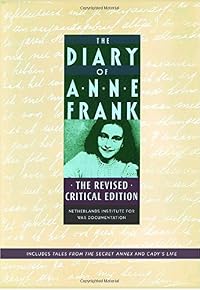
This book is an analysis of Anne Frank's diary as a work of literature, particularly comparing the three different versions - a (the original version she wrote day by day), b (the revised version she rewrote in mid 1944 after Dutch Minister Bolkestein's radio call for Dutch citizens to preserve their wartime reminiscences for posterity, which reflects her maturing views as a 15 year old rather than a 13 year old) and c (the synthesis of a and b and which was the original published version in 1947). It also analyses the 1950s Broadway and Hollywood versions of the diary - the bitter arguments over their show more purpose and the best approach to their presentation, especially over the former, make for unedifying reading. Though not nearly so unpleasant as the (mercifully) quite short chapter about the attempts of Holocaust deniers to try to show the diary was a hoax. The book concludes with some reflections by the author on the challenges and opportunities teaching Anne Frank to students. I wasn't always convinced by the author's literary conclusions, but this was mostly quite interesting in covering differing aspects of this remarkable diary and its author. show less
This book is an analysis of Anne Frank's diary as a work of literature, particularly comparing the three different versions - a (the original version she wrote day by day), b (the revised version she rewrote in mid 1944 after Dutch Minister Bolkestein's radio call for Dutch citizens to preserve their wartime reminiscences for posterity, which reflects her maturing views as a 15 year old rather than a 13 year old) and c (the synthesis of a and b and which was the original published version in 1947). It also analyses the 1950s Broadway and Hollywood versions of the diary - the bitter arguments over their show more purpose and the best approach to their presentation, especially over the former, make for unedifying reading. Though not nearly so unpleasant as the (mercifully) quite short chapter about the attempts of Holocaust deniers to try to show the diary was a hoax. The book concludes with some reflections by the author on the challenges and opportunities teaching Anne Frank to students. I wasn't always convinced by the author's literary conclusions, but this was mostly quite interesting in covering differing aspects of this remarkable diary and its author. show less
Excellent background on the diary and its fame and on Anne Frank. I learned that the diary was not as clear-cut as I thought. Her father edited it and part was from another account she wrote. It's still a powerful witness of the Holocaust.
Members
- Recently Added By
Published Reviews
ThingScore 67
Prose’s summaries and explanations of dialogue and plot can, inevitably, sometimes read like CliffsNotes, but she makes a persuasive argument for Anne Frank’s literary genius.
added by Shortride
This is a Grade A example of what a smart, precise and impassioned teacher can do.
added by Shortride
In the absence of new material, those who write about her must either endlessly rehearse what's already known, reconstitute her for a modern audience or analyse those "new" Anne Franks. Francine Prose tries to do all three and fails much of the time. For, if Anne Frank has in some sense become a sign, then the task of analysing her book's afterlife requires the skills of a semiotician rather show more than a novelist. show less
added by souloftherose
Lists

Adult Books for YA Readers
194 works; 6 members

History: Holocaust
106 works; 1 member
Author Information

64+ Works 12,963 Members
Francine Prose was born on April 1, 1947. She graduated from Radcliffe College in 1968. She received the PEN Translation Prize in 1988 and received a Guggenheim fellowship in 1991. Francine Prose novel The Glorious Ones, has been adapted into a musical with the same title by Lynn Ahrens and Stephen Flaherty. It ran at the Mitzi E. Newhouse Theater show more at Lincoln Center in New York City in the fall of 2007. Prose has served as president of PEN American Center, a New York City based literary society of writers, editors, and translators that works to advance literature in 2007 and 2008. Prose novel, Blue Angel, a satire about sexual harassment on college campuses, was a finalist for the National Book Award. One of her novels, Household Saints, was adapted for a movie by Nancy Savoca. In 2014 her title Lovers at the Chameleon Club - Paris 1932, made The New York Times Best Seller List. (Bowker Author Biography) show less
Common Knowledge
- Original publication date
- 2009
- People/Characters
- Anne Frank; Otto Frank
- Important places
- Amsterdam, North Holland, Netherlands; The Netherlands; North Holland, Netherlands
- Important events
- World War II (1939 | 1945); Holocaust (1939 | 1945)
- Dedication
- To Howie
- First words
- I would call the subject of Anne Frank's Diary even more mysterious and fundamental than St. Augustine's, and describe it as: the conversion of a child into a person...
- Quotations
- Only a natural writer could sound as if she is not writing so much as thinking on the page.
- Last words
- (Click to show. Warning: May contain spoilers.)And for those few hours during which my students and I talked about her diary, it seemed to me that her spirit - or, in any case, her voice - had been there with us, fully present and utterly alive, audible in yet another slowly darkening room.
Classifications
- Genres
- Nonfiction, Literature Studies and Criticism, General Nonfiction, History, Biography & Memoir
- DDC/MDS
- 940.5318092 — History & geography History of Europe History of Europe 1918- World War II, 1939-1945 Social, political, economic history; Holocaust Holocaust Standard subdivisions History, geographic treatment, biography Biography
- LCC
- DS135 .N6 .F73525 — History of Europe, Asia, Africa and Oceania Asia History of Asia Israel (Palestine). The Jews Jews outside of Palestine
- BISAC
Statistics
- Members
- 420
- Popularity
- 73,296
- Reviews
- 14
- Rating
- (4.02)
- Languages
- Dutch, English, Italian, Portuguese
- Media
- Paper, Ebook
- ISBNs
- 11
- ASINs
- 4