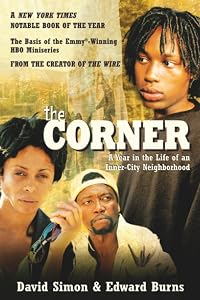
The Corner
by David Simon (Author), Ed Burns (Author)
On This Page
Description
The crime-infested intersection of West Fayette and Monroe Streets is well-known--and cautiously avoided--by most of Baltimore. But this notorious corner's 24-hour open-air drug market provides the economic fuel for a dying neighborhood. David Simon, an award-winning author and crime reporter, and Edward Burns, a 20-year veteran of the urban drug war, tell the chilling story of this desolate crossroad. Through the eyes of one broken family--two drug-addicted adults and their smart, show more vulnerable 15-year-old son, DeAndre McCollough, Simon and Burns examine the sinister realities of inner cities across the country and unflinchingly assess why law enforcement policies, moral crusades, and the welfare system have accomplished so little. This extraordinary book is a crucial look at the price of the drug culture and the poignant scenes of hope, caring, and love that astonishingly rise in the midst of a place America has abandoned. show lessTags
Recommendations



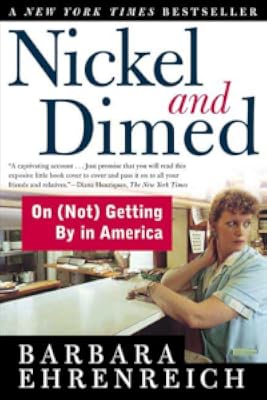
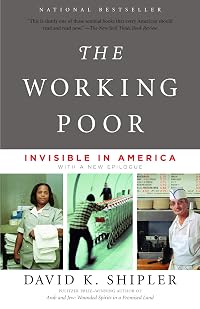
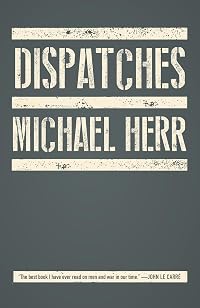
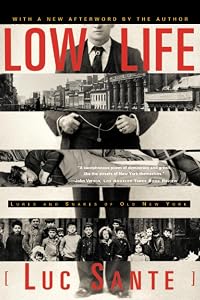


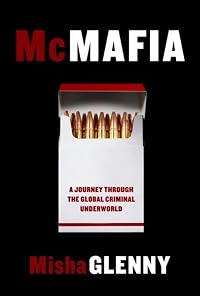
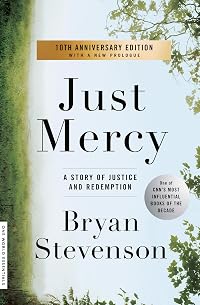

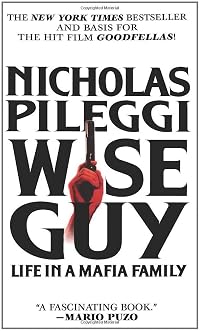
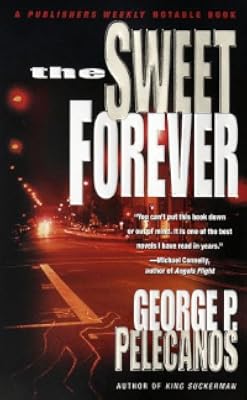
Member Recommendations

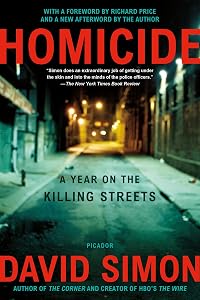
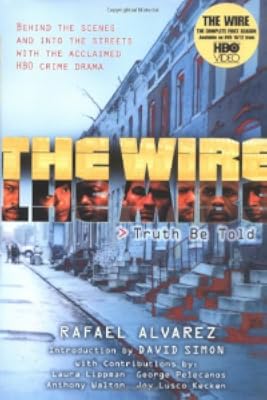
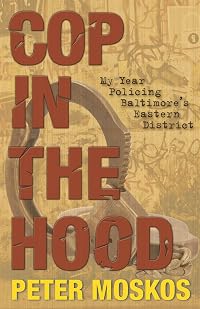
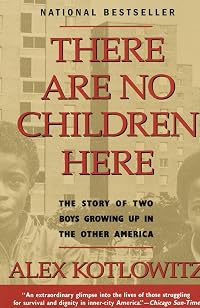
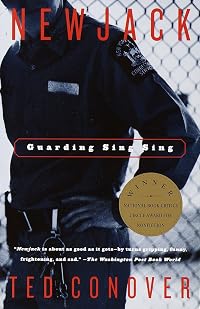
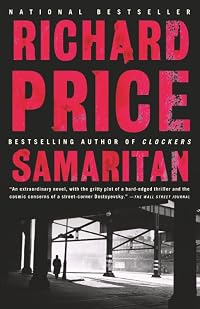
asymmetric The Wire and the corner are both creations of David Simon and share some themes, particularly the description of life in West Baltimore's ghettos.
Member Reviews
How can I describe The Corner? How can I do justice to this heartbreaking book? You know David Simon and Ed Burns as the creative force behind The Wire. This non-fiction book is the truth behind the television, a revealing portrait of a broken family living at one of the worst drug corners in West Baltimore. Dope and coke are sold 24/7, violence is omnipresent, and the pursuit of drug-induced happiness has made life and liberty seem as distant as the moon.
Gary McCollough is a former businessman turned dopehound, a street philosopher who's basic decency and inability to hurt anyone else means that he's a perennial victim. Fran, his ex-wife, has buried her own life in the needle. Their son, DeAndre, is fifteen, caught between boyhood show more posing and the awful realities of life on the corner. Other characters round out the neighborhood. Ella Thompson volunteers at the rec center, one of the last honest citizens left. Fat Curt is an old veteran of addiction, his organs failing and limbs swollen, who has no where else to go. Blue runs a shooting gallery in the shell of his dead mother's house.
In this year long story, Simon and Burns follow their subjects, painting revealing portraits of bare humanity under the twin weights of drugs and a society that has abandoned any sense of responsibility towards the ghettos. The first rule of the corner is chasing the blast, that rush of pleasure from the the drug and relief from the snake of withdrawal symptoms, and a moment of blessed escape away from the grind of life. And life, life is absolutely grinding. It's an endless series of scams and being scammed to get money for the dope. It's getting beat on by other crews, by your friends and family, by the police. It's overloaded systems of public services, education, justice, healthcare, that can barely manage to cart the bodies away, let alone help anyone.
Simon and Burns are at their best when they're talking about hopelessness, and the things that lift their subject past it. Corner life is lived entirely in present tense. Even a plan as simple as "I'll buy a loaf of bread to have toast tomorrow" is void in the face of junkie roommates. The effort required to get clean, a months long ordeal to get a rehab slot in the face of requests for documents, court dates, and the blast itself, is a fragile thread, let alone the effort of staying clean when drugs are easier to get than coffee. The most tragic parts of the book concern DeAndre, a smart kid who's almost entirely given up on school, but doesn't have the brutality and fearlessness it takes to make it as a gangster. At 15, DeAndre impregnates his 13 year old girlfriend Tyreeka. Neither of them are in any sense ready to be parents, but the baby provides a focus for a girl who's not sure that she matters to anyone, and a sense of immortality for boy who sees only a little bit of life ahead.
At times, Simon devolves into a general rant at the War on Drugs, and the false hope that 30 years of brutality can win against the corner, against the raw desire for oblivion in our midst. And now, 25 years on, the drug war is much the same. With the Opioid Epidemic, the Corner is now in white America too. As I hit 'save' on this review, President Trump plans to release a drug plan that includes death for drug dealers.
Screw it. Down the flag. Let the dealers and the junkies hold a parade down the National Mall. Throw some samplers to the crowd, because That Shit Is The Bomb. Drugs won. War over. show less
Gary McCollough is a former businessman turned dopehound, a street philosopher who's basic decency and inability to hurt anyone else means that he's a perennial victim. Fran, his ex-wife, has buried her own life in the needle. Their son, DeAndre, is fifteen, caught between boyhood show more posing and the awful realities of life on the corner. Other characters round out the neighborhood. Ella Thompson volunteers at the rec center, one of the last honest citizens left. Fat Curt is an old veteran of addiction, his organs failing and limbs swollen, who has no where else to go. Blue runs a shooting gallery in the shell of his dead mother's house.
In this year long story, Simon and Burns follow their subjects, painting revealing portraits of bare humanity under the twin weights of drugs and a society that has abandoned any sense of responsibility towards the ghettos. The first rule of the corner is chasing the blast, that rush of pleasure from the the drug and relief from the snake of withdrawal symptoms, and a moment of blessed escape away from the grind of life. And life, life is absolutely grinding. It's an endless series of scams and being scammed to get money for the dope. It's getting beat on by other crews, by your friends and family, by the police. It's overloaded systems of public services, education, justice, healthcare, that can barely manage to cart the bodies away, let alone help anyone.
Simon and Burns are at their best when they're talking about hopelessness, and the things that lift their subject past it. Corner life is lived entirely in present tense. Even a plan as simple as "I'll buy a loaf of bread to have toast tomorrow" is void in the face of junkie roommates. The effort required to get clean, a months long ordeal to get a rehab slot in the face of requests for documents, court dates, and the blast itself, is a fragile thread, let alone the effort of staying clean when drugs are easier to get than coffee. The most tragic parts of the book concern DeAndre, a smart kid who's almost entirely given up on school, but doesn't have the brutality and fearlessness it takes to make it as a gangster. At 15, DeAndre impregnates his 13 year old girlfriend Tyreeka. Neither of them are in any sense ready to be parents, but the baby provides a focus for a girl who's not sure that she matters to anyone, and a sense of immortality for boy who sees only a little bit of life ahead.
At times, Simon devolves into a general rant at the War on Drugs, and the false hope that 30 years of brutality can win against the corner, against the raw desire for oblivion in our midst. And now, 25 years on, the drug war is much the same. With the Opioid Epidemic, the Corner is now in white America too. As I hit 'save' on this review, President Trump plans to release a drug plan that includes death for drug dealers.
Screw it. Down the flag. Let the dealers and the junkies hold a parade down the National Mall. Throw some samplers to the crowd, because That Shit Is The Bomb. Drugs won. War over. show less
I had to wait a few days after finishing this book to write anything about it, because it didn't seem like any part of my reaction really did it justice, or would be worthy enough to record without cheapening the book. It's unquestionably one of the most powerful books I've read in a long time, and knowing that it's nonfiction - that all these people really did exist and really did do the things it describes - makes me pause. Very few books make me think about my own relationship to the text to the extent that The Corner did. Maybe it's because it's about real life, that Baltimore and so many other inner cities are really suffering in this way in my own country right now that makes it hit so much harder than, say, the equivalent show more suffering in a Zola novel. While I think America is a great place to live and has towering advantages over many other countries in many things, I think its greatest failing, at heart, is a willingness to simply look the other way at real human suffering if caring about it would cost money.
The quote from Kafka that opens up the book, which also later made an appearance in season 5 of Simon's TV series The Wire - "You can hold back from the suffering of the world. You have free permission to do so, and it is in accordance with your nature. But perhaps this very holding back is the one suffering you could have avoided." - sums up what I want to say about my personal and our collective attitude towards the corner perfectly. I'm not exactly sure what drives David Simon to delve so deeply into the lives of these people and all the others he's featured on his shows or in his books; he'd probably say that, contra the Kafka quote, holding back is the one thing he can't do. He immersed himself in the lives of Ella, Fran, Gary, DeAndre, and the many other people with smaller roles for well over a year, connecting their joys and heartbreaks, their own pieces of the "suffering of the world", into an immensely affecting work for public consumption. If you've seen The Wire then all this will be very familiar, but it's worth looking at this material through a new medium, particularly because its diligent, searching explorations of the individual people's lives is much more focused on the ground-level day-to-day struggles to stay clean or get a new fix or get a job or keep a job than the panoramic sweep of the show. I'm not sure which of the main characters has the most painful story, but each was gripping.
Periodically Simon will interrupt the narrative to go into extended rants on how exactly we've gotten ourselves trapped in this endless drug war and cycle of poverty. This book was written in the early 90s before the decrease in crime rates, but his moving analyses of the vicious logic of drug use and drug crime remain perfectly relevant, especially in a city like Baltimore. The real question for me is: after reading an amazing work like this, what am I going to do about it? I can continue not being a heroin addict, but I don't know what I can do about the nightmare vortex portrayed here. The corner has an internal logic all its own, and I'm not sure that there's much I can do about it other than to support the end of this pointless Reaganeering that has hollowed out our cities and ruined millions of lives. Like Simon said through The Wire, you can't call it a war on drugs - wars end. The challenge that our society faces is how to admit defeat and begin the long, painful process of making sure that the kind of life pictured here becomes just fiction again. Any ideas? show less
The quote from Kafka that opens up the book, which also later made an appearance in season 5 of Simon's TV series The Wire - "You can hold back from the suffering of the world. You have free permission to do so, and it is in accordance with your nature. But perhaps this very holding back is the one suffering you could have avoided." - sums up what I want to say about my personal and our collective attitude towards the corner perfectly. I'm not exactly sure what drives David Simon to delve so deeply into the lives of these people and all the others he's featured on his shows or in his books; he'd probably say that, contra the Kafka quote, holding back is the one thing he can't do. He immersed himself in the lives of Ella, Fran, Gary, DeAndre, and the many other people with smaller roles for well over a year, connecting their joys and heartbreaks, their own pieces of the "suffering of the world", into an immensely affecting work for public consumption. If you've seen The Wire then all this will be very familiar, but it's worth looking at this material through a new medium, particularly because its diligent, searching explorations of the individual people's lives is much more focused on the ground-level day-to-day struggles to stay clean or get a new fix or get a job or keep a job than the panoramic sweep of the show. I'm not sure which of the main characters has the most painful story, but each was gripping.
Periodically Simon will interrupt the narrative to go into extended rants on how exactly we've gotten ourselves trapped in this endless drug war and cycle of poverty. This book was written in the early 90s before the decrease in crime rates, but his moving analyses of the vicious logic of drug use and drug crime remain perfectly relevant, especially in a city like Baltimore. The real question for me is: after reading an amazing work like this, what am I going to do about it? I can continue not being a heroin addict, but I don't know what I can do about the nightmare vortex portrayed here. The corner has an internal logic all its own, and I'm not sure that there's much I can do about it other than to support the end of this pointless Reaganeering that has hollowed out our cities and ruined millions of lives. Like Simon said through The Wire, you can't call it a war on drugs - wars end. The challenge that our society faces is how to admit defeat and begin the long, painful process of making sure that the kind of life pictured here becomes just fiction again. Any ideas? show less
I can't think about this book without comparing it to Homicide (the earlier book by David Simon), so I won't bother. While Homicide documents the year David Simon spent embedded with Baltimore homicide detectives, in The Corner we spend the year on a single inner-city corner dominated by an open-air drug market. As in Homicide, we follow a few of this communities' characters through the year, coming to understand the motivations and pressures that shape their lives and worldview. Both books are tomes, written with Simon's characteristic gritty lyricism. That's about where the similarities end.
I laughed the whole way through Homicide. Despite the horror of murder, the detectives live relatively ordinary working lives: they go to work, show more they deal with office politics, they become masters of their craft, get promoted, demoted, burn out, retire. The tragedies they navigate every day are strangely quotidian, which gives it all a wonderful, gritty humor.
The Corner, however, is not funny. The people of The Corner are just sick. They have no education, no prospects. Their community is overwhelmed by violence, addition, crime, imprisonment. The characters are written with care and empathy, and many of them are outright likeable, which only helps make this probably the saddest thing I have ever read.
It also helps the overall arc of the book. One of the frustrating things about Homicide is that nothing ever really seems to happen: it's a compendium of incredible anecdotes. The Corner has something more like a plot, characters so close to despair and addition have something clear to lose or gain.
Over the year, we watch a group of schoolchildren transform into hardened criminals and drug addicts. We watch addicts struggle to regain sobriety and a grip on their own futures. We watch lifelong addicts slip toward collapse or salvation. You want to reach through the pages and give these people a hug.
After all, there doesn't seem to be much other respite. The book is sprinkled with chapter-long essays where Simon places the stream of individual tragedies into an ocean of systemic neglect, abuse, societal collapse and hopelessness. Uplifting stuff.
The Corner is bleak, tragic, unrelenting, and highly recommended.
4 stars for the unforgivable HBO miniseries advert on the cover show less
I laughed the whole way through Homicide. Despite the horror of murder, the detectives live relatively ordinary working lives: they go to work, show more they deal with office politics, they become masters of their craft, get promoted, demoted, burn out, retire. The tragedies they navigate every day are strangely quotidian, which gives it all a wonderful, gritty humor.
The Corner, however, is not funny. The people of The Corner are just sick. They have no education, no prospects. Their community is overwhelmed by violence, addition, crime, imprisonment. The characters are written with care and empathy, and many of them are outright likeable, which only helps make this probably the saddest thing I have ever read.
It also helps the overall arc of the book. One of the frustrating things about Homicide is that nothing ever really seems to happen: it's a compendium of incredible anecdotes. The Corner has something more like a plot, characters so close to despair and addition have something clear to lose or gain.
Over the year, we watch a group of schoolchildren transform into hardened criminals and drug addicts. We watch addicts struggle to regain sobriety and a grip on their own futures. We watch lifelong addicts slip toward collapse or salvation. You want to reach through the pages and give these people a hug.
After all, there doesn't seem to be much other respite. The book is sprinkled with chapter-long essays where Simon places the stream of individual tragedies into an ocean of systemic neglect, abuse, societal collapse and hopelessness. Uplifting stuff.
The Corner is bleak, tragic, unrelenting, and highly recommended.
4 stars for the unforgivable HBO miniseries advert on the cover show less
In Chapter 5 of Let Us Now Praise Famous Men, that chronicle of poverty in the Great Depression after a section on of the dejection of poverty, where the description transitions into a long string of punctuation marks. The emotion and description have moved beyond words. The author pounds his fists on the typewriter and screams out of frustration.
This is a real Social Document. It is a raw and honest look at the brutal decay and degradation of the inner city, the compounding of prejudice and bad policy and ignorance over several decades, and the cruel economics of addiction and the drug trade, and those who profit from it, politicians, fiends, and slingers alike. The war on drugs has become a war on the underclass itself.
These are show more human beings. It's easy to forget that, to distort or glamorize or hate them, to imagine ourselves in 'their position', that we would 'rise up' from the ghettoes and they are lazy and indolent. But there are few ways out, and those who do are like escapees from prison.
Simon has no optimism or hope for this state. But he has shown us what is out there, and now we have no excuse for ignorance. What else is to be done? show less
This is a real Social Document. It is a raw and honest look at the brutal decay and degradation of the inner city, the compounding of prejudice and bad policy and ignorance over several decades, and the cruel economics of addiction and the drug trade, and those who profit from it, politicians, fiends, and slingers alike. The war on drugs has become a war on the underclass itself.
These are show more human beings. It's easy to forget that, to distort or glamorize or hate them, to imagine ourselves in 'their position', that we would 'rise up' from the ghettoes and they are lazy and indolent. But there are few ways out, and those who do are like escapees from prison.
Simon has no optimism or hope for this state. But he has shown us what is out there, and now we have no excuse for ignorance. What else is to be done? show less
The Corner is very similar to Simon's other best selling book, Homicide: a Year on the Killing Streets. As a freelance writer he has been allowed access to the darkest and grittiest corners of West Baltimore. With Edward Burns as coauthor, Simon takes the reader on a cruel and complicated journey. Together they illustrate what junkies will and won't do to score the next hit or blast; what crimes or capers they will commit or won't...because even full blown addicts have their limits. West Baltimore is a shooting gallery where the drug war rearranges police priorities. It's a harsh reality. The operative word is "real" because even though the plot line reads like a movie and the people you meet could be actors, they are all real. As show more readers, you get to know people and care about them. Be forewarned. It's no fairy tale. It grips you as only a never ending nightmare could. show less
Few novels can boast the combination Simon and Burns achieve here: absolute narrative clarity and complete emotional ownership of the reader. Armed with the tools of journalism and the humanity of people who would devote years of their lives to the study of a toxically heartbreaking environment in the first place, they tell their subjects' stories as every human's story deserves to be told: with respect, compassion, precision, and an understanding of the forces that shape our lives. It's a feat similar to Oliver Sacks's—a complex human situation made both utterly comprehensible and undeniably relatable.
nothing's harder than seeing gary mccullough fall in the show and then read about it again in the book. this gives a better perspective of simon & burns's theories behind the heroin blight and provides a pretty dim assessment of our ability to address it, let alone stop it.
Members
- Recently Added By
Author Information

Some Editions
Awards and Honors
Common Knowledge
- Canonical title
- The Corner
- Original publication date
- 1997
- People/Characters
- Fran Boyd; Gary McCullough; DeAndre McCullough; Tyreeka Freamon; Fat Curt; Ella Thompson
- Important places
- Baltimore, Maryland, USA; Maryland, USA
- Important events
- The War on Drugs (1971 - ?)
- Related movies
- The Corner (2000 | IMDb); The Wire
Classifications
- Genres
- Nonfiction, General Nonfiction
- DDC/MDS
- 364.177097526 — Society, government, & culture Social problems and social services Crime Criminal offenses Crimes against public morals
- LCC
- HV5833 .B2 .S55 — Social sciences Social pathology. Social and public welfare. Criminology Social pathology. Social and public welfare. Drug habits. Drug abuse
- BISAC
Statistics
- Members
- 1,035
- Popularity
- 25,130
- Reviews
- 15
- Rating
- (4.21)
- Languages
- 5 — Dutch, English, French, German, Spanish
- Media
- Paper, Audiobook, Ebook
- ISBNs
- 18
- UPCs
- 2
- ASINs
- 7
