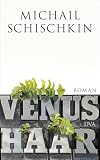
Maidenhair
by Mikhail Shishkin
On This Page
Description
Day after day Russian asylum-seekers sit across from the interpreter and Peter--the Swiss officers who guard the gates to paradise--and tell of the atrocities they've suffered, or that they've invented, or heard from someone else.The reader lives inside the nameless interpreter's head, with the narratives combining throughout.Tags
Recommendations





























Member Reviews
Говорить, что «Венерин волос» Михаила Шишкина это роман о работе переводчика в Швейцарии и в то же время дневник певицы — всё равно, что считать «Анну Каренину» руководством к адюльтеру. И тем не менее это действительно роман о работе главного героя переводчиком и параллельно дневник Изабеллы Юрьевой. Как так получилось?
Шишкин писал свой роман с 2002 по 2004 года, в Цюрихе и Риме. Сам Михаил Шишкин show more действительно работал переводчиком («толмачом») для иммиграционных властей Швейцарии, которую он в романе называет «раем». Рассказы людей, просивших убежище, и легли в основу романа. Читать их очень тяжело.
Самые разные истории сплетаются воедино. Начиная с мальчика из детдома, мы встречаем беженцев из Чечни, отслужившего в Афганистане «мента», который не хотел говорить, что он «шерстинка в шкуре зверя» и другие грустные и тяжелые истории.
Рассказчик показывает нам, что пережили люди в России и как сильно они хотят попасть в «рай». И тут оказывается, что он раньше работал учителем, будучи еще в России, и однажды получил заказ написать книгу об одной известной русской певице. Пластинки с её песнями слушал отец толмача, когда толмач был маленький, еще в его прошлой жизни в России в коммунальной квартире. Певицу зовут Изабелла Юрьева, и толмачу за книгу выдают «баснословные» 300 долларов аванса. Его задача — встретиться с ней, в то время уже старухой, и взять у неё интервью.
Но она болеет, чувствует себя всё хуже и почти не приходит в сознание, толмачу дают её дневники для книги, которые потом у него «провалялись несколько лет где-то среди других книг и бумаг». Издательство разорилось, книгу уже никому писать не нужно, толмач живет в Швейцарии уже несколько лет. Певица умерла.
Это и есть та связующая нить между первой частью романа и второй. Если в первой толмач рассказывает нам, кого он встречает на работе, то во второй мы уже читаем выдержки из дневника певицы, параллельно с допросами беженцев и размышлениями автора. Читая дневник, мы уже знаем, что его милая писательница умерла. Книга зациклена, всё уже было написано. Дневник при всей его простоте срывает мишуру и показывает то, к чему сводится человеческая жизнь в кратком пересказе. Милая, добрая девушка, еще не женщина, проходит весь путь: от надежд на будущее, веры в то, что она особенная и ей удастся то, что не удавалось другим, до одиночества в браке и отчаяния. Она боится старости, дряхлости и смерти, а шутка судьбы в том, что Юрьева проживёт 100 лет.
Читать дневник грустно. Его наглядность настолько сильна, что возникает ощущение, будто в жизни нет ничего стоящего, к чему стоило бы стремиться. Нужен ли успех и деньги, если внутри пустота?
Шишкин открывает нам уникальный мир, на страницах которого чеченцы во время Второй Мировой войны спасаются от трагедии в Хайбахе и встречают эллинов и греются вместе с ними у костра. На утро Ксенофонт поведет их всех вместе к морю бессмертия, Талассе. И так они и будут вечно идти по страницам романа к своему бессмертию.
Читать дальше на BookGeek.ru!href> show less
Шишкин писал свой роман с 2002 по 2004 года, в Цюрихе и Риме. Сам Михаил Шишкин show more действительно работал переводчиком («толмачом») для иммиграционных властей Швейцарии, которую он в романе называет «раем». Рассказы людей, просивших убежище, и легли в основу романа. Читать их очень тяжело.
Вопрос: Вы откуда? Из страны, где в постелях стонут и молчат — слова грязные, а чистых нет?
Самые разные истории сплетаются воедино. Начиная с мальчика из детдома, мы встречаем беженцев из Чечни, отслужившего в Афганистане «мента», который не хотел говорить, что он «шерстинка в шкуре зверя» и другие грустные и тяжелые истории.
Вышел на площадь и сказал то, что должен был сказать. Стою на остановке и говорю: «Я — не шерстинка!».
Вопрос: И? Ответ: Дальше всё было по считалке. Суд. Зона.
Рассказчик показывает нам, что пережили люди в России и как сильно они хотят попасть в «рай». И тут оказывается, что он раньше работал учителем, будучи еще в России, и однажды получил заказ написать книгу об одной известной русской певице. Пластинки с её песнями слушал отец толмача, когда толмач был маленький, еще в его прошлой жизни в России в коммунальной квартире. Певицу зовут Изабелла Юрьева, и толмачу за книгу выдают «баснословные» 300 долларов аванса. Его задача — встретиться с ней, в то время уже старухой, и взять у неё интервью.
Но она болеет, чувствует себя всё хуже и почти не приходит в сознание, толмачу дают её дневники для книги, которые потом у него «провалялись несколько лет где-то среди других книг и бумаг». Издательство разорилось, книгу уже никому писать не нужно, толмач живет в Швейцарии уже несколько лет. Певица умерла.
Это и есть та связующая нить между первой частью романа и второй. Если в первой толмач рассказывает нам, кого он встречает на работе, то во второй мы уже читаем выдержки из дневника певицы, параллельно с допросами беженцев и размышлениями автора. Читая дневник, мы уже знаем, что его милая писательница умерла. Книга зациклена, всё уже было написано. Дневник при всей его простоте срывает мишуру и показывает то, к чему сводится человеческая жизнь в кратком пересказе. Милая, добрая девушка, еще не женщина, проходит весь путь: от надежд на будущее, веры в то, что она особенная и ей удастся то, что не удавалось другим, до одиночества в браке и отчаяния. Она боится старости, дряхлости и смерти, а шутка судьбы в том, что Юрьева проживёт 100 лет.
Читать дневник грустно. Его наглядность настолько сильна, что возникает ощущение, будто в жизни нет ничего стоящего, к чему стоило бы стремиться. Нужен ли успех и деньги, если внутри пустота?
Шишкин открывает нам уникальный мир, на страницах которого чеченцы во время Второй Мировой войны спасаются от трагедии в Хайбахе и встречают эллинов и греются вместе с ними у костра. На утро Ксенофонт поведет их всех вместе к морю бессмертия, Талассе. И так они и будут вечно идти по страницам романа к своему бессмертию.
Читать дальше на BookGeek.ru!href> show less
Rather a disappointment. I liked the essays in 'Calligraphy Lesson,' though I wasn't so keen on the stories, and that should have suggested to me that I wouldn't want to read 500 pages of 'story.' Well, I tried. Others have praised the prose, but I wonder what they were reading: Shishkin do the police in different voices, and he do them so good (here, an interpreter for Russian/Slavic refugees; a singer first as a young girl, then as a woman, then as an older woman; the refugees themselves; and some more distant third narration). But that's not the same as writing well simpliciter. It doesn't help that the book's great climax is in my least favorite literary style that is actually a style, that of stuttering fragments:
"A Jew races on show more the Corso. Now you, you damn kikes, you're going to know how our Lord was crucified! A christened kike is a sated wolf. Man out back, kike in the shack. Man is the Holy Sepulcher; he must be freed. Mary herself indicated where to build the chruch, and in the middle of August, snow fell on Esquiline. After the free the fallen leaves stiffened. Triton went crazy, like an angel trumpeting through the Eustachian tubes: Arise, arise, why are you sprawled out here!"
This is a common enough tactic in English, and I'm too old to bother trying to read it anymore, unless it's in Joyce, who gets a free pass for originality (compare, unfavorably, Joyce Carey, or Eimear McBride). And of course, in Joyce, and for it being one option among many. The same is true for for Shishkin, but the first 450 pages of Maidenhair aren't quite as rewarding as the non-stuttering pages of Ulysses. I'll take the long-line of the modernist prose tradition, thanks.
Maidenhair's other problem, from my humble corner, is that I'm also done reading books that give us narrative fragments and then expect us to connect said fragments together. That doesn't mean I'm done reading difficult books; it means I'm done reading books in which the difficulty is invented by the author for no real purpose, rather than actually inhering in the topic or approach of the book (see also: Dodge Rose). I'm most particularly of all done reading books in which the payoff for all that laborious connecting is something as daft as "Life sucks, mostly, but love is good." Thanks, Mikhail. I never would have know without you.
That said, Shishkin is trying to write good books, he wants to write important books, he has good ideas (assimilating the refugees' stories to literary myths was a great one, though the execution wasn't so perfect), and he cares about literature and the literary tradition. So even though I'll never try to read this beginning to end again, I'm glad to have it, and I'll flick through it from time to time. show less
"A Jew races on show more the Corso. Now you, you damn kikes, you're going to know how our Lord was crucified! A christened kike is a sated wolf. Man out back, kike in the shack. Man is the Holy Sepulcher; he must be freed. Mary herself indicated where to build the chruch, and in the middle of August, snow fell on Esquiline. After the free the fallen leaves stiffened. Triton went crazy, like an angel trumpeting through the Eustachian tubes: Arise, arise, why are you sprawled out here!"
This is a common enough tactic in English, and I'm too old to bother trying to read it anymore, unless it's in Joyce, who gets a free pass for originality (compare, unfavorably, Joyce Carey, or Eimear McBride). And of course, in Joyce, and for it being one option among many. The same is true for for Shishkin, but the first 450 pages of Maidenhair aren't quite as rewarding as the non-stuttering pages of Ulysses. I'll take the long-line of the modernist prose tradition, thanks.
Maidenhair's other problem, from my humble corner, is that I'm also done reading books that give us narrative fragments and then expect us to connect said fragments together. That doesn't mean I'm done reading difficult books; it means I'm done reading books in which the difficulty is invented by the author for no real purpose, rather than actually inhering in the topic or approach of the book (see also: Dodge Rose). I'm most particularly of all done reading books in which the payoff for all that laborious connecting is something as daft as "Life sucks, mostly, but love is good." Thanks, Mikhail. I never would have know without you.
That said, Shishkin is trying to write good books, he wants to write important books, he has good ideas (assimilating the refugees' stories to literary myths was a great one, though the execution wasn't so perfect), and he cares about literature and the literary tradition. So even though I'll never try to read this beginning to end again, I'm glad to have it, and I'll flick through it from time to time. show less
4.5 stars.
Венерин волос (Maidenhair) is what I think of as an immersion type of book, a book that takes over my thoughts even when I'm not reading it. Maidenhair is also very difficult to summarize: the book shifts between characters, countries, and time lines to offer varied takes on life and death. Though the book has a reputation for difficulty, I found it very readable and enjoyable, even suspenseful at times, and loaded with references to literature and history.
(There's more about Maidenhair on my blog, here.)
Венерин волос (Maidenhair) is what I think of as an immersion type of book, a book that takes over my thoughts even when I'm not reading it. Maidenhair is also very difficult to summarize: the book shifts between characters, countries, and time lines to offer varied takes on life and death. Though the book has a reputation for difficulty, I found it very readable and enjoyable, even suspenseful at times, and loaded with references to literature and history.
(There's more about Maidenhair on my blog, here.)
This is one of those books that starts off with a bang and then slowly fizzles. Initially, I would liken the reading experience to be very similar to reading Rushdie's "Satanic Verses" or "Midnight's Children", which requires an ability to give oneself over to the stream of consciousness of the novel in order to absorb the themes and to see patterns. In this case, by midway through the book I was there and did not enjoy the rest. The themes are powerful ones in this novel set in the Swiss office for interviewing people requesting refugee status. They include: the savagery of mankind, love, development of numbness to savagery after hearing and seeing too much of it, and how life fits with scripture. Quite an interesting collection, but show more again, the book fizzles for me. Darn! show less
There are many fine things in this book, however the separate strands didn't cohere for me.
Een bijzonder boek, dat ik graag wilde lezen na de nominatie voor de Filter Vertaalprijs. Maar tegelijkertijd een boek waar ik heel moeilijk doorheenkwam, doordat grote stukken teveel van het goede zijn: poëtische zinsnedes, maar dan 200 achter elkaar. Zinloze verbanden waarin je probeert iets te ontdekken, maar het gaat zolang door dat er geen zin meer te geven valt. Sommige coherente delen die heel mooi zijn: het leven in Rostov en elders tijdens en na de Revolutie aan de hand van / geïnspireerd door het leven van zangeres Isabella Joerjeva. De Tristan-en-Isolde geschiedenis van een post-Tristan tolk en zij n geliefde met wie het niet lukt. Vraag en Antwoord in een tolkensetting van mensen die Zwitserland inwillen, verhalen van show more oorlog, Tsjetsenen, modder en armoede, soms de mooiste en meest evocatieve van het boek, maar zo uitwaaierend dat je begint te denken, Ja, buiten staat ook een boom en zo kan ik het ook. Kortom: prachtige scènes en beschrijvingen, totaal willekeurige structuur (of liever: structuur die ik niet kan doorzien), soms lijkend alleen te willen epateren. show less
Oct 3, 2015Dutch
Ratings
Members
- Recently Added By
Lists

Best of 2014
8 works; 1 member
Author Information

23+ Works 803 Members
Some Editions
Awards and Honors
Awards
Common Knowledge
- Canonical title
- Maidenhair
- Original title
- Венерин волос; Venerin volos
- Alternate titles*
- Maidenhair
- Original publication date
- 2005
- Important places*
- Russland; Schweiz
- First words*
- Dem Dareios und der Parysatis wurden zwei Söhne geboren, ein älterer, Artaxerxes, ein jüngerer, Kyros.
- Last words*
- (Click to show. Warning: May contain spoilers.)Ein Kräutlein will ich euch zeigen, ein grünes, grünes Gras!
- Original language*
- Russisch
*Some information comes from Common Knowledge in other languages. Click "Edit" for more information.
Classifications
- Genres
- General Fiction, Fiction and Literature
- DDC/MDS
- 891.73 — Literature & rhetoric Literatures of other languages East Indo-European and Celtic literatures Russian and East Slavic languages Russian fiction
- LCC
- PG3487 .I7525 .V4613 — Language and Literature Slavic languages and literatures. Baltic languages. Albanian language Slavic. Baltic. Albanian Russian literature Individual authors and works 1961-2000
- BISAC
Statistics
- Members
- 296
- Popularity
- 108,992
- Reviews
- 6
- Rating
- (3.98)
- Languages
- 13 — Danish, Dutch, English, Estonian, Finnish, French, German, Greek, Italian, Norwegian (Bokmål), Romanian, Russian, Swedish
- Media
- Paper, Ebook
- ISBNs
- 22
- ASINs
- 3