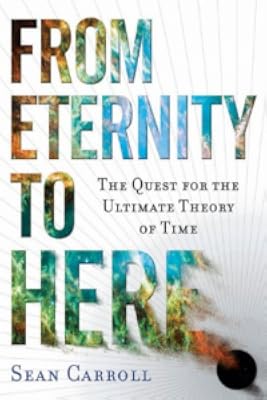
From Eternity to Here: The Quest for the Ultimate Theory of Time
by Sean M. Carroll
On This Page
Description
A rising star in theoretical physics offers his awesome vision of our universe and beyond, all beginning with a simple question: Why does time move forward?Tags
Recommendations



Member Reviews
This is some very impressive stuff.
I've read a lot of nonfiction science books that sometimes had equations but mostly did not, but what I really wanted was a cohesive drive, an arrow to spear right through some of the biggest questions of our time... such as What Is Time.
Sean Carroll manages to keep things very sharp between what is perfectly understood and all of the theories that are somewhat understood, and the other Cosmology stuff that's mostly just baffling. :)
Any way you look at it, though, this is not a book that gets derailed or goes off into super strange directions. He lays out all the foundations, from the opening definitions of Time and what we think it means, from the average to the rather advanced notions of space-time show more and curvature, Einstein's energy equation, speed of light, diliation, moving all the way to Black Holes. This is very solid stuff.
Plus, we have a very coherent definition of Time as Entropy, showing us just how complicated it can get when time's arrow might just be the illusion that Hawking says it is. I really enjoyed that discussion.
Of course, we come up with lots of possibilities and digressions that are always explored in SF, too, but most of these are just bylines, moving quickly by the Grandfather paradox, etc, to get right back on the main track.
Yes. We have Equations. :) Fortunately, the author does a very good job about explaining them and even getting deeper into the extra areas that made this rather more interesting for me since I've read many science books and have heard most of this already.
I recommend this for anyone interested in Time. :) Not time management. Just Time. :) We do touch rather heavily upon Cosmology by the end, too, which was a blast and a half, getting into many-universes theory and string theory, to name a few. And he makes it clear! :)
Seriously. This was some sharp stuff. Very readable. It's not a general overview. You might say it's putting time's arrow right through the heart of a big question and staying on track all the way to the end. show less
I've read a lot of nonfiction science books that sometimes had equations but mostly did not, but what I really wanted was a cohesive drive, an arrow to spear right through some of the biggest questions of our time... such as What Is Time.
Sean Carroll manages to keep things very sharp between what is perfectly understood and all of the theories that are somewhat understood, and the other Cosmology stuff that's mostly just baffling. :)
Any way you look at it, though, this is not a book that gets derailed or goes off into super strange directions. He lays out all the foundations, from the opening definitions of Time and what we think it means, from the average to the rather advanced notions of space-time show more and curvature, Einstein's energy equation, speed of light, diliation, moving all the way to Black Holes. This is very solid stuff.
Plus, we have a very coherent definition of Time as Entropy, showing us just how complicated it can get when time's arrow might just be the illusion that Hawking says it is. I really enjoyed that discussion.
Of course, we come up with lots of possibilities and digressions that are always explored in SF, too, but most of these are just bylines, moving quickly by the Grandfather paradox, etc, to get right back on the main track.
Yes. We have Equations. :) Fortunately, the author does a very good job about explaining them and even getting deeper into the extra areas that made this rather more interesting for me since I've read many science books and have heard most of this already.
I recommend this for anyone interested in Time. :) Not time management. Just Time. :) We do touch rather heavily upon Cosmology by the end, too, which was a blast and a half, getting into many-universes theory and string theory, to name a few. And he makes it clear! :)
Seriously. This was some sharp stuff. Very readable. It's not a general overview. You might say it's putting time's arrow right through the heart of a big question and staying on track all the way to the end. show less
I don't like a quest. I like scientific research, creativity, non-conformist ideas. Luckily it's only the subtitle of the book that I hold a grudge against. In the book itself you'll find scientific research, creativity and non-conformist thinking. And a scientist who tells us that some of his ideas aren't science but speculation. (Well, 'predictions' my ass). All too often scientists use misplaced authority in popular science books when it comes to defending their own theories. Sean Carroll, theoretical physicist at CalTech, isn't one of them, and that is laudable.
From Eternity to Here (2010) is a book about the arrow of time. What is time? The answer in a nutshell: experiencing the tendency of the universe to increase its entropy, a show more measure of "disorder". There we have them again. Scrambled eggs won't unscramble (although quantum mechanics tell us there's a small chance it will happen. And if you wait long enough it inevitably will happen). The milk in your coffee that won't get unmixed.
Entropy tends to stay the same or increase on a large scale. That's because there are more possible combinations of chaos than of order. If an earthquake hits your pile of books, it tends to fall over. If the books are on the ground and the second wave of earthquakes come, generally they won't pile on top of each other.
That seems to be what we perceive as time: the direction from low entropy to higher entropy. It will eventually end with everything - all matter, all fields, all of spacetime - in equilibrium, which means time will stop as well. No change, no time, ma'am.
Carroll speculates however that it won't stop there. In an equilibrium universe entropy will continue to grow by creating bubbles that are new universes. These universes start out low in entropy, and the unlimited increase can continue.
Why does Sean Carroll come up with the need for eternal increase of entropy, to the cost of a yet unfalsifiable multiverse theory? Reason is that our own universe started out in a strange, very low entropy state. And that poses problems. Not only for the development of our universe, but for the current state of our universe as well. After all, the highest chance for us is to find ourselves in such a De Sitter space. In such a space there's equilibrium without an arrow of time. Weak anthropic principle, but with a twist.
The book fills up with explanations about the usual suspects. That is: entropy, general relativity, quantum physics, string theory, black holes and event horizons, AdS/CFT . The whole cast of characters you'll find in most current books about cosmology. In that regard the book won't teach you much extra. But it is a good overview structured from another perspective: the perspective of time. As a bonus it takes you on a mind-boggling tour of possibilities. From the dimensions of infinite space to the multiverse in its many variations. A well written book with an interesting conclusion. Worth your time.
For those missing the most basic of mathematics you should read the 'math' section at the end of the book first. For those with a few years of high school math: dive right in. Follow the arrow From Eternity to Here.
In the right direction, that is. show less
From Eternity to Here (2010) is a book about the arrow of time. What is time? The answer in a nutshell: experiencing the tendency of the universe to increase its entropy, a show more measure of "disorder". There we have them again. Scrambled eggs won't unscramble (although quantum mechanics tell us there's a small chance it will happen. And if you wait long enough it inevitably will happen). The milk in your coffee that won't get unmixed.
Entropy tends to stay the same or increase on a large scale. That's because there are more possible combinations of chaos than of order. If an earthquake hits your pile of books, it tends to fall over. If the books are on the ground and the second wave of earthquakes come, generally they won't pile on top of each other.
That seems to be what we perceive as time: the direction from low entropy to higher entropy. It will eventually end with everything - all matter, all fields, all of spacetime - in equilibrium, which means time will stop as well. No change, no time, ma'am.
Carroll speculates however that it won't stop there. In an equilibrium universe entropy will continue to grow by creating bubbles that are new universes. These universes start out low in entropy, and the unlimited increase can continue.
Why does Sean Carroll come up with the need for eternal increase of entropy, to the cost of a yet unfalsifiable multiverse theory? Reason is that our own universe started out in a strange, very low entropy state. And that poses problems. Not only for the development of our universe, but for the current state of our universe as well. After all, the highest chance for us is to find ourselves in such a De Sitter space. In such a space there's equilibrium without an arrow of time. Weak anthropic principle, but with a twist.
The book fills up with explanations about the usual suspects. That is: entropy, general relativity, quantum physics, string theory, black holes and event horizons, AdS/CFT . The whole cast of characters you'll find in most current books about cosmology. In that regard the book won't teach you much extra. But it is a good overview structured from another perspective: the perspective of time. As a bonus it takes you on a mind-boggling tour of possibilities. From the dimensions of infinite space to the multiverse in its many variations. A well written book with an interesting conclusion. Worth your time.
For those missing the most basic of mathematics you should read the 'math' section at the end of the book first. For those with a few years of high school math: dive right in. Follow the arrow From Eternity to Here.
In the right direction, that is. show less
I’ll be honest: this was a tough job. Sean Carroll really does his best to explain the basic issues of theoretical physics in a comprehensible and pleasant way. Certainly in the beginning he uses a lot of humour (lots of cats!), nice literary references and a very patient style to successfully present the basics on classical mechanics (from Newton to Einstein) and quantum mechanics.
But somewhere halfway through, he starts with what is the logical main part when it comes to time as a physical phenomenon: entropy. And from then on this book becomes a difficult read. From as many as 20 different perspectives, Carroll tries to answer the question why that entropy exists, how it defines the one-directional arrow of time, and why in our show more universe it runs from past to future (yep, apparently that is not an obvious question).
Everything seems to come down to the initial state of our universe, namely in low entropy. But why was it actually that low back then? Carroll jumps from one issue to another, from one scenario or theory to another, and new aspects constantly appear that make the proposed hypotheses unlikely. It has been cited in some reviews: this book looks like an infinite set of Russian dolls that are put together. But he has to conclude: we know to little (especially on quantum gravity) to give clear answers.
At the end of the book, Carroll ventures into his own hypothesis (he calls it a prediction), which is inspired by multiverse theory. He admits that he is very speculative, but he also defends that approach, because that is simply the way in which science advances. This was a very interesting book, which ultimately does not provide a satisfactory answer to the question why time exists as it exists, but it does provide an honest insight into how science works. show less
But somewhere halfway through, he starts with what is the logical main part when it comes to time as a physical phenomenon: entropy. And from then on this book becomes a difficult read. From as many as 20 different perspectives, Carroll tries to answer the question why that entropy exists, how it defines the one-directional arrow of time, and why in our show more universe it runs from past to future (yep, apparently that is not an obvious question).
Everything seems to come down to the initial state of our universe, namely in low entropy. But why was it actually that low back then? Carroll jumps from one issue to another, from one scenario or theory to another, and new aspects constantly appear that make the proposed hypotheses unlikely. It has been cited in some reviews: this book looks like an infinite set of Russian dolls that are put together. But he has to conclude: we know to little (especially on quantum gravity) to give clear answers.
At the end of the book, Carroll ventures into his own hypothesis (he calls it a prediction), which is inspired by multiverse theory. He admits that he is very speculative, but he also defends that approach, because that is simply the way in which science advances. This was a very interesting book, which ultimately does not provide a satisfactory answer to the question why time exists as it exists, but it does provide an honest insight into how science works. show less
I did not think I was going to like this book at first. The author quotes overwhelmingly male authors, playwrights, scientists, scholars, etc., to the point where it seems like it would have been easier to find one or two women to quote. OK, you argue, that was just the blurb starting each chapter, get over it. Until the author literally quoted a sci-fi book where the male protagonist travels through stopped time and looks up women's skirts. WHY WOULD YOU INCLUDE THAT IN A POPULAR SCIENCE BOOK? I mean, come on, I can think of at least one (I'm sure there are more) Star Trek episodes that aren't horribly objectifying that he could have used instead. And to follow that up, within one or two chapters the author quotes from a Woody Allen show more movie. 🤦🏻♀️
Once I got past the sexist references, the book picked up some steam and it was really fascinating. The actual science was easy to follow, captivating, and I found myself just reading hundreds of pages at a time.
I guess it just goes to show how much things have changed (in a good way) since 2010. show less
Once I got past the sexist references, the book picked up some steam and it was really fascinating. The actual science was easy to follow, captivating, and I found myself just reading hundreds of pages at a time.
I guess it just goes to show how much things have changed (in a good way) since 2010. show less
შონ ქეროლის "მარადისობიდან დღემდე" ერთ-ერთი იმ იშვიათთაგანი წიგნია რომელიც სამყაროს ენტროპიის და დროის ისარის (მიმართულების) პრობლემას ეხება. ქეროლის თქმით თუ თქვენ მოხვდებით რომელიმე წამყვანი ინსტიტუტის ბიბლიოთეკაში და დაათვალიერებთ თაროს სადაც ფიზიკის სახელმძღვანელოები და show more ლიტერატურა აწყვია, ძალიან გაგიჭირდებათ მოძებნოთ წიგნი რომელიც ეხება ენტროპიის და დროის პრობლემას კოსმოლოგიურ კონტექსტში. თერმოდინამიკა როგორც წესი რჩება ლაბორატორიაში, სამზარეულოში და მექანიკაში. აქ სიტუაცია სხვგავარია, ავტორს სამზარეულოს (ლაბორატორიის) პირობების დათვალიერების შემდეგ გადავყავართ უსასრულობაში. სამყაროს "დასაწყისიდან" მის თერმულ სიკვდილამდე, წარმოუდგენლად შორეულ მომავალში, და უკან დიდ აფეთქებამდე არსებულ ჰიპოთეტურ მარადისობაში.
აქ დასმული კითხვები ერთი შეხედვით უცნაურია, "რატომ გვახსოვს წარსული და არა მომავალი?" "რატომ ვბერდებით და ვკვდებით" ანუ რატომ ვერ იქნება ბენჯამენ ბატონის (ფიცჯერალდის ნოველის გმირი) ამბავი რეალობა. "რატომ ქონდა სამყაროს დიდ აფეთქებისას ექსტრემალურად დაბალი ენტროპია?"
საერთოდ რა არის დრო?
თერმოდინამიკის, სპეციალური და ზოგადი ფარდობითობის, კვანტური მექანიკის მიმოხილვის შემდეგ ქეროლი გვთავაზობს ამ ღრმა პრობლემების გადაწყვეტის მონახაზს. ამ მონახაზში, ჩემი აზრით უნიკალური ისიცაა რომ ქეროლი საწყისი დაბალი ენტროპიის პრობლემით მიდის მულტი სამყაროს იდეამდე. მულტი სამყარომდე ბევრი გზა მიდის უმეტესობა დამატებითი განზომილებების, სიმების და კვანტური თეორიების გავლით, ენტროპიის პრობლემა რამდენადმე დამოუკიდებელი და საინტერესოა.
მიუხედავად იმისა რომ ქეროლს კარგი ანალოგიები და მაგალითები აქვს, არ აკლია იუმორის გრძნობაც, ამ ჟანრის (სამეცნიერო პოპულარული ლიტერატურა) დამწყებ მკითხველს ნამდვილად ვერ ვურჩევ. ჰოკინგის და კაკუს ძალიან გამარტივებულ ახსნასთან შედარებით ქეროლი ნამეტანი არ ზრუნავს ყველა დეტალის დაღეჭვაზე. არადა ზოგიერთი საკითხი ძალზედ ჩახლართული და რთულია. ან მოყავს ისეთი არგუმენტი რომელიც არასპეციალისტი და არამეცნიერი მკითხველისთვის არც ისე ნათელია.
წიგნი საინტერესოა იმითაც რომ მისი მიზანი არაა კოსმოლოგიის ზოგადი მიმოხილვა და მთავარი პრობლემების გამოკვეთა. რითიც მაგალითად ჰოკინგის და კაკუს წიგნები გამოირჩევა. არამედ დასახული აქვს კონკრეტული პრობლემა: - დრო. show less
აქ დასმული კითხვები ერთი შეხედვით უცნაურია, "რატომ გვახსოვს წარსული და არა მომავალი?" "რატომ ვბერდებით და ვკვდებით" ანუ რატომ ვერ იქნება ბენჯამენ ბატონის (ფიცჯერალდის ნოველის გმირი) ამბავი რეალობა. "რატომ ქონდა სამყაროს დიდ აფეთქებისას ექსტრემალურად დაბალი ენტროპია?"
საერთოდ რა არის დრო?
თერმოდინამიკის, სპეციალური და ზოგადი ფარდობითობის, კვანტური მექანიკის მიმოხილვის შემდეგ ქეროლი გვთავაზობს ამ ღრმა პრობლემების გადაწყვეტის მონახაზს. ამ მონახაზში, ჩემი აზრით უნიკალური ისიცაა რომ ქეროლი საწყისი დაბალი ენტროპიის პრობლემით მიდის მულტი სამყაროს იდეამდე. მულტი სამყარომდე ბევრი გზა მიდის უმეტესობა დამატებითი განზომილებების, სიმების და კვანტური თეორიების გავლით, ენტროპიის პრობლემა რამდენადმე დამოუკიდებელი და საინტერესოა.
მიუხედავად იმისა რომ ქეროლს კარგი ანალოგიები და მაგალითები აქვს, არ აკლია იუმორის გრძნობაც, ამ ჟანრის (სამეცნიერო პოპულარული ლიტერატურა) დამწყებ მკითხველს ნამდვილად ვერ ვურჩევ. ჰოკინგის და კაკუს ძალიან გამარტივებულ ახსნასთან შედარებით ქეროლი ნამეტანი არ ზრუნავს ყველა დეტალის დაღეჭვაზე. არადა ზოგიერთი საკითხი ძალზედ ჩახლართული და რთულია. ან მოყავს ისეთი არგუმენტი რომელიც არასპეციალისტი და არამეცნიერი მკითხველისთვის არც ისე ნათელია.
წიგნი საინტერესოა იმითაც რომ მისი მიზანი არაა კოსმოლოგიის ზოგადი მიმოხილვა და მთავარი პრობლემების გამოკვეთა. რითიც მაგალითად ჰოკინგის და კაკუს წიგნები გამოირჩევა. არამედ დასახული აქვს კონკრეტული პრობლემა: - დრო. show less
Although the science was fairly incomprehensible, especially in the last third of the book or so, I feel like I leave this book having learned two or three things, at least. Most of all the book confirmed that even the best scientists in the world pretty quickly run out of firm answers on what the universe is like or why it exists. Even the wild speculations and theories run out eventually, and all you can do is shrug your shoulders and tell yourself that you really didn't really need to know that much anyway.
A lucid, reasonably understandable look at relatively, quantum mechanics, and time. The author seeks to understand and explain time's arrow, and trace time back to the Big Bang...or before, if possible. There are some points where it appears the author does not understand biology (nothing unusual for a physicist; most don't), but otherwise the work is interesting, comprehensible, and thorough. His solution to the problems posed by the current state of physical knowledge is interesting, and he almost convinces me it could be possible. I am at least leaving an open mind. There are a couple of chapters in which the explanations get a bit tedious, but most of the book reads well, though for some inexplicable reason, it took me a longer time show more than usual. Perhaps some sort of cosmic irony, considering the topic. show less
Members
- Recently Added By
Lists

Books Read in 2016
4,666 works; 199 members

The r/AskScience Reading List
159 works; 3 members

Penguin Random House
458 works; 4 members
Author Information

24+ Works 4,547 Members
Awards and Honors
Notable Lists
Common Knowledge
- Original publication date
- 2010-01-07
Classifications
Statistics
- Members
- 973
- Popularity
- 27,039
- Reviews
- 25
- Rating
- (3.81)
- Languages
- 5 — English, Italian, Polish, Spanish, Turkish
- Media
- Paper, Audiobook, Ebook
- ISBNs
- 18
- ASINs
- 11