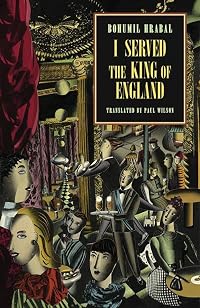
I Served the King of England
by Bohumil Hrabal
On This Page
Description
In a comic masterpiece following the misadventures of a simple but hugely ambitious waiter in pre-World War II Prague, who rises to wealth only to lose everything with the onset of Communism, Bohumil Hrabal takes us on a tremendously funny and satirical trip through 20th-century Czechoslovakia.First published in 1971 in a typewritten edition, then finally printed in book form in 1989, I Served the King of England is "an extraordinary and subtly tragicomic novel" (The New York Times), telling show more the tale of Ditie, a hugely ambitious but simple waiter in a deluxe Prague hotel in the years before World War II. Ditie is called upon to serve not the King of England, but Haile Selassie. It is one of the great moments in his life. Eventually, he falls in love with a Nazi woman athlete as the Germans are invading Czechoslovakia. After the war, through the sale of valuable stamps confiscated from the Jews, he reaches the heights of his ambition, building a hotel. He becomes a millionaire, but with the institution of communism, he loses everything and is sent to inspect mountain roads. Living in dreary circumstances, Ditie comes to terms with the inevitability of his death, and with his place in history. show less
Tags
Recommendations



















Member Reviews
Extraordinary. Quite simply one of the greatest things I have read in my life. The first-person narrative of a waiter in pre-WW2 Czechoslovakia, it begins in a predominately comic vein as it tells a coming of age story highlighted by an encounter with the Emperor of Ethiopia, then turns deadly serious as World War 2 starts and the Nazis take over his homeland--not to his detriment, however, as he has managed to captivate a beautiful German gym instructor whom he marries, with the permission of the Nazi party, in one of the book's most memorable juxtapositions of the ridiculous and the horrific. But it is the post-war section that truly seals the novel's greatness, as the waiter's financial success segues into a comic prison sequence show more that ends with his more or less banishment to the forest. The closing sequences, with his faithful animal friends, are about as good as writing can get. This book pretty much captures everything there is about life, about self-discovery, about happiness, about wealth, about friendship, about love--about all things--in its 241 pages. I feel privileged to have read it. In a house with hundreds of books I will never live long enough to even open, I'm happy my hands pulled this one out of the stack. show less
I loved it completely -- the picaresque, comic, yet sharp social & political observations delivered seriously by our height-challenged, not-completely-but-almost-hapless narrator. At times it's almost silly, at other times a strange look at horrific events, yet it is all told with a levity, a belief in the ultimate goodness & hope of life (that's how it came across to me), in spite of the good or bad that has gone before. It's like looking back at a life well-lived (& not well-lived, at times), but with rose-tinted glasses & the wisdom & contentment that often come with age. A fun book.
Recommended.
Recommended.
A work of staggering genius, with a likewise genius translation courtesy of Paul Wilson, this book follows the life and misadventures of the diminutive waiter, Ditie, in the Czech Republic of the mid-twentieth century. I can't say too much without divulging the plot, but if like me you've been thirsting after novels that carry the same tone and atmosphere of those of Roberto Bolano, this will be just your cup of tea.
What a glorious novel. Set in pre- to post-WW2, it tells the life story of a Czech busboy turned millionaire who loses everything (or does he?) The writing style changes as the man matures. The first half is comic stream of conscious and gets a little tedious, but if you can get to the halfway point, the rest of the book is pure genius and 100% enjoyable. The history of its publication and the author is also pretty interesting. I would highly recommend this book to a reader patient enough to get through the first half-- which is funny and amusing, but gets a little old after a while. I actually think this is intentional, but still tedious. The second half of the book flew by (like the second half of our lives?).
Acquired via BookCrossing 28 May 2011 (Hare and Hounds meetup)
A kind of fantasy set in pre-WWII and wartime Czech Republic. This could obviously be read at many different levels, and I just as obviously missed a lot of the satirical element, but it was an interesting and amusing (if that's the word) story in its own right (if a little rude!) and I didn't mind the animal violence as much as usual as it was clearly metaphorical. My attention did wander a little towards the end, but overall a good and unusual read. MUCH better than Unbearable Lightness of Being!!
A kind of fantasy set in pre-WWII and wartime Czech Republic. This could obviously be read at many different levels, and I just as obviously missed a lot of the satirical element, but it was an interesting and amusing (if that's the word) story in its own right (if a little rude!) and I didn't mind the animal violence as much as usual as it was clearly metaphorical. My attention did wander a little towards the end, but overall a good and unusual read. MUCH better than Unbearable Lightness of Being!!
‘I Served the King of England’ starts off humorously, with the narrator, a young hotel busboy, describing various guests and how he makes money on the side by selling frankfurters at the railroad station and conveniently not having change for their big bills. However, it quickly starts meandering with a style that feels like one anecdote after another concatenated together as he moves from one hotel to the next. There is some sex thrown in here and there, starting with him early on discovering an “aim for life” after visiting Paradise’s, a local brothel, but it doesn’t feel all that honest, such as the time prostitutes find themselves so aroused after being poked and prodded by a bunch of rich old men that they need him to show more skillfully ‘finish what they began’. (ugh)
It takes awhile to get there, but the third and fourth chapters (out of five total) are good, when the Nazis take over the Czechoslovakia and the narrator finds himself in love with a German woman, then subjects himself to a humiliating physical examination before being permitted to marry her. Tellingly, their son, supposedly a part of the future superior Aryan race, is mentally retarded, and this portion of the book ends with a very moving scene.
It is interesting to read Hrabal’s expression of Czech zeitgeist in the 1970’s, having endured the Nazis and then the Soviets, and in the case of the narrator, having guilt for having profited in WWII from plunder taken from the Jews, and yet, through it all, keeping a lightness, and a madcap zaniness about them. It’s an easy book to rate for me though. Four stars for chapters three and four, and two and a half stars for the rest of it.
Quotes:
On the beauty of nature:
“It wasn’t a small hotel, as I’d been expecting, but a small town or a large village surrounded by woods, with hot springs in the forest and air so fresh you could have put it in a cup. All you had to do was turn and face the pleasant breeze and drink it in freely, as fish breathe through their gills, and you could hear the oxygen mixed with ozone flowing through your gills, and your lungs and vital parts would gradually pump up, as though earlier, somewhere down in the valley, long before, you’d got a flat tire, and it was only now, in this air, that you’d got it automatically pumped back up to a pressure that was safer and nicer to drive on.”
On love:
“We looked at each other as though we were both naked, and again that white film came over her eyes, the kind of look women get when they are ready to cast aside the last shred of inhibition and let themselves be treated any way that seems right at the moment, when a different world opens up, a world of love games and wantonness. She gave me a long, slow kiss in front of everyone, and I closed my eyes, and as we kissed, our champagne glasses tilted in our fingers and the wine slowly spilled out onto the tablecloth, and all the guests were silent.”
On having only a few moments left before saying goodbye; this as the German soldiers were about to leave for the Russian Front:
“Only now have I got to the core of it, that what made these people beautiful was knowing that they might never see each other again. The New Man was not the victor, loud-mouthed and vain, but the man who was humble and solemn, with the beautiful eyes of a terrified animal. And so through the eyes of these lovers – because even married couples became lovers again with the dangers of the front hanging over them – I learned to see the countryside, the flowers on the tables, the children at play, and to see that every hour is a sacrament. The day and the night before the departure for the front, the lovers didn’t sleep, but they weren’t necessarily in bed either, because there was something more here than bed: there were eyes and special feeling, like seeing a sad, romantic play or movie in a large theater or movie house. I also learned that the closest that one person can be to another is through silence, an hour, then a quarter-hour, then the last few minutes of silence when the carriage has arrived, or sometimes a military britzska, or a car. Two silent people rise to their feet, gazing long at each other, a sigh, then a final kiss, then the man standing in the britzska, then the man sitting down and the vehicle driving off up the hill, the final bend in the road, the waving handkerchief.” show less
It takes awhile to get there, but the third and fourth chapters (out of five total) are good, when the Nazis take over the Czechoslovakia and the narrator finds himself in love with a German woman, then subjects himself to a humiliating physical examination before being permitted to marry her. Tellingly, their son, supposedly a part of the future superior Aryan race, is mentally retarded, and this portion of the book ends with a very moving scene.
It is interesting to read Hrabal’s expression of Czech zeitgeist in the 1970’s, having endured the Nazis and then the Soviets, and in the case of the narrator, having guilt for having profited in WWII from plunder taken from the Jews, and yet, through it all, keeping a lightness, and a madcap zaniness about them. It’s an easy book to rate for me though. Four stars for chapters three and four, and two and a half stars for the rest of it.
Quotes:
On the beauty of nature:
“It wasn’t a small hotel, as I’d been expecting, but a small town or a large village surrounded by woods, with hot springs in the forest and air so fresh you could have put it in a cup. All you had to do was turn and face the pleasant breeze and drink it in freely, as fish breathe through their gills, and you could hear the oxygen mixed with ozone flowing through your gills, and your lungs and vital parts would gradually pump up, as though earlier, somewhere down in the valley, long before, you’d got a flat tire, and it was only now, in this air, that you’d got it automatically pumped back up to a pressure that was safer and nicer to drive on.”
On love:
“We looked at each other as though we were both naked, and again that white film came over her eyes, the kind of look women get when they are ready to cast aside the last shred of inhibition and let themselves be treated any way that seems right at the moment, when a different world opens up, a world of love games and wantonness. She gave me a long, slow kiss in front of everyone, and I closed my eyes, and as we kissed, our champagne glasses tilted in our fingers and the wine slowly spilled out onto the tablecloth, and all the guests were silent.”
On having only a few moments left before saying goodbye; this as the German soldiers were about to leave for the Russian Front:
“Only now have I got to the core of it, that what made these people beautiful was knowing that they might never see each other again. The New Man was not the victor, loud-mouthed and vain, but the man who was humble and solemn, with the beautiful eyes of a terrified animal. And so through the eyes of these lovers – because even married couples became lovers again with the dangers of the front hanging over them – I learned to see the countryside, the flowers on the tables, the children at play, and to see that every hour is a sacrament. The day and the night before the departure for the front, the lovers didn’t sleep, but they weren’t necessarily in bed either, because there was something more here than bed: there were eyes and special feeling, like seeing a sad, romantic play or movie in a large theater or movie house. I also learned that the closest that one person can be to another is through silence, an hour, then a quarter-hour, then the last few minutes of silence when the carriage has arrived, or sometimes a military britzska, or a car. Two silent people rise to their feet, gazing long at each other, a sigh, then a final kiss, then the man standing in the britzska, then the man sitting down and the vehicle driving off up the hill, the final bend in the road, the waving handkerchief.” show less
Engaging picaresque tale of a waiter's rise and fall, set against the background of mid-20th century Czech history. There are obvious echoes of The Tin Drum; like Grass, he struggles a bit to keep up the momentum in the post-war section of the book. There are some wonderful images in the earlier chapters that come across very effectively even in Paul Wilson's rather stodgy (and very North American) translation. I suspect that the sense of anticlimax we get in the later chapters might have a lot to do with the difficulties of rendering Hrabal's apparently very individual style into English. Of course, the book was published (secretly) only three years after 1968, and the Soviet invasion, never mentioned, probably has a lot to do with the show more very pessimistic tone of the ending. show less
Members
- Recently Added By
Lists

The Guardian's 1000 Novels Everyone Must Read
1,005 works; 547 members

Global Reads: Books Set in Eastern Europe
45 works; 10 members

Boarding House and Hotel Fiction
73 works; 25 members

My list of 100 books to read next
100 works; 4 members

Books set in Prague
40 works; 1 member

Read This Next
120 works; 3 members

Widely acclaimed, one book per year
105 works; 3 members
Author Information

166+ Works 7,893 Members
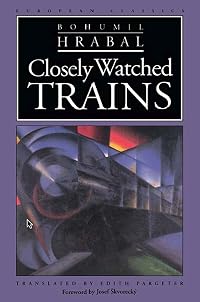
Hrabal worked as a lawyer, clerk, railwayman, traveling salesman, steelworker, and laborer before turning to literature in 1962. In his tragic-comic novels and short stories he concentrates on the everyday lives of ordinary people. Thomas Lask says, "Hrabal shows an offbeat, original mind, a fey imagination and a sure hand in constructing his show more tales" (N.Y. Times Bk. Review). Hrabal's novel Closely Watched Trains (1965) was made into an internationally successful movie. (Bowker Author Biography) show less
Some Editions
Awards and Honors
Notable Lists
Series
Belongs to Publisher Series
L'àncora [Destino] (15)
池澤夏樹個人編集 世界文学全集 (3-1)
Work Relationships
Is contained in
Common Knowledge
- Canonical title
- I Served the King of England
- Original title
- Obsluhoval jsem anglického krále
- Original publication date
- 1971
- Important places
- Prague, Czechoslovakia
- First words
- When I started to work at the Golden Prague Hotel, the boss took hold of my left ear, pulled me up and said, 'You're a busboy here, so remember, you don't see anything and you don't hear anything.
- Last words
- (Click to show. Warning: May contain spoilers.)Behind me a door quietly opened, and I stiffened, but it was just the little horse coming in, and behind him the goat, and the cat leaped up on the tin countertop by the stove, and I was glad the villagers had come all that way through the snow to see me, glad they'd been alarmed by me, because I must be something rare, a true student of the headwaiter, Mr Skrivanek, who served the King of England, and I had the honor to serve the Emperor of Ethiopia, who decorated me for all time with his medal, and the medal gave me strength to write this story out for readers, this story of how the unbelievable came true.
Classifications
- Genres
- General Fiction, Fiction and Literature
- DDC/MDS
- 891.8635 — Literature & rhetoric Literatures of other languages East Indo-European and Celtic literatures West and South Slavic languages (Bulgarian, Slovene, Polish, Czech, Slovak, Serbo-Croatian, and Macedonian) Czech Czech fiction 1900–1989
- LCC
- PG5039.18 .R2 .O2713 — Language and Literature Slavic languages and literatures. Baltic languages. Albanian language Slavic. Baltic. Albanian Slavic Czech
- BISAC
Statistics
- Members
- 1,579
- Popularity
- 14,419
- Reviews
- 32
- Rating
- (3.98)
- Languages
- 23 — Catalan, Czech, Dutch, English, Estonian, Finnish, French, German, Galician, Hebrew, Hungarian, Italian, Japanese, Latvian, Lithuanian, Norwegian (Bokmål), Polish, Portuguese, Romanian, Russian, Slovenian, Spanish, Swedish
- Media
- Paper, Audiobook, Ebook
- ISBNs
- 96
- ASINs
- 11