
Eyeless in Gaza
by Aldous Huxley 
On This Page
Description
Though somewhat overshadowed by Brave New World and The Doors of Perception, Huxley's modernist novel Eyeless in Gaza (1936) is often regarded as his finest work. The writer and historian Simon Heffer dubbed it, unequivocally, 'his only great novel.' The plot centres on Anthony Beavis, a dilettante social theorist, a man inclined to recoil from life. The pleasures of the physical world disgust him and the universe of ideas is but a poor refuge. Having long lost the art of intimacy, he show more betrays friendships and toys with the affections of women. But as Beavis approaches middle age, his world of perfect detachment begins to lose its appeal. Finally realising that his withdrawal from life has been motivated not by intellectual honesty but by moral cowardice, Beavis, devastated and at crisis point, meets the remarkable and redoubtable Dr Miller. The novel's style and setting create a unique atmosphere. Placed mainly in the inter-war years of the 20th century, the story is told in short, dated sections without following strict chronology: we encounter characters and events through fractured time, forward and backward, resulting in an unusual perspective. Eyeless in Gaza - a quotation from Milton's Samson Agonistes - will come as an exciting, enriching surprise to many who know only the more popular Huxley. Especially in this persuasive recording by Jamie Parker. show lessTags
Recommendations

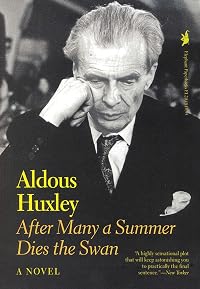






















Member Recommendations

Member Reviews
That was the chief difference between literature and life. In books, the proportion of exceptional to commonplace people is high; in reality, very low.
Practically bed ridden, incapacitated and unable to sleep I completed this chewy hulk of a novel in 24 hours. Overflowing with ideas, Eyeless asks about Action: what is one to do? Anthony, one of the novels chief characters remains preoccupied with freedom throughout his life. The narrative rotates between 5 or so timelines and flips back to each periodically, like Moloch gleefully dealing Texas Hold'em. Others are debauched or likewise stalwarts in various ideologies. Huxley asserts through the fog of politics and history that a point might be, just keep it simple. Take it easy on your show more colon. Don't try to fuck people over. Make amends. There are no overt references to gardens, but I accept that such is implied. This was published in 1936 and with Spain and the Dark Times on the horizon, this is penned in a certain panic. I wondered whether our own anxiety will crystalize in such a masterful experiment. show less
Practically bed ridden, incapacitated and unable to sleep I completed this chewy hulk of a novel in 24 hours. Overflowing with ideas, Eyeless asks about Action: what is one to do? Anthony, one of the novels chief characters remains preoccupied with freedom throughout his life. The narrative rotates between 5 or so timelines and flips back to each periodically, like Moloch gleefully dealing Texas Hold'em. Others are debauched or likewise stalwarts in various ideologies. Huxley asserts through the fog of politics and history that a point might be, just keep it simple. Take it easy on your show more colon. Don't try to fuck people over. Make amends. There are no overt references to gardens, but I accept that such is implied. This was published in 1936 and with Spain and the Dark Times on the horizon, this is penned in a certain panic. I wondered whether our own anxiety will crystalize in such a masterful experiment. show less
A good book, perhaps, but not a particularly enjoyable one. "Eyeless in Gaza" is very well-written and its tone is surprisingly literary, particularly since I've always considered Brave New World's prose to be rather workmanlike. Still, it's hard to get away from the fact that it concerns a small group of impossibly rich, privileged, and well-connected British characters who seem to specialize in making themselves unhappy. Those who argue that most of the books in the literary fiction section written before 1950 are the tiresome bellyaches of rich, neurotic white guys will probably find a lot of ammunition here. Still, the novel effectively portrays the spiritual and intellectual disorientation that many felt during the nineteen show more thirties and serves as a Bildungsroman for an entire cohort of characters, most of whom come to bad ends. "Eyeless in Gaza" might also be considered a merciless psychoanalytical treatment of the previous age: almost all the Victorians in the book come off as impossibly repressed and emotionally crippled. Still, there are a few memorable characters here, such as Mark Straithes's tortured twentieth century ascetic and the louche, sensual Mary Amberly. The novel's main character, Anthony Beavis, remains something of an enigma, and I'd be curious to learn weather the philosophies that he adopted to overcome his spiritual torpor -- anthropology, trippy mysticism, vegetarianism and uncompromising pacifism -- survived the early forties intact. Still, the book is heavy and slow moving, and the tension that might have been built up by its various complex storylines is seriously diminished by its unusually disjointed temporal structure. Huxley puts forth some interesting ideas and writes some exquisitely cunning dialogue, but "Eyeless in Gaza" feels heavy and slow-moving, and its overall mood is one of frustration and impotence. One gets the impression that most of its characters are at the mercy of their origins. It's admirable and erudite, but it's not a book that I'm likely to read again. show less
It's a shame that Huxley is only remembered for Brave New World; just about everything else I've read by him so far be it essays or other fiction, I find far more compelling.
This novel has an unusual non- linear structure, and drifts back and forth over the course of 30 years in the character's respective lives. They are largely all upper middle class or wealthy people with as excellent a rearing and education as would be hoped for and they fervently discuss politics and spirtuality at great length, but they never seem to put any of it into practice. Vanity, cowardice, and scorn -be it intellectual or class driven, are ever present as prime behavioral manifestations. The central character is an appalling wretch, but the end of the show more novel finds him trying to redress that in some fashion. Never too late to try.
Excellent character study. He writes about intellectual asceticism,shyness and emotional disconnection with real conviction and insight.
His character's scornful evaluations of each other are often simultaneously -disturbingly callous, and quite amusing.
Not an easy novel in many ways, but well worth the trouble. show less
This novel has an unusual non- linear structure, and drifts back and forth over the course of 30 years in the character's respective lives. They are largely all upper middle class or wealthy people with as excellent a rearing and education as would be hoped for and they fervently discuss politics and spirtuality at great length, but they never seem to put any of it into practice. Vanity, cowardice, and scorn -be it intellectual or class driven, are ever present as prime behavioral manifestations. The central character is an appalling wretch, but the end of the show more novel finds him trying to redress that in some fashion. Never too late to try.
Excellent character study. He writes about intellectual asceticism,shyness and emotional disconnection with real conviction and insight.
His character's scornful evaluations of each other are often simultaneously -disturbingly callous, and quite amusing.
Not an easy novel in many ways, but well worth the trouble. show less
"Hell is the incapacity to be other than the creature one finds oneself ordinarily behaving as."
Eyeless in Gaza was first published in 1936 and said to be the most auto-biographical of all Huxley's works. The novel centres around Anthony Beavis and his group of friends spanning their lives from childhood to middle age during the first decades of the 20th century. The story is told in non-sequential chapters and from differing characters' perspective.
It is a pretty hefty tome and isn't a particularly easy read yet many commentators seem to believe it to be the greatest of the author's books, so why didn't I like it more?
Firstly; it's length, it's just too long, featuring far too many inconsequential details and sub-plots that add nothing show more to the overall tale.
Secondly; I found it far too difficult. The non-sequential nature of the novel did have the effect of allowing two strands of the story, one taking place in 1914 featuring the sad demise of Beavis's childhood friend Brian, the other following Anthony's and Mark's trip to Mexico to join an insurrection there in 1934, to come to a climax almost simultaneously for the reader. However, on the other hand this disjointed style hindered rather than aided my understanding of the overall message that Huxley was trying to convey. I found myself trying to remember just who the characters were and what their relationships were in the various time periods. On several occasions I found myself flipping back to a previous chapter to remind myself. Perhaps a series of flashbacks would have proved more manageable.
Thirdly; there were just too many big ideas vying for prominence, ideas concerning the great social and artistic upheavals of the day being espoused by wealthy privileged individuals who seem to have little contact or in common with the masses making them seem like unreliable commentators. Equally I found the overall bleak outlook, the defeatism and pacifism on show at the end of the novel something of a dampener. Huxley seems be trying to prove that there is more to life than love but ultimately concludes that really there isn't.
On a couple of occasions I was tempted to give up on this book but there also elements of this book which I found enjoyable. The characterisation was generally well done as was the depiction of their surroundings. At times Huxley displays a certain satirical humour whilst at times, particularly the section involving Anthony and Mark in Mexico, the author proves that he could, if he wanted to be, an entertaining storyteller.
Having read and enjoyed the author's Brave New World I was looking forward to reading this book but found it somewhat over-blown and disappointing. Oh well, you can't win 'em all. show less
Eyeless in Gaza was first published in 1936 and said to be the most auto-biographical of all Huxley's works. The novel centres around Anthony Beavis and his group of friends spanning their lives from childhood to middle age during the first decades of the 20th century. The story is told in non-sequential chapters and from differing characters' perspective.
It is a pretty hefty tome and isn't a particularly easy read yet many commentators seem to believe it to be the greatest of the author's books, so why didn't I like it more?
Firstly; it's length, it's just too long, featuring far too many inconsequential details and sub-plots that add nothing show more to the overall tale.
Secondly; I found it far too difficult. The non-sequential nature of the novel did have the effect of allowing two strands of the story, one taking place in 1914 featuring the sad demise of Beavis's childhood friend Brian, the other following Anthony's and Mark's trip to Mexico to join an insurrection there in 1934, to come to a climax almost simultaneously for the reader. However, on the other hand this disjointed style hindered rather than aided my understanding of the overall message that Huxley was trying to convey. I found myself trying to remember just who the characters were and what their relationships were in the various time periods. On several occasions I found myself flipping back to a previous chapter to remind myself. Perhaps a series of flashbacks would have proved more manageable.
Thirdly; there were just too many big ideas vying for prominence, ideas concerning the great social and artistic upheavals of the day being espoused by wealthy privileged individuals who seem to have little contact or in common with the masses making them seem like unreliable commentators. Equally I found the overall bleak outlook, the defeatism and pacifism on show at the end of the novel something of a dampener. Huxley seems be trying to prove that there is more to life than love but ultimately concludes that really there isn't.
On a couple of occasions I was tempted to give up on this book but there also elements of this book which I found enjoyable. The characterisation was generally well done as was the depiction of their surroundings. At times Huxley displays a certain satirical humour whilst at times, particularly the section involving Anthony and Mark in Mexico, the author proves that he could, if he wanted to be, an entertaining storyteller.
Having read and enjoyed the author's Brave New World I was looking forward to reading this book but found it somewhat over-blown and disappointing. Oh well, you can't win 'em all. show less
http://nwhyte.livejournal.com/2216200.html
Eyeless in Gaza combines some fairly brutal commentary about lefties in British politics in the late 1930s, but tells the story in a narrative which is sliced up between decades, several different strands interlacing. There are some particularly grim scenes, involving a dog, an amputation, and a suicide, which are a striking contrast with the theoretical philosophising of the main character. I thought this had some of Huxley's better women characters as well, with a frank depiction of shifting relationships among a group of friends.
Eyeless in Gaza combines some fairly brutal commentary about lefties in British politics in the late 1930s, but tells the story in a narrative which is sliced up between decades, several different strands interlacing. There are some particularly grim scenes, involving a dog, an amputation, and a suicide, which are a striking contrast with the theoretical philosophising of the main character. I thought this had some of Huxley's better women characters as well, with a frank depiction of shifting relationships among a group of friends.
“There’s a fog upon LA. And my friends have lost their way…” was the passage to cross my mind upon waking up and viewing the inexhaustible fog outside my father’s mountainside window. Then the rain began. It was an apt day to finish the most self-reflective novel of my favorite author’s, Eyeless in Gaza. A discursive tale on the perils of contemplation, the terrors of trivialities, and of course, the great indignation love can cause an individual.
Nothing like finishing a book accentuating the trivialities of trivialities all the while knowing what is truly important. Huxley's struggle between finding spirituality, having a command on science and overcoming ill-advised love is a rainy Sunday kind of book. It took me almost show more two months to finish the novel mostly because I wasn't rushing. I read many treatises, essays, and plays in between and saved eyeless for bathroom reading. Huxley would have been fine with that. For much like the novel itself that jumps chronologically (spanning over thirty years) and spatially (from various continents) I began the book in Chicago and finished it in Los Angeles.
I know of numerous instances in which peoples lives have been altered while reading Eyeless. Not so much because of the book itself but corresponding instances with reading it. For example, a terribly underrated British band named after the book for its lead singer, Martyn Bates, happened to be reading the novel when he met band cohort Peter Becker. I was of course hoping for the same. I didn't find him but I did discover Alexander Scriabin, The Russian symbolist composer that suits my fancy, I also developed a true friendship, and finally made a decision I've been attempting to make for practically seven years: to pursue an autodidactic lifestyle and terminate my life-long bind to the education institute.
Is pitting the soothsaying Dr. Miller against the English cynic in a Socratic battle on humanity/pacifism a scurrilous afterthought? Well, Huxley did wait until the end of the novel to reveal the mystic Miller so his doubters wouldn’t get to that point, but he makes clear how he finally ceased his years of doubting and what would make a logical British man turn over to an American optimist. A human for a human instead of human vs a bug. The optimist will be granted approval and find humanity hearty and the cynic will continue to hate. The ultimate relationship so well exposed in the most Huxlian way at the end of this great read. show less
Nothing like finishing a book accentuating the trivialities of trivialities all the while knowing what is truly important. Huxley's struggle between finding spirituality, having a command on science and overcoming ill-advised love is a rainy Sunday kind of book. It took me almost show more two months to finish the novel mostly because I wasn't rushing. I read many treatises, essays, and plays in between and saved eyeless for bathroom reading. Huxley would have been fine with that. For much like the novel itself that jumps chronologically (spanning over thirty years) and spatially (from various continents) I began the book in Chicago and finished it in Los Angeles.
I know of numerous instances in which peoples lives have been altered while reading Eyeless. Not so much because of the book itself but corresponding instances with reading it. For example, a terribly underrated British band named after the book for its lead singer, Martyn Bates, happened to be reading the novel when he met band cohort Peter Becker. I was of course hoping for the same. I didn't find him but I did discover Alexander Scriabin, The Russian symbolist composer that suits my fancy, I also developed a true friendship, and finally made a decision I've been attempting to make for practically seven years: to pursue an autodidactic lifestyle and terminate my life-long bind to the education institute.
Is pitting the soothsaying Dr. Miller against the English cynic in a Socratic battle on humanity/pacifism a scurrilous afterthought? Well, Huxley did wait until the end of the novel to reveal the mystic Miller so his doubters wouldn’t get to that point, but he makes clear how he finally ceased his years of doubting and what would make a logical British man turn over to an American optimist. A human for a human instead of human vs a bug. The optimist will be granted approval and find humanity hearty and the cynic will continue to hate. The ultimate relationship so well exposed in the most Huxlian way at the end of this great read. show less
Reason read: 2023, Oct botm Reading 1001
This story takes place during the early 1900s to 1930's and tells the story of Anthony Beavis. He lost his mother and then he lives much of his life closed off emotionally from others. He has affairs with older women and their daughters. He betrays his one good friend and is admittedly a coward. After going through several relationships, death of his friend, an encounter with a doctor in Mexico, Anthony has a heart change. He becomes an active pacifist. Historically the book is set during the WWI, post WWI, Spanish Civil War, the depression, and pre WWII with a look at the decadence of Germany with it s Cabaret life style. The story is not told chronologically and jumps back and forth from time show more before and after the death of his friend, Brian. This was a definite turning point for Anthony. The characters are numerous and a bit hard to keep track of all them but the story line is linked to there motivations and desires and their overall change. The side trips into dialogues of philosophizing could have been shortened and this would have not hurt the story in any way. The book is not the one people think of when they think of Huxley but it is probably his best book. I will remember this one. The title is from the Bible story of Samson after Delilah betrays him to the philistines and he is blinded and made to work as a slave. show less
This story takes place during the early 1900s to 1930's and tells the story of Anthony Beavis. He lost his mother and then he lives much of his life closed off emotionally from others. He has affairs with older women and their daughters. He betrays his one good friend and is admittedly a coward. After going through several relationships, death of his friend, an encounter with a doctor in Mexico, Anthony has a heart change. He becomes an active pacifist. Historically the book is set during the WWI, post WWI, Spanish Civil War, the depression, and pre WWII with a look at the decadence of Germany with it s Cabaret life style. The story is not told chronologically and jumps back and forth from time show more before and after the death of his friend, Brian. This was a definite turning point for Anthony. The characters are numerous and a bit hard to keep track of all them but the story line is linked to there motivations and desires and their overall change. The side trips into dialogues of philosophizing could have been shortened and this would have not hurt the story in any way. The book is not the one people think of when they think of Huxley but it is probably his best book. I will remember this one. The title is from the Bible story of Samson after Delilah betrays him to the philistines and he is blinded and made to work as a slave. show less
Members
- Recently Added By
Lists

1,001 BYMRBYD Concensus
723 works; 27 members

The Works of Aldous Huxley
49 works; 1 member

Publisher's Weekly Bestsellers Part I - 1895-1939
399 works; 8 members
Author Information

298+ Works 105,314 Members
Aldous Huxley was born on July 26, 1894, in Surrey, England, into a distinguished scientific and literary family; his grandfather was the noted scientist and writer, T.H. Huxley. Following an eye illness at age 16 that resulted in near-blindness, Huxley abandoned hope of a career in medicine and turned instead to literature, attending Oxford show more University and graduating with honors. While at Oxford, he published two volumes of poetry. Crome Yellow, his first novel, was published in 1927 followed by Antic Hay, Those Barren Leaves, and Point Counter Point. His most famous novel, Brave New World, published in 1932, is a science fiction classic about a futuristic society controlled by technology. In all, Huxley produced 47 works during his long career, In 1947, Huxley moved with his family to southern California. During the 1950s, he experimented with mescaline and LSD. Doors of Perception and Heaven and Hell, both works of nonfiction, were based on his experiences while taking mescaline under supervision. In 1959, Aldous Huxley received the Award of Merit for the Novel from the American Academy of Arts and Letters. He died on November 22, 1963. (Bowker Author Biography) show less
Aldous Huxley has a Legacy Library. Legacy libraries are the personal libraries of famous readers, entered by LibraryThing members from the Legacy Libraries group.
Some Editions
Awards and Honors
Series
Belongs to Publisher Series
Work Relationships
Common Knowledge
- Canonical title
- Eyeless in Gaza
- Original title
- Eyeless in Gaza
- Original publication date
- 1936
- People/Characters
- Anthony Beavis; Helen Ledwidge (Amberly); Mary Amberley (Champernowne); Brian Foxe; Mark Staithes; James Miller (show all 35); Joyce Egerton (Amberly); Beppo Bowles; Purchas; John Beavis; James Beavis; Lady Champernowne; Roger Amberly; General Champernowne; Maisie Beavis; Hugh "Goggler" Ledwidge; Rachel Foxe; Gerry Watchett; Colin Egerton; Pauline Gannett; Aunt Edith; Louie Piper; Joan Thursley; Mrs. Thursley; Mr. Thursley; George Thursley; Arthur Thursley; Peter Quinn; Mr. Croyland; Mr. Caldwell; Ekki Giesebrecht; Diana Beavis; Sidney Gattick; Mme. Bonifay; Holtzmann
- Important places
- Surrey, England, UK; England, UK; London, England, UK; Oxford, Oxfordshire, England, UK; Oxfordshire, England, UK; Rosenlaui, Bern, Switzerland (show all 11); Switzerland; Paris, France; France; Mexico; Basel, Basel-Stadt, Switzerland
- Related movies
- Eyeless in Gaza (1971 | IMDb)
- Epigraph
- 'Eyeless in Gaza at the Mill with slaves' - Milton
- First words
- The snapshots had become almost as dim as memories.
- Last words
- (Click to show. Warning: May contain spoilers.)Whatever it might be, he knew now that all would be well.
- Original language
- English
Classifications
Statistics
- Members
- 1,499
- Popularity
- 15,534
- Reviews
- 21
- Rating
- (3.67)
- Languages
- 14 — Danish, Dutch, English, French, German, Greek, Hebrew, Hungarian, Italian, Polish, Portuguese, Romanian, Russian, Spanish
- Media
- Paper, Ebook
- ISBNs
- 31
- ASINs
- 57