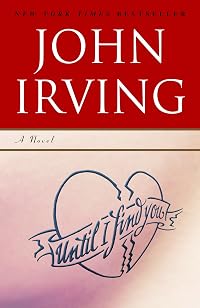
Until I Find You
by John Irving
On This Page
Description
The story of the actor Jack Burns. His mother, Alice, is a Toronto tattoo artist. When Jack is four, he travels with Alice to several North Sea ports; they are trying to find Jack's missing father, William, a church organist who is addicted to being tattooed. But Alice is a mystery, and William can't be found. Even Jack's memories are subject to doubt. Jack Burns goes to schools in Canada and New England, but what shapes him are his relationships with older women. John Irving renders Jack's show more life as an actor in Hollywood with the same richness of detail and range of emotions he uses to describe the tattoo parlors in those North Sea ports and the reverberating music Jack heard as a child in European churches. show lessTags
Recommendations




Member Reviews
Beginnings are hard. Endings are harder. And in the case of “Until I Find You,” both the beginning and the ending are quite rocky. The middle of the book, however (and in a novel of more than 800 pages, the middle is quite hefty) ...well, the middle is rather delightful. Reading this novel is like eating a gourmet sandwich beautifully crafted between slices of two-day old soggy bread.
It pains me to fault Mr. Irving for his apparent meandering in the first section of this novel and for the disappointment of the novel’s conclusion. To be fair, no imaginable ending could have lived up to the inevitability of this tale’s conclusion. Irving’s masterful storytelling throughout the bulk of the novel sabotages its own ending. An show more empathetic reader—and as a lifelong fan of Irving’s work, I consider myself forgiving to a fault—can happily overlook the seemingly random details of the novel’s opening section as their impact and significance emerges clearly through the development of Jack Burns, the novel’s protagonist. But the ending. Not even a writer of Irving’s talent could have wheedled his way out of the trap he set for himself.
This novel’s—and its main character’s—resemblance to numerous other Irving novels (most notably TS Garp in “The World According to Garp,” Homer Wells in “The Cider House Rules,” and Owen Meany in “A Prayer for Owen Meany”) is both its greatest strength and its most debilitating weakness. All of the hallmark Irving quirks and issues are there, but he’s handled them more artfully in those earlier novels. Jack—a budding actor with a talent for cross-dressing and a penchant for older women (who are, in fact, molesting him)—is an inscrutably complex character but almost certainly not the most likeable character in the novel. As he grows up without the guidance or support of a father, he becomes a true conundrum—an introverted actor.
Halfway through the novel, the narrative pivots dramatically (to provide more details would certainly spoil the plot), but suffice it to say that Jack shifts his focus from constructing identities and stories to reconstructing identities and stories—he realizes that everything he thought he knew about the most important people in his life was a mere narrative construct, and he sets about attempting to reconstruct those narratives in a search for truth—quite an ironic undertaking for a man whose profession relies on his ability to create convincing fictions.
In the end, Irving’s prose is—as ever—amusing and poignant (often at the same time), and this novel proves that he has regained his ability to weave a compelling tale around interesting characters, a skill that came into question in “The Fourth Hand,” the novel that preceded this one. While by no means his best work, “Until I Find You” demonstrates an imminent return to form for Irving—a form that I hope continues to evolve in his next novel. show less
It pains me to fault Mr. Irving for his apparent meandering in the first section of this novel and for the disappointment of the novel’s conclusion. To be fair, no imaginable ending could have lived up to the inevitability of this tale’s conclusion. Irving’s masterful storytelling throughout the bulk of the novel sabotages its own ending. An show more empathetic reader—and as a lifelong fan of Irving’s work, I consider myself forgiving to a fault—can happily overlook the seemingly random details of the novel’s opening section as their impact and significance emerges clearly through the development of Jack Burns, the novel’s protagonist. But the ending. Not even a writer of Irving’s talent could have wheedled his way out of the trap he set for himself.
This novel’s—and its main character’s—resemblance to numerous other Irving novels (most notably TS Garp in “The World According to Garp,” Homer Wells in “The Cider House Rules,” and Owen Meany in “A Prayer for Owen Meany”) is both its greatest strength and its most debilitating weakness. All of the hallmark Irving quirks and issues are there, but he’s handled them more artfully in those earlier novels. Jack—a budding actor with a talent for cross-dressing and a penchant for older women (who are, in fact, molesting him)—is an inscrutably complex character but almost certainly not the most likeable character in the novel. As he grows up without the guidance or support of a father, he becomes a true conundrum—an introverted actor.
Halfway through the novel, the narrative pivots dramatically (to provide more details would certainly spoil the plot), but suffice it to say that Jack shifts his focus from constructing identities and stories to reconstructing identities and stories—he realizes that everything he thought he knew about the most important people in his life was a mere narrative construct, and he sets about attempting to reconstruct those narratives in a search for truth—quite an ironic undertaking for a man whose profession relies on his ability to create convincing fictions.
In the end, Irving’s prose is—as ever—amusing and poignant (often at the same time), and this novel proves that he has regained his ability to weave a compelling tale around interesting characters, a skill that came into question in “The Fourth Hand,” the novel that preceded this one. While by no means his best work, “Until I Find You” demonstrates an imminent return to form for Irving—a form that I hope continues to evolve in his next novel. show less
john irving is such a good writer. i mean, a *really* great writer. if not for that, this book would get probably 1 to 1.5 stars at the most. it's easily 650 pages too long, first of all. the first 550 pages of the book should have been more like 75 pages. i know that irving experienced abuse that he didn't recognize as such when a young man, but the sexual stuff he writes about regularly is a bit ... too much and too weird and i wish he would get therapy for it. (and stop writing about it so much.) the number of times he talks about the main character sitting (at a movie, for example) with someone who just holds his penis - it's dozens.
i love his writing. truly. and the story, at its base, if you break it down, is a good and show more interesting one. but i don't like the way he tells it; i don't believe almost any of the dialogue rings true; i wanted more from this. if an editor (or irving himself, of course) had cut literally 75-80% of this (and 100% of the weird penis stuff) and made it crisp and tight, this would be amazing. but as it is, it's mostly just strange and too long and missing its potential. show less
i love his writing. truly. and the story, at its base, if you break it down, is a good and show more interesting one. but i don't like the way he tells it; i don't believe almost any of the dialogue rings true; i wanted more from this. if an editor (or irving himself, of course) had cut literally 75-80% of this (and 100% of the weird penis stuff) and made it crisp and tight, this would be amazing. but as it is, it's mostly just strange and too long and missing its potential. show less
I am a huge John Irving fan (my favorite is Hotel New Hampshire), so I am used to his quirky characters and meandering plot lines which run in all directions, but finally return to the point of the story. This being said, I found Irving's latest novel to be a bit long-winded (at 820 pages it is *not* a light read!). Every character is flawed, sometimes almost unbelievably so...and yet, at the end, there is redemption for the main character, Jack Burns. I would recommend this book only to die-hard Irving fans who will be patient enough to wade through this chunky novel. Think Garp times 10!
I love John Irving's novels, but this one was nothing less than a chore to read. I didn't find the story remotely interesting until the last third of the book. Where was the editor?
By now I think I've clearly established that I'm a huge John Irving fan. I just finished his most recent, Until I Find You, and I loved it. I adored it. I didn't want it to end, which may seem odd since it's 820 pages long. Please don't let the length deter you.
I loved the narrator's voice, the characters-major and minor. I loved the story, the journey, the quest; the twists and the passage of time. Every last bit of it seemed plausible to me, but I've always embraced the bizarreness of Irving's characters and settings.
Two favorite passages:
So much of what you think you remember is a lie, the stuff of postcards. The snow untrampled and unspoiled; the Christmas candles in the windows of the houses, where the damage to the children is show more unseen and unheard.
If you can't forgive her, you'll never be free of her. It's for your own sake, you know- for your soul. When you forgive someone who's hurt you, it's like escaping your skin- you're that free, outside yourself, where you can see everything. show less
I loved the narrator's voice, the characters-major and minor. I loved the story, the journey, the quest; the twists and the passage of time. Every last bit of it seemed plausible to me, but I've always embraced the bizarreness of Irving's characters and settings.
Two favorite passages:
So much of what you think you remember is a lie, the stuff of postcards. The snow untrampled and unspoiled; the Christmas candles in the windows of the houses, where the damage to the children is show more unseen and unheard.
If you can't forgive her, you'll never be free of her. It's for your own sake, you know- for your soul. When you forgive someone who's hurt you, it's like escaping your skin- you're that free, outside yourself, where you can see everything. show less
I finished this behemoth of a book Thursday night. I'm torn about whether to recommend it or not. It's John Irving after all and the writing itself is exactly what you'd expect. I've always loved Irving and A Prayer For Owen Meany is probably my favorite book ever. So I personally was completely caught up in the story. I read 800+ pages in the time it usually takes me to read a 300 page book. There were times I literally couldn't put it down.
That said, the story itself is disturbing. It's about a child who is sexually abused. It's about memory and what we think we know and how we are changed when we find the truth (in this way, it was reminiscent of the excellent Julian Barnes book, The Sense of an Ending).
There are graphic scenes in show more the book. That probably won't surprise you if you've read any other Irving. But the scenes don't feel prurient. They simply feel like reporting a story. Or, as Irving says in this book, telling the whole story in chronological order.
So, would I recommend it? Maybe. Did I think it was a good book? Definitely. show less
That said, the story itself is disturbing. It's about a child who is sexually abused. It's about memory and what we think we know and how we are changed when we find the truth (in this way, it was reminiscent of the excellent Julian Barnes book, The Sense of an Ending).
There are graphic scenes in show more the book. That probably won't surprise you if you've read any other Irving. But the scenes don't feel prurient. They simply feel like reporting a story. Or, as Irving says in this book, telling the whole story in chronological order.
So, would I recommend it? Maybe. Did I think it was a good book? Definitely. show less
There were parts of this novel I really liked and parts I struggled to read and it is too long. The reader meets Jack Burns as a four year old and we follow him, sometimes second by second to his early middle age. The story is mostly told chronologically but does look back in later chapters. As a four year old, Jack travels between tattoo parlours, through various Northern European countries. His mother tells him they are following his father. Back in Canada and the USA, there is so much abuse I almost gave up reading. It is only John Irving's brillian writing and his humour that kept me going as I shut my eyes to the worst parts to avoid nightmares. This is when he meets Emma, five years older than Jack who becomes his best friend. show more Together they live in LA among the stars.and Jack gets a therapist. There are slightly expected twists before the end, lots of detail about films and Hollywood parties and then the big turn around. I kept going to the end, as I say because the writing is so good but I would have loved this to have been shorter.. show less
Members
- Recently Added By
Published Reviews
ThingScore 25
One of the problems with this novel is that Mr. Irving never finds a persuasive voice for narrating these events. The repeated acts of sexual abuse committed upon the prepubescent Jack play neither as awful, realistic acts of abuse nor as metaphorical, Grand Guignol encounters. As a result, the whole book is suffused with a smarmy but cartoonish aura: the reader is unable to sympathize with show more Jack as a poor abused child or to regard his experiences as some sort of farcical parable about the wicked ways of the world. show less
added by SimoneA
Lists

Unread books
1,063 works; 87 members

Top Five Books of 2016
795 works; 229 members

Llibres que he llegit el 2010
35 works; 1 member

Lucy's Long List
69 works; 1 member
Author Information

61+ Works 96,585 Members
John Irving published his first novel at the age of twenty-six. He has received awards from the Rockefeller Foundation, the National Endowment for the Arts, and the Guggenheim Foundation; he has won an O. Henry Award, a National Book Award, and an Academy Award. (Publisher Provided) John Irving was born John Wallace Blunt, Jr. on March 2, 1942 in show more Exeter, New Hampshire. His named was changed to John Winslow Irving when his stepfather adopted him at the age of six. He was a dyslexic child and it took him five years to get through Exeter Academy, which is where his adoptive father taught Russian history. He received a B.A. (cum laude) from the University of New Hampshire in 1965 and an M.F.A. from the Iowa Writers' Workshop, in 1967, where he studied with Kurt Vonnegut Jr. His first novel was Setting Free the Bears (1969) but it wasn't until The World According to Garp was published in 1978, that he became a literary star. The novel spent six months on the bestseller list and won the American Book Award in 1980. It was also made into a movie in 1982 starring Robin Williams and costarring Glenn Close and John Lithgow. In 1981, he received an O. Henry Award for the short story Interior Space. Some of his other novels were also made into movies including The Hotel New Hampshire starring Jodie Foster and Rob Lowe; A Prayer for Owen Meany, which was titled Simon Birch starring Jim Carrey; and The Cider House Rules starring Michael Caine. He won the Oscar for Best Adapted Screenplay for The Cider House Rules in 2000. Irving also wrote two memoirs; one detailing his wrestling adventures entitled The Imaginary Girlfriend, and another concerning his novels made into Hollywood films entitled My Movie Business: A Memoir. (Bowker Author Biography) show less
Some Editions
Awards and Honors
Distinctions
Series
Belongs to Publisher Series
Common Knowledge
- Canonical title
- Until I Find You
- Original title
- Until I Find You
- Alternate titles*
- Покуда я тебя не обрету
- Original publication date
- 2005
- People/Characters
- Jack Burns; Alice Burns; William Burns; Emma Oastler
- Important places
- Toronto, Ontario, Canada; Amsterdam, North Holland, Netherlands; Copenhagen, Denmark; Oslo, Norway; Zürich, Zürich, Switzerland; Helsinki, Finland (show all 9); Nova Scotia, Canada; Halifax, Nova Scotia, Canada; Edinburgh, Scotland, UK
- Epigraph
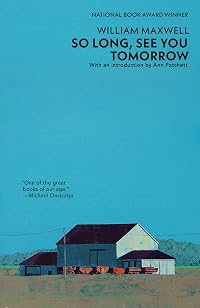
- What we, or at any rate what I, refer to confidently as memory -- meaning a moment, a scene, a fact that has been subjected to a fixative and thereby rescued from oblivion -- is really a form of storytelling that goes on cont... (show all)inually in the mind and often changes with the telling. Too many conflicting emotional interests are involved for life ever to be wholly acceptable, and possibly it is the work of the storyteller to rearrange things so that they conform to this end. In any case, in talking about the past we lie with every breath we draw.
-- William Maxwell, So Long, See You Tomorrow - Dedication
- For my youngest son, Everett,
who made me feel young again.
With my fervent hope that when you're
old enough to read this story, you will
have had (or still be in the midst of)
an ideal chil... (show all)dhood -- as different from
the one described here as anyone
could imagine. - First words
- According to his mother, Jack Burns was an actor before he was an actor, but Jack's most vivid memories of childhood were those moments when he felt compelled to hold his mother's hand.
- Last words
- (Click to show. Warning: May contain spoilers.)In fact, Jack couldn't wait to tell Miss Wurtz that he had found him.
*Some information comes from Common Knowledge in other languages. Click "Edit" for more information.
Classifications
Statistics
- Members
- 4,458
- Popularity
- 3,334
- Reviews
- 71
- Rating
- (3.49)
- Languages
- 16 — Catalan, Czech, Danish, Dutch, English, Estonian, Finnish, French, German, Italian, Lithuanian, Norwegian (Bokmål), Polish, Russian, Spanish, Swedish
- Media
- Paper, Audiobook, Ebook
- ISBNs
- 66
- UPCs
- 1
- ASINs
- 14