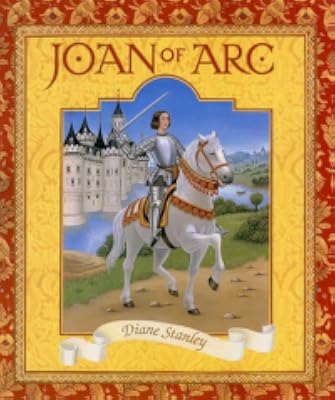
Joan of Arc
by Diane Stanley
On This Page
Description
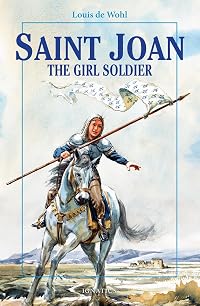
A biography of the fifteenth-century peasant girl who led a French army to victory against the English and was burned at the stake for witchcraft.Tags
Recommendations










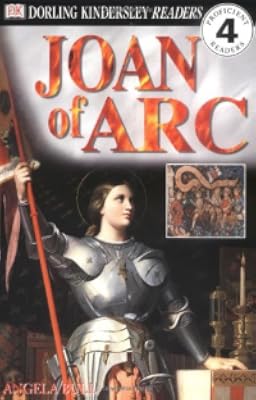
Member Recommendations
by anonymous user
by anonymous user

charlie68 Both tell of stories of mystical experiences of females and the upset it creates to established authorities.
Member Reviews
Has a great deal of information regarding Joan of Arc in a distilled format complete with beautiful illustrations that kids and tweens will lap up; adults will enjoy it as well! However, a major flaw is that the author errs on the side of making Joan infallible, a dangerous proposition that too many authors already support. The truth is much harder to determine regarding Joan, the accuracy of her visions, and the quality of the advice she gave-we cannot know what might have happened if Charles VII listened to her all the time-what ifs cannot be judged!
Joan of Arc by Diane Stanley. Library section 10 C: Youth (gr. 6-8), Fiction and Biography. First, kids need to know that Joan of Arc was NOT Noah’s wife. OK, so then, why was she important? She was a peasant girl (not even a mature woman) who heard the voices of angels and saints. She was a female in a religious world dominated by male leaders who were extremely harsh in their treatment of any female uppity enough to possess religious power. She had the audacity to lead soldiers into combat, dressing like a man in her own suit of armor. She was an inspiration to France and loyal to her king. She was a martyr for her faith and is considered the savior of France.
During the Hundred Year’s War between France and England, England show more controlled northern France. The King and his son the Dauphin held southern France. Joan’s town of Domremy, in far eastern France, was subject to constant strife because it was loyal to the king, though in English territory. England was their enemy!
Joan, known as Jeanette to her family, was born around 1412 to a peasant farmer and his wife. As a youngster at work in the fields and farm, Joan began to hear voices and see visions of saints and angels. She was told to take the Dauphin to Reims, in enemy territory, to be crowned king. This led Joan to travels and eventual battles, as she fought for king and country. Wounded in war, and later captured by the British, she was accused and tried for dressing in men’s clothes which was an “abomination to God.” She was also accused of the claim that God was guiding her personally, through voices and visitations. This was a sin because only the Church, as God’s representative on earth, could tell Christians what God wanted ordinary people to do. She was found guilty and was burnt at the stake.
After her death the tide turned and by 1453 the war was over, with the British gone back to England for good. The French king, who had not risen to her defense during her trial, set about trying to clear her name and he was successful 25 years after her death. In 1920, almost 500 years after her death Joan was made a saint by the Catholic Church.
This book contains much historic detail and is therefore going to be of interest to middle school age children (a child interested in France, knights, or history in general might find it good reading if they are in 4th-6th grade). It first explains the Hundred Years War and sets the political stage into which Joan was born. It then chronicles her life story. There is also a glossary of French words and a pronunciation guide, as well as a 1429 map of France divided into northern and southern territories. There are beautiful, full color illustrations. We have another book of Joan of Arc by Josephine Poole, also in section 9 A.
There are so few women of importance in religion for our girls to emulate. This historical figure is a larger than life model who was a real person. She was devoted to God and tried to do God’s will, she was patriotic and loyal, courageous, even willing to do a man’s work if God willed it. In the middle ages, a time when women were thought weak, good for little more than birthing children and staying at home, Joan broke the mold. Even today her combination of religious devotion and military bravery are astounding.
I love sharing Joan’s story with young girls to give them good food to grow on. Thankfully, today most girls are protected by law from being burnt at the stake for trying to be all they can be. Still, being a woman in business or the military can be fraught with frustration and danger. Our girls need all the moxie we can instill in them! There are several films of Joan’s life, but they are NOT in our library: a 1948 version, “Joan of Arc,” starring Ingrid Bergman, and more recent ones, “The Messenger: The Story of Joan of Arc,” starring Milla Jovovich (rated R), and “Joan of Arc,” starring LeeLee Sobieski (unrated). View them before you allow your kids to see them since the more recent two are bound to have graphic medieval war violence. show less
During the Hundred Year’s War between France and England, England show more controlled northern France. The King and his son the Dauphin held southern France. Joan’s town of Domremy, in far eastern France, was subject to constant strife because it was loyal to the king, though in English territory. England was their enemy!
Joan, known as Jeanette to her family, was born around 1412 to a peasant farmer and his wife. As a youngster at work in the fields and farm, Joan began to hear voices and see visions of saints and angels. She was told to take the Dauphin to Reims, in enemy territory, to be crowned king. This led Joan to travels and eventual battles, as she fought for king and country. Wounded in war, and later captured by the British, she was accused and tried for dressing in men’s clothes which was an “abomination to God.” She was also accused of the claim that God was guiding her personally, through voices and visitations. This was a sin because only the Church, as God’s representative on earth, could tell Christians what God wanted ordinary people to do. She was found guilty and was burnt at the stake.
After her death the tide turned and by 1453 the war was over, with the British gone back to England for good. The French king, who had not risen to her defense during her trial, set about trying to clear her name and he was successful 25 years after her death. In 1920, almost 500 years after her death Joan was made a saint by the Catholic Church.
This book contains much historic detail and is therefore going to be of interest to middle school age children (a child interested in France, knights, or history in general might find it good reading if they are in 4th-6th grade). It first explains the Hundred Years War and sets the political stage into which Joan was born. It then chronicles her life story. There is also a glossary of French words and a pronunciation guide, as well as a 1429 map of France divided into northern and southern territories. There are beautiful, full color illustrations. We have another book of Joan of Arc by Josephine Poole, also in section 9 A.
There are so few women of importance in religion for our girls to emulate. This historical figure is a larger than life model who was a real person. She was devoted to God and tried to do God’s will, she was patriotic and loyal, courageous, even willing to do a man’s work if God willed it. In the middle ages, a time when women were thought weak, good for little more than birthing children and staying at home, Joan broke the mold. Even today her combination of religious devotion and military bravery are astounding.
I love sharing Joan’s story with young girls to give them good food to grow on. Thankfully, today most girls are protected by law from being burnt at the stake for trying to be all they can be. Still, being a woman in business or the military can be fraught with frustration and danger. Our girls need all the moxie we can instill in them! There are several films of Joan’s life, but they are NOT in our library: a 1948 version, “Joan of Arc,” starring Ingrid Bergman, and more recent ones, “The Messenger: The Story of Joan of Arc,” starring Milla Jovovich (rated R), and “Joan of Arc,” starring LeeLee Sobieski (unrated). View them before you allow your kids to see them since the more recent two are bound to have graphic medieval war violence. show less
This is a good biography for younger students although the reading level is above young students capabilities. However it is worth reading it aloud to those children. The illustrations really help the reader understand the both the times and the situations. I am very grateful for the way Joan’s execution was portrayed. The distance was great enough that only a faint view of her could be seen but you can see the large crowd indicating the significance of her death.
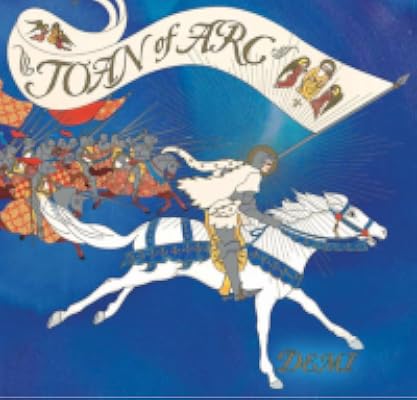
Diane Stanley's biographies ought to be made accessible to older readers. They provide such a readable hook. Often these gems sit untouched in my elementary school library, because they are densely written and they are long. And yet, her narrative arc is enjoyable and entertaining. The trademark illustrations are vibrant and colorful, adding detail to the time and place of her subjects. In this one, Joan of Arc is an entirely sympathetic character, and a hero to boot. Told in the context of THe Hundred Years War, it provides a rich summation of the life of Joan of Arc and her impact on the history of France .
This was the most interesting and informative children's biography we have read to date. Complete with a French pronunciation guide, this book was more than fact filled. Prior to this reading I had always regarded Joan of Arc as more of a exaggerated legend but Diane Stanley gave me not only facts but also sources as well as very clearly identifying conjecture. Full pages of text followed by full page illustrations helped with the flow of information and the children were eager to keep reading despite the vast quantity of detail. A very satisfying read.
A beautiful book. Simple to understand text (intended audience is young adult readers). Every other page is a full color illustration. Bibliography. Joan is presented as a French heroine betrayed by both church and court officials. The final words are of Joan's rehabilitation and canonization by the Roman Catholic Church.
Joan of Arc by Diane Stanley gives readers a portrait of Joan of Arc and her role in history. This picturebook biography is dominated by text that has been researched (bibliography provided). Stanley begins the book by giving readers background knowledge about the Hundred Year War and the tension leading up to who should be crowned king of France. This information as well as the map and pronunciation guide of French words set the tone for the quests of Jeannette (Joan of Arc). Explanations of customs, beliefs and way of life during the Medieval Times is organically interwoven into the story of Joan of Arc, helping the reader make better understanding of the expeditions of Joan and how her actions changed the course of history. show more Stanley’s portrayal of Joan includes her hardships, success and attributes both positive and negative. Also, the book does not withhold the accounts of her capture, trial, death and the events after her life that bring closure to Joan of Arc’s story. Overall, the writing covers the key facts surrounding how Joan became a saint and a name known in history. The pictures and page designs add to a medieval ambience and add to the story. This story is intriguing and engaging. It will leave readers thinking about Joan of Arc. Definately a book to have about Joan of Arc.
Age Appropriate: 5th grade to 8th grade
Note: Although this is a picturebook, it is definitely geared for intermediate readers because of the amount of text and the difficultly of some of the vocabulary words. This story could be used for and read by older individuals. show less
Age Appropriate: 5th grade to 8th grade
Note: Although this is a picturebook, it is definitely geared for intermediate readers because of the amount of text and the difficultly of some of the vocabulary words. This story could be used for and read by older individuals. show less
Members
- Recently Added By
Lists

Sonlight Books
1,487 works; 25 members

Ambleside Books
459 works; 18 members

Ambleside Y2
33 works; 1 member

The Story of the World: History for the Classical Child: Activity Book Two
415 works; 2 members
Author Information

58+ Works 16,830 Members
Diane Stanley was born in 1943 and was raised in Abilene, Texas. She later attended both Trinity University and Johns Hopkins University. Her portfolio of children's book illustrations was creative enough for her to begin publication in 1978. She became an art director for G.P. Putnam & Sons and later began retelling and illustrating classic show more children's books. Stanley has revamped the fairy tale, Rumpelstiltskin's Daughter and has also researched the children's biographies Cleopatra and Leonardo Da Vinci. She also illustrated her mother's book, The Last Princess. (Bowker Author Biography) show less
Awards and Honors
Awards
Distinctions
Common Knowledge
- Original publication date
- 1998
- People/Characters
- Joan of Arc (Jeanne d'Arc)
- Important places
- France; Orléans, Loiret, Centre-Val de Loire, France; Reims, Marne, Grand-Est, France; Rouen, Seine-Maritime, Normandy, France
- Important events
- Hundred Years' War (1337 | 1453); Siege of Orléans (1428 | 1429)
- Dedication
- For Emily Jennings Ivey
Classifications
- Genre
- Nonfiction
- DDC/MDS
- 944.026092 — History & geography History of Europe France and Monaco France Capet and Valois 987-1589 Charles VI 1380-1422; Charles VII 1422-61 ; XVth Century
- LCC
- DC103.5 .S66 — History of Europe, Asia, Africa and Oceania France – Andorra – Monaco History of France History By period Early and medieval to 1515 1328-1515
- BISAC
Statistics
- Members
- 1,607
- Popularity
- 14,099
- Reviews
- 16
- Rating
- (4.03)
- Languages
- English
- Media
- Paper
- ISBNs
- 11
- ASINs
- 3