
On This Page
Description
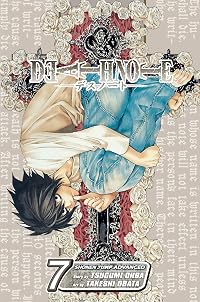
Light tests the boundaries of the Death Note's powers as L and the police begin to close in. Luckily Light's father is the head of the Japanese National Police Agency and leaves vital information about the case lying around the house. With access to his father's files, Light can keep one step ahead of the authorities. But who is the strange man following him, and how can Light guard against enemies whose names he doesn't know?Tags
Recommendations

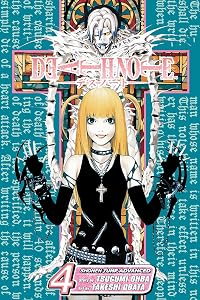

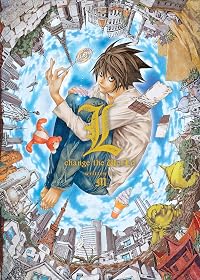


Member Recommendations

weener If you like dark, fantastic manga...
Member Reviews
My opinion of this manga has been tainted by the anime. How does one regain the initial suspense and wonder they have when they encounter a work for the first time? Besides that, it can be hard to maintain a fresh look on the first work in a series when you've seen the ending of the last. Still, I'll try because I think Death note is worth reading.
Death Note constantly questions ones moral compass, which is quite profound for a comic strip geared towards 17 year-olds about a magical notebook of murder. Besides asking the obvious "what would you do?" question that this book poses, the question that kept surfacing in my mind was "Why am a rooting for the bad guy?" and there is no helping it. By the end of this book I found myself vested. show more I may have set myself apart from the Light Yugami, the protagonist, and proclaimed up and down that I would never make the choices he did, but like it or not, I reveled in his successes.
You could argue that real genius was afoot when Tsugumi Ohba and Takeshi Obata thought this one up. If Light had been an adult, the reader would have called foul play. By making him young though, his flaws in moral judgment seem forgivable, and it stirs up the raw emotion everyone once had as an adolescent. It is also interesting that the death note itself, although fantastical in nature, parallels the weapons in our day, being able to strike people down from far away without getting one's hands dirty. That right there is where the age of Light really matters most, its hard to sympathize or even relate to nations and governments deciding they must purge the world of evil, but one can wrap their head around such feelings in a high school student.
I was able to forgive the few shortcomings interspersed throughout the manga rather quickly. Personally, I wanted more buildup in the beginning. It would have been interesting to me to see what kind of person Light was before he found the Death Note. Also, Light's declarations of righteousness throughout the comic can be over the top, but in some ways this hyperbole echoes back to the fact that Light is representing people and powers that must feel that they are so correct in their actions that they border on godliness.
The fantastical nature of this work also speaks to how delusional the idea of cleansing the world of evil is... or getting rid of all the terrorists, or I dare say the united states epic war on drugs. This idea, that through sheer willpower and determination we can succeed in removing that which we find repugnant. I think that is where Death Note shines, in showing us how desirable such things can be, while reminding us how unrealistic such goals are.
Attribution: http://gestclarinetist.wordpress.com/2010/06/05/death-note-volume-1-tsugumi-ohba... show less
Death Note constantly questions ones moral compass, which is quite profound for a comic strip geared towards 17 year-olds about a magical notebook of murder. Besides asking the obvious "what would you do?" question that this book poses, the question that kept surfacing in my mind was "Why am a rooting for the bad guy?" and there is no helping it. By the end of this book I found myself vested. show more I may have set myself apart from the Light Yugami, the protagonist, and proclaimed up and down that I would never make the choices he did, but like it or not, I reveled in his successes.
You could argue that real genius was afoot when Tsugumi Ohba and Takeshi Obata thought this one up. If Light had been an adult, the reader would have called foul play. By making him young though, his flaws in moral judgment seem forgivable, and it stirs up the raw emotion everyone once had as an adolescent. It is also interesting that the death note itself, although fantastical in nature, parallels the weapons in our day, being able to strike people down from far away without getting one's hands dirty. That right there is where the age of Light really matters most, its hard to sympathize or even relate to nations and governments deciding they must purge the world of evil, but one can wrap their head around such feelings in a high school student.
I was able to forgive the few shortcomings interspersed throughout the manga rather quickly. Personally, I wanted more buildup in the beginning. It would have been interesting to me to see what kind of person Light was before he found the Death Note. Also, Light's declarations of righteousness throughout the comic can be over the top, but in some ways this hyperbole echoes back to the fact that Light is representing people and powers that must feel that they are so correct in their actions that they border on godliness.
The fantastical nature of this work also speaks to how delusional the idea of cleansing the world of evil is... or getting rid of all the terrorists, or I dare say the united states epic war on drugs. This idea, that through sheer willpower and determination we can succeed in removing that which we find repugnant. I think that is where Death Note shines, in showing us how desirable such things can be, while reminding us how unrealistic such goals are.
Attribution: http://gestclarinetist.wordpress.com/2010/06/05/death-note-volume-1-tsugumi-ohba... show less
A death god drops his notebook in the human world, and when a super-intelligent high school student finds it and realizes he can kill people at will with it, he (the kid) decides to use this new-found power to rid the world of criminals. The police aren't exactly happy about the strange mass deaths of inmates and start a hunt for the mysterious mass murderer, spearheaded by an equally mysterious and smart detective-type guy. Oh, and the death god hangs out with the kid to see how all this plays out.
So far so very cool in this first manga volume. I love the story, especially the idea that the main character isn't exactly morally sound or even very likable. But he is intriguing and I just *have* to see what happens next.
So far so very cool in this first manga volume. I love the story, especially the idea that the main character isn't exactly morally sound or even very likable. But he is intriguing and I just *have* to see what happens next.
My first attempt at reading manga and from an interest point of view, a successful first effort. Starting from the rear of the book and reading right to left took a little getting used to, but it was surprising how quickly you adapt. The story itself follows Light Yagami as he finds the Death Note - a notebook dropped by a death god. The book allows the owner to kill anyone whose name is written within its pages. Light, feeling this is his opportunity to rid the world of criminals and bullies fully embraces the idea of the Death Note. That is until his actions come to the attention of the mysterious figure of L, the legendary and unknown detective. This brief synopsis hardly does the story justice. What you think is a book solely based show more on horror becomes a subtle complex battle of wills and a debate between right and wrong. Enjoyed this alot more than I thought I would. The opening half a dozen pages I really wasnt sure, but the rather simple plot frays off into new areas which I never imagined at the start. The facets of the Death Note are revealed slowly through the book as opposed to a mass download of information and just enhances the delicate storytelling. Intriguing and enjoyable. show less
Light Yagami is a serious straight-A student from Japan with great prospects. Ryuk is a shinigami, a death god, with nothing but time on his hands. Both Light and Ryuk are bored with their worlds. Then Light finds Ryuk's Death Note, a notebook with the power to kill anyone who's name is written within. Of course, there are rules that must be obeyed when using the Death Note. But Light sees it as a tool that he can use to create a utopia, ridding the world of criminal, and he can rule over it. Ryuk sees a chance to be entertained. When criminals begin to mysteriously die all over the world, the police and the enigmatic detective L begin searching for the killer, dubbed by the media as Kira.
This is the first volume of Death Note, and it show more gets the ball rolling quickly. Light is a chilling character. He honestly believes that what he's doing will make the world a better place and, though he first struggles with the powers of the Death Note, he quickly becomes corrupted by its power. Light sees the world in terms of black and white. Ryuk provides commentary and reflection on Light's actions (an interesting role for a death god), acting as a sort of chorus. He sometimes fills in the gaps between Light's plots and how they play out in the manga.
If there's anything I don't care for in Death Note, it's Light's incredible intellect. Yes, it's established that he's a genius and has amazing analytical skills. However, nothing seems to catch him off-guard. Even when Ryuk presents him with information he couldn't have possibly guessed about the Death Note, we only see Light briefly sweat it out and then just shrug the shock off. Light is still a teen and, even though he's confident and believe himself to be righteous, I'd think he'd be a little more flustered at times.
However, the story line is very interesting, raising questions about abuse of power and right and wrong. The artwork is incredible. You become more comfortable looking at the shinigami, who are very open about what they are, instead of Light, who goes from sweet and optimistic to manic. show less
This is the first volume of Death Note, and it show more gets the ball rolling quickly. Light is a chilling character. He honestly believes that what he's doing will make the world a better place and, though he first struggles with the powers of the Death Note, he quickly becomes corrupted by its power. Light sees the world in terms of black and white. Ryuk provides commentary and reflection on Light's actions (an interesting role for a death god), acting as a sort of chorus. He sometimes fills in the gaps between Light's plots and how they play out in the manga.
If there's anything I don't care for in Death Note, it's Light's incredible intellect. Yes, it's established that he's a genius and has amazing analytical skills. However, nothing seems to catch him off-guard. Even when Ryuk presents him with information he couldn't have possibly guessed about the Death Note, we only see Light briefly sweat it out and then just shrug the shock off. Light is still a teen and, even though he's confident and believe himself to be righteous, I'd think he'd be a little more flustered at times.
However, the story line is very interesting, raising questions about abuse of power and right and wrong. The artwork is incredible. You become more comfortable looking at the shinigami, who are very open about what they are, instead of Light, who goes from sweet and optimistic to manic. show less
Damn...
Start looking around you...
And all you see are people the world would be better off without.
Well, that escalated quickly, didn't it?
I have been wanting to read this for a while, so when I happened across it on my library's shelves yesterday, I picked it up instantly. This was a good choice. This nicely packed little examination of what might happen if a bored, idealistic teen (Light Yagami) suddenly had the ability to eliminate anyone whose name and face are known to him gets right down to business, and the race is on between the now serial killer teen and the as yet mysterious detective the world's police agencies bring in to stop him (L).
In addition to the nice in medias res pacing, I loved the complex characterizations at show more work in both Light and L, and the room left around Ryuk (the god of death who kicks this whole confrontation off). His motives are explained so far as needed and no further, and that is a very good thing. The tension in the story comes not so much from whether L will catch Light, but from the tragic setup inherent in the nature of the Death Note itself. Light's downfall is already set in the rules surrounding the power he is using, but the open questions left around Ryuk allow, for now, some degree of uncertainty. Is this truly a tragedy in the classic sense? Or is it a classic romance, with the hero destined to escape his certain destruction? I for one am very eager to find out. Unfortunately, volume 2 seems to have disappeared off my library's shelves since yesterday, so it seems I may need to make a trip to the bookstore...
Update January 27, 2019: Book holds up, review holds up. I love it when that happens! show less
Start looking around you...
And all you see are people the world would be better off without.
Well, that escalated quickly, didn't it?
I have been wanting to read this for a while, so when I happened across it on my library's shelves yesterday, I picked it up instantly. This was a good choice. This nicely packed little examination of what might happen if a bored, idealistic teen (Light Yagami) suddenly had the ability to eliminate anyone whose name and face are known to him gets right down to business, and the race is on between the now serial killer teen and the as yet mysterious detective the world's police agencies bring in to stop him (L).
In addition to the nice in medias res pacing, I loved the complex characterizations at show more work in both Light and L, and the room left around Ryuk (the god of death who kicks this whole confrontation off). His motives are explained so far as needed and no further, and that is a very good thing. The tension in the story comes not so much from whether L will catch Light, but from the tragic setup inherent in the nature of the Death Note itself. Light's downfall is already set in the rules surrounding the power he is using, but the open questions left around Ryuk allow, for now, some degree of uncertainty. Is this truly a tragedy in the classic sense? Or is it a classic romance, with the hero destined to escape his certain destruction? I for one am very eager to find out. Unfortunately, volume 2 seems to have disappeared off my library's shelves since yesterday, so it seems I may need to make a trip to the bookstore...
Update January 27, 2019: Book holds up, review holds up. I love it when that happens! show less
Not being a dedicated fan of Manga, it is hard to judge this book. I can only judge it by the artistic and literary standards I am familiar with. In which case, I thought it was average. I can see how it would be adictive, because the story does leave cliff hangers in every chapter. However, it won't take long for me to forget this story line. It is too expensive to be a habit.
All that said, I am glad I read it. Death Note is inventive and not as cryptic as some Manga materials I have seen. The concept is good, though the protagonists mixed motivations of moral cleansing and personal power do not seem to me to be compatible. This mix should make him more of a fascist and less of a hero than the characterization of the book. His personal show more power trip is underplayed, presumably to keep him palatable. But as a true fascist, his cooperation with a veritable demon seems appropriate. One finds himself wishing that he would succeed with his moral cleansing, but his megalomania holds the reader back from truly wishing him well. show less
All that said, I am glad I read it. Death Note is inventive and not as cryptic as some Manga materials I have seen. The concept is good, though the protagonists mixed motivations of moral cleansing and personal power do not seem to me to be compatible. This mix should make him more of a fascist and less of a hero than the characterization of the book. His personal show more power trip is underplayed, presumably to keep him palatable. But as a true fascist, his cooperation with a veritable demon seems appropriate. One finds himself wishing that he would succeed with his moral cleansing, but his megalomania holds the reader back from truly wishing him well. show less
4.5
When I wrote in my review of [b:Battle Royale|57891|Battle Royale|Koushun Takami|http://photo.goodreads.com/books/1331235272s/57891.jpg|2786327] that there were only two manga series I would recommend, it made me realise just how much in need of a review this was. I am not a manga fan, I know some people love it like crazy, but I've tried starting the most commonly loved - Naruto, InuYasha, Fullmetal Alchemist, etc. - and been left believing that I would never appreciate these Japanese graphic novels. Death Note was a complete accident which I found one day whilst browsing youtube. I ran into the first episode and watched out of curiosity, then I watched the next and the next until I'd seen the whole thing and knew I had to read the show more novels too. Both are brilliant. The whole series has only one flaw for me, though quite a big one, and that's why I deducted half a star from the rating. I will talk about this issue later on.
Just so you know, this is going to be a review of the series as a whole because I'm not going to review every single volume, but I promise to leave out any spoilers.
Here goes: Death Note is brilliant. It's incredibly clever and will challenge your views on justice and power, but the challenges it puts your way are far from simple. I guarantee that you will change your mind multiple times during each volume, you will switch sides constantly, you will one minute think Light Yagami is evil and the next you'll think him a hero. This is a very complex moral story about right and wrong, about how power corrupts, and about what is a just punishment for the wicked.
Light Yagami is an over-achieving student who is fed up with the world around him, day by day he hears the news report listing murders and rapes and other atrocities committed by human scum. When one day a Shinigami (Japanese death god) drops his death note into the human realm, Light Yagami picks it up and holds in his hands the power to kill people just by writing their names and picturing their faces whilst doing so. He starts out with the most noble intentions - rid the earth of the foulest criminals - but there's a price to pay for playing god. As people start to realise that somehow someone is murdering criminals and disregarding Japan's law methods, questions about justice begin to arise - is the killer doing the world a favour, or is he showing a complete lack of respect for human rights?
When more people begin to stand in Light's way, he is forced to write the names of more and more individuals - some criminals, some not. The power granted to him begins to change him, force him deeper into his obsession with this god-like role. All the while, Ohba maintains a brilliant pace and throws up many obstacles and challenges. This story will really appeal to people who want something to think about and are sick of reading novels with the same old pattern.
On top of all this, Death Note has possibly my favourite detective of all time. When the Japanese police force realise that they are unqualified to catch the killer, they appeal to L Lawliet for help. Now, I don't want to say too much about L because I could spoil it, but he's intelligent, lovable, brilliant... even if the rest of the story doesn't work for you, I doubt you'll be able to resist loving L Lawliet. And this is one of the things I love most about the series: there's no clear line between good and bad. The novel pits Light and L against one another, they have very different ideas about justice and right and wrong, but the brilliance of it is that you can see it from both points of view, in a way you find yourself on both of their sides. Just amazing.
So why did I knock off half a star? Because of the portrayal of women in Death Note. At the end of the day, this series was made to mainly appeal to young adult males. There's no kickass heroine, very few main female characters appear throughout the whole thing. Plus, the biggest female character is Misa Amane, she is beautiful but useless a lot of the time. She is silly and fickle, and she is mostly regarded with contempt from the other characters. This would probably annoy me more if the rest of the story wasn't so excellent, but it is, it really is.
You should read it. Or watch it. Each episode is only 20 minutes long, why not try out the first and see if it's something you could like: http://www.youtube.com/watch?v=CheI5Dse2jU show less
When I wrote in my review of [b:Battle Royale|57891|Battle Royale|Koushun Takami|http://photo.goodreads.com/books/1331235272s/57891.jpg|2786327] that there were only two manga series I would recommend, it made me realise just how much in need of a review this was. I am not a manga fan, I know some people love it like crazy, but I've tried starting the most commonly loved - Naruto, InuYasha, Fullmetal Alchemist, etc. - and been left believing that I would never appreciate these Japanese graphic novels. Death Note was a complete accident which I found one day whilst browsing youtube. I ran into the first episode and watched out of curiosity, then I watched the next and the next until I'd seen the whole thing and knew I had to read the show more novels too. Both are brilliant. The whole series has only one flaw for me, though quite a big one, and that's why I deducted half a star from the rating. I will talk about this issue later on.
Just so you know, this is going to be a review of the series as a whole because I'm not going to review every single volume, but I promise to leave out any spoilers.
Here goes: Death Note is brilliant. It's incredibly clever and will challenge your views on justice and power, but the challenges it puts your way are far from simple. I guarantee that you will change your mind multiple times during each volume, you will switch sides constantly, you will one minute think Light Yagami is evil and the next you'll think him a hero. This is a very complex moral story about right and wrong, about how power corrupts, and about what is a just punishment for the wicked.
Light Yagami is an over-achieving student who is fed up with the world around him, day by day he hears the news report listing murders and rapes and other atrocities committed by human scum. When one day a Shinigami (Japanese death god) drops his death note into the human realm, Light Yagami picks it up and holds in his hands the power to kill people just by writing their names and picturing their faces whilst doing so. He starts out with the most noble intentions - rid the earth of the foulest criminals - but there's a price to pay for playing god. As people start to realise that somehow someone is murdering criminals and disregarding Japan's law methods, questions about justice begin to arise - is the killer doing the world a favour, or is he showing a complete lack of respect for human rights?
When more people begin to stand in Light's way, he is forced to write the names of more and more individuals - some criminals, some not. The power granted to him begins to change him, force him deeper into his obsession with this god-like role. All the while, Ohba maintains a brilliant pace and throws up many obstacles and challenges. This story will really appeal to people who want something to think about and are sick of reading novels with the same old pattern.
On top of all this, Death Note has possibly my favourite detective of all time. When the Japanese police force realise that they are unqualified to catch the killer, they appeal to L Lawliet for help. Now, I don't want to say too much about L because I could spoil it, but he's intelligent, lovable, brilliant... even if the rest of the story doesn't work for you, I doubt you'll be able to resist loving L Lawliet. And this is one of the things I love most about the series: there's no clear line between good and bad. The novel pits Light and L against one another, they have very different ideas about justice and right and wrong, but the brilliance of it is that you can see it from both points of view, in a way you find yourself on both of their sides. Just amazing.
So why did I knock off half a star? Because of the portrayal of women in Death Note. At the end of the day, this series was made to mainly appeal to young adult males. There's no kickass heroine, very few main female characters appear throughout the whole thing. Plus, the biggest female character is Misa Amane, she is beautiful but useless a lot of the time. She is silly and fickle, and she is mostly regarded with contempt from the other characters. This would probably annoy me more if the rest of the story wasn't so excellent, but it is, it really is.
You should read it. Or watch it. Each episode is only 20 minutes long, why not try out the first and see if it's something you could like: http://www.youtube.com/watch?v=CheI5Dse2jU show less
Members
- Recently Added By
Lists

Recommended Comics / Graphic Novels
595 works; 122 members

Best Fantasy Novels
821 works; 357 members

Recommend the 20 best books you've read in the last five years
2,168 works; 606 members

Books Read in 2008
335 works; 7 members

Manga - Death Note
12 works; 1 member
Manga - Death Note
12 works; 1 member
Author Information

87+ Works 33,264 Members
Tsugumi Ohba is the author of the hit series Death Note, Bakuman and Platinum End. Takeshi Obata Takeshi Obata was born in 1969 in Niigata, Japan, and first achieved international recognition as the artist of the wildly popular Shonen Jump title Hikaru no Go, which won the 2003 Tezuka Osamu Cultural Prize: Shinsei "New Hope" Award and the 2000 show more Shogakukan Manga Award. He went on to illustrate the smash hit Death Note as well as the hugely successful manga Bakuman, All You Need Is Kill and Platinum End. show less

Some Editions
Awards and Honors
Awards
Distinctions
Series

Work Relationships
Is contained in
Common Knowledge
- Canonical title
- Death Note, Volume 1: Boredom
- Original title
- デスノート 1
- Alternate titles*
- Death Note 1
- Original publication date
- 2004-04-02
- People/Characters
- Light Yagami; L; Ryuk; Soichiro Yagami; Sachiko Yagami; Sayu Yagami (show all 7); Matsuda
- Important places
- Tokyo, Japan; Japan
- Related movies
- Death Note: Desu nôto (2006 | IMDb); Death Note: The Last Name (2006 | IMDb); Death Note (2017 | IMDb)
- First words
- "Same old thing, day after day...What a bore."
"This world is a rotten mess..." - Last words
- (Click to show. Warning: May contain spoilers.)"Exactly 11:45. The Death Note's right on time."
*Some information comes from Common Knowledge in other languages. Click "Edit" for more information.
Classifications
- Genres
- Graphic Novels & Comics, Teen, Horror
- DDC/MDS
- 741.5952 — Arts & recreation Drawing & decorative arts Drawing Comic books, graphic novels, fotonovelas, cartoons, caricatures, comic strips History, geographic treatment, biography Asian Japanese
- LCC
- PN6790 .J33 .O358 — Language and Literature Literature (General) Literature (General) Collections of general literature Comic books, strips, etc.
- BISAC
Statistics
- Members
- 3,402
- Popularity
- 4,926
- Reviews
- 91
- Rating
- (4.19)
- Languages
- 17 — Chinese, Czech, Dutch, English, Finnish, French, German, Hungarian, Italian, Japanese, Korean, Norwegian (Bokmål), Polish, Portuguese, Spanish, Swedish, Turkish
- Media
- Paper, Ebook
- ISBNs
- 36
- ASINs
- 8