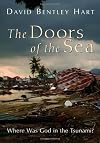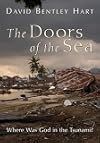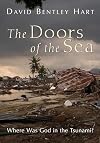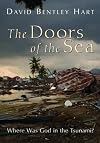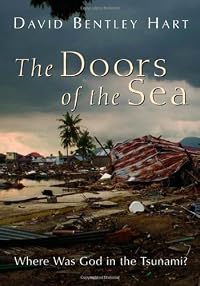
The Doors of the Sea: Where Was God in the Tsunami?
by David Bentley Hart
On This Page
Description
As news reports of the horrific December 2004 tsunami in Asia reached the rest of the world, commentators were quick to seize upon the disaster as proof of either God's power or God's nonexistence, asking over and over, How could a good and loving God - if such exists - allow such suffering? In The Doors of the Sea David Bentley Hart speaks at once to those skeptical of Christian faith and to those who use their Christian faith to rationalize senseless human suffering. He calls both to show more recognize in the worst catastrophes not the providential will of God but rather the ongoing struggle between the rebellious powers that enslave the world and the God who loves it wholly. show lessTags
Recommendations



















Member Reviews
Here is a book I will need to reread a few times to take in what I've missed or misunderstood the first time around. At barely 100 pages, I looked up more words than I have with any other book. The lexicon at work here is so perfectly specific, but it bogs down what is already a difficult topic - not just in logic but in fundamental beliefs.
I found many profound and succinct ways of articulating what I believe in this book, while also stumbling through some hand-wavery to explain the crux of the issue - why on God's green earth is evil present.
I submit wholeheartedly to the idea that God is all loving and good and evil cannot come from him or be part of his "plan". To believe in a god like that would be shrugging off accountability, show more essentially leaving one complicit in the evil. A very Nuremberg defense of bad theology.
I just find myself wanting more explanation of why creation fell in the first place, allowing the mysterious hand of evil to bind us to death. Free and rational beings apparently call for it, but I lost the plot with that explanation. We might be free of a controlling will, but we are certainly not individually free of creation's falling.
I think this is leading me to a more communal understanding of the Church and the body of faith, and away from the personal/individual religion I grew up with. The deconstruction continues. show less
I found many profound and succinct ways of articulating what I believe in this book, while also stumbling through some hand-wavery to explain the crux of the issue - why on God's green earth is evil present.
I submit wholeheartedly to the idea that God is all loving and good and evil cannot come from him or be part of his "plan". To believe in a god like that would be shrugging off accountability, show more essentially leaving one complicit in the evil. A very Nuremberg defense of bad theology.
I just find myself wanting more explanation of why creation fell in the first place, allowing the mysterious hand of evil to bind us to death. Free and rational beings apparently call for it, but I lost the plot with that explanation. We might be free of a controlling will, but we are certainly not individually free of creation's falling.
I think this is leading me to a more communal understanding of the Church and the body of faith, and away from the personal/individual religion I grew up with. The deconstruction continues. show less
Excellent and very readable meditation on the problem of evil as it came to the fore after the tsunami on December 26, 2004 that killed at least 100,000 in Southeast Asia. Uses literary sources in his meditations, especially Voltaire's poem after the Lisbon earthquake, and Doestoevsky's Brothers Karamazov. Takes some strong shots at Calvinist predestinarian understandings of divine providence
An amazing look at the problem of evil within the wider Christian context and the only one I’ve found somewhat satisfying. I liked its focus on Southeast Asia as well as its response to Catholic and Calvinist hyperbole.
The Doors of the Sea is an emotional response against "metaphysical optimism," which in his view trivializes tragedy by stating that everything is okay in the end. Coming from an Eastern Orthodox perspective, Hart certainly believes that the Christian God is victorious in the end, but he warns against religious responses that attribute evil to God. According to Hart, God does not need horrendous evil in order to glorify Himself. Hart goes further to say that the doctrine of predestination compromises the core message of the gospel.
As a reader who has flip-flopped on this particular doctrine, I found this a very profound read. It is definitely packed with emotion, but only minimally focused at the tsunami. It is more a passionate show more rejection of metaphysical optimism and rejecting trivial versions of theodicy. show less
As a reader who has flip-flopped on this particular doctrine, I found this a very profound read. It is definitely packed with emotion, but only minimally focused at the tsunami. It is more a passionate show more rejection of metaphysical optimism and rejecting trivial versions of theodicy. show less
An excellent book of anti-theodicy. Hart is able to articulate just what divine apatheia truly entails for the Christian faith in his working out of the 'problem' of evil. He is most profound in the end of the book when he reminds us that we are to hate evil with a perfect hate but know that even in the midst of unspeakable terror and death, that we are not to see God, but the face of evil and sin and know that in the end, God will wipe away all our tears. Highly recommended and accessible (for Hart) text on the issue of what is commonly referred to as 'natural evil', although the 'moral evil' issue is covered rather heavily as well in the work of Dostoyevsky, Voltaire, et. al.
Hart is an Eastern Orthodox Christian and writes from a perspective that is a little different than what we usually hear. The book is rich is philosophy, theology, and literary references, and will sometimes take a second or third reading of a passage to understand. Hart interacts extensively with the writings of Voltaire and Dostoyevsky in building his theodicy.
Although Hart states that he is not trying to make Reformed theology "the bad guy", he freely admits that certain elements of Reformed theology are simply not compatible with Eastern Orthodox theology. As an Arminian, I found it refreshing to find a work that is so rich and deep.
Since it seems that tragedies come at a fairly regular pace, this is a highly recommended work in show more understanding God and suffering. As noted, some passages take effort - but you will be rewarded richly for the effort. show less
Although Hart states that he is not trying to make Reformed theology "the bad guy", he freely admits that certain elements of Reformed theology are simply not compatible with Eastern Orthodox theology. As an Arminian, I found it refreshing to find a work that is so rich and deep.
Since it seems that tragedies come at a fairly regular pace, this is a highly recommended work in show more understanding God and suffering. As noted, some passages take effort - but you will be rewarded richly for the effort. show less
Harte offers here a brief but significant case AGAINST theodicy pointing out the fallacies of theodicy and offering an introduction to the unique understanding of god presented in the Judeo/Christian Scriptures.
Members
- Recently Added By
Author Information

32+ Works 3,790 Members
David Bentley Hart is an Eastern Orthodox scholar of religion and a philosopher, writer, and cultural commentator. His books include The Experience of God and The New Testament: A Translation.
Common Knowledge
- Canonical title
- The Doors of the Sea: Where Was God in the Tsunami?
- Original publication date
- 2005
- Important events
- 2004 Indian Ocean earthquake and tsunami
- First words
- In that great verdant arc of lands that forms the northeastern rim of the Indian Ocean and that takes the Bay of Bengal into its embrace—sweeping out from Sri Lanka and up the coasts of eastern India to Bangladesh and Burma... (show all), then down the Malay Peninsula to Thailand and Malaysia, and then further down the coast of Sumatra to the western tip of Java—there are Gods without number.
- Last words
- (Click to show. Warning: May contain spoilers.)Now we are able to rejoice that we are saved not through the immanent mechanisms of history and nature, but by grace; that God will not unite all of history's many strands in one great synthesis, but will judge much of history false and damnable; that he will not simply reveal the sublime logic of fallen nature, but will strike off the fetters in which creation languishes; and that, rather than showing us how the tears of a small girl suffering in the dark were necessary for the building of the Kingdom, he will instead raise her up and wipe away all tears from her eyes—and there shall be no more death, nor sorrow, nor crying, nor any more pain, for the former things will have passed away, and he that sits upon the throne will say, "Behold, I make all things new."
Classifications
Statistics
- Members
- 382
- Popularity
- 81,617
- Reviews
- 9
- Rating
- (4.31)
- Languages
- English
- Media
- Paper, Ebook
- ISBNs
- 5
- ASINs
- 3