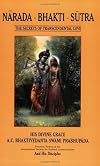
The Yoga of Spiritual Devotion: A Modern Translation of the Narada Bhakti Sutras
by Narada
On This Page
Description
* The first translation of this great but little-known path of spiritual devotion written for the modern Western audience. * An insightful commentary aimed at making the path of love immediately accessible to Westerners. * A life-affirming and relationship-positive path of yoga. * Written in the spirit of the kirtans (ecstatic songs and dances) of Narada, sensitively translated by Prem Prakash. Bhakti Yoga, the path of devotion, is considered one of the primary paths for spiritual show more realization in yogic tradition. Its representative, Narada, is the embodiment of the enlightened sage who travels the universe spreading his sacred teachings. Unlike Jnana Yoga, the Yoga of Wisdom, the bhakti acolyte does not discriminate against material phenomena--for him, all phenomena are aspects of God. Within the context of Ananda, blissful love, the temporal is realized as the reflection of the eternal, and the soul is realized as the expression of God. show lessTags
Recommendations



































Member Reviews
Bhakti Yoga, the path of devotion, is considered one of the primary paths for spiritual realisation in the yogic tradition. Prem Prakash's book offers a sensitive introduction to the devotional path. He makes the ancient Bhakti Sutras of Narada come alive for all of us who wish to cultivate the power of the heart.
American Yogi Prem Prakash has done a great service by providing a modern translation and accessible commentary for readers interested in learning about and/or following the path of yoga. Regarding bhakti yoga, that is, the yoga of spiritual devotion, Prem Prakash says in his Introduction, “By making love his polestar, the bhakti yogi follows its light along the path of life until the soul realizes it is one with that light.” Here are a few notes I have made in my multiple readings of this beautiful book:
The sweetness of devotion fills the yogi and the yogi becomes intoxicated with bliss.
Take care of the body so it supports spiritual practice.
Hold intention to always be attuned to the divine. Be sweet and soft and show more sensitive.
According to Narada, bhakti or spiritual devotion is its own fruit. The yogi feels joy and gratitude on feeling the love from the divine within.
Want liberation? All you need is bhakti. All you need is love.
Sing and listen to the qualities of the divine – kirtan and satsung and drumming – celebrate everything and everyone being worthy of love.
Be a sun and generate light.
Be free from the bondage of orthodox doctrine, tradition, and social and religious teachings – the divine is direct and spontaneous, not mediated through anyone or anybody.
Be a love-infused yogi
Peace and joy are experienced every step of the way in the path of bhakti yoga – if this is not one’s experience than something has gone wrong. The eternal divine relationship must be present in the yogi at every moment if the practice is truly authentic.
One need not be perfect as long as motivation is pure. Every striving, no matter how small, counts.
The bhakti yogi exerts a subtle influence on all whom he or she comes into contact
Among bhakti yogis there is no prejudice. Worldly status means nothing.
Live in a simple, orderly and comfortable way.
Whatever form the divine takes to inspire the yogi to devotion – god, goddess, light, whatever – is the proper form.
show less
The sweetness of devotion fills the yogi and the yogi becomes intoxicated with bliss.
Take care of the body so it supports spiritual practice.
Hold intention to always be attuned to the divine. Be sweet and soft and show more sensitive.
According to Narada, bhakti or spiritual devotion is its own fruit. The yogi feels joy and gratitude on feeling the love from the divine within.
Want liberation? All you need is bhakti. All you need is love.
Sing and listen to the qualities of the divine – kirtan and satsung and drumming – celebrate everything and everyone being worthy of love.
Be a sun and generate light.
Be free from the bondage of orthodox doctrine, tradition, and social and religious teachings – the divine is direct and spontaneous, not mediated through anyone or anybody.
Be a love-infused yogi
Peace and joy are experienced every step of the way in the path of bhakti yoga – if this is not one’s experience than something has gone wrong. The eternal divine relationship must be present in the yogi at every moment if the practice is truly authentic.
One need not be perfect as long as motivation is pure. Every striving, no matter how small, counts.
The bhakti yogi exerts a subtle influence on all whom he or she comes into contact
Among bhakti yogis there is no prejudice. Worldly status means nothing.
Live in a simple, orderly and comfortable way.
Whatever form the divine takes to inspire the yogi to devotion – god, goddess, light, whatever – is the proper form.
show less
American Yogi Prem Prakash has done a great service by providing a modern translation and accessible commentary for readers interested in learning about and/or following the path of yoga. Regarding bhakti yoga, that is, the yoga of spiritual devotion, Prem Prakash says in his Introduction, “By making love his polestar, the bhakti yogi follows its light along the path of life until the soul realizes it is one with that light.” Here are a few notes I have made in my multiple readings of this beautiful book:
The sweetness of devotion fills the yogi and the yogi becomes intoxicated with bliss.
Take care of the body so it supports spiritual practice.
Hold intention to always be attuned to the divine. Be sweet and soft and show more sensitive.
According to Narada, bhakti or spiritual devotion is its own fruit. The yogi feels joy and gratitude on feeling the love from the divine within.
Want liberation? All you need is bhakti. All you need is love.
Sing and listen to the qualities of the divine – kirtan and satsung and drumming – celebrate everything and everyone being worthy of love.
Be a sun and generate light.
Be free from the bondage of orthodox doctrine, tradition, and social and religious teachings – the divine is direct and spontaneous, not mediated through anyone or anybody.
Be a love-infused yogi
Peace and joy are experienced every step of the way in the path of bhakti yoga – if this is not one’s experience than something has gone wrong. The eternal divine relationship must be present in the yogi at every moment if the practice is truly authentic.
One need not be perfect as long as motivation is pure. Every striving, no matter how small, counts.
The bhakti yogi exerts a subtle influence on all whom he or she comes into contact
Among bhakti yogis there is no prejudice. Worldly status means nothing.
Live in a simple, orderly and comfortable way.
Whatever form the divine takes to inspire the yogi to devotion – god, goddess, light, whatever – is the proper form.
show less
The sweetness of devotion fills the yogi and the yogi becomes intoxicated with bliss.
Take care of the body so it supports spiritual practice.
Hold intention to always be attuned to the divine. Be sweet and soft and show more sensitive.
According to Narada, bhakti or spiritual devotion is its own fruit. The yogi feels joy and gratitude on feeling the love from the divine within.
Want liberation? All you need is bhakti. All you need is love.
Sing and listen to the qualities of the divine – kirtan and satsung and drumming – celebrate everything and everyone being worthy of love.
Be a sun and generate light.
Be free from the bondage of orthodox doctrine, tradition, and social and religious teachings – the divine is direct and spontaneous, not mediated through anyone or anybody.
Be a love-infused yogi
Peace and joy are experienced every step of the way in the path of bhakti yoga – if this is not one’s experience than something has gone wrong. The eternal divine relationship must be present in the yogi at every moment if the practice is truly authentic.
One need not be perfect as long as motivation is pure. Every striving, no matter how small, counts.
The bhakti yogi exerts a subtle influence on all whom he or she comes into contact
Among bhakti yogis there is no prejudice. Worldly status means nothing.
Live in a simple, orderly and comfortable way.
Whatever form the divine takes to inspire the yogi to devotion – god, goddess, light, whatever – is the proper form.
show less
An exemplary work that traces the birth, growth, development and expression of Bhakti in a lucid and simple manner. A valuable commentary to the pithy aphorisms.
Ratings
Members
- Recently Added By
Author Information
2 Works 94 Members
Some Editions
Classifications
- Genres
- Nonfiction, Religion & Spirituality
- DDC/MDS
- 294.543 — Religion Other religions Dharmic religions Hinduism Religious experience, life, practice, religious ethics Worship, meditation, yoga
- LCC
- BL1214.32 .B53 .P74 — Philosophy, Psychology and Religion Religions. Mythology. Rationalism Religions. Mythology. Rationalism History and principles of religions Asian. Oriental By religion Hinduism
- BISAC
Statistics
- Members
- 93
- Popularity
- 340,087
- Reviews
- 4
- Rating
- (4.63)
- Languages
- English, Spanish
- Media
- Paper, Ebook
- ISBNs
- 12
- ASINs
- 4