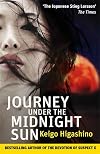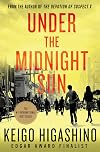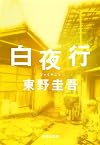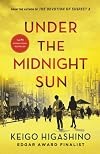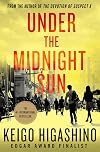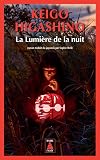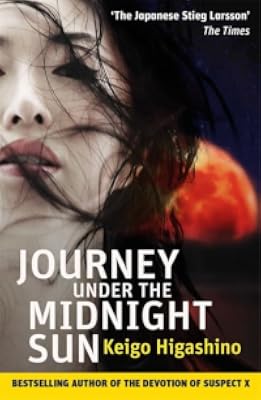
Journey Under the Midnight Sun
by Keigo Higashino
On This Page
Description
In an abandoned building in 1973 in Osaka, the body of a murdered man is found. Working quietly and methodically, Detective Sagasaki discovers two people who appear to have clear links to the crime -- Ryo, the uncommunicative son of the dead man, and Yukiho, the charming daughter of the man principally in the frame for the murder. Decades pass. The murder remains unsolved. Ryo and Yukiho continue with their lives, disappearing and reappearing through school, jobs, and marriage. But Sagasaki, show more who carries tenaciousness to the point of obsession, is prepared to spend as much time as it takes to solve an insoluble case. As the many strands of plot, coincidence, and rumor dovetail, Sagasaki zeroes in on the curious bond connecting Yukiho to Ryo. Journey under the Midnight Sun isn't a whodunnit or even a whydunnit, but a what-exactly-is-being-dunnit, and an extraordinary work of fiction that could be read as a potted history of Japan, an exploration of a crumbling social order, a ludic literary puzzle that plays with genre expectations, and most of all, a tantalising mystery that keeps the pages turning. -- show lessTags
Recommendations

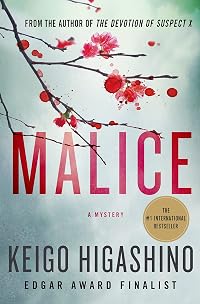
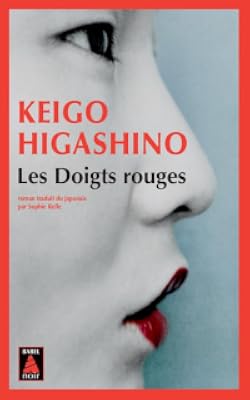




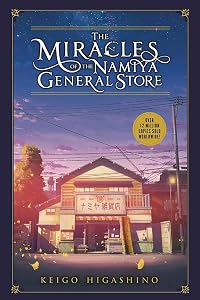
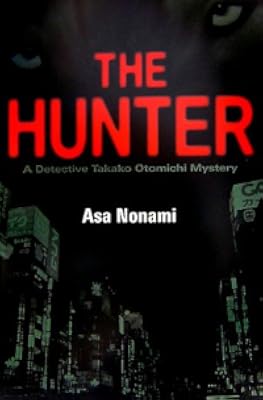
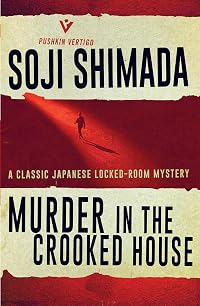
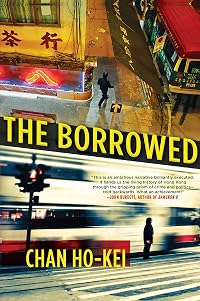
Member Reviews
In Journey Under the Midnight Sun, Higashino has used a very different style to that in his Detective Galileo series, something unlike anything else I've read within the crime genre. Initially, this wasn't as satisfying a read as I was expecting it to be. I really enjoyed the previous books I've read by Higashino, and I wanted this to instantly be as good. It took a while to get going. I read that the story was originally serialised in a magazine, as discrete episodes, which explains why the first half of the novel feels a little disjointed at times. There's little exposition in the chapters to give a clear sense of time and its passing, and the links between each of the early episodes only gradually become clear. Things start to pick show more up once past events have been documented and the story becomes current. Threads pull together, and suspicions begin to be voiced by the people around the two central characters. There is a building sense of menace, which works well. Around the midway point, enough has happened to send up a flag whenever someone new is introduced who might annoy one or other of the central characters. Nothing is spelled out, nothing can be proved, but bad things keep happening. What can't be proved also can't be explained - the reader is left with suspicions about who is doing what, but lacking any idea about motive. I liked that about the book very much. Two thirds of the way through, the mystery begins to be resolved. The story takes a very dark turn towards the end, which I found upsetting. By the end of the book, I was completely gripped, and wanting to tell characters to be careful, or to look more closely at what was going on. show less
This is no ordinary novel. It is an intricate, well-written, and perfectly paced exposé of the darker side of human nature. There are those within its pages who must learn that even a midnight sun can burn its worshippers.
Higashino presents a multi-layered novel comprised of deeply flawed, complex human beings whose extreme natures and exceptional self-control drive them to exert dominance over people and situations. The annals of history overflow with myriad people--some famous, some infamous, some outright sociopaths--whose singular determination either compelled or allowed them to accomplish the almost impossible, good or ill. It is from them, perhaps, that Higashino drew inspiration for the main characters in Under the Midnight show more Sun.
Though lengthy, there are no superfluous storylines. Each narrative is an integral thread in the web. Detective Sasagaki has his work cut out for him, but he also has enough doggedness (and packs of Hi-Lite cigarettes) to keep him digging for the truth.
Not since reading The Devotion of Suspect X have I enjoyed a Higashino novel this much, and I found myself staying up late into the night reading, and thinking about the book over the course of the next day. This is an excellent novel written by a true master of the craft of suspense. show less
Higashino presents a multi-layered novel comprised of deeply flawed, complex human beings whose extreme natures and exceptional self-control drive them to exert dominance over people and situations. The annals of history overflow with myriad people--some famous, some infamous, some outright sociopaths--whose singular determination either compelled or allowed them to accomplish the almost impossible, good or ill. It is from them, perhaps, that Higashino drew inspiration for the main characters in Under the Midnight show more Sun.
Though lengthy, there are no superfluous storylines. Each narrative is an integral thread in the web. Detective Sasagaki has his work cut out for him, but he also has enough doggedness (and packs of Hi-Lite cigarettes) to keep him digging for the truth.
Not since reading The Devotion of Suspect X have I enjoyed a Higashino novel this much, and I found myself staying up late into the night reading, and thinking about the book over the course of the next day. This is an excellent novel written by a true master of the craft of suspense. show less
For a mystery novel that spans two decades, from 1973 to 1992, Journey Under the Midnight Sun is precise and focused. It follows the lives of two sociopaths and the detective who has trailed them since the murder of a pawnshop owner in 1973. Twists and turns abound. There is a score of well developed characters, each one psychoanalyzed and supplied with their own point of view. All is brought together like a fine clockwork mechanism at the end, the pursuit of the motive revealing something shocking and disgraceful.
This is a fast paced novel. Do not let the 539 page length deceive you. It reads quickly. And as the pieces of the puzzle slide in and out and finally into a fixed place, we occasionally lose sight of the main protagonist, the show more aging detective Sasagaki. He stands at the center of the first chapter but then disappears until the final 150 or so pages. Yet the thread of the story never veers off track. And when Sasagaki reappears, it is as a fulfilling force. In fact, that would be my summation of the effect of Journey Under the Midnight Sun on the reader--a catharsis. Except all doesn't end as neatly as might be hoped. Without going into spoilers, there is a great deal of rationalization at the end of this novel. A bit of social preening even, as the reader is introduced into issues of justification and explanation that verge on unwanted sympathy.
All this leaves the reader somewhat uneasy at the end. But, then, that is the point. Nobody rests easy at the end of Journey Under the Midnight Sun. show less
This is a fast paced novel. Do not let the 539 page length deceive you. It reads quickly. And as the pieces of the puzzle slide in and out and finally into a fixed place, we occasionally lose sight of the main protagonist, the show more aging detective Sasagaki. He stands at the center of the first chapter but then disappears until the final 150 or so pages. Yet the thread of the story never veers off track. And when Sasagaki reappears, it is as a fulfilling force. In fact, that would be my summation of the effect of Journey Under the Midnight Sun on the reader--a catharsis. Except all doesn't end as neatly as might be hoped. Without going into spoilers, there is a great deal of rationalization at the end of this novel. A bit of social preening even, as the reader is introduced into issues of justification and explanation that verge on unwanted sympathy.
All this leaves the reader somewhat uneasy at the end. But, then, that is the point. Nobody rests easy at the end of Journey Under the Midnight Sun. show less
“Ever heard about the goby and the shrimp?”
If not, read this book! It's long and involved, but it comes to a boil quite nicely! Covering twenty years and a lot of characters, it feels like a history novel but is really a murder-mystery book with a detective who just won't let go of a case, even into retirement. “…even after searching for nearly twenty years. Two decades.”
The toilet paper shortage sure brought back memories! And the computers with cassette recorders for memory storage! I was in junior high then!
“When it comes to that particular neighborhood, I can tell which of the stray cats are pregnant, and who the father was,” Sasagaki said, his mouth opening in silent laughter.”
“You can’t be afraid of losing show more something you never had.”
*Great last sentence! show less
If not, read this book! It's long and involved, but it comes to a boil quite nicely! Covering twenty years and a lot of characters, it feels like a history novel but is really a murder-mystery book with a detective who just won't let go of a case, even into retirement. “…even after searching for nearly twenty years. Two decades.”
The toilet paper shortage sure brought back memories! And the computers with cassette recorders for memory storage! I was in junior high then!
“When it comes to that particular neighborhood, I can tell which of the stray cats are pregnant, and who the father was,” Sasagaki said, his mouth opening in silent laughter.”
“You can’t be afraid of losing show more something you never had.”
*Great last sentence! show less
A pawnbroker is found stabbed to death in an abandoned building in Osaka. As part of Detective Sasagaki's inquiries he questions a woman who was a regular customer and forms a theory that she was the pawn-broker's lover. A year later that woman is discovered by her daughter Yukiho, gassed to death. It is ruled an accident, but suspicions of suicide, born of the scandal and shame, remain.
What starts out looking like a standard procedural then takes a surprising turn as the murder investigation is put aside and we follow the lives of Yukiho and the pawnbroker's son, Ryo, through their school and college years. Both of them seem to be doing well, but also seem to be magnets for trouble. As their lives unfold into adulthoood and the show more coincidences pile up, Sasagaki maintains a close interest in their doings.
This novel has a really good plot which cleverly subverts the usual police procedural, and has three engaging and fascinating characters at its core. Another winner from Higashino. show less
What starts out looking like a standard procedural then takes a surprising turn as the murder investigation is put aside and we follow the lives of Yukiho and the pawnbroker's son, Ryo, through their school and college years. Both of them seem to be doing well, but also seem to be magnets for trouble. As their lives unfold into adulthoood and the show more coincidences pile up, Sasagaki maintains a close interest in their doings.
This novel has a really good plot which cleverly subverts the usual police procedural, and has three engaging and fascinating characters at its core. Another winner from Higashino. show less
This is a non-traditional mystery by one of my favourite mystery writers. It focuses on the fallout of an unsolved murder over nearly two decades.
In 1973, Yosuke Kirihara, a pawnbroker, is found murdered in an abandoned building. Detective Sasagaki investigates. Suspicion falls on Fumiyo Nishimoto, a frequent customer, and her lover, but there is no evidence of guilt and so the case remains unsolved. After this inciting incident, the book follows the lives of Ryo, the ten-year-old son of the victim, and Yukiho, the daughter of the customer. Through their adolescence and their young adulthood, misfortune befalls many of Ryo and Yukiho’s acquaintances, friends, and family.
Point of view is used in an interesting way. Ryo and Yukiho show more remain very much in the background because chapters are narrated from the point of view of various minor characters. Obviously, this is an effective technique to create suspense. Since Ryo and Yukiho’s thoughts and feelings are never directly revealed, the reader can only guess at what motivates them or at their degree of involvement in events.
The plot can best be described as labyrinthine with numerous twists and turns, but in the end, all the details of the various subplots come together. How these subplots will be connected is one of the things that keeps the reader’s interest. The ending is not really a surprise; in fact, I would argue that the book could not have ended differently.
The cast of characters is massive. A character may show up in one section and then disappear, only to reappear years later. Non-Japanese readers might have some difficulty with the names. The first chapter introduces Yosuke, Yaeko and Ryo Kirihara; Isamu Matsuura; Fumiyo and Yukiho Nishimoto; and Tadao Terasaki. Other significant characters are Eriko Kawashima, Yuichi Akiyoshi, Miyako Fujimura, Fumihiko Kikuchi, Tomohiko Sonomura, Namie Nishiguchi, Kazunari and Yasuharu Shinozuka, Makoto Takamiya, Chizuru Misawa – and the list could go on and on. I would advise readers to perhaps begin a chart to remember characters.
The book is certainly dark with some very dark characters. However, even the villains are in the end shown to be human. When the reader learns about the backstories, motivations become clear and some sympathy is even felt for the bad guys.
The duration of the novel is almost twenty years, and the passage of time is shown through references to events in Japan; it is the allusions to advances in computer technology between 1973 and 1992 that are most distinctive.
This is a clever book which I found to be a compelling read. I was disappointed when I reached the end of this novel; as lengthy as it is, I would have liked it to continue.
Please check out my reader's blog (http://schatjesshelves.blogspot.ca/) and follow me on Twitter (@DCYakabuski). show less
In 1973, Yosuke Kirihara, a pawnbroker, is found murdered in an abandoned building. Detective Sasagaki investigates. Suspicion falls on Fumiyo Nishimoto, a frequent customer, and her lover, but there is no evidence of guilt and so the case remains unsolved. After this inciting incident, the book follows the lives of Ryo, the ten-year-old son of the victim, and Yukiho, the daughter of the customer. Through their adolescence and their young adulthood, misfortune befalls many of Ryo and Yukiho’s acquaintances, friends, and family.
Point of view is used in an interesting way. Ryo and Yukiho show more remain very much in the background because chapters are narrated from the point of view of various minor characters. Obviously, this is an effective technique to create suspense. Since Ryo and Yukiho’s thoughts and feelings are never directly revealed, the reader can only guess at what motivates them or at their degree of involvement in events.
The plot can best be described as labyrinthine with numerous twists and turns, but in the end, all the details of the various subplots come together. How these subplots will be connected is one of the things that keeps the reader’s interest. The ending is not really a surprise; in fact, I would argue that the book could not have ended differently.
The cast of characters is massive. A character may show up in one section and then disappear, only to reappear years later. Non-Japanese readers might have some difficulty with the names. The first chapter introduces Yosuke, Yaeko and Ryo Kirihara; Isamu Matsuura; Fumiyo and Yukiho Nishimoto; and Tadao Terasaki. Other significant characters are Eriko Kawashima, Yuichi Akiyoshi, Miyako Fujimura, Fumihiko Kikuchi, Tomohiko Sonomura, Namie Nishiguchi, Kazunari and Yasuharu Shinozuka, Makoto Takamiya, Chizuru Misawa – and the list could go on and on. I would advise readers to perhaps begin a chart to remember characters.
The book is certainly dark with some very dark characters. However, even the villains are in the end shown to be human. When the reader learns about the backstories, motivations become clear and some sympathy is even felt for the bad guys.
The duration of the novel is almost twenty years, and the passage of time is shown through references to events in Japan; it is the allusions to advances in computer technology between 1973 and 1992 that are most distinctive.
This is a clever book which I found to be a compelling read. I was disappointed when I reached the end of this novel; as lengthy as it is, I would have liked it to continue.
Please check out my reader's blog (http://schatjesshelves.blogspot.ca/) and follow me on Twitter (@DCYakabuski). show less
Higashino's adeptness at dropping the proverbial breadcrumbs for readers to sniff, pick up and ponder over in agony while he dances a merry tango with "goddamnit, whodunnit?!" is, suffice to say, pretty amazing. He also adds the touch of time through usage of cultural references, so the characters never get stuck in an awkward time vacuum (Galaxy 999, the rise of the computer in the 80s, Japan's economic crisis in the late 80s to early 90s...and Twin Peaks). Unfortunately, after all this pressure-cooker buildup of suspense, the ending fell flat with me, although it could have been me expecting way too much.
However, it had me rushing through nearly 500 pages's worth in a day, which I haven't had the pleasure of doing in a long time. Thanks.
However, it had me rushing through nearly 500 pages's worth in a day, which I haven't had the pleasure of doing in a long time. Thanks.
Members
- Recently Added By
Lists

To Read
617 works; 7 members

Books Read in 2019
4,052 works; 108 members
Author Information

265 Works 7,556 Members
Some Editions
Awards and Honors
Distinctions
Series
Belongs to Publisher Series
Common Knowledge
- Canonical title
- Journey Under the Midnight Sun
- Original title
- 白夜行
- Alternate titles
- Byakuyako (White Night) (White Night); Under the Midnight Sun
- Original publication date
- 1999
- Related movies
- Into the White Night (2010 | IMDb)
- First words
- Sasagaki left the station and headed west along the tracks.
- Last words
- (Click to show. Warning: May contain spoilers.)Not once did she look around.
- Disambiguation notice
- Due for publication in English in 2014 as 'Journey Under the Midnight Sun'
Classifications
- Genres
- Fiction and Literature, Mystery
- DDC/MDS
- 895.6 — Literature & rhetoric Literatures of other languages Literatures of East and Southeast Asia Japanese
- LCC
- PL852 .I3625 .B9313 — Language and Literature Languages and literatures of Eastern Asia, Africa, Oceania Languages of Eastern Asia, Africa, Oceania Japanese language and literature Japanese literature Individual authors and works
- BISAC
Statistics
- Members
- 478
- Popularity
- 63,077
- Reviews
- 22
- Rating
- (4.01)
- Languages
- 5 — English, French, German, Italian, Japanese
- Media
- Paper, Audiobook, Ebook
- ISBNs
- 22
- ASINs
- 7