On This Page
Description
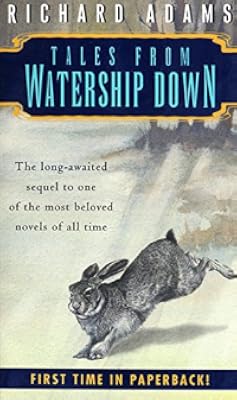
Here is the enchanting sequel to the beloved classic Watership Down, which introduced millions of readers to an extraordinary world of rabbits—including Fiver, Hazel, Bigwig, Dandelion, and the legendary hero El-ahrairah. Tales From Watership Down returns to these unforgettable characters, and also presents new heroes as they struggle to survive the cruelties of nature and the shortsighted selfishness of humankind, embark on new adventures, and recount traditional stories of rabbit show more mythology, charming us once again with imagination, heart, and wonder. A spellbinding book of courage and survival, these tales are an exciting invitation to come home to a beloved world.. show less
Tags
Recommendations

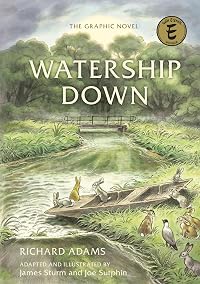



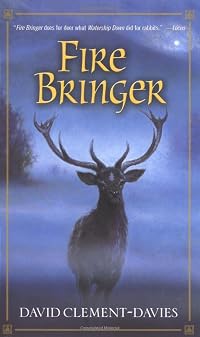
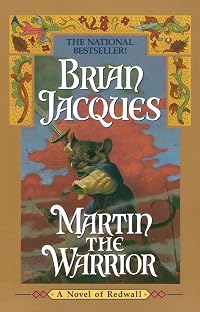
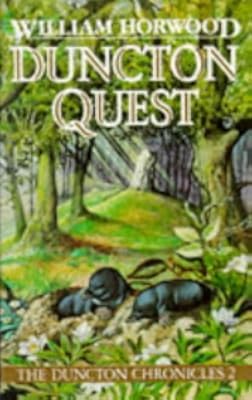

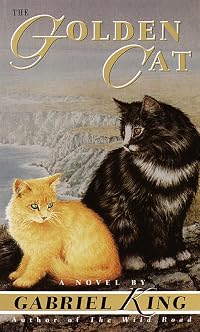
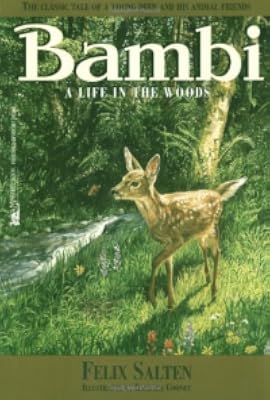
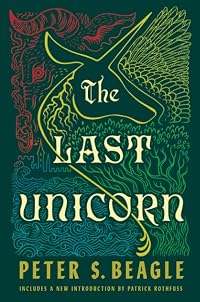


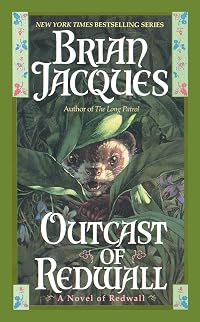
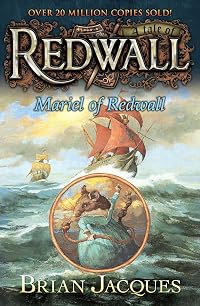






Member Recommendations


Member Reviews
Fun enough for a quick read - does not live up to the heights of the original. It's just hard to move from a sort of grand epic tale to a short story format. One thing I found very interesting is there is a morbid edge to this collection that was not present in Watership Down. The original novel never shied away from frank discussions of death and pain, but this book is very pointedly taking you to darker places. I mean ... a key point in one of the El-Ahrairah and Rapscuttle stories is them finding a human corpse. That is WILD.
I don’t think any talking-animal story has ever come close to what Richard Adams accomplished with Watership Down, an epic tale of rabbits who flee their doomed warren. It had the perfect mix of myth, adventure, naturalism, and irony… irony in that world-changing or mysterious events in the rabbits’ world are actually mundane ones for human beings. An escaped dog decides the outcome of a war. A punt on a stream is alien technology, and a freight train a rampaging Godzilla. Adams’ rabbits handle these elements with a very British matter-of-factness, as if they were fighting in the trenches of Verdun.
But they are not without humor and charm, especially in their tales of El-Ahrairah, a rabbit trickster deity who supports his people show more with smarts and sass. This rabbit, or lapine as Adams puts it, mythology is a good part of why the book has become and remains a classic. Not only that, the world they inhabit is itself a mythology, a rural English countryside without motorways, radios, air traffic, or tourists, where cows are milked by hand and children never watch TV. Cars, trains, and electrical pylons make appearances, but that’s it. It’s a mythic twist within a twist.
I first read Watership Down at the age of 13 and enjoyed it immensely. It’s one of those books that are a perfect bridge for young teens into more adult reading. I even remember how I got it: from a bookstore in Philadelphia, on a day trip there with my widowed mother, who had pulled me out of school to enjoy the autumn weather. And like many other budding writers, I created my own language from the lapine glossary that Adams provided at the end of the book, a language that ranks as a conlang classic. (Adams utilized “soft sounds” like th, f, and hr and short verbs to create something that rabbits might speak, if they could.)
For the “talking animal” selection of this year’s Author Water Cooler challenge I chose Tales from Watership Down, billed as a sequel even though it’s more of a coda/appendix. Half was more rabbit mythology tales, and half short stories of what happened in the new Watership Down warren after the defeat of General Woundwart. I don’t think any of this could have been read on its own; one would have to have read and enjoyed the previous book. The stories are a lot like the multiple appendixes J. R. R. Tolkien provided after the “official” ending of Return of the King (“Well, I’m back,” he said.) Material that enhances what you just read, but is not really necessary.
That said, I did enjoy my re-visit with Hazel, Bigwig, Fiver, and their companions. The further history of the warren unfolded logically in a series of small events that added more to the world, teasing us almost of what might have been if the author decided to create a series. If there was a theme to it, it was the importance of even-handed, inclusive, yet decisive, leadership. Adams even managed to right some wrongs in the original story, in that the female rabbits received more of a voice, and he hints that the does are in fact responsible for cultural transmission in rabbit society. It’s an intriguing idea of a free-floating stream of ESP that acts as a collective unconscious, in the Jungian sense, for the rabbits. It nicely explains how distant warrens can have the same language and societies, though I am not sure the author intended it as such.
Thumbs-up for readers who have the original book. show less
But they are not without humor and charm, especially in their tales of El-Ahrairah, a rabbit trickster deity who supports his people show more with smarts and sass. This rabbit, or lapine as Adams puts it, mythology is a good part of why the book has become and remains a classic. Not only that, the world they inhabit is itself a mythology, a rural English countryside without motorways, radios, air traffic, or tourists, where cows are milked by hand and children never watch TV. Cars, trains, and electrical pylons make appearances, but that’s it. It’s a mythic twist within a twist.
I first read Watership Down at the age of 13 and enjoyed it immensely. It’s one of those books that are a perfect bridge for young teens into more adult reading. I even remember how I got it: from a bookstore in Philadelphia, on a day trip there with my widowed mother, who had pulled me out of school to enjoy the autumn weather. And like many other budding writers, I created my own language from the lapine glossary that Adams provided at the end of the book, a language that ranks as a conlang classic. (Adams utilized “soft sounds” like th, f, and hr and short verbs to create something that rabbits might speak, if they could.)
For the “talking animal” selection of this year’s Author Water Cooler challenge I chose Tales from Watership Down, billed as a sequel even though it’s more of a coda/appendix. Half was more rabbit mythology tales, and half short stories of what happened in the new Watership Down warren after the defeat of General Woundwart. I don’t think any of this could have been read on its own; one would have to have read and enjoyed the previous book. The stories are a lot like the multiple appendixes J. R. R. Tolkien provided after the “official” ending of Return of the King (“Well, I’m back,” he said.) Material that enhances what you just read, but is not really necessary.
That said, I did enjoy my re-visit with Hazel, Bigwig, Fiver, and their companions. The further history of the warren unfolded logically in a series of small events that added more to the world, teasing us almost of what might have been if the author decided to create a series. If there was a theme to it, it was the importance of even-handed, inclusive, yet decisive, leadership. Adams even managed to right some wrongs in the original story, in that the female rabbits received more of a voice, and he hints that the does are in fact responsible for cultural transmission in rabbit society. It’s an intriguing idea of a free-floating stream of ESP that acts as a collective unconscious, in the Jungian sense, for the rabbits. It nicely explains how distant warrens can have the same language and societies, though I am not sure the author intended it as such.
Thumbs-up for readers who have the original book. show less
If this was billed as a sequel to [Watership Down] then the advertising was off because it is nothing of the sort. To be fair it doesn't really try to be concentrating instead on mildly diverting stories told by the rabbits to each other regarding their proud ancestor.
For those who loved the original book so much (I was one of those) there will be disappointment here that that magic was not recreated but, putting aside that disappointment, the stories can be enjoyed for what they are: pleasant, diverting and echoing a better world.
For those who loved the original book so much (I was one of those) there will be disappointment here that that magic was not recreated but, putting aside that disappointment, the stories can be enjoyed for what they are: pleasant, diverting and echoing a better world.
I liked this little follow up to Watership Down. Although clearly intended as a companion book and not another journey-epic on par with the first, it was an interesting extention. I liked reading more about the trickster rabbit's exploits, although some adventures were a little odd and confusing, compared to the more traditional ones of the first book. The Watership Down warren stories were not especially exciting, but still fun little glimpses of the future.
My feminist side did appreciate Hyzenthlay being named co-Chief though. I always liked her. ;)
My feminist side did appreciate Hyzenthlay being named co-Chief though. I always liked her. ;)
I was really disappointed by this. I love Watership Down almost unreservedly - I love the sheer originality of it, I love the culture of the rabbits, the grand epic feel against the beautiful evocation of the English countryside. The gorgeous epilogue, with its mythic feel, that gives us this:
"Yes, of course," said Hazel, hoping he would be able to remember his name in a moment. Then he saw that in the darkness of the burrow the stranger's ears were shining with a faint silver light."
But the follow-up is just no good at all, compared to the original. The publisher of my edition of Watership Down has, obviously and hilariously, demanded that the blurb big up the adventure but not mention the rabbits, giving us a band of "adventurers" show more leaving their "doomed city". But the sequel really is just a book about rabbits. The stories are nearly all unsatisfactory, and unlike in the original, where Dandelion's tales of El-ahrairah have the real ring of trickster folktales, with clever tricks and lots of guile, the folktales fall insipidly flat.
I did like the fact that there's a gesture at addressing the problem in the original, when Hazel appoints Hyzenthlay as another Chief Rabbit, but the story doesn't really go anywhere with it, which is another disappointment. show less
"Yes, of course," said Hazel, hoping he would be able to remember his name in a moment. Then he saw that in the darkness of the burrow the stranger's ears were shining with a faint silver light."
But the follow-up is just no good at all, compared to the original. The publisher of my edition of Watership Down has, obviously and hilariously, demanded that the blurb big up the adventure but not mention the rabbits, giving us a band of "adventurers" show more leaving their "doomed city". But the sequel really is just a book about rabbits. The stories are nearly all unsatisfactory, and unlike in the original, where Dandelion's tales of El-ahrairah have the real ring of trickster folktales, with clever tricks and lots of guile, the folktales fall insipidly flat.
I did like the fact that there's a gesture at addressing the problem in the original, when Hazel appoints Hyzenthlay as another Chief Rabbit, but the story doesn't really go anywhere with it, which is another disappointment. show less
I am a massive fan of Watership Down, which I’ve read countless times both as a child and an adult, so when I discovered only recently that this book existed I had to read it and I wasn’t disappointed.
The first half is made up of new El-ahrairah stories, which although perhaps lose a certain something when not told in the context of a larger story, I still found compelling, mysterious and poignant. The second half is about what happened to the rabbits in the time after moving to Watership Down, and how they deal with new situations and problems. Many of these stories are to do with leadership and how to cope with splits and divisions of opinion; so once again you get to see Hazel’s fair and level-headed approach to conflicts and show more decision-making.
I found it really enjoyable to catch up with the rabbits I remembered from the original book, and to see them forging new relationships with other rabbits who have their own interesting story to tell. I’m not completely sure how interesting this book would be to somebody who is not such a big fan of Watership Down, although the stories are entertaining in their own right and don’t rely too heavily on you remembering what happens in the original book. In any case, I loved it, and if you feel like I do about the original Watership Down then it’s well worth a read. show less
The first half is made up of new El-ahrairah stories, which although perhaps lose a certain something when not told in the context of a larger story, I still found compelling, mysterious and poignant. The second half is about what happened to the rabbits in the time after moving to Watership Down, and how they deal with new situations and problems. Many of these stories are to do with leadership and how to cope with splits and divisions of opinion; so once again you get to see Hazel’s fair and level-headed approach to conflicts and show more decision-making.
I found it really enjoyable to catch up with the rabbits I remembered from the original book, and to see them forging new relationships with other rabbits who have their own interesting story to tell. I’m not completely sure how interesting this book would be to somebody who is not such a big fan of Watership Down, although the stories are entertaining in their own right and don’t rely too heavily on you remembering what happens in the original book. In any case, I loved it, and if you feel like I do about the original Watership Down then it’s well worth a read. show less
This collection of stories takes up where Watership Down left off. Fiver, Hazel, Bigwig, and the rest have established a new warren on the Down and spend their time hanging out with their neighbours in Efrafa and telling legendary tales of El-ahrairah. We are also treated to their further adventures as other rabbits come to stay with them and share their own experiences.
I thoroughly enjoyed this collection, with its mix of legends and “present-day” stories. And despite the several years it’s been since I last read Watership Down, the Lapine language came right back to me (to the point that I may start referring to cars as hrududil). You’ll definitely get more benefit out of this collection if you’ve read the previous book, but show more there’s nothing stopping you from reading it out of order if that’s your jam. There’s enough context here to get you up to speed, and a glossary at the back of the book to help you learn Lapine. show less
I thoroughly enjoyed this collection, with its mix of legends and “present-day” stories. And despite the several years it’s been since I last read Watership Down, the Lapine language came right back to me (to the point that I may start referring to cars as hrududil). You’ll definitely get more benefit out of this collection if you’ve read the previous book, but show more there’s nothing stopping you from reading it out of order if that’s your jam. There’s enough context here to get you up to speed, and a glossary at the back of the book to help you learn Lapine. show less
Members
- Recently Added By
Lists

Books Read in 2014
2,343 works; 89 members

Books Read in 2010
631 works; 11 members
Author Information

Richard George Adams was born in Newbury, England on May 9, 1920. He enrolled at the University of Oxford in 1938, but his studies were interrupted by World War II. During the war, he served with the British airborne forces in the Middle East and India. After the war, he returned to Oxford and received a degree in history in 1948. He joined the show more Ministry of Housing and Local Government and worked his way up over 20 years to a senior post in the clean-air section of the environmental department. He retired in 1974 to become a full-time writer. His first his novel, Watership Down, was published in 1972. It received the Carnegie Medal in Literature in 1972 and the Guardian Children's Fiction Prize in 1973. His other books include Shardik, The Plague Dogs, Traveller, and Tales from Watership Down. He also wrote an autobiography entitled The Day Gone By. He died on December 24, 2016 at the age of 96. (Bowker Author Biography) show less
Some Editions
Series

Work Relationships
Contains
Common Knowledge
- Canonical title
- Tales from Watership Down
- Original title
- Tales from Watership Down
- Original publication date
- 1996
- People/Characters
- El-ahrairah; Rabscuttle; Campion [Watership Down]; Dandelion [Watership Down]; Hazel [Watership Down] (brother of Fiver); Fiver
- Important places
- Watership Down, Hampshire, England, UK
- Dedication
- To Elizabeth, with love and gratitude
- First words
- "Tell us a story, Dandelion!"
- Last words
- (Click to show. Warning: May contain spoilers.)This they knew to be Captain Campion, onetime hero of Efrafa, but no less a hero to the rabbits of Watership Down.
- Original language
- English
Classifications
Statistics
- Members
- 2,888
- Popularity
- 6,254
- Reviews
- 37
- Rating
- (3.60)
- Languages
- 8 — Czech, Danish, Dutch, English, Finnish, German, Italian, Spanish
- Media
- Paper, Audiobook, Ebook
- ISBNs
- 52
- ASINs
- 13