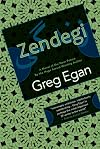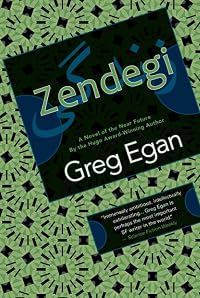
Zendegi
by Greg Egan
On This Page
Description
"In the near future, journalist Martin Seymour travels to Iran to cover the parliamentary elections. Most would-be opposition candidates are disqualified and the election becomes the non-event the world expects. But shortly afterward a compromising image of a government official captured on a mobile phone triggers a revolutionary movement that overthrows the old theocracy. Nasim Golestani, a young Iranian scientist living in exile in the United States, is hoping to work on the Human show more Connectome Project--which aims to construct a detailed map of the wiring of the human brain--but when government funding for the project is canceled and a chance comes to return to her homeland, she chooses to head back to Iran. Fifteen years after the revolution, Martin is living in Iran with his wife and young son, while Nasim is in charge of the virtual world known as Zendegi, used by millions of people for entertainment and business. When Zendegi comes under threat from powerful competitors, Nasim draws on her old skills, and data from the now-completed Human Connectome Project, to embark on a program to create more lifelike virtual characters and five the company an unbeatable edge. As controversy grows over the nature and rights of these software characters, tragedy strikes Martin's family. Martin turns to Nasim, seeking a solution that no one else can offer...but Zendegi is about to become a battlefield."--Dust cover flap. show lessTags
Recommendations


















Member Reviews
Quizás ’Zendegi’ sea el libro más asequible dentro de la bibliografía de Greg Egan, el famoso autor de ciencia ficción hard. Y digo asequible, que no simple, ya que aunque el peso de terminología científica es mucho menor en esta obra, las ideas que maneja son de gran calado. Egan deja esta vez las grandes ideas especulativas para centrarse en una historia más de ámbito social y ético, donde priman las experiencias y relaciones de los protagonistas. Parece que esta vez la ciencia ficción es una herramienta que utiliza Egan como trasfondo de lo que realmente nos quiere contar, que no es otra cosa que lo que estaría dispuesto a hacer un padre por amor a su hijo.
Egan sitúa ’Zendegi’ (palabra que significa vida en persa) show more en Irán, en un futuro cercano. La primera parte de la novela es una carta de presentación de los personajes y de sus vidas, donde se nos dan a conocer los dos hilos narrativos de la trama, así como los dos personajes que los sustentan: Martin Seymour, un periodista australiano destinado a cubrir las elecciones iraníes, y que se ve inmerso en medio de los acontecimientos posteriores; y Nasim Golestani, una exiliada iraní en Estados Unidos, dedicada a trabajar en un proyecto que intenta mapear el cerebro humano. Ya en la segunda parte, es donde empieza la historia en sí, y donde entra en juego Zendegi, un espacio de realidad virtual.
La novela de Greg Egan no es de acción, todo lo contrario, tiene un transcurrir pausado y tranquilo, donde sabemos de las vidas de los personajes, así como de sus logros y fracasos, que junto a los avances tecnológicos, sirven de reflexión sobre la familia, la mortalidad, los cambios sociales, etc. Se plantea también el enfrentamiento, el debate moral y ético, entre las posibilidades que nos ofrece la ciencia para emular duplicados de cerebros, de personas, y los derechos que éstos deberían tener, que me ha parecido los más interesante de la novela.
’Zendegi’ no es que me haya disgustado, pero tampoco me ha entusiasmado en exceso. Resulta una buena reflexión de un futuro cercano, pero está lejos de las ideas y especulaciones científicas a que nos tiene habituados Greg Egan en otras obras suyas, como ‘Axiomático’, ‘Cuarentena’ o ‘Diáspora’. Realmente, espero otro tipo de historias por parte de Greg Egan. show less
Egan sitúa ’Zendegi’ (palabra que significa vida en persa) show more en Irán, en un futuro cercano. La primera parte de la novela es una carta de presentación de los personajes y de sus vidas, donde se nos dan a conocer los dos hilos narrativos de la trama, así como los dos personajes que los sustentan: Martin Seymour, un periodista australiano destinado a cubrir las elecciones iraníes, y que se ve inmerso en medio de los acontecimientos posteriores; y Nasim Golestani, una exiliada iraní en Estados Unidos, dedicada a trabajar en un proyecto que intenta mapear el cerebro humano. Ya en la segunda parte, es donde empieza la historia en sí, y donde entra en juego Zendegi, un espacio de realidad virtual.
La novela de Greg Egan no es de acción, todo lo contrario, tiene un transcurrir pausado y tranquilo, donde sabemos de las vidas de los personajes, así como de sus logros y fracasos, que junto a los avances tecnológicos, sirven de reflexión sobre la familia, la mortalidad, los cambios sociales, etc. Se plantea también el enfrentamiento, el debate moral y ético, entre las posibilidades que nos ofrece la ciencia para emular duplicados de cerebros, de personas, y los derechos que éstos deberían tener, que me ha parecido los más interesante de la novela.
’Zendegi’ no es que me haya disgustado, pero tampoco me ha entusiasmado en exceso. Resulta una buena reflexión de un futuro cercano, pero está lejos de las ideas y especulaciones científicas a que nos tiene habituados Greg Egan en otras obras suyas, como ‘Axiomático’, ‘Cuarentena’ o ‘Diáspora’. Realmente, espero otro tipo de historias por parte de Greg Egan. show less
There is an old Saturday Night Live skit where William Shatner addresses a bunch of sycophantic trekkies at a star trek convention and tells them all to get a life. Zendegi feels like Egan's 'get a life' polemic in novel form aimed at the transhumanist/singularity crowd. Being one of the most prolific writers of hard scifi and held in high esteem amongst the aforementioned crowds, Egan seems to have worked extra hard in this novel to undermine any notion that the stories he is most famous for are at all representative of his current real world views. From the choice of location, to the type of technologies discussed, every aspect of this book betrays a sense of guilt from an author whose past work has been taken much too seriously and show more now wants to rectify this by writing about the important things he thinks we should be thinking about--democratic political activism in repressed countries, raising thoughtful and moral children, and technology that actually has a foundation in established science rather than fantastic future speculations. Unfortunately, the story was dull and terribly anti-climactic and therefore I have no choice but to give a low rating. I understand Egan's motivation for this book, and I share in some of those sentiments, but that still doesn't excuse a boring book whose only interesting parts are insider jokes only futurist geeks will get. show less
Unlike typical Egan novels. this one stays not only in the very near future--beginning in 2012-- but very close to reality throughout the book, and is almost entirely set in a non-English setting, namely Iran. The two main SFnal themes are virtual reality and uploading -- or more accurately copying-- the memories and thought patterns of humans. As with his other novels, Egan works very hard to develop his technological speculations as rigorously as possible. But this doesn't begin to happen until nearly halfway into the book. Before that we follow Martin, a journalist embedded in Iran during a new revolution, and Nasim, a Iranian computer scientist, who has returned to her homeland. Martin is our window into Iran and Iranian culture show more while Nasim is our window into Egan's technological speculation. In this book, the human story, especially Martin's, takes precedence, and is quite moving.
Recommended, especially if you found other Egan books hard to keep up with, and you don't mind the SF, however prominent, taking a back seat. show less
Recommended, especially if you found other Egan books hard to keep up with, and you don't mind the SF, however prominent, taking a back seat. show less
(...)
Aside from the science, Egan shows himself a keen observer of humanity. Zendegi is also a book about bias, and Egan is, via Martin Seymour, an honest, soul searching commentator on these matters, with a sensibility for diversity and bigotry seeped in respect for what it means to be human, never pointing fingers, but not flinching away from judgement either. Even though I only mention it at the very end of this review, this bias isn’t some trivial matter: it is at the heart of the entire narrative.
Definitely recommended for Egan fans, and because it is very accessible without being superficial, it’s also recommended as an introduction to his work
Full review on Weighing A Pig Doesn't Fatten It
Aside from the science, Egan shows himself a keen observer of humanity. Zendegi is also a book about bias, and Egan is, via Martin Seymour, an honest, soul searching commentator on these matters, with a sensibility for diversity and bigotry seeped in respect for what it means to be human, never pointing fingers, but not flinching away from judgement either. Even though I only mention it at the very end of this review, this bias isn’t some trivial matter: it is at the heart of the entire narrative.
Definitely recommended for Egan fans, and because it is very accessible without being superficial, it’s also recommended as an introduction to his work
Full review on Weighing A Pig Doesn't Fatten It
I assume America in this near future has strapped a jetpack to the continent and blasted off into space. I think it would be less jarring if the story was set in the future democratic North Korea (at least that's just one war away from normalcy). I don't mind the focus heavily shifted from sci-fi to the father-son relationship but the whole socio-political story around it was tiresome and the overall saccharin levels made the premise feel more contrived. Please, more planet consuming AIs, fewer middle-eastern fairy tale markets.
A really interesting Greg Egan book which makes an *excellent* audiobook. It's set in a post-Iranian reformation Iran, in a world with interesting VR and AI. As an audiobook, it's even better, since it's read by a Persian woman; it's cute how she gets all the Farsi words right and then has trouble with some of the more obscure English words.
Amusingly, it was written in 2009; I was going to fault it for being too "of the minute" if it had been written today. 6 years ago, it was fairly prescient.
Unlike most of my other favorite Egan books, there wasn't much "fundamental science" in this -- at least, I think if IT/tech (my field) as more implementation and engineering and messiness than anything fundamental like general relativity or show more quantum mechanics.
Another unusual thing about this book -- it has actual characters with personal problems and you end up caring about them as people, watching their motivations evolve, and remain true to their core principles; it's more like "literature" than genre fiction in a lot of ways.
My only criticism of the book is that the end seemed a little rushed, and since Egan doesn't tend to do true sequels, we're never going to see more in this universe.
If someone isn't into sci-fi in general, I'd strongly recommend this book as an introduction. If you're an Egan fan, or a fan of hard sci-fi, it might not be the absolute top book, but it's quite good, and definitely worth reading. show less
Amusingly, it was written in 2009; I was going to fault it for being too "of the minute" if it had been written today. 6 years ago, it was fairly prescient.
Unlike most of my other favorite Egan books, there wasn't much "fundamental science" in this -- at least, I think if IT/tech (my field) as more implementation and engineering and messiness than anything fundamental like general relativity or show more quantum mechanics.
Another unusual thing about this book -- it has actual characters with personal problems and you end up caring about them as people, watching their motivations evolve, and remain true to their core principles; it's more like "literature" than genre fiction in a lot of ways.
My only criticism of the book is that the end seemed a little rushed, and since Egan doesn't tend to do true sequels, we're never going to see more in this universe.
If someone isn't into sci-fi in general, I'd strongly recommend this book as an introduction. If you're an Egan fan, or a fan of hard sci-fi, it might not be the absolute top book, but it's quite good, and definitely worth reading. show less
Many of us here at LT have LP records, left from our earlier years - vinyl disks with musical information encoded in the analog modulation of a spiral groove. When we try uploading them to fancy digital formats, we face many possibilities for losing the musical data therein. We must be careful or we can be left with an unacceptable copy, as Greg Egan's protagonist, journalist Martin Seymour, learns in the first chapter of Zendegi. A human being can be viewed as a sort of collection of data: personality, responses, memories. What might it take to upload a human mind into a computer, and how good a job might be good enough? What might an imperfect job imply, practically and ethically? Threatened by terminal disease, Martin must attack the show more problem urgently, hoping to leave something of himself in a popular virtual-reality gaming environment, with the goal of helping to continue raising his young son.
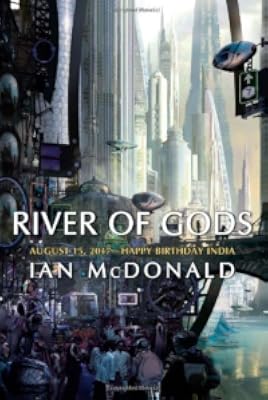
Egan here exchanges his usual cosmic themes for a careful focus on imagining aspects of how the dawn of uploading might go, and on the father-son relationship. He draws Martin and his son Javeed with more than his normal attention to character and emotion: a father's desperation at the oncoming orphaning of his six-year-old; a son's confusion and sadness in facing his father's mortality, coming immediately after the loss of his mother. Egan handles such personal themes less successfully, though, than in his earlier Teranesia and "Oceanic". He sets his story mainly in Iran in 2027, with an early section in 2012 showing a more successful version of the reform movement of 2009. The 2012 section is compelling, the best part of the book in a novelistic sense. The 2027 setting is somewhat generic, although a welcome visit to Ian McDonald's turf of near-future, non-Western settings. For Egan, the idea is always first. The excitement and interest stem from understanding what is happening in intellectual terms, of feeling the thrill when a scientific experiment returns a remarkable result, one that brings philosophical questions in its wake.
Egan's best novels - Permutation City, Distress, Teranesia - are among the most signficant, questioning sf novels we have. Zendegi is not in their class, but still fascinating and moving. Watch those recording levels. show less
Egan here exchanges his usual cosmic themes for a careful focus on imagining aspects of how the dawn of uploading might go, and on the father-son relationship. He draws Martin and his son Javeed with more than his normal attention to character and emotion: a father's desperation at the oncoming orphaning of his six-year-old; a son's confusion and sadness in facing his father's mortality, coming immediately after the loss of his mother. Egan handles such personal themes less successfully, though, than in his earlier Teranesia and "Oceanic". He sets his story mainly in Iran in 2027, with an early section in 2012 showing a more successful version of the reform movement of 2009. The 2012 section is compelling, the best part of the book in a novelistic sense. The 2027 setting is somewhat generic, although a welcome visit to Ian McDonald's turf of near-future, non-Western settings. For Egan, the idea is always first. The excitement and interest stem from understanding what is happening in intellectual terms, of feeling the thrill when a scientific experiment returns a remarkable result, one that brings philosophical questions in its wake.
Egan's best novels - Permutation City, Distress, Teranesia - are among the most signficant, questioning sf novels we have. Zendegi is not in their class, but still fascinating and moving. Watch those recording levels. show less
Members
- Recently Added By
Lists

Simulated Reality in Fiction
124 works; 7 members
Author Information

129+ Works 13,911 Members
Some Editions
Awards and Honors
Awards
Distinctions
Common Knowledge
- Original publication date
- 2010
- People/Characters
- Martin Seymour; Nasim Golestani; Javeed Seymour
- First words
- Martin stared anxiously at the four crates full of vinyl LPs in the corner of the living room.
- Last words
- (Click to show. Warning: May contain spoilers.)If you want to make it human, make it whole.
Classifications
Statistics
- Members
- 388
- Popularity
- 80,562
- Reviews
- 18
- Rating
- (3.42)
- Languages
- English, French, Japanese, Spanish
- Media
- Paper, Ebook
- ISBNs
- 13
- ASINs
- 5