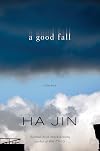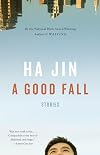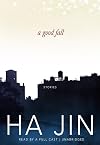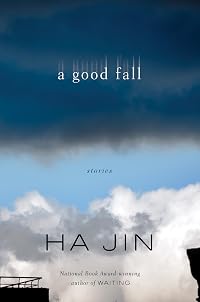
A Good Fall: Stories
by Ha Jin
On This Page
Description
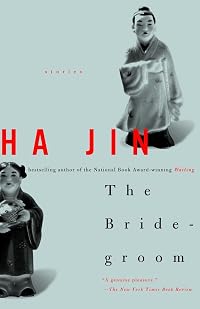
In his first book of stories since The Bridegroom, National Book Award-winning author Ha Jin gives us a collection that delves into the experience of Chinese immigrants in America.A lonely composer takes comfort in the antics of his girlfriend's parakeet; young children decide to change their names so they might sound more "American," unaware of how deeply this will hurt their grandparents; a Chinese professor of English attempts to defect with the help of a reluctant former student. All of show more Ha Jin's characters struggle to remain loyal to their homeland and its traditions while also exploring the freedom that life in a new country offers.Stark, deeply moving, acutely insightful, and often strikingly humorous, A Good Fall reminds us once again of the storytelling prowess of this superb writer. show lessTags
Recommendations








Member Reviews
A Good Fall by Ha Jin
My rating: 4 of 5 stars
There's a lot here: some whimsy, a lot of dark humor, some heartache...in other words, life. But here Ha Jin captures live with a hyper-consciousness of the experience of Chinese immigrants in the U.S. We are invited into struggles of love and life, often against the backdrop of Flushing in Queens, NYC, and sometimes the understanding is remote, and other times it is more visceral. "A Composer and his Parakeet" hearkens back to an older time of fables, while keeping a modern narrative. Other stories, such as "Choice" and "The House Behind the Weeping Cherry" demonstrate that necessity and circumstance can both blur lines and forge relationships. It is an excellent book for the nightstand, show more reading one story at a time. To read it cover to cover would likely be rather unwieldy, although it would likely highlight Ha Jin's overall message regarding immigrant experience. That the characters are dynamic and diverse is important unto itself, and this is a great offer to think about the many layers and facets of life that fly under the radar. show less
My rating: 4 of 5 stars
There's a lot here: some whimsy, a lot of dark humor, some heartache...in other words, life. But here Ha Jin captures live with a hyper-consciousness of the experience of Chinese immigrants in the U.S. We are invited into struggles of love and life, often against the backdrop of Flushing in Queens, NYC, and sometimes the understanding is remote, and other times it is more visceral. "A Composer and his Parakeet" hearkens back to an older time of fables, while keeping a modern narrative. Other stories, such as "Choice" and "The House Behind the Weeping Cherry" demonstrate that necessity and circumstance can both blur lines and forge relationships. It is an excellent book for the nightstand, show more reading one story at a time. To read it cover to cover would likely be rather unwieldy, although it would likely highlight Ha Jin's overall message regarding immigrant experience. That the characters are dynamic and diverse is important unto itself, and this is a great offer to think about the many layers and facets of life that fly under the radar. show less
Ha Jin is one of my most favorite writers, and this superb collection of short stories about Chinese immigrants to the United States is amongst his best works. These unconnected stories are all set in the Queens neighborhood of Flushing, a diverse NYC neighborhood with a majority Asian population. The characters come from different socioeconomic backgrounds, ranging from scholars to illegal aliens barely able to feed themselves. All struggle to fit into their new environments, and a common theme is anxiety, often due to their lack of fluency with the English language. An English professor at an unnamed NYC college fears that he will not be granted tenure, due to a grammatical mistake on his application that emphasizes his inadequate show more command of the language. A divorced woman works as a grossly underpaid home health aide for a demented old man who gropes her repeatedly, as her poor English keeps her from achieving a better life.
These stories are straightforward and feel authentic, but are deceptively complex, as the characters' situations and difficulties are left unresolved by Jin. All of the stories were excellent, and these characters will stay with me for some time. This is one of my favorite books of the year, and I can't recommend it highly enough. show less
These stories are straightforward and feel authentic, but are deceptively complex, as the characters' situations and difficulties are left unresolved by Jin. All of the stories were excellent, and these characters will stay with me for some time. This is one of my favorite books of the year, and I can't recommend it highly enough. show less
I always approach books of short stories with a little trepidation. Sometimes I feel very unfulfilled by the short form, sometimes I feel like I get worn out reading and situating my self over and over in stories by the same author. Historically, its been really hard for me to make it through a short story collection without taking long breaks or getting burnt out or bored in the process.
This was an exception.
I read straight through this and really really enjoyed every story. Jin's characters are so well formed. The stories were all distinct and all of them were arced in a way that felt really satisfying. I love stories that give me insight into other people lives - these all succeeded in really giving some light to lives very show more different from mine and I really appreciated all the stories and felt like I knew the characters well. I haven't read Jin before this - and will definitely seek out his other works. show less
This was an exception.
I read straight through this and really really enjoyed every story. Jin's characters are so well formed. The stories were all distinct and all of them were arced in a way that felt really satisfying. I love stories that give me insight into other people lives - these all succeeded in really giving some light to lives very show more different from mine and I really appreciated all the stories and felt like I knew the characters well. I haven't read Jin before this - and will definitely seek out his other works. show less
Twelve stories with themes like immigrants in transition, culture clashes, vanity, identity, and family traditions. Ha Jin's characters are so well drawn they keep speaking to me after I have closed the book. I could see A Good Fall as a movie with interconnecting stories of Chinese immigrants living in Flushing, New York. Maybe they are all living in the same apartment and pass each other on the stairs? Each suffering their secrets in silence?
I do not think it is a spoiler to say that A Good Fall surprisingly ends on a hopeful note.
I do not think it is a spoiler to say that A Good Fall surprisingly ends on a hopeful note.
This book is a collection of short stories about Chinese immigrants and their new experience settling in New York. Some are relatively new transplants, while others have been in the US for many years. The process of immersing self into a new culture and place, while retaining cultural traditions and personal beliefs, is complex and bewildering to many of the characters.
The first compliment has to go to Ha Jin’s prose: clear, clean and crisp. Each story is astonishing in its simplicity, deceivingly so. Because none of the stories and life experiences are simple. He writes beautifully, making you care for this odd mix of people so much with so few words. I appreciated how he didn’t feel the need to over-explain the complications, show more he’s expecting his readers to have some basic knowledge about Chinese culture. Yet he still adds nuances of depth to these characters so you come away with new understanding of them and their plight, both individually and collectively.
For example, the Chinese have the well known reputation for respecting their ancestors far more than the American norm. While assimilating into American culture, some walk a fine line between behaving like everyone else or staying close to their cultural heritage. It’s not simple at all. An overbearing mother appears for the most part to be an obnoxious insertion into her son’s life, yet she is behaving in the norm. What is fascinating is how he relates to her, trying to respect her and her value system while keeping the peace with his wife. In the end, he makes a painful choice, because the two cannot be blended. Grandparents clinging to their past battle with grandchildren who only see their future, and in the middle a couple try and maintain respect and reasonableness for both generations.
In “A Composer and His Parakeets”, Fanlin finds that his new role as pet sitter for his girlfriend’s parakeet has more depth and meaning than his relationship with her. He finds inspiration, as well as happiness and contentment, by simply caring for the small needs of the little pet. He realizes that just as she had pawned the bird off to him, soon she would leave him. As he composes, his work actually improves significantly as he can openly express himself and not hold back
“The Bane of the Internet” shows the suffering of a newly immigrated woman who has to deal with the ease of keeping in contact with her family back home, one she thought she had escaped. While I laughed at some of her plight, the reality of her complaint is all too true.
In “An English Professor”, we watch a fully competent Chinese professor drive himself insane in his attempt to get tenure because he finds a typo in his application. The lengths he goes to in his desperation and pain, his paranoia and his lack of confidence are by turns humorous and tragic. Underlining it all is the intense drive to succeed and to save face, a theme that runs through many of the stories.
A few things surprised me. In immigrant communities, the newspaper business is still alive and well, a collection of news and trivia and anecdotal events that serve as background and a connection to culture. I found it fascinating that once immigrants have entered the US, they eagerly seek association with other immigrants from their past, even if these ones were not of their previous ‘class’ structure (who they would never have sought out back home). Their focus on financial and social standing remains, yet they desire to gather as family members to interact in the old ways.
As I read, I kept thinking of the phrase “what to keep”. Every single character in this has to make that decision, in small decisions and in large, in order to get what they wanted from the new land and remain faithful to their values. Ha Jin illuminates the complications and makes these lives and decisions of these ordinary people a fascinating chronicle of personal sacrifice. show less
The first compliment has to go to Ha Jin’s prose: clear, clean and crisp. Each story is astonishing in its simplicity, deceivingly so. Because none of the stories and life experiences are simple. He writes beautifully, making you care for this odd mix of people so much with so few words. I appreciated how he didn’t feel the need to over-explain the complications, show more he’s expecting his readers to have some basic knowledge about Chinese culture. Yet he still adds nuances of depth to these characters so you come away with new understanding of them and their plight, both individually and collectively.
For example, the Chinese have the well known reputation for respecting their ancestors far more than the American norm. While assimilating into American culture, some walk a fine line between behaving like everyone else or staying close to their cultural heritage. It’s not simple at all. An overbearing mother appears for the most part to be an obnoxious insertion into her son’s life, yet she is behaving in the norm. What is fascinating is how he relates to her, trying to respect her and her value system while keeping the peace with his wife. In the end, he makes a painful choice, because the two cannot be blended. Grandparents clinging to their past battle with grandchildren who only see their future, and in the middle a couple try and maintain respect and reasonableness for both generations.
In “A Composer and His Parakeets”, Fanlin finds that his new role as pet sitter for his girlfriend’s parakeet has more depth and meaning than his relationship with her. He finds inspiration, as well as happiness and contentment, by simply caring for the small needs of the little pet. He realizes that just as she had pawned the bird off to him, soon she would leave him. As he composes, his work actually improves significantly as he can openly express himself and not hold back
“The Bane of the Internet” shows the suffering of a newly immigrated woman who has to deal with the ease of keeping in contact with her family back home, one she thought she had escaped. While I laughed at some of her plight, the reality of her complaint is all too true.
In “An English Professor”, we watch a fully competent Chinese professor drive himself insane in his attempt to get tenure because he finds a typo in his application. The lengths he goes to in his desperation and pain, his paranoia and his lack of confidence are by turns humorous and tragic. Underlining it all is the intense drive to succeed and to save face, a theme that runs through many of the stories.
A few things surprised me. In immigrant communities, the newspaper business is still alive and well, a collection of news and trivia and anecdotal events that serve as background and a connection to culture. I found it fascinating that once immigrants have entered the US, they eagerly seek association with other immigrants from their past, even if these ones were not of their previous ‘class’ structure (who they would never have sought out back home). Their focus on financial and social standing remains, yet they desire to gather as family members to interact in the old ways.
As I read, I kept thinking of the phrase “what to keep”. Every single character in this has to make that decision, in small decisions and in large, in order to get what they wanted from the new land and remain faithful to their values. Ha Jin illuminates the complications and makes these lives and decisions of these ordinary people a fascinating chronicle of personal sacrifice. show less
The characters in this convincing collection of stories about Chinese immigrants in the U.S. all live in Flushing, Queens, but we see the neighborhood through many eyes. Individually these stories are solid, written in Ha Jin's clear prose; together they form an overarching narrative about what it means to adapt to America's peculiar blend of idealistic freedom and crushing economic constraint.
A Good Fall by Ha Jin is a collection of short stories dealing with the lives of Chinese immigrants to the U. S. He presents a wide range of protagonists from a graduate student and young professor to a presser in a garment factory to a monk and draws their characters so well you feel like you know them, even within the confines of a short story. He treats their challenges with such a light touch that it's easy to read. A delightful worthwhile read.
Members
- Recently Added By
Published Reviews
ThingScore 75
Everyone has something he wants to escape: a job, relationship, family feud or -- like the characters in Ha Jin's new short fiction collection -- a country. Rather than tell stories of emigration, though, Ha Jin, who left China in 1985, depicts moments when one's old life crashes into new routines, resurrecting all that has been lost and gained via escape.
Each story in A Good Fall siphons show more readers into straightforward plots about Chinese immigrants from diverse backgrounds now living in Flushing, home to New York City's second largest Chinatown. The characters' 180-degree turns are most often made in response to stress and heartache inextricably connected to immigrant life. All grapple with an intense set of expatriate problems. Wanping's love blossoms for a prostitute whose debts keep her tied to the water trade. A disenfranchised, 28-year-old monk thinks life is over because he can't pay his debts back in China. Yet delicate generational and cultural differences subtly define their unique situations, and Ha Jin unpacks the small details of their largely indistinct lives in ways that reveal their larger-than-life personal implications. show less
Each story in A Good Fall siphons show more readers into straightforward plots about Chinese immigrants from diverse backgrounds now living in Flushing, home to New York City's second largest Chinatown. The characters' 180-degree turns are most often made in response to stress and heartache inextricably connected to immigrant life. All grapple with an intense set of expatriate problems. Wanping's love blossoms for a prostitute whose debts keep her tied to the water trade. A disenfranchised, 28-year-old monk thinks life is over because he can't pay his debts back in China. Yet delicate generational and cultural differences subtly define their unique situations, and Ha Jin unpacks the small details of their largely indistinct lives in ways that reveal their larger-than-life personal implications. show less
added by kidzdoc
Author Information

34+ Works 10,452 Members
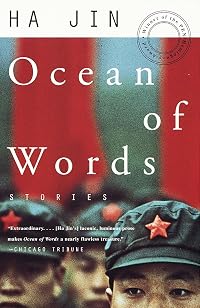
Ha Jin left his native China in 1985 and is now a professor of English at Emory University. He is author of, among other works, two short-story collections: Ocean of Words, which won the PEN/Hemingway Award, and Under the Red Flag, which won the Flannery O'Connor Award for short fiction. His novel Waiting won the National Book Award for fiction in show more 1999. He lives in Atlanta. (Bowker Author Biography) show less
Awards and Honors
Awards
Work Relationships
Common Knowledge
- Canonical title
- A Good Fall: Stories
- Original publication date
- 2009-11-24
- Important places
- Flushing, Queens, New York, New York, USA; New York, New York, USA
- Dedication
- To Lisha
- First words
- My sister Yuchin and I used to write each other letters. It took more than ten days for the mail to reach Sichuan, and I usually only wrote her once a month. After Yuchin married, she was often in trouble, but I no longer t... (show all)hought about her every day. Five years ago her marriage began falling apart.
- Last words
- (Click to show. Warning: May contain spoilers.)"Well, I hope that's something I can learn." He gazed at her and smiled.
Classifications
Statistics
- Members
- 360
- Popularity
- 87,470
- Reviews
- 14
- Rating
- (3.76)
- Languages
- Chinese, English, German
- Media
- Paper, Audiobook, Ebook
- ISBNs
- 13
- ASINs
- 4