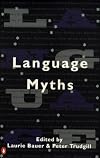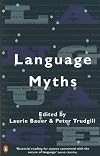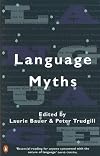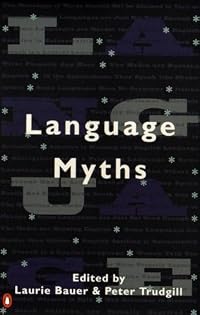
Language Myths
by Laurie Bauer (Editor), Peter Trudgill (Editor)
On This Page
Description
Language is a part of us all and is tightly woven into human experience. Yet, although research into language has increased at a phenomenal rate over the last fifty years, misconceptions abound. This illuminating and highly readable collection of essays explores some of the myths, for example- standards of children's speech and writing have declined; women talk too much; the 'purity' of the English language is under threat; some languages are more attractive to the ear or are harder to learn show more than others; and, the media has a detrimental effect on language. Written by a team of leading linguists, Language Mythscontains many valuable insights. The contributors are- Jean Aitchison; John Algeo; Lars-Gunnar Andersson; Laurie Bauer; Winifred Bauer; Edward Carney; J.K. Chambers; Jenny Cheshire; John H. Esling; Nicholas Evans; Howard Giles and Nancy Niedzielski; Ray Harlow; Janet Holmes; Anthony Lodge; James Milroy; Lesley Milroy; Michael Montgomery; Dennis R. Preston; Peter Roach; Peter Trudgill and Walt Wolfram. show lessTags
Recommendations















Member Reviews
This book has a good heart, and a few really solid essays--Dennis Preston (funny guy, incidentally) on prestige ranking of American accents and JK Chambers on TV's non-effect on language change (the reason I bought it originally, and while a little offended that a certain nameless someone referred me to the shibboleths book to prove the point, I am also convinced). Some of the others are definitely kindergarten, and I don't mean for language scholars, but surely even the gen-pub doesn't needto be told that some languages aren't intrinsically "harder" or "more expressive" or "faster" or "more primitive" than others, and that language change isn't language decline? Then I think about how quickly I can come up with five people who have show more said just the opposite on one of these matters in the last six weeks, and how stubborn they were, and I'm like "oh yeah." So there is definitely a place for this book, even if I suspect most of the prescriptivists and cavilers will require more convincing than it provides. And it's a quick read. show less
Such a treat: 21 short essays addressing common linguistic misunderstandings, misapprehensions and misbeliefs. Everything you thought you knew about languages (yours and others) is wrong and now we know why. And so entertainingly presented! This book costs so little and is so filled with useful information in so few pages that there's no excuse for not learning what you shouldn't believe about words, and why.
Contrary to the back cover, I don't imagine this book would be a very valuable source for the "language professional," but for introductory purposes and the "lay person," it is very valuable. It's capable of giving non-professionals a whole new perspective on language, particularly a sociolinguisitic one. As one would hope from a book written by linguists, it is well written. The book's short length is a plus, not because we want to be done with it, but because it avoids bogging down a reader who's just trying to get a basic understanding of the concepts.
Slightly disappointing. As a linguist, I feel a professional obligation to be able to dispel the kinds of misconceptions the essays in Language Myths describe, and I hoped it would be a compendium of snappy counterexamples to naive Whorfianism, cultural stereotypes, etc. There are some of those, but there's also a lot of redundant description of the difference between prescriptive and descriptive linguistics. Some of this arises from the format of the book—because it's a collection of authors writing about a common theme, they all feel compelled to cover some of the same ground. Selections from this book would make good reading in an introductory linguistics class, and I suppose it would be eye-opening for people who've never thought show more about these issues before. For me though, I was hoping for more arguments and less assertions in favor of descriptivism. show less
My TESOL instructor lent me this book. It is a collection of essays from academic linguists that tackle popular myths about language--such as, do they really speak like Shakespeare in Appalachia? Do women talk more than men? Are some languages spoken more quickly than others? Does TV really make people sound the same?
Not as entertaining as, say, Bryson's The Mother Tongue, but probably much more accurate, this book is full of fascinating tidbits for every linguistic dork.
Not as entertaining as, say, Bryson's The Mother Tongue, but probably much more accurate, this book is full of fascinating tidbits for every linguistic dork.
Mildly informative and mildly entertaining book about some widely held language myths. Overall it takes aim at the premise that there are permanent rules for a language (the prescriptive approach) but this isn't exactly new news. Language mavens, however, will enjoy it.
Each chapter is an essay which examines a common language myth. (E.g.: Appalachian English is Shakespeare's English, some languages are more logical than others, words shouldn't change meaning, etc.) An excellent resource for anyone who wants to get rid of their own language misconceptions or learn to defend against the miconceptions of others.
Members
- Recently Added By
Lists

Great Books About Language
73 works; 48 members

Books Read in 2011
684 works; 19 members
Author Information

Laurie Bauer is Emeritus Professor of Linguistics at Victoria University of Wellington, New Zealand. I.S.P. Nation is Emeritus Professor of Applied Linguistics at Victoria University of Wellington, New Zealand.

Peter Trudgill is Professor of Sociolinguistics at the University of Agder, Kristiansand, Norway.
All Editions
Common Knowledge
- Original publication date
- 1998
- First words
- Introduction
Laurie Bauer and Peter Trudgill
The main reason for presenting this book is that we believe that, on the whole, linguists have not been good about informing the general public about language.
Myth 1
The Meanings of Words Should Not be Allowed to Vary or Change
Peter Trudgill
All languages change all the time. It is not very well understood why this is the case, but it is a universal characte... (show all)ristic of human languages.
Classifications
Statistics
- Members
- 612
- Popularity
- 47,489
- Reviews
- 9
- Rating
- (3.36)
- Languages
- English
- Media
- Paper, Ebook
- ISBNs
- 2
- ASINs
- 3