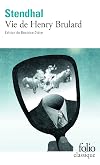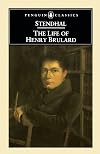
The Life of Henry Brulard
by Stendhal
On This Page
Description
The Life of Henry Brulard is the autobiography of one of France's greatest writers, Stendhal, author of The Red and the Black and The Charterhouse of Parma. Here, writing at white heat and with such ferocious honesty and indignation that his book was to remain unpublishable for more than a century after its composition, Stendhal revisits his unhappy childhood in a stuffy provincial town and bares his rebellious heart. His adored mother, who died when he was only seven; a father devoted only show more to his own social ambitions; the aunt whose daily cruelties passed for care: these are among the indelible portraits in a work that captures the sights, sounds, places, and characters of Stendhal's youth, its pleasures and sorrows, with preternatural clarity and immediacy. Full of dazzling images and burning emotions, The Life of Henry Brulard is a vivid memoir that is also an extraordinary work of the imagination. show lessTags
Recommendations

























Member Reviews
Stendhal is a great writer so you cannot go wrong buying this book. Most readers are familiar with his two great and classic novels The Red and the Black and The Charterhouse of Parma. The present book, The Life of Henry Brulard, is much less known . He lived an eventful life so there’s a lot of material to make a compelling story. The book was written in 1835 when Stendhal was 52 years old (bn. 1783). Most of the book dwells on the author’s life as a child and young adult.
The main counterpoint of Stendhal’s childhood is his antipathy for his father versus his reverence for his grandfather. Satellite characters more or less align with one or the other, as “evil” or “good” forces in his life. Stendhal lived a suffocating show more life, prevented from knowing or playing with other boys, kept from exposure to the outside world, which he hated and struggle against constantly. The grandfather is his only real companion for many years, the only one with whom he can share ideas and agree.
Stendhal’s life shifts from the worst depression to the liveliest happiness when the liberty of which he had dreamed, came true at the Central school at age 11. Stendhal studied drawing and music extensively, along with Latin and others.
At age 17 he became a lieutenant of the 6th Dragoons. We see Stendhal transition into manhood at a young age, considering his sheltered youth. He engages in battles across Europe, which we see through his eyes, which see absurdity in everything.
Ultimately Milan became Stendhal’s favorite place to live, where he spent most of his time from 1800 to 1821. We learn this in the last few pages, and the story ends. The book is written in 1835, and he lives to 1842, but the book does not cover those later years.
Stendhal did not complete this book, and it was never published in his lifetime. It must be read in light of the fact that it is an unfinished draft of randomly recorded memories. In this light, it is an interesting study into Stendhal’s retrospection and the psychology of memory. He often comments on the tricks the mind plays on memory, and alternative ways of interpreting his childhood experiences.
The book is a must for anyone interested in Stendhal, or who enjoyed his novels. I also recommend it for anyone interested in history in general. show less
The main counterpoint of Stendhal’s childhood is his antipathy for his father versus his reverence for his grandfather. Satellite characters more or less align with one or the other, as “evil” or “good” forces in his life. Stendhal lived a suffocating show more life, prevented from knowing or playing with other boys, kept from exposure to the outside world, which he hated and struggle against constantly. The grandfather is his only real companion for many years, the only one with whom he can share ideas and agree.
Stendhal’s life shifts from the worst depression to the liveliest happiness when the liberty of which he had dreamed, came true at the Central school at age 11. Stendhal studied drawing and music extensively, along with Latin and others.
At age 17 he became a lieutenant of the 6th Dragoons. We see Stendhal transition into manhood at a young age, considering his sheltered youth. He engages in battles across Europe, which we see through his eyes, which see absurdity in everything.
Ultimately Milan became Stendhal’s favorite place to live, where he spent most of his time from 1800 to 1821. We learn this in the last few pages, and the story ends. The book is written in 1835, and he lives to 1842, but the book does not cover those later years.
Stendhal did not complete this book, and it was never published in his lifetime. It must be read in light of the fact that it is an unfinished draft of randomly recorded memories. In this light, it is an interesting study into Stendhal’s retrospection and the psychology of memory. He often comments on the tricks the mind plays on memory, and alternative ways of interpreting his childhood experiences.
The book is a must for anyone interested in Stendhal, or who enjoyed his novels. I also recommend it for anyone interested in history in general. show less
On a écrit que l'auteur de "la Chartreuse de Parme" avait souhaité "d'être à soi-même plus intérieur et plus étranger qu'il n'est permis". Telle est l'ambiguïté de ce texte capital, véritable confession où Stendhal s'efforce de rejoindre Henri Beyle, et où, en retour, la vérité de l'autobiographie prépare et implique le mensonge, peut-être plus vrai, de la fiction romanesque.
Jun 7, 2011French
Superiore alle mie forze. La bozza incompiuta di un abbozzo, farcita di incomprensibili schizzi e di ripetizioni e annotazioni su cose da fare, rivedere, controllare. Sicuramente interessante per un filologo ma per il semplice lettore una indicibile pizza.
Jan 14, 2020Italian
Ce livre est une autobiographie de Stendhal racontée en fiction. Il y raconte son enfance, sa stricte éducation, sa carrière dans la vie politique et militaire,fait part de son aversion pour sa ville natale Grenoble, qu'il a toujours pris en horreur, et critique également sa haine pour les bourgeois, les aristocrates. Il parle également de la haine pour sa tante Séraphie, parle de ses problèmes avec son père et l'argent, parle de l'amour pour son grand-père Mr Gagnon qui lui a donné son goût pour les Lettres. Il apprend aussi le dessin et le latin avec des Maîtres, étudie les mathématiques à l'Ecole centrale puis est reçu à l'Ecole Polytechnique parmi les meilleurs. Il se moque et critique l'hypocrisie des gens de son show more époque. show less
Mar 29, 2015 (Edited)French
Ratings
Members
- Recently Added By
Author Information

535+ Works 22,051 Members
One of the great French novelists of the nineteenth century, Stendhal (pseudonym for Marie-Henri Beyle) describes his unhappy youth with sensitivity and intelligence in his autobiographical novel The Life of Henri Brulard. It was written in 1835 and 1836 but published in 1890, long after his death. He detested his father, a lawyer from Grenoble, show more France, whose only passion in life was making money. Therefore, Stendhal left home as soon as he could. Stendhal served with Napoleon's army in the campaign in Russia in 1812, which helped inspire the famous war scenes in his novel The Red and the Black (1831). After Napoleon's fall, Stendhal lived for six years in Italy, a country he loved during his entire life. In 1821, he returned to Paris for a life of literature, politics, and love affairs. Stendhal's novels feature heroes who reject any form of authority that would restrain their sense of individual freedom. They are an interesting blend of romantic emotionalism and eighteenth-century realism. Stendhal's heroes are sensitive, emotional individuals who are in conflict with the society in which they live, yet they have the intelligence and detachment to analyze their society and its faults. Stendhal was a precursor of the realism of Flaubert. He once described the novelist's function as that of a person carrying a mirror down a highway so that the mirror would reflect life as it was, for all society. (Bowker Author Biography) show less
Some Editions
Awards and Honors
Notable Lists
Series
Belongs to Publisher Series
Work Relationships
Is contained in
Common Knowledge
- Canonical title
- The Life of Henry Brulard
- Original title
- La vie de Henri Brulard
- Original publication date
- 1890 (original French) (original French)
- Important places*
- Grenoble, Auvergne-Rhône-Alpes, Frankrijk
- First words*
- "Je me trouvais ce matin, 16 octobre 1832, à San Pietro in Montorio, sur le mont Janicule, à Rome, il faisait un soleil magnifique".
- Quotations*
- "1783, 93, 1803, je suis tout le compte sur mes doigts... et 1833 cinquante".
"J'ai écrit sur la ceinture en dedans: 16 octobre 1832, je vais avoir la cinquantaine, ainsi abrégé pour n'être pas compris: J.vaisa voi... (show all)rla 5". - Last words*
- (Click to show. Warning: May contain spoilers.)"On gâte des sentiments si tendres à les raconter en détail".
- Original language*
- Français
*Some information comes from Common Knowledge in other languages. Click "Edit" for more information.
Classifications
Statistics
- Members
- 488
- Popularity
- 62,428
- Reviews
- 4
- Rating
- (3.88)
- Languages
- 10 — Dutch, English, French, Old French, German, Italian, Norwegian (Bokmål), Polish, Portuguese, Spanish
- Media
- Paper, Ebook
- ISBNs
- 24
- ASINs
- 19