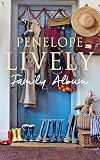
Family Album
by Penelope Lively
On This Page
Description
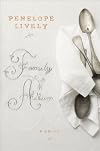
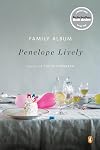
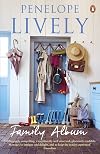
All Alison ever wanted was a blissful childhood for her six children, with summers at the beach and birthday parties on the lawn at their family home. Together with Ingrid, the family au pair, she has worked hard to create a real old-fashioned family life. But beneath its postcard sheen, the picture is clouded by a distant father, Alison's inexplicable emotional outbursts, and long-repressed secrets that no one dares mention.Tags
Recommendations




















Member Reviews
Penelope Lively is gifted with the ability of acute observation, both of characters and the seemingly mundane activities of domestic life. Her writing is suffused with wit and sensitivity, and while the story is not plot driven, I was captivated throughout the read.
Allersmead, a large Edwardian House in Britain, is where parents Charles and Alison Harper raised their six children, Paul, Gina, Sandra, Roger, Katie and Clare. The family also employed an " au pair" Ingrid, who interestingly remains with the parents long after all of the children have grown up and left home.
Father Charles is a somewhat detached husband and father, busy writing books on other societies, including how such societies raise their children. He ponders on show more societies where " the care and supervision of the children is more or less a collective affair." " The kibbutz has always seemed to him to have been a an eminently sensible arrangement" , as have African Tribal systems" in which all women keep an eye on all children, and men get on with whatever they do." p 37. From those quotes, you can get a good idea of Charles parenting style .
In contrast, Alison is an " earth mother". p19 "For Allison, Allersmead is a kind of glowing archetypal hearth, and she it's guardian." " All she ever wanted was children, a house in which to stow them , and a husband of course" p33.
As the story opens all of the children have grown up and left Allersmead. Interestingly none have children of their own, and all live lives very independent of one another. The family is far flung , physically and psychologically. Only Charles, Alison and the au pair, Ingrid remain at Allersmead,. Paul, the eldest son who tends to run into trouble, comes and goes from the family home.
Gina,aged 39, makes one of her rare returns home with her boyfriend Philip. Philip,the product of a very ordinary two child family, is fascinated by the large family that grew up at Allersmead, and so the recollections of family life begin. That sets off the individual and collective memories of all six of the children who grew up at Allersmead, each one with his / her own chapter though written in the third person.
The dynamics of the family in the past, present and future are captivating. Yes, there is somewhat of a dark , shadowy secret to the family , which, as in most families, is pretty much universally known to all, but never openly acknowledged.
It's always the mark of a fabulous writer , like Penelope Lively, when spot on observations and wit can keep the reader glued to the pages , while seemingly dealing with the mundane.
5 stars show less
Allersmead, a large Edwardian House in Britain, is where parents Charles and Alison Harper raised their six children, Paul, Gina, Sandra, Roger, Katie and Clare. The family also employed an " au pair" Ingrid, who interestingly remains with the parents long after all of the children have grown up and left home.
Father Charles is a somewhat detached husband and father, busy writing books on other societies, including how such societies raise their children. He ponders on show more societies where " the care and supervision of the children is more or less a collective affair." " The kibbutz has always seemed to him to have been a an eminently sensible arrangement" , as have African Tribal systems" in which all women keep an eye on all children, and men get on with whatever they do." p 37. From those quotes, you can get a good idea of Charles parenting style .
In contrast, Alison is an " earth mother". p19 "For Allison, Allersmead is a kind of glowing archetypal hearth, and she it's guardian." " All she ever wanted was children, a house in which to stow them , and a husband of course" p33.
As the story opens all of the children have grown up and left Allersmead. Interestingly none have children of their own, and all live lives very independent of one another. The family is far flung , physically and psychologically. Only Charles, Alison and the au pair, Ingrid remain at Allersmead,. Paul, the eldest son who tends to run into trouble, comes and goes from the family home.
Gina,aged 39, makes one of her rare returns home with her boyfriend Philip. Philip,the product of a very ordinary two child family, is fascinated by the large family that grew up at Allersmead, and so the recollections of family life begin. That sets off the individual and collective memories of all six of the children who grew up at Allersmead, each one with his / her own chapter though written in the third person.
The dynamics of the family in the past, present and future are captivating. Yes, there is somewhat of a dark , shadowy secret to the family , which, as in most families, is pretty much universally known to all, but never openly acknowledged.
It's always the mark of a fabulous writer , like Penelope Lively, when spot on observations and wit can keep the reader glued to the pages , while seemingly dealing with the mundane.
5 stars show less
Penelope Lively is one of my favorite authors, and this novel did not disappoint. Gina, the oldest daughter of Alison & Charles, brings her partner Philip to meet her parents and stay the weekend at her childhood home, Allersmead. Philip, an only child, is fascinated by Gina and her five siblings, and begins to draw stories out of her. It’s obvious Gina’s family has more than its share of dysfunction, but most of it is masked until Lively expertly reveals a detail, and until those details start to add up and connect. As each family member’s character is developed, Lively shows how the same incident can affect each person in radically different ways. And of course there was a huge family secret which was a constant, unspoken show more presence which everyone pretended to ignore.
This was an excellent character study with a few “aha moments” in the storyline, making for a quick and satisfying read. show less
This was an excellent character study with a few “aha moments” in the storyline, making for a quick and satisfying read. show less
Astutely written.
This was an interesting study of a large family in rural England, living in an old, crumbling mansion. I loved the earth mother, Alison, devoted to her children, whose only aim in life was to be matriarch to a large family.
Her husband, Charles, was a somewhat cliched version of the distant father, surrounded by constant noise and hubbub, yet almost unaware of it. Somewhat ironically, he was an anthropologist, studying the interactions of distant societies and how they raised their children.
The six children also had the support of Ingrid, an au pair, who had been with the family for years and still remained, even after all the children had left.
This is a largely character driven novel, with the old house, Allersmead, show more looming large in the background.
Each person has a chapter of their own, providing back-story and further details, but do we really need quite so much information? As an audiobook, it was a bit confusing and I would probably have awarded an extra star if I'd been reading it rather than listening, simply because of the complexity of the family relationships.
As the, now adult, children come home to visit Ingrid and their parents, we start to see the flaws in the family dynamics. In addition, we are drawn forward by the knowledge that there is a family secret to eventually be revealed.
Not a gripping story but entertaining for the astute observations that Ms Lively provides. We are the fly on the wall as these nine people interact through the years. show less
This was an interesting study of a large family in rural England, living in an old, crumbling mansion. I loved the earth mother, Alison, devoted to her children, whose only aim in life was to be matriarch to a large family.
Her husband, Charles, was a somewhat cliched version of the distant father, surrounded by constant noise and hubbub, yet almost unaware of it. Somewhat ironically, he was an anthropologist, studying the interactions of distant societies and how they raised their children.
The six children also had the support of Ingrid, an au pair, who had been with the family for years and still remained, even after all the children had left.
This is a largely character driven novel, with the old house, Allersmead, show more looming large in the background.
Each person has a chapter of their own, providing back-story and further details, but do we really need quite so much information? As an audiobook, it was a bit confusing and I would probably have awarded an extra star if I'd been reading it rather than listening, simply because of the complexity of the family relationships.
As the, now adult, children come home to visit Ingrid and their parents, we start to see the flaws in the family dynamics. In addition, we are drawn forward by the knowledge that there is a family secret to eventually be revealed.
Not a gripping story but entertaining for the astute observations that Ms Lively provides. We are the fly on the wall as these nine people interact through the years. show less
I loved this book when I was reading it. I was captivated by the characters and the setting. When I was done, I was filled with questions. Alison and Charles, parents of six, along with Ingrid the perpetual au pair and more all within the walls of Allersmead. The children are all grown and look back at their childhood. What struck me was this all seemed to be Alison's vision of family which she imposed on everyone, like it of not. That vision was the guiding force - not the individuals who were the family. Ironically, in the end, there didn't seem to be much family. Most of the children did not keep in touch with each other or their parents. Alison and Charles did not have much of a marriage. Alison and Ingrid had a better partnership, show more despite the fact that Ingrid was the mother of the youngest child in the family. The value of each child as an individual didn't seem to exist - they were just part of the whole. Charles was a man on his own lurking in the family home - writing, sometimes drinking, isolated either by Alison's overwhelming vision or by his own choice. There didn't seem to be any one thing which led to all the children, except Paul, removing themselves from the family but there it was. It's a very interesting book. show less
Another minutely-observed family structure by Lively. I love her precise, unadorned, meticulous writing, unorthodox situations, authorial distance. She's a cool writer on hot topics, so non-judgmental.
Later note: For readers who found too little characterization, I think that was deliberate. Quantity was more important than quality & individuality to the mother; Ingrid knew -- and remembered -- who did what to who. The kids seem to have developed more in response to each other, than to their upbringing.
Later note: For readers who found too little characterization, I think that was deliberate. Quantity was more important than quality & individuality to the mother; Ingrid knew -- and remembered -- who did what to who. The kids seem to have developed more in response to each other, than to their upbringing.
I loved this book-- most particularly in the way the writing conveyed the gestalt of one (large) nuclear family's life across decades, rich with concurrent memories conveyed through the voices of all it's members (some more than others, of course). I liked that this family's mysteries (and of course every family has its mysteries, never clearly elucidated in one clear, unambiguous "truth") are acknowledged and poked at but never revealed in some definitive form. A beautiful, though reserved, piece of writing--and provocative, as all beautifully written prose must be. I had the curious thought, throughout, that the mother, "Allison," reminded me of the characters played by Allison Steadman in Mike Leigh's films-- and that this family show more might have been one of Mike Leigh's families. show less
Okay, perhaps five stars because this book was so ridiculously timely, what with me lately thinking about family and memory and the fantastic oddity of life. But five stars it is because for me, this book truly was Amazing.
I don't know how I'd even begin to describe Family Album, except to say that it really is rather like being privy to the meandering memories that pass through the minds of family members as they are gathered to flip through the family photo album. But that really isn't quite right at all, so perhaps I'd talk about Penelope Lively's amazing use of punctuation and sentence structure, and her gloriously diverse vocabulary. I had to use my dictionary quite a few times and that's a rarity for me. Meanings were always quite show more clear from context, and mostly I was intrigued by how certain words were employed, but there were also a few distinctly British words unfamiliar to me. Hurray for that!
If you have a family, or know any families, and you like words, and you like thinking about families and words - and memories - read this book. And if you have lots of siblings, read this book...and then call me up so we can sit down and talk about it. (And that invitation even includes my sisters.) show less
I don't know how I'd even begin to describe Family Album, except to say that it really is rather like being privy to the meandering memories that pass through the minds of family members as they are gathered to flip through the family photo album. But that really isn't quite right at all, so perhaps I'd talk about Penelope Lively's amazing use of punctuation and sentence structure, and her gloriously diverse vocabulary. I had to use my dictionary quite a few times and that's a rarity for me. Meanings were always quite show more clear from context, and mostly I was intrigued by how certain words were employed, but there were also a few distinctly British words unfamiliar to me. Hurray for that!
If you have a family, or know any families, and you like words, and you like thinking about families and words - and memories - read this book. And if you have lots of siblings, read this book...and then call me up so we can sit down and talk about it. (And that invitation even includes my sisters.) show less
Members
- Recently Added By
Published Reviews
ThingScore 75
In 16 distinct chapters, from various, smoothly spliced points of view, Lively moves back and forth through the family's history, filling in events that explain apparently casual references....
The success of these chapters is uneven, but several of them are brilliant, full of glancing humor and spot-on truths about the way families maintain the peace through a process of willful ignorance and show more disciplined forgetfulness. show less
The success of these chapters is uneven, but several of them are brilliant, full of glancing humor and spot-on truths about the way families maintain the peace through a process of willful ignorance and show more disciplined forgetfulness. show less
added by zhejw
Lively immediately plunges us into an entirely convincing world of bustling family life, yet at the same time keeps her distance with lethally sharp observations, and a tendency to watch more effectively than to inhabit. The novel follows no linear progression and has little plot: it swirls between memories, hints, and snapshots of later life, yet it is unflaggingly compelling....
Family Album show more manages to intrigue and delight, and to keep the reader captivated, racing along without obvious direction but with a very tight sense of purpose. The narrative is distanced to an extreme degree: we are reading an anthropological study of the English middle classes from the 1970s to the present, their traditions and tribal habits causing winces of delighted, uncomfortable recognition. show less
Family Album show more manages to intrigue and delight, and to keep the reader captivated, racing along without obvious direction but with a very tight sense of purpose. The narrative is distanced to an extreme degree: we are reading an anthropological study of the English middle classes from the 1970s to the present, their traditions and tribal habits causing winces of delighted, uncomfortable recognition. show less
added by zhejw
Lists

Top Five Books of 2020
982 works; 350 members

Books Read in 2015
3,299 works; 126 members
Author Information

Penelope Lively has written over 18 books for children, and over 15 titles for adults, distinguishing herself on both levels. Among the awards she has received are the coveted Booker Prize for the adult novel "Moon Tiger" (1987) and the Carnegie Medal for the highly acclaimed juvenile work, "The Ghost of Thomas Kempe" (1973). In Lively's writing, show more for both adults and children, the recurrent theme is interpreting the past through exploring the function of memory. "My particular preoccupation as a writer is with memory. Both with memory in the historical sense and memory in the personal sense." Beginning her writing career in the early 1970's, Lively wrote exclusively for children for over a decade. Because children have limited memories, devices were used to explore their perceptions of the past, such as ghosts in "Uninvited Ghosts and Other Stories" (1985), and a sampler in "A Stitch in Time' (1976). Lively's first adult novel, "The Road to Lichfield" (1977) was the result of turning to an older audience when she felt inspiration running out. Her adult novels include "Passing On" (1995), the story of a mother's legacy to her children and 'Oleander, Jacarandi: A Childhood Perceived' (1994) which is a memoir of Lively's childhood. Penelope (Low) Lively, born March 17, 1933 in Cairo, Egypt, had a most unusual childhood. She grew up in Cairo with no formal education until age 12, when her family put her in boarding school in England. After earning a B.A. in history at Oxford in 1955, she married Jack Lively, a university professor, whom she calls her most useful critic. They have a son and a daughter, Adam and Josephine. (Bowker Author Biography) show less
Some Editions
Awards and Honors
Awards
Distinctions
Common Knowledge
- Canonical title
- Family Album
- Original publication date
- 2009
- People/Characters
- Het gezin Harper (ouders en zes kinderen); au pair Ingrid; Paul; Gina; Sandra; Katie (show all 12); Roger; Clare; Corinna; Philip; Alison; Charles
- Dedication
- To Kay and Stephen
- First words
- Gina turned the car off the road and into the driveway of Allersmead.
- Last words
- (Click to show. Warning: May contain spoilers.)And right, Rog - rotovator and fruit cage will be sorted asap. And Allersmead too, alas.
Classifications
Statistics
- Members
- 709
- Popularity
- 40,251
- Reviews
- 44
- Rating
- (3.50)
- Languages
- Dutch, English, German, Italian
- Media
- Paper, Audiobook, Ebook
- ISBNs
- 27
- ASINs
- 9