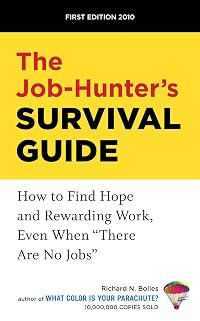
The Job-Hunter's Survival Guide: How to Find a Rewarding Job Even When "There Are No Jobs"
by Richard N. Bolles
On This Page
Description
"An emergency, essentials-only guide to finding a job--even your dream job--in a challenging economic climate, from the author of classic career guide What Color Is Your Parachute?"--Provided by publisher.Tags
Recommendations

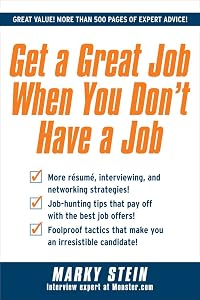

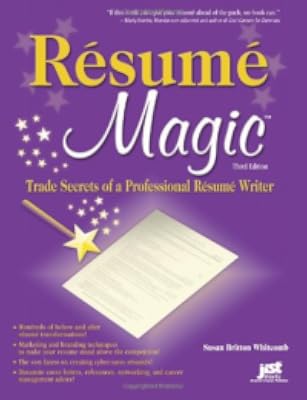
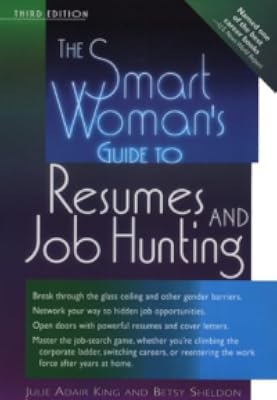
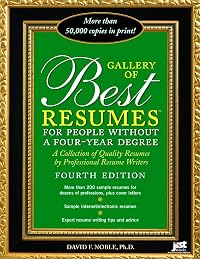



Member Recommendations
Member Reviews
Obviously reading a book like this means I am in the midst of trying to find work. This is a short book from the author of 'What Color is Your Parachute?' designed to impart advice to those looking for a job. Bolles provides an overview of eighteen ways of looking for a job (i.e. networking, internet, want ads, etc), rating the least effective and the most. As might be expected, just circulating a resume online or uploading it to a company website is not as effective as establishing personal contact via phone or in person. Bolles number one way to get employed (about 86% effective), is by doing a personal inventory where you discover what you want to do, where you want to do it, and what transferable skills you have. Bolles says keeping show more your eyes on the prize (where you want to be vocationally) is the surest way to get there. show less
Here is a basic job-hunting guide for the growing number of people who are unemployed, and don’t have the time, or desire, to read a lot of details.
Among the first things you should do is to do a Google search of your name, to see what the Internet says about you. If there are any drunken, or racy, photos of you on Facebook, for instance, restrict their availability or delete them, now. You can plan on a potential employer doing the same search.
After that, take some time and do a through self-inventory of what you do best and enjoy most, and your skills that are most transferable. What did you like most about your last job? What would be your dream job? (Please don’t say "A job with high pay and no responsibilities.") That way, you show more can be absolutely detailed about the type of job you are seeking, and use that to focus your job search.
Most people want to limit their job-searching to replying to online job vacancies, mailing resumes, answering newspaper ads or using private employment agencies. Their rate of success is small, so don’t make them your only job-search methods. Much more effective job-search methods include asking your network for job leads, knocking on the door of any employer that interests you (whether or not they have a vacancy), and using the Yellow Pages, alone or with others in a job club, looking for fields of interest.
Before you get on the Internet, know what kind of job you are seeking. There are a seemingly infinite number of sites to visit, including omnibus search engines, sites with jobs in specific fields, and social networking sites. Pick just a few sites, and monitor them (jobs are frequently cross-posted to multiple sites). If a site allows you to fill out a profile, or post your resume, do it. You never know who will read it. Employers prefer to fill vacancies from within, before they advertise for the opening, and deal with a bunch of semi-qualified candidates. If they already have your resume, or have seen you work as a temp or contract employee, your chances have greatly increased.
This book is short, and excellent. To those who bemoan the total lack of available jobs, the author asks "Have you done anything more than rely on the Internet or Sunday want ads for your job searching?" It is very much recommended for all job seekers. show less
Among the first things you should do is to do a Google search of your name, to see what the Internet says about you. If there are any drunken, or racy, photos of you on Facebook, for instance, restrict their availability or delete them, now. You can plan on a potential employer doing the same search.
After that, take some time and do a through self-inventory of what you do best and enjoy most, and your skills that are most transferable. What did you like most about your last job? What would be your dream job? (Please don’t say "A job with high pay and no responsibilities.") That way, you show more can be absolutely detailed about the type of job you are seeking, and use that to focus your job search.
Most people want to limit their job-searching to replying to online job vacancies, mailing resumes, answering newspaper ads or using private employment agencies. Their rate of success is small, so don’t make them your only job-search methods. Much more effective job-search methods include asking your network for job leads, knocking on the door of any employer that interests you (whether or not they have a vacancy), and using the Yellow Pages, alone or with others in a job club, looking for fields of interest.
Before you get on the Internet, know what kind of job you are seeking. There are a seemingly infinite number of sites to visit, including omnibus search engines, sites with jobs in specific fields, and social networking sites. Pick just a few sites, and monitor them (jobs are frequently cross-posted to multiple sites). If a site allows you to fill out a profile, or post your resume, do it. You never know who will read it. Employers prefer to fill vacancies from within, before they advertise for the opening, and deal with a bunch of semi-qualified candidates. If they already have your resume, or have seen you work as a temp or contract employee, your chances have greatly increased.
This book is short, and excellent. To those who bemoan the total lack of available jobs, the author asks "Have you done anything more than rely on the Internet or Sunday want ads for your job searching?" It is very much recommended for all job seekers. show less
Ratings
Members
- Recently Added By
Author Information

36+ Works 6,553 Members
Richard Nelson Bolles was born in Milwaukee, Wisconsin on March 19, 1927. During World War II, he served in the Navy. He studied chemical engineering for two years at the Massachusetts Institute of Technology, then transferred to Harvard University, where he received a bachelor's degree in physics. After graduation, he decided to become an show more Episcopal minister. He received a master's degree in New Testament studies from General Theological Seminary in New York and was ordained in 1953. He had been a clergyman for 18 years when a combination of budget problems and philosophical differences with superiors led to the elimination of his job and his dismissal in 1968 as a pastor at Grace Cathedral in San Francisco. After six months of searching, he got a job with United Ministries in Higher Education, an interdenominational church organization that recruited and supported college chaplains across the country. However, when the college chaplains were increasingly being laid off, he decided to help the chaplains find new careers. He was an ordained Episcopal minister until 2004, when he left the ministry. In 1970, he self-published What Color Is Your Parachute?: A Practical Manual for Job-Hunters and Career-Changers as a photocopied how-to booklet for unemployed ministers. In 1972, he recast it to appeal to a wider audience and found an independent publisher willing to print small batches so that it could be frequently updated. His other books included How to Find Your Mission in Life and The Three Boxes of Life and How to Get Out of Them. He died on March 31, 2017 at the age of 90. (Bowker Author Biography) show less
Classifications
- Genres
- Business, Nonfiction, General Nonfiction
- DDC/MDS
- 650.14 — Applied science & technology Management & public relations Business Skills & Management Personal success in business Success in obtaining jobs and promotions
- LCC
- HF5382.7 .B628 — Social sciences Commerce Commerce Business Vocational guidance. Career devlopment
- BISAC
Statistics
- Members
- 90
- Popularity
- 357,103
- Reviews
- 2
- Rating
- (3.88)
- Languages
- English, German
- Media
- Paper, Ebook
- ISBNs
- 3
- ASINs
- 1