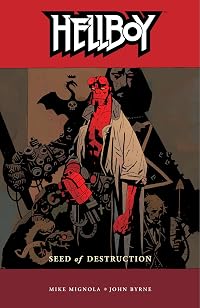
Hellboy: Seed of Destruction
by Mike Mignola (Author), John Byrne (Author)
Hellboy graphic novels (1), Hellboy: Seed of Destruction (Collections and Selections — 1-4), Hellboy (Collections and Selections — Vol. 1, issues 01-04)
On This Page
Description
Dark Horse presents new editions of the entire Hellboy line with new covers, beginning with Seed of Destruction, the basis of director Guillermo del Toro's blockbuster films. Hellboy is one of the most celebrated comics series in recent years. The ultimate artists' artist and a great storyteller whose work is in turns haunting, hilarious, and spellbinding. Mike Mignola has won numerous awards in the comics industry and beyond. When strangeness threatens to engulf the world, a strange man show more will come to save it. Sent to investigate a mystery with supernatural overtones, Hellboy discovers the secrets of his own origins, and his link to the Nazi occultists who promised Hitler a final solution in the form of a demonic avatar. Includes stories from San Diego Comic-Con Comics #2 and the Comic Buyer's Guide. show lessTags
Recommendations
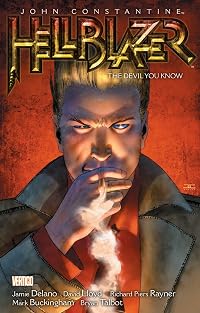
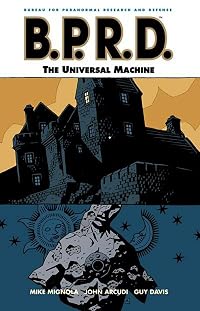
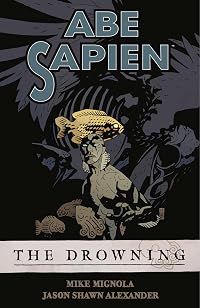
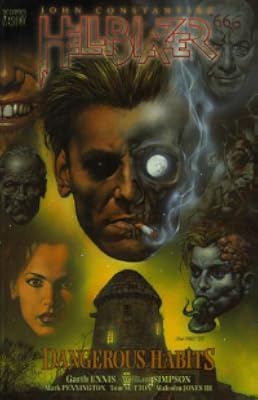

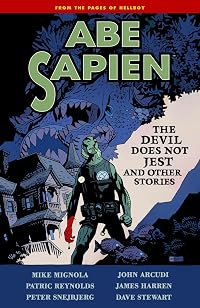
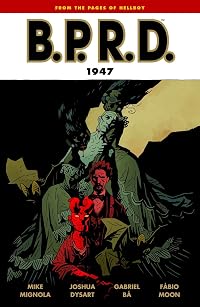
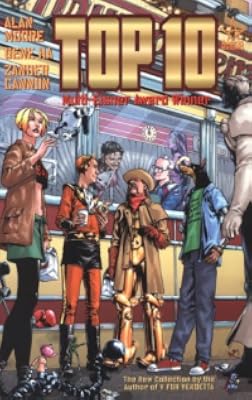
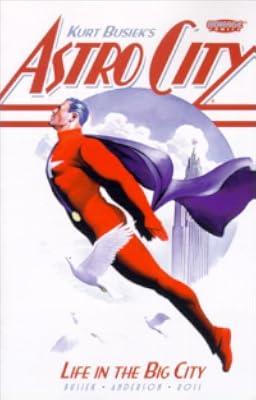
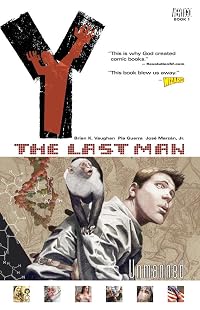
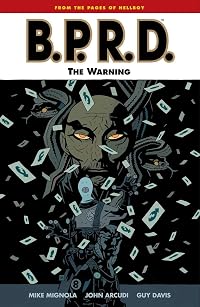
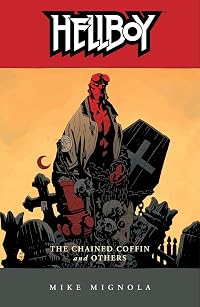
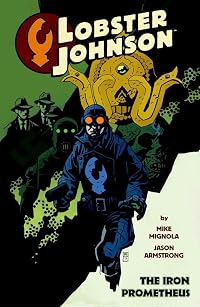

Member Recommendations
Death_By_Papercut Mike Mignola baby!

nsblumenfeld Prolific author Rhys Hughes had a story in the anthology Hellboy: Oddest Jobs. Now he's written a novel featuring a character inspired by Hellboy -- a novel with a glowing cover quote from Mike Mignola. Check it out!
Death_By_Papercut Old legends in a new light...or dark.

Member Reviews
"Son of a..."
Mignola establishes his art style immediately with skillful use of dark, muted colors, building an ominous and somber tone through architecture and symbols that captivate the eye. This soon gives way to our shadowy anti-heroes that come across as a more realistic twist on the X-Men; hardened misfits at ease among the macabre. Hellboy himself, an obstinate fighter and smart aleck, makes for a fitting counterweight to the primeval forces that he and his companions must wage fisticuffs against. And since the main characters often play with fire, they tend to get burned. Danger and death never feels forced nor fake; characters tend to overestimate their abilities, and can never account for everything (how could they?), thus show more instilling proper tension throughout the series.
Mignola's unbridled fascination with all things horror lead him to put successful spins on a plethora of concepts without running out of steam. His inspirations include alchemy, fairy tales, Slavic folklore, Gothic horror, Lovecraftian horror, etc. While the cruxes and tropes born from each one are familiar, Mignola rearranges and adds to these ideas in ways that are exceptionally shocking, strange, and phantasmal. And unlike Lovecraft's all-consuming horrors, Hellboy explores the alternative, tenacious path of retaliation against abominations. But will Hellboy succeed in the end? Maybe, maybe not.
The writing itself consists of a more literary, dense Gothic era style mixed with modern lingo and quips from the main characters (mostly Hellboy himself). This juxtaposition is effective as it keeps the series from getting too bogged down by its own heavy atmosphere and haughty antagonists (who often indulge in lofty, esoteric speeches). But Mignola never takes the humor too far, always keeping things grounded in each dire, weighty circumstance.
While I haven't read many western comic books yet, I get the feeling that Hellboy will be hard to top. It successfully fuses so many things together into a chaotic, metaphysical brew of an indelible kind. And it's pretty funny, to boot. However, the pacing and repetition of certain instances holds Hellboy back, and it's disappointing how certain story threads drop off too early, although I've gathered that Mignola expands upon said threads via other series within the same universe. That said, this is still a cogent and unique work, and I'm looking forward to reading Mignola's other comics. show less
Mignola establishes his art style immediately with skillful use of dark, muted colors, building an ominous and somber tone through architecture and symbols that captivate the eye. This soon gives way to our shadowy anti-heroes that come across as a more realistic twist on the X-Men; hardened misfits at ease among the macabre. Hellboy himself, an obstinate fighter and smart aleck, makes for a fitting counterweight to the primeval forces that he and his companions must wage fisticuffs against. And since the main characters often play with fire, they tend to get burned. Danger and death never feels forced nor fake; characters tend to overestimate their abilities, and can never account for everything (how could they?), thus show more instilling proper tension throughout the series.
Mignola's unbridled fascination with all things horror lead him to put successful spins on a plethora of concepts without running out of steam. His inspirations include alchemy, fairy tales, Slavic folklore, Gothic horror, Lovecraftian horror, etc. While the cruxes and tropes born from each one are familiar, Mignola rearranges and adds to these ideas in ways that are exceptionally shocking, strange, and phantasmal. And unlike Lovecraft's all-consuming horrors, Hellboy explores the alternative, tenacious path of retaliation against abominations. But will Hellboy succeed in the end? Maybe, maybe not.
The writing itself consists of a more literary, dense Gothic era style mixed with modern lingo and quips from the main characters (mostly Hellboy himself). This juxtaposition is effective as it keeps the series from getting too bogged down by its own heavy atmosphere and haughty antagonists (who often indulge in lofty, esoteric speeches). But Mignola never takes the humor too far, always keeping things grounded in each dire, weighty circumstance.
While I haven't read many western comic books yet, I get the feeling that Hellboy will be hard to top. It successfully fuses so many things together into a chaotic, metaphysical brew of an indelible kind. And it's pretty funny, to boot. However, the pacing and repetition of certain instances holds Hellboy back, and it's disappointing how certain story threads drop off too early, although I've gathered that Mignola expands upon said threads via other series within the same universe. That said, this is still a cogent and unique work, and I'm looking forward to reading Mignola's other comics. show less
I saw the Hellboy movie years ago and loved it. Rasputin and the Nazis, Lovecraftian monsters, Gothic ruins, arcane machines, and a wise-cracking, cigar chomping, good demon who kicks ass. I didn't know anything about how Hellboy was supposed to be, but I thought Perlman knocked it out of the park.
I always meant to get around to reading the comic, but I didn't get a chance until now. Starting at the beginning, I see that the movie and the book start off on the same page, but then wildly veer off in different directions with only loose connections as the stories unfold. This is going to be blasphemous of me to say, but I liked the movie more.
In the movie, more time was spent developing the characters and the backstory. In the comic, show more Hellboy and the reader are subjected to a bad case of monologuing (I've had characters do it, too. It happens to writers all the time.) by Rasputin. As the comic is told almost exclusively from Hellboy's POV—after his origin sequence—there's no other place to put it. Perhaps if this opening story had been told over eight issues instead of four, there might have been a better way to develop it organically.
Hellboy's relationships with other characters is largely undeveloped in this issue of the comic. Other than a little background on Abe and Liz, we really don't get any reason why Hellboy cares about them. And Professor Bruttenholm? Forget it. In the movie, Perlman and Hurt really develop the relationship. Here, it's over before it starts with nary a thought or feeling. I have to imagine that these relationships and characters were expounded upon in subsequent issues.
But despite these shortcomings, I liked the story. The Lovecraftian vibe, Rasputin, and occult-Nazis are there with their arcane machines. The Hellboy that Perlman brought to life is a bit more subdued though. The raw power is there, but still in a more embryonic state. There's clearly more to come.
Mignola's art really captures the brooding darkness. Even bright yellow energetic struggles to keep it at bay and won't last long against the suffocating gloom. Sepia tones lend age and authenticity to portraits on a wall. Hellboy pops off the page with his signature fire engine red, particularly when contrasted against the moodier background hues of blue, purple, and gray or contrasting with green-colored foes. And black. Always black.
At the end of this volume, there were a couple notes from Mignola about the origin of Hellboy's appearance, two short four-page comics, and a gallery of Hellboy portraits as interpreted by other artists. It was a nice addition.
3.5 stars. show less
I always meant to get around to reading the comic, but I didn't get a chance until now. Starting at the beginning, I see that the movie and the book start off on the same page, but then wildly veer off in different directions with only loose connections as the stories unfold. This is going to be blasphemous of me to say, but I liked the movie more.
In the movie, more time was spent developing the characters and the backstory. In the comic, show more Hellboy and the reader are subjected to a bad case of monologuing (I've had characters do it, too. It happens to writers all the time.) by Rasputin. As the comic is told almost exclusively from Hellboy's POV—after his origin sequence—there's no other place to put it. Perhaps if this opening story had been told over eight issues instead of four, there might have been a better way to develop it organically.
Hellboy's relationships with other characters is largely undeveloped in this issue of the comic. Other than a little background on Abe and Liz, we really don't get any reason why Hellboy cares about them. And Professor Bruttenholm? Forget it. In the movie, Perlman and Hurt really develop the relationship. Here, it's over before it starts with nary a thought or feeling. I have to imagine that these relationships and characters were expounded upon in subsequent issues.
But despite these shortcomings, I liked the story. The Lovecraftian vibe, Rasputin, and occult-Nazis are there with their arcane machines. The Hellboy that Perlman brought to life is a bit more subdued though. The raw power is there, but still in a more embryonic state. There's clearly more to come.
Mignola's art really captures the brooding darkness. Even bright yellow energetic struggles to keep it at bay and won't last long against the suffocating gloom. Sepia tones lend age and authenticity to portraits on a wall. Hellboy pops off the page with his signature fire engine red, particularly when contrasted against the moodier background hues of blue, purple, and gray or contrasting with green-colored foes. And black. Always black.
At the end of this volume, there were a couple notes from Mignola about the origin of Hellboy's appearance, two short four-page comics, and a gallery of Hellboy portraits as interpreted by other artists. It was a nice addition.
3.5 stars. show less
Hellboy has become a virtual household name, with several films, animated shows, several spin-off series, and dozens of novels and graphic novel collections set in the Hellboy universe and the stories housed in this collection started it all.
This trade paperback collects the four issues of Hellboy: Seed of Destruction, along with the first two Hellboy shorts, originally published in San Diego Comic Con Comics #2 and Comics Buyer’s Guide #1070, along with a gallery of pin-ups and some early concept sketches (Hellboy has evolved quite a bit, Abe Sapien looks pretty much identical to Minola’s original drawing of him, interestingly enough).
Note: This review features plot spoilers -- read at your own risk. I’ll briefly provide an show more overview of the four main sections of the book (these were originally individual comics, so they hang together pretty well as individual sub-stories, meshing together to create this overall story arc.)
Part One: Begins in 1944 with a combined US-British operation to counter a group of Nazi occultists led by Rasputin, who end up summoning Hellboy to Earth from…well, wherever he came from. It doesn’t work as planned because Hellboy’s a nice guy, but it sets up a great set of villains who we’ll see more from later. Fast forward fifty years and Hellboy’s adopted father has just returned from an Arctic expedition where they encountered a strange Lovecraftian temple. Cue weird, strong, powerful froglike humanoid who kills Hellboy’s father and beats the stuffing out of Helboy.
Part Two: Hellboy and his two companions from the Bureau for Paranormal Research and Defense (BPRD) – the eversexy pyrokinetic Liz Sherman and fishman-with-a-mysterious-origin Abe Sapien – investigate Cavendish Hall, a strange old house with an eerie past that’s a nexus point for more Lovecraftian horrors and occult mischief. Liz gets kidnapped by frogs and Hellboy encounters Rasputin who’s a powerful sorcerer attempting to summon some unspeakable entities to Earth.
Part Three: Hellboy and Abe, separately, encounter all kinds of strange critters who attempt to kill them in the watery basements and crypts beneath Cavendish Hall. Hellboy also learns more about what’s going on from Rasputin because, like all good villains, he loves to monologue and reveal backstory when the hero appears to be down for the count. We begin to get an inkling of just how bad things would turn out if Rasputin succeeds in summoning the beasties – which he plans to do using Liz Sherman as a living battery to fuel his spell.
Part Four: Our heroes, through sheer grit and determination, manage to stop Rasputin’s plan at the last second. Titanic battle. Good stuff. Plus some foreshadowing at the end that we haven’t seen the last of the old Nazi occultists.
If there’s a weakness in this collection, it’s that while it’s a rollicking good story in its own right, much of the story’s richness, details, and backstory can really only be appreciated in hindsight once the reader has read additional Hellboy collections. This is certainly a collection that rewards re-reading once the reader has a few more Hellboy stories under his belt.
The art is a bit stylized, so it might not be to everyone’s taste – particularly those you want “photo-realistic art – but I like it a lot. Plotting is tight and characterization comes out slowly but surely through the collection. Mignola has a real gift for crafting memorable dialogue, villains, and bizarre happenings.
I highly recommend checking out this collection. If it whets your appetite for more Hellboy stories, there’s a lot more out there. I give Hellboy, Volume 1: Seed of Destruction 5 stars out of 5.
Review copyright 2010 J. Andrew Byers show less
This trade paperback collects the four issues of Hellboy: Seed of Destruction, along with the first two Hellboy shorts, originally published in San Diego Comic Con Comics #2 and Comics Buyer’s Guide #1070, along with a gallery of pin-ups and some early concept sketches (Hellboy has evolved quite a bit, Abe Sapien looks pretty much identical to Minola’s original drawing of him, interestingly enough).
Note: This review features plot spoilers -- read at your own risk. I’ll briefly provide an show more overview of the four main sections of the book (these were originally individual comics, so they hang together pretty well as individual sub-stories, meshing together to create this overall story arc.)
Part One: Begins in 1944 with a combined US-British operation to counter a group of Nazi occultists led by Rasputin, who end up summoning Hellboy to Earth from…well, wherever he came from. It doesn’t work as planned because Hellboy’s a nice guy, but it sets up a great set of villains who we’ll see more from later. Fast forward fifty years and Hellboy’s adopted father has just returned from an Arctic expedition where they encountered a strange Lovecraftian temple. Cue weird, strong, powerful froglike humanoid who kills Hellboy’s father and beats the stuffing out of Helboy.
Part Two: Hellboy and his two companions from the Bureau for Paranormal Research and Defense (BPRD) – the eversexy pyrokinetic Liz Sherman and fishman-with-a-mysterious-origin Abe Sapien – investigate Cavendish Hall, a strange old house with an eerie past that’s a nexus point for more Lovecraftian horrors and occult mischief. Liz gets kidnapped by frogs and Hellboy encounters Rasputin who’s a powerful sorcerer attempting to summon some unspeakable entities to Earth.
Part Three: Hellboy and Abe, separately, encounter all kinds of strange critters who attempt to kill them in the watery basements and crypts beneath Cavendish Hall. Hellboy also learns more about what’s going on from Rasputin because, like all good villains, he loves to monologue and reveal backstory when the hero appears to be down for the count. We begin to get an inkling of just how bad things would turn out if Rasputin succeeds in summoning the beasties – which he plans to do using Liz Sherman as a living battery to fuel his spell.
Part Four: Our heroes, through sheer grit and determination, manage to stop Rasputin’s plan at the last second. Titanic battle. Good stuff. Plus some foreshadowing at the end that we haven’t seen the last of the old Nazi occultists.
If there’s a weakness in this collection, it’s that while it’s a rollicking good story in its own right, much of the story’s richness, details, and backstory can really only be appreciated in hindsight once the reader has read additional Hellboy collections. This is certainly a collection that rewards re-reading once the reader has a few more Hellboy stories under his belt.
The art is a bit stylized, so it might not be to everyone’s taste – particularly those you want “photo-realistic art – but I like it a lot. Plotting is tight and characterization comes out slowly but surely through the collection. Mignola has a real gift for crafting memorable dialogue, villains, and bizarre happenings.
I highly recommend checking out this collection. If it whets your appetite for more Hellboy stories, there’s a lot more out there. I give Hellboy, Volume 1: Seed of Destruction 5 stars out of 5.
Review copyright 2010 J. Andrew Byers show less
I don't even know is the story is that great. Lovecraftian elder gods etc. A
are okay, but what really stands out is Mignola's art. Artists with a strong inking background make a unique and powerful visual style that's unique to comic books. It's not just an homage to Jack Kirby either but also a perfect marriage of heavy blacks to occult subjects.
are okay, but what really stands out is Mignola's art. Artists with a strong inking background make a unique and powerful visual style that's unique to comic books. It's not just an homage to Jack Kirby either but also a perfect marriage of heavy blacks to occult subjects.
A paranormal mystery with a detective who's a demon with a big, stone right hand, what's not to love? Hellboy is one of my favorite characters. He's a big red demon with the personality of Sam Spade or Philip Marlowe who, as a member of the Bureau of Paranormal Research and Defense, investigates the strange and unexplained all over the world. He is the World's Greatest Paranormal Investigator.
This is the first Hellboy story, the Seed of Destruction, the one that started it all. Sets up the Bureau, tells Hellboy's mysterious origins, and introduces the "frogs." The whole thing is very pulp, which I love. It's a blend of detective story and Lovecraftian horror with Rasputin pulling the strings while working for the Nazis. There's a lot show more going on, and it's all brilliant. show less
This is the first Hellboy story, the Seed of Destruction, the one that started it all. Sets up the Bureau, tells Hellboy's mysterious origins, and introduces the "frogs." The whole thing is very pulp, which I love. It's a blend of detective story and Lovecraftian horror with Rasputin pulling the strings while working for the Nazis. There's a lot show more going on, and it's all brilliant. show less
I can't believe I'm only getting around to reading these now. It's obvious from 20 feet away that they're gorgeously drawn, and the premise of demons & mutants working for a goofy spy agency is always fun if not original, but Mignola adds loads of nifty mythological detail to the mix and it's really funny too. I'm rating this first one lower than the rest just because John Byrne's script, though OK, isn't as interesting as the later ones that Mignola wrote.
‘Hellboy' volume one is a good start to an interesting series. It sets the expectations of what’s to come while giving us just enough world-building and characterization to warrant following the bread crumbs
The reader can feel both for the personalities we'll be traveling with as well as the tone. The tone is more somber than I expected, having only previously experienced the Guillermo del Toro movies. But the feel of mysticism and the occult that the movies captured so well is felt here to an even greater degree. Every frame drips with a hint of the mystic and the sublime. The sardonic wit of Hellboy that was so enjoyable in the movie is also here, though it takes a backseat to the atmosphere and the longer narrative.
The art is show more decent and the artist does a good job utilizing a simple pallet. Almost everything, especially the characters, are solid colors. The backgrounds are usually subdued, so the use of block color helps the characters and action stand out. Things are usually easy to follow, though some scenes are sparse to the point I’d wish they’d included more. There are scenes and designs of intricate detail and only occasional frames feel lacking.
Story-wise the plot is nothing new. The interesting twist of who the main characters are is enough to keep one flipping pages. There is little in the way of character development, but as this is the first volume, I am not surprised. The volume feels like the opening act to an epic play. It is a comic I would recommend to anyone interested in the movies or to anyone interested in a unique twist on a paranormal tale show less
The reader can feel both for the personalities we'll be traveling with as well as the tone. The tone is more somber than I expected, having only previously experienced the Guillermo del Toro movies. But the feel of mysticism and the occult that the movies captured so well is felt here to an even greater degree. Every frame drips with a hint of the mystic and the sublime. The sardonic wit of Hellboy that was so enjoyable in the movie is also here, though it takes a backseat to the atmosphere and the longer narrative.
The art is show more decent and the artist does a good job utilizing a simple pallet. Almost everything, especially the characters, are solid colors. The backgrounds are usually subdued, so the use of block color helps the characters and action stand out. Things are usually easy to follow, though some scenes are sparse to the point I’d wish they’d included more. There are scenes and designs of intricate detail and only occasional frames feel lacking.
Story-wise the plot is nothing new. The interesting twist of who the main characters are is enough to keep one flipping pages. There is little in the way of character development, but as this is the first volume, I am not surprised. The volume feels like the opening act to an epic play. It is a comic I would recommend to anyone interested in the movies or to anyone interested in a unique twist on a paranormal tale show less
Members
- Recently Added By
Published Reviews
ThingScore 75
The book is an action-adventure, not out of place compared to so many other comics with outrageous-looking heroes and mystical events, but the sense of being part of something bigger sets it apart.
added by lampbane
Lists

Read the book and saw the movie
1,170 works; 195 members

70 of the Best Horror Comics
178 works; 5 members

Books Read in 2014
2,343 works; 86 members

Jones & Newman: Best Horror Books Further Recommended Reading
577 works; 4 members

Reading Glasses Podcast
410 works; 3 members
Author Information


All Editions
Some Editions
Awards and Honors
Awards
Notable Lists
Series


Work Relationships
Is contained in
Contains
Has the adaptation
Inspired
Common Knowledge
- Canonical title
- Hellboy: Seed of Destruction
- Original title
- Hellboy: Seed of Destruction
- Alternate titles
- Hellboy, Vol. 1: Seed of Destruction
- Original publication date
- 1994-10
- People/Characters
- Hellboy; Abraham "Abe" Sapien
- Important places
- East Bromwich, England, UK; Brooklyn, New York, New York, USA; Tarmagant Island, Scotland, UK
- Related movies
- Hellboy (2004 | IMDb)
- Dedication
- For Jack Kirby, H.P. Lovecraft, my lovely wife, Christine, and the amazing Elmer Newton.
- First words
- Journal of 1st Sgt. George Whitman, USA
12/23/44
East Bromwich, England
We've been here for two days now and it isn't getting any better. - Last words
- (Click to show. Warning: May contain spoilers.)This is not the end!!
- Disambiguation notice
- Do not combine with the Seed of Destruction omnibus, which collects additional stories.
Classifications
- Genres
- Horror, Graphic Novels & Comics
- DDC/MDS
- 741.5973 — Arts & recreation Drawing & decorative arts Drawing Comic books, graphic novels, fotonovelas, cartoons, caricatures, comic strips History, geographic treatment, biography North American United States (General)
- LCC
- PN6728 .H38 .M54 — Language and Literature Literature (General) Literature (General) Collections of general literature Comic books, strips, etc.
- BISAC
Statistics
- Members
- 2,128
- Popularity
- 9,625
- Reviews
- 42
- Rating
- (3.97)
- Languages
- 11 — Czech, Danish, Dutch, English, Finnish, French, German, Hungarian, Italian, Spanish, Portuguese (Brazil)
- Media
- Paper, Ebook
- ISBNs
- 33
- ASINs
- 8