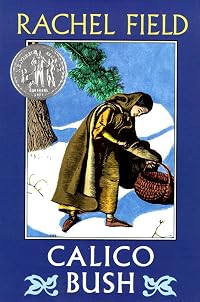
Calico Bush
by Rachel Field
On This Page
Description
In 1743, thirteen-year-old Marguerite Ledoux travels to Maine as the indentured servant of a family that regards her as little better than the Indians that threaten them, but her strength, quick thinking and courage surprise them all.Tags
Recommendations






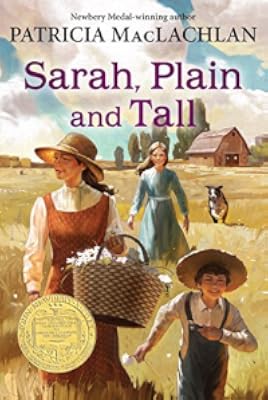
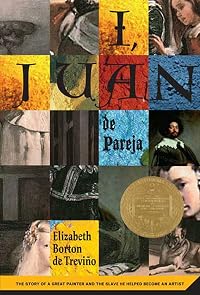
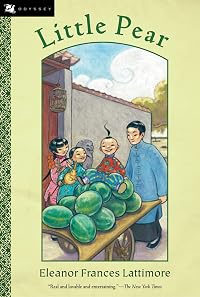
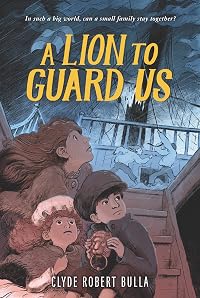



Member Recommendations
Member Reviews
First published in 1931, and chosen as a Newbery Honor Book in 1932 - Rachel Field had already been awarded the Newbery Medal itself in 1930, for Hitty: Her First Hundred Years - this work of historical fiction for young readers opens in June of 1743, and chronicles one year in the life of Marguerite Ledoux, an orphaned young French girl who, finding herself destitute in Marblehead, Massachusetts, becomes a "Bound-out Girl" for the Sargent family. Accompanying the Sargents to the Maine wilderness, where Mr. Sargent plans to occupy a claim he had only recently purchased, Marguerite - now known as "Maggie" - finds her courage put to the test on more than one occasion, as she must rescue the family cow from drowning, confront a bear intent show more on attacking the Sargent children, and think quickly in order to defuse tension, when a party of potentially hostile Indians appears. She must also contend with her fellow settlers hostility to her, on account of her French background. When her many acts of courage and kindness are unexpectedly rewarded, and she is given the opportunity to rejoin "her kind" in Quebec , she must decide who she really is, and where she belongs...
I found Calico Bush - so named because the "calico bush" flower (also known as mountain laurel), and the ballad named for it, have significance in the story - to be an immensely engaging work of fiction: engrossing, often quite moving, and historically realistic. Life in colonial days was harsh, particularly outside of the larger urban settlements, and Field captures that here, with her tale of a young orphaned girl adrift in a world of strangers. She does not shy away from depicting the losses that Marguerite suffers at the beginning of the story - the death of her Oncle Pierre on the sea voyage from France, and the slow decline of her Grand'mère in Massachusetts, where the two find themselves on the Poor Farm - nor does she spare the Sargents, who lose baby Debby in a horrible accident in which she crawls into the fire late one night. Loss, hard work and privation are all here, and so too is prejudice: the prejudice of the Anglo settlers against Marguerite, because of her French blood - something that reveals itself frequently in the sneering remarks of the eldest Sargent boy, Caleb, but also in the occasional comments of some of the adults - and the prejudice and fear that all of them experience in their interactions with the native peoples of the area.
I expected the latter to be particularly offensive, given the frequent dehumanization of native peoples I have encountered in the pages of vintage American children's literature, but although there were elements that felt a little sensational to me - notably, the evil "torture" cave that Marguerite discovers, at one point - for the most part I thought that Field managed to offer a fairly realistic portrait of how people of that time and place would have felt and spoken about "Injuns," without indulging in gratuitous demonization of native peoples, as a narrator. In fact, I was rather impressed by some of the more thoughtful moments, as when Marguerite meets the Indian warrior in the woods, and they exchange Christmas greetings in French. I thought the follow-up to that scene, in which the Sargents are spared attack the next spring, when the same man appears with the group of warriors that gather outside the house, actually served to humanize native peoples, by demonstrating that they (like any other group of people) would respond more favorably to fair and generous treatment, than to open hostility and attack.
I understand that Calico Bush was inspired by the story of a real historical figure - one Marguerite La Croix, who was, together with her family, one of the first settlers on Maine's Little Cranberry Island - which makes sense to me, as the story felt very authentic. All in all, this was a strong work of historical fiction for younger readers, one I would recommend to readers who enjoy that genre. show less
I found Calico Bush - so named because the "calico bush" flower (also known as mountain laurel), and the ballad named for it, have significance in the story - to be an immensely engaging work of fiction: engrossing, often quite moving, and historically realistic. Life in colonial days was harsh, particularly outside of the larger urban settlements, and Field captures that here, with her tale of a young orphaned girl adrift in a world of strangers. She does not shy away from depicting the losses that Marguerite suffers at the beginning of the story - the death of her Oncle Pierre on the sea voyage from France, and the slow decline of her Grand'mère in Massachusetts, where the two find themselves on the Poor Farm - nor does she spare the Sargents, who lose baby Debby in a horrible accident in which she crawls into the fire late one night. Loss, hard work and privation are all here, and so too is prejudice: the prejudice of the Anglo settlers against Marguerite, because of her French blood - something that reveals itself frequently in the sneering remarks of the eldest Sargent boy, Caleb, but also in the occasional comments of some of the adults - and the prejudice and fear that all of them experience in their interactions with the native peoples of the area.
I expected the latter to be particularly offensive, given the frequent dehumanization of native peoples I have encountered in the pages of vintage American children's literature, but although there were elements that felt a little sensational to me - notably, the evil "torture" cave that Marguerite discovers, at one point - for the most part I thought that Field managed to offer a fairly realistic portrait of how people of that time and place would have felt and spoken about "Injuns," without indulging in gratuitous demonization of native peoples, as a narrator. In fact, I was rather impressed by some of the more thoughtful moments, as when Marguerite meets the Indian warrior in the woods, and they exchange Christmas greetings in French. I thought the follow-up to that scene, in which the Sargents are spared attack the next spring, when the same man appears with the group of warriors that gather outside the house, actually served to humanize native peoples, by demonstrating that they (like any other group of people) would respond more favorably to fair and generous treatment, than to open hostility and attack.
I understand that Calico Bush was inspired by the story of a real historical figure - one Marguerite La Croix, who was, together with her family, one of the first settlers on Maine's Little Cranberry Island - which makes sense to me, as the story felt very authentic. All in all, this was a strong work of historical fiction for younger readers, one I would recommend to readers who enjoy that genre. show less
Marguerite is a "bound-out girl," rather like an indentured servant after she is orphaned soon after her uncle and grandmother bring her to the New World from France. The Sergent family takes her in as their servant for a six-year bondage. The book takes place over the course of one of those years, as the Sergent's move to settle in the wilderness of Maine. There isn't much plot. Mainly, we are just seeing what pioneer life was like. It reminded me a great deal of the Little House on the Prairie series, but for all the fame of the Ingalls Wilder books, I thought Calico Bush was better written and more interesting.
In 1743, thirteen-year-old Marguerite Ledoux travels to Maine as the indentured servant of a family that regards her as little better than the Indians that threaten them, but her strength, quick thinking and courage surprise them all.
I found this difficult to get into at the beginning and almost gave up, but I'm glad I persisted as it's an interesting period piece.
This book was a 1932 Newbery Honor Book for best contribution to American children's literature. It is the story of thirteen-year-old Marguerite Ledoux in 1742-1743, a young French emigrant who finds herself all alone in the New World after her uncle and grandmother die. She agrees to be "bound" to a family who are moving to begin a farm on an isolated section of the coast of colonial Maine. It is a beautiful story and finds appeal amongst readers today.
Ok, I had to put it down and I may not pick it up. I am so angry right now. The Hunters land at their claim and find the home that was waiting for them burned by Indians. Neighbors come right over to inform them that the savages seem to regard this bit of land as special to their religion somehow. Mr. Hunter says This here's my claim, an' I mean to stay, Injun or no Injun." Well I guess I could have seen that coming from all the previous talk about Indians, and prejudice against the French, too - but gosh it's blatant. Does anyone know if Hunter learns a lesson, or if this racist behavior is condoned?
Nor am I motivated to read the rest of the book anyway for the good bits of history, as it's been boring as heck so far.
Read more insights show more in the Children's Books group. There are good reasons you might want to read this book." show less
Nor am I motivated to read the rest of the book anyway for the good bits of history, as it's been boring as heck so far.
Read more insights show more in the Children's Books group. There are good reasons you might want to read this book." show less
Members
- Recently Added By
Published Reviews
ThingScore 100
One of the 30 twentieth-century children's books that every adult should know.
added by ArrowStead
"Calico Bush" is a story of the first rank.
added by ArrowStead
Lists

Best Newbery Honor Books
258 works; 33 members

Must-Read Maine
146 works; 91 members

Sonlight Books
1,487 works; 25 members

Honey For a Child's Heart
1,152 works; 25 members

CCE 1000 Good Books List
1,033 works; 12 members

Newbery Honor Books By Year - I - 1922-1980
199 works; 3 members

50+ Books for a 6th Grader Who Loves to Read
53 works; 4 members

Books Read in 2023
5,638 works; 147 members

Recommended Reading List
219 works; 1 member

The Story of the World: Activity Book Four: The Modern Age
333 works; 2 members

The Playful Pioneers
166 works; 1 member
Author Information

61+ Works 6,187 Members
Some Editions
Awards and Honors
Awards
Common Knowledge
- Canonical title
- Calico Bush
- Original publication date
- 1931
- People/Characters
- Marguerite Ledoux; Sargent Family
- Important places
- Maine, USA
- Dedication
- To my island neighbors and especially Captain Jim Sprague
- First words
- 1743 and a fine June morning. Blue water, wind from the southwest, and Marguerite Ledoux taking her last sight of Marblehead as she crouched at the low railing of the Isabella B.
- Last words
- (Click to show. Warning: May contain spoilers.)Soon the sun would be going down behind the islands, but just in these few moments before it disappeared the line of Mount Desert hills stood out very deep and blue--almost as blue, she thought, as the "Delectable Mountains" on her quilt pattern.
Classifications
- Genres
- Kids, Children's Books, Fiction and Literature
- DDC/MDS
- 813.54 — Literature & rhetoric American literature in English American fiction in English 1900-1999 1945-1999
- LCC
- PZ7 .F475 .C — Language and Literature Fiction and juvenile belles lettres Fiction and juvenile belles lettres Juvenile belles lettres
- BISAC
Statistics
- Members
- 1,895
- Popularity
- 11,381
- Reviews
- 7
- Rating
- (3.71)
- Languages
- Chinese, Danish, English, German
- Media
- Paper, Ebook
- ISBNs
- 21
- ASINs
- 20