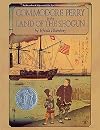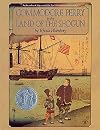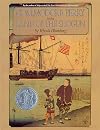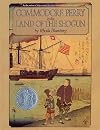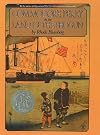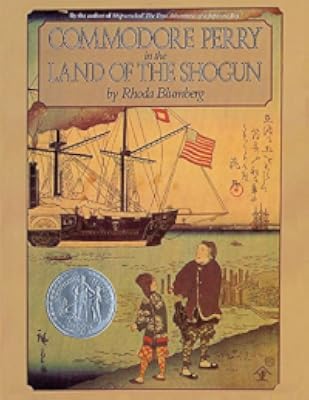
Commodore Perry in the Land of the Shogun
by Rhoda Blumberg
On This Page
Description
Details Commodore Matthew Perry's role in opening Japan's closed society to world trade in the 1850s, one of history's most significant diplomatic achievements.Tags
Recommendations














Member Reviews
Fat picture-book size. Lots of illustrations, most of Americans as drawn by Japanese witnesses. Sufficient margins and back matter, therefore not terribly intimidating. This would have bored me to tears when I was young... unless a teacher or parent who valued it read it aloud to class or family. Even then, I'd not have absorbed much of it and would have needed it to be only one part of unit.
Now, I am able to appreciate Blumberg's writing and I am managing to find it engaging enough that I did finish it. However, I am not sure just how objective is the history. I get the impression that Blumberg firmly believes that it was a very good thing for Japan to open to the West. She seems to be leaving out more information that would show a show more contrary perspective.
Otoh, it seems as though Japan was ready for the upheaval. Perry's first visit was 1854. By 1872 all classes were abolished, including the samurai. There were no longer rules about where people could live, how they could earn a living, what they could wear. Emperor Meiji adopted Western dress. Wow. And now (well, at least as of 1985) there are annual Black Ship festivals celebrating Perry's accomplishment of opening Japan to the West by negotiated treaty. (All this according to my best understanding of Blumberg's text.)
Is it worthy a Newbery Honor? I don't know. Probably. Showing kids primary history sources is important. Showing them a key point in the history of the country that brought Hello Kitty to their homes is important. Did any of you know about this book when you were in school? show less
Now, I am able to appreciate Blumberg's writing and I am managing to find it engaging enough that I did finish it. However, I am not sure just how objective is the history. I get the impression that Blumberg firmly believes that it was a very good thing for Japan to open to the West. She seems to be leaving out more information that would show a show more contrary perspective.
Otoh, it seems as though Japan was ready for the upheaval. Perry's first visit was 1854. By 1872 all classes were abolished, including the samurai. There were no longer rules about where people could live, how they could earn a living, what they could wear. Emperor Meiji adopted Western dress. Wow. And now (well, at least as of 1985) there are annual Black Ship festivals celebrating Perry's accomplishment of opening Japan to the West by negotiated treaty. (All this according to my best understanding of Blumberg's text.)
Is it worthy a Newbery Honor? I don't know. Probably. Showing kids primary history sources is important. Showing them a key point in the history of the country that brought Hello Kitty to their homes is important. Did any of you know about this book when you were in school? show less
Commodore Perry in the Land of the Shogun is a concise account of the forced opening of Japan to the Western world in 1854. The event marked a powerful and dangerous precedent that Japan itself would later use to its own advantage on neighboring Korea. Commodore Perry was not the first U.S. Naval officer to bring warships in hopes of establishing trade with Japan, but he was the first successful one employing a sort of "gunboat diplomacy"; a deadly mixture of stubbornness and the firepower to enforce an open-door policy with America. In truth, Japan had already been mingling on a limited scale with the Dutch but had also retained a rather nasty international reputation for its treatment of shipwrecked Americans. Therefore, in addition show more to insisting on opening a trading port to supply merchant and whaling operations in the Pacific, one of the many points of the Treaty of Kanagawa included ceasing an open hostile policy towards shipwrecked sailors. The radical diplomatic changes that Perry was able to enact coincided with the gradual decline of the shogunate and the young Japanese emperor's eventual sweeping reforms now known as the Meiji Restoration. The book abruptly ends on this note. Although the author's target audience is the young adult crowd, it's a sufficient account of the Commodore's expedition. Short, sweet and recommended. show less
Japan's long period of strict isolationism and how it ended is another of the many blank spaces from my own education that has been filled in by homeschooling my children. This book includes illustrations made at the time by both Japanese and American artists, as well as primary sources in the appendices. Some bits were a little confusing and/or a little boring for my son, but the fact that my eight-year-old paid attention to an entire sixteen-chapter book about nineteenth-century diplomacy means Blumberg was doing some pretty solid authoring with this one.
I was pleasantly surprised with this book. I wasn't expecting to enjoy it so much. The book is relatively quick as a reading experience and presents well -without endless details, names, and dates- the efforts of Perry and his men to form a treaty with the Japanese people during a time of extreme isolationism. The manner in which the two sides keep each other at length and also cross over to learn about one another is entertaining.
A fairly dry and more-than-fairly racially dated account of Perry's interactions with the Japanese. For kids. Really not sure how this won a Newbery Honor. Yoicks.
This book has won the Newbery Honor award. This is definitely a book for more advanced readers so I would say 5th grade and up. There are a lot of pages in this book and the content of the book is too mature for any graders younger then 5th. This story is about Commodore Perry and his voyage to Japan. It explains why the United States sent Matthew Perry to Japan, opening trade ports and whaling, while giving the view of not only the Americans but the Japanese as well. This book tells both sides of the trade and it also includes some interesting Japanese drawings. Some of the main issues are different cultures, trading amongst countries and how to compromise. The students reading this book would read it over an extended period of time show more when we are learning about history and they can keep a journal for every chapter they read. so once they finish a chapter they can write a brief summary on it. This book is a great source for explaining why we decided to trade with Japan. show less
The use of original drawings from both Americans and Japanese who were present add so much. They help convey the setting and attitudes of each side.
Members
- Recently Added By
Lists

Sonlight Books
1,487 works; 25 members

Honey For a Child's Heart
1,152 works; 25 members

Best Newbery Honor Books
258 works; 33 members

Newbery Honor Books By year - II - 1981-2035
143 works; 4 members

The Story of the World: Activity Book Four: The Modern Age
333 works; 2 members

Books Read in 2024
4,727 works; 128 members
Author Information

24 Works 2,893 Members
Rhoda Blumberg was born in Crown Heights, Brooklyn, New York on December 14, 1917. She received a B.A. degree from Adelphi University in New York. After graduation, she worked as a freelance writer, researcher, and producer for both CBS Radio and NBC Radio, a talent scout for Simon and Schuster, and wrote features for several national show more publications. She got married in 1945 and spent more than 20 years raising their four children. In 1973, she worked as executive editor of Simon and Schuster's travel guides. She soon decided to try writing children's nonfiction. Her first book, Firefighters, was published in 1975. She wrote more than 25 nonfiction books over the next 30 years. Her books included The Incredible Journey of Lewis and Clark, The Great American Gold Rush, The Remarkable Voyages of Captain Cook, Shipwrecked!: The True Adventures of a Japanese Boy, and York's Adventures with Lewis and Clark: An African-American's Part in the Great Expedition. Commodore Perry in the Land of the Shogun was awarded a 1986 Newbery Honor and won the Boston-Globe-Horn Book Award and the Golden Kite Award. She received the Washington Post/Children's Book Guild Award for her overall contribution to nonfiction. She also collaborated on several books with illustrator Murray Tinkelman including The Truth About Dragons and Backyard Bestiary. She died on June 6, 2016 at the age of 98. (Bowker Author Biography) show less
Awards and Honors
Awards
Common Knowledge
- Original publication date
- 1985
- People/Characters
- Matthew Calbraith Perry
- Important places
- Japan
- Original language
- English
Classifications
Statistics
- Members
- 923
- Popularity
- 29,092
- Reviews
- 9
- Rating
- (3.70)
- Languages
- English
- Media
- Paper, Ebook
- ISBNs
- 12
- ASINs
- 3