On This Page
Description
A biography of an African girl brought to New England as a slave in 1761 who became famous on both sides of the Atlantic as the first Black poet in America.Tags
Recommendations
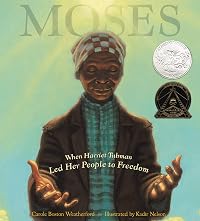
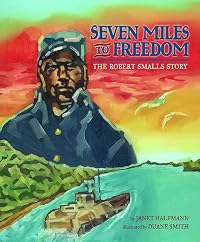
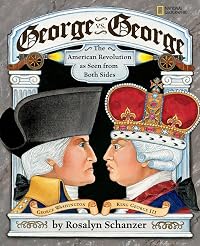
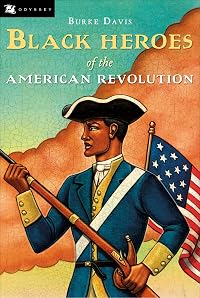


Member Reviews
Opening in 1761, as a young girl sits miserably huddled in the hold of a slave ship bound for the Americas, A Voice of Her Own is a picture-book examination of the life of Phillis Wheatley, the first African-American poet ever to be published. Purchased by the wealthy Wheatley family of Boston, and named 'Phillis' after the ship which brought her from Africa, she so impressed her owners with her intelligence that they took the unheard of step of educating her. While still a slave in the Wheatley household, she became a published poet, a guest in many of Boston's finest homes, where she was asked to recite, and traveled to England. She dedicated poems to well-known clergymen, to George Washington, and wrote sympathetically of the show more colonists' determination to free themselves from British rule. Eventually, she herself was freed, although (as is made plain in the afterword) her story did not end happily...
I found this an immensely engaging biography of a fascinating historical and literary figure, and was impressed with the way that Lasky's well-written narrative captured the desolation of Wheatley's early kidnapping and enslavement, and the subsequent story of her education, and development as a writer. How strange and disconcerting it must have been for Wheatley, to take tea in the drawing room of the Finch family, when the master of the house owned the very ship, the 'Phillis,' that brought her to the Americas! How odd that she wrote so sympathetically of the patriots' cause, and believe in their right to freedom, when no American publisher would print her work, because she was African! So many things struck me, in my reading: how unusual Wheatley's story was, how few women of that day were educated to her level, and how few slaves.
All in all, this is an effective biography, in that it made me want to know more! I want to know more about Wheatley's life, and I want to read her poetry - in the eighteenth-century original, of course! I may have to look her up on archive.org... show less
I found this an immensely engaging biography of a fascinating historical and literary figure, and was impressed with the way that Lasky's well-written narrative captured the desolation of Wheatley's early kidnapping and enslavement, and the subsequent story of her education, and development as a writer. How strange and disconcerting it must have been for Wheatley, to take tea in the drawing room of the Finch family, when the master of the house owned the very ship, the 'Phillis,' that brought her to the Americas! How odd that she wrote so sympathetically of the patriots' cause, and believe in their right to freedom, when no American publisher would print her work, because she was African! So many things struck me, in my reading: how unusual Wheatley's story was, how few women of that day were educated to her level, and how few slaves.
All in all, this is an effective biography, in that it made me want to know more! I want to know more about Wheatley's life, and I want to read her poetry - in the eighteenth-century original, of course! I may have to look her up on archive.org... show less
The life of Phillis Wheatley, who was kidnapped from the African continent and enslaved as a house servant in Boston, is told clearly and with special attention paid to Phillis's path as a poet and writer. The author pays special attention to how Phillis last saw her mother in Africa, before Phillis was separated from her mother and father by enslavement. This memory is referred to several times to show Phillis's positioning and voice as a writer – how, though she is finely educated and devoted to her craft, Phillis's life is distinct from other writers being published in the 1700s, as Phillis was the first Black American woman to be published and this occurrence was a rarity.
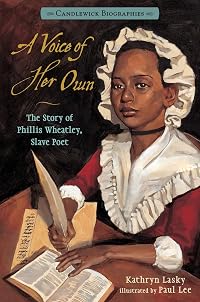
The illustrations are lovely oil paintings, though I did show more not appreciate the illustrator's note that "Phillis Wheatley proved to everyone around her that all things are possible if you work for them" – this kind of messaging implies that hard work equals success. In the light of slavery and the institution of racism, hard work rarely leads to "success" or leaving slavery. Hard work done by a Black enslaved person generally lead to continued oppression, to the benefit of white people, with little to no recourse for Black enslaved people. So this sentiment is a poor choice.
Clearly written and engrossing, but lacking in anti-racist sentiment. I would have liked to see the author push back at the institution of slavery, calling out the fact that though Phillis Wheatley was formally educated, hundreds of thousands of enslaved people were denied access to education and were brutalized. It would have also been useful if the author were to push back on the Wheatleys' role in Phillis's life. I would have liked to see Susannah and John Wheatley be referred to as slave owners, to remind the audience of their culpability to the institution of slavery - and to see some push back against the idea that Susannah Wheatley "saw Phillis as a daughter". I think the narrative of Susannah Wheatley as a kindly slave owner who just wanted a "personal servant" and was "impressed" by Phillis's intelligence is not in keeping with an anti-racist framework. Slave owners should not be portrayed as kindly or without culpability, no matter how "nicely" they treated the people they enslaved. show less
The illustrations are lovely oil paintings, though I did show more not appreciate the illustrator's note that "Phillis Wheatley proved to everyone around her that all things are possible if you work for them" – this kind of messaging implies that hard work equals success. In the light of slavery and the institution of racism, hard work rarely leads to "success" or leaving slavery. Hard work done by a Black enslaved person generally lead to continued oppression, to the benefit of white people, with little to no recourse for Black enslaved people. So this sentiment is a poor choice.
Clearly written and engrossing, but lacking in anti-racist sentiment. I would have liked to see the author push back at the institution of slavery, calling out the fact that though Phillis Wheatley was formally educated, hundreds of thousands of enslaved people were denied access to education and were brutalized. It would have also been useful if the author were to push back on the Wheatleys' role in Phillis's life. I would have liked to see Susannah and John Wheatley be referred to as slave owners, to remind the audience of their culpability to the institution of slavery - and to see some push back against the idea that Susannah Wheatley "saw Phillis as a daughter". I think the narrative of Susannah Wheatley as a kindly slave owner who just wanted a "personal servant" and was "impressed" by Phillis's intelligence is not in keeping with an anti-racist framework. Slave owners should not be portrayed as kindly or without culpability, no matter how "nicely" they treated the people they enslaved. show less
I take issue with Lasky's use of the term "enslavement" to describe the American colonies' relationship to England in the 1770s, but otherwise this is a decent basic biography. I especially appreciate the scene where Phillis has to sit at tea in the home of "the man who was responsible for her kidnapping." Framing the scene as she does, Lasky helps highlight Phillis's experience of alienation, contradiction, and trauma.
I loved A Voice of Her Own. First, the writing style was eloquent and beautiful. For example, the author, Kathryn Lasky, wrote in chapter three, "A candle flickered. Its flame spun a gold cocoon of light in the corner of the room where Phillis sat at a desk, copying Bible passages."
The author's writing is filled with detail and emotion. The gold cocoon of light represents Philis' feeling of safety and comfort when she reads and writes. I enjoyed how the author described Philis' emotional state through imagery.
Second, this book provided an interesting perspective on slavery. The book primarily discussed Phillis' longing for creativity and knowledge despite her role as a slave. Narratives about this subject are few and far between. show more
Overall, the big picture of this book is that all people, no matter their background, are capable of learning and rising to great heights. show less
The author's writing is filled with detail and emotion. The gold cocoon of light represents Philis' feeling of safety and comfort when she reads and writes. I enjoyed how the author described Philis' emotional state through imagery.
Second, this book provided an interesting perspective on slavery. The book primarily discussed Phillis' longing for creativity and knowledge despite her role as a slave. Narratives about this subject are few and far between. show more
Overall, the big picture of this book is that all people, no matter their background, are capable of learning and rising to great heights. show less
This biography about Phillis Wheatley is nothing short of lovely. It describes her life from the moment she was taken on the ship to America to when her Owner died. There were so many beautiful poetic elements throughout the book. Those elements lead to my interest in the book through the whole thing. I was hanging on every word.
The illustrations are beautiful and the author does a great job of doing Wheatley justice. To be a slave and be able to read and write is something almost unheard of. Wheatley had a huge impact on the black community of America when they had little to no hope. Her story is compelling and painfully beautiful. Lasky does a wonderful job of sharing it.
The illustrations are beautiful and the author does a great job of doing Wheatley justice. To be a slave and be able to read and write is something almost unheard of. Wheatley had a huge impact on the black community of America when they had little to no hope. Her story is compelling and painfully beautiful. Lasky does a wonderful job of sharing it.
This informational picture book focuses on the life and times of Phillis Wheatley, an African American slave and poet. The book begins with Phillis' traumatic kidnapping and horrific journey to Boston aboard a slave ship. It recounts how her owner, Susannah Wheatley, saw in Phillis an innate desire to learn and express herself creatively, which resulted in Susannah's unprecedented desire to nurture Phillis' aptitude. Phillis became a renowned poet whose writings often reflected the tumultuous final years of America's colonial ties to England. Although her writings were respected as an odd novelty, she was shunned in America and only found support to finance her works in England. However, her talent could not be denied, and her works show more were eventually published in 1774.
As a work of nonfiction, I believe this book strives to remain as historically accurate as possible while connecting Phillis' life story and works to the historically important era in which she lived. Since the book is organized chronologically, it includes excerpts from her poetry that reflect her emotions and the general associations affixed to important happenings like the passing of the Stamp Act. It of course simplifies these aspects for a younger audience, but includes names like Crispus Attucks, John Hancock, and George Washington which are names that should entice students. The book also draws a parallel between Phillis' situation as a slave and America's own yearning for freedom, which is an interesting detail.
The book also blurs the line between fiction and nonfiction by suggesting the idea that Phillis regularly had flashbacks of her life in Africa and her mother performing religious rituals. Of course this could have happened, but I believe they serve as moments in the book to highlight the atrocities of the slave trade and the sense of otherness that Phillis must have felt while living in a strange new land. But the book does address this break from reality by sometimes stating that Philis "maybe thought of her own mother" (Lasky 15). The writing and illustrations also deserve recognition for their ability to immerse readers into the experiences Phillis' endured particularly during her trip across the Atlantic.
This book would be extremely helpful in the younger grades considered to be secondary. It would be relevant for grades seven through third, and I could easily see myself using this text in a history or social studies lesson which focused on early American history, the slave trade, colonial Boston, or early American slavery. It could also easily be used in a literature class which focused on poetry, early American writers, female writers, or African American writers. show less
As a work of nonfiction, I believe this book strives to remain as historically accurate as possible while connecting Phillis' life story and works to the historically important era in which she lived. Since the book is organized chronologically, it includes excerpts from her poetry that reflect her emotions and the general associations affixed to important happenings like the passing of the Stamp Act. It of course simplifies these aspects for a younger audience, but includes names like Crispus Attucks, John Hancock, and George Washington which are names that should entice students. The book also draws a parallel between Phillis' situation as a slave and America's own yearning for freedom, which is an interesting detail.
The book also blurs the line between fiction and nonfiction by suggesting the idea that Phillis regularly had flashbacks of her life in Africa and her mother performing religious rituals. Of course this could have happened, but I believe they serve as moments in the book to highlight the atrocities of the slave trade and the sense of otherness that Phillis must have felt while living in a strange new land. But the book does address this break from reality by sometimes stating that Philis "maybe thought of her own mother" (Lasky 15). The writing and illustrations also deserve recognition for their ability to immerse readers into the experiences Phillis' endured particularly during her trip across the Atlantic.
This book would be extremely helpful in the younger grades considered to be secondary. It would be relevant for grades seven through third, and I could easily see myself using this text in a history or social studies lesson which focused on early American history, the slave trade, colonial Boston, or early American slavery. It could also easily be used in a literature class which focused on poetry, early American writers, female writers, or African American writers. show less
A biography picture book of a name-less slave girl, who was kidnapped from her very home in Africa. Kidnapped in the darkness of the night, lodged onto a slave ship in a cold holding room was all that she remembered of that night. This dark area is where thoughts of her mother came to her mind. Maybe thoughts of her mother were a comfort in this difficult time, a way to not worry about surrounding circumstances. Reaching America, this young naked, greased, fragile, young girl was sold to the Wheatley family. Immediately they named her, ironically Phillis is the name of the slave ship she arrived on, and that is the name they chose for her. For me this name would remind me where I came from, a way to remember the people who captured me. show more Being a slave, never speaking English, Phillis began to learn reading and writing in English at a fast pace. Mrs. Wheatley was responsible for teaching Phillis, even though it was against the law. Phillis began writing poems in her spare time with tools given by her owners, Phillis had her first poem published in 1767. Many of her poems were written while she was a slave, about things happening in her neighborhood. Being the first published slave poet, Phillis was invited to recite her poems for several well-known men, she was sent to England and “received into many fine homes”. While in England Phillis had her very first book published, “the first book ever written by a black American woman.” This was a remarkable achievement; Phillis was the first African American to publish a book. “Everyone wanted to meet the young Negro slave poet from America.” As the book goes on we learn when the Wheatley family passed, they gave Phillis her “manumission papers, freeing her from slavery…”
I enjoyed reading this book, not knowing who Phillis Wheatley was, this book gives me a great background and story of her life. This is a must read for children, grades 4-7. Helping them realize that no matter what happens in life, that there is always a way to do the impossible, also a good lesson on what happened during a slave trade. Being a slave girl coming to America, not knowing her own name to accomplish as much as Phillis has is incredible. show less
I enjoyed reading this book, not knowing who Phillis Wheatley was, this book gives me a great background and story of her life. This is a must read for children, grades 4-7. Helping them realize that no matter what happens in life, that there is always a way to do the impossible, also a good lesson on what happened during a slave trade. Being a slave girl coming to America, not knowing her own name to accomplish as much as Phillis has is incredible. show less
Members
- Recently Added By
Lists

Beautiful Feet Books
304 works; 7 members
Author Information

Kathryn Lasky was born in Indianapolis, Indiana on June 24, 1944, and knew she wanted to be a writer from the time she was ten. She majored in English in college and after graduation wrote for various magazines and taught. Her first book, I Have Four Names for My Grandfather, was published while she was teaching. She has written more than seventy show more books for children and young adults on everything from historical fiction to picture books and nonfiction books including the Dear America books and the Guardians of Ga'Hoole series. Many of her books are illustrated with photographs by her husband, Christopher Knight. She has received many awards for her titles including Sugaring Time which was a Newberry Honor Book; The Night Journey which won the National Jewish Book Award for Children; Pageant which was an ALA Notable Children's book; and Beyond the Burning Time which was an ALA Best Book for Young Adults. She has also received the Washington Post's Children's Book Guild Award for her contribution to children's nonfiction. She lives in Cambridge, Massachusetts. (Bowker Author Biography) show less
All Editions
Awards and Honors
Series

Common Knowledge
- Canonical title
- A Voice of Her Own: The Story of Phillis Wheatley, Slave Poet
- Original publication date
- 2003
- People/Characters
- Phillis Wheatley
- Dedication
- To my family, the Bridwells
P.L. - First words
- At first there was just blackness.
- Last words
- (Click to show. Warning: May contain spoilers.)She was only thirty-one years old, but she had made an indelible mark on American literature.
Classifications
Statistics
- Members
- 494
- Popularity
- 61,210
- Reviews
- 19
- Rating
- (3.95)
- Languages
- English
- Media
- Paper
- ISBNs
- 8