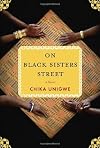
On Black Sisters Street
by Chika Unigwe
On This Page
Description
On Black Sisters Street tells the haunting story of four very different women who have left their African homeland for the riches of Europe—and who are thrown together by bad luck and big dreams into a sisterhood that will change their lives.Each night, Sisi, Ama, Efe, and Joyce stand in the windows of Antwerp’s red-light district, promising to make men’s desires come true—if only for half an hour. Pledged to the fierce Madam and a mysterious pimp named Dele, the girls share an show more apartment but little else—they keep their heads down, knowing that one step out of line could cost them a week’s wages. They open their bodies to strangers but their hearts to no one, each focused on earning enough to get herself free, to send money home or save up for her own future.
Then, suddenly, a murder shatters the still surface of their lives. Drawn together by tragedy and the loss of one of their own, the women realize that they must choose between their secrets and their safety. As they begin to tell their stories, their confessions reveal the face in Efe’s hidden photograph, Ama’s lifelong search for a father, Joyce’s true name, and Sisi’s deepest secrets—-and all their tales of fear, displacement, and love, concluding in a chance meeting with a handsome, sinister stranger.
On Black Sisters Street marks the U.S. publication debut of Chika Unigwe, a brilliant new writer and a standout voice among contemporary African authors. Raw, vivid, unforgettable, and inspired by a powerful oral storytelling tradition, this novel illuminates the dream of the West—and that dream’s illusion and annihilation—as seen through African eyes. It is a story of courage, unity, and hope, of women’s friendships and of bonds that, once forged, cannot be broken. African American Fiction. Literature. Fiction. show less
Tags
Recommendations
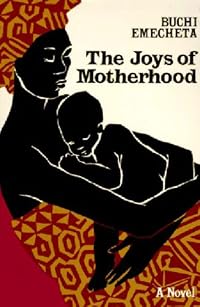
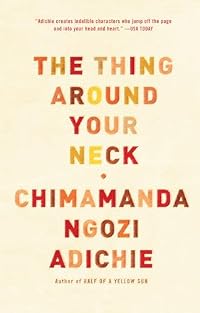
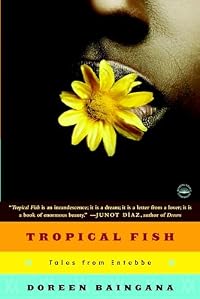
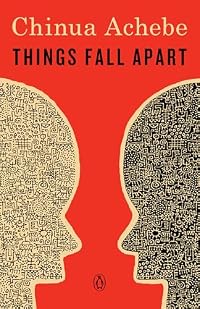





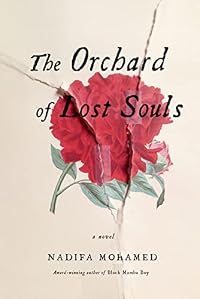
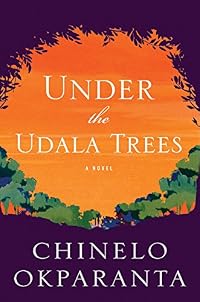

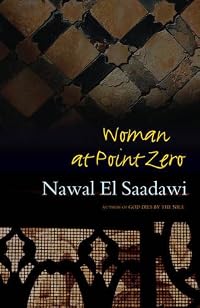
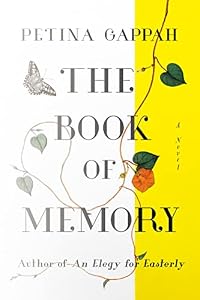

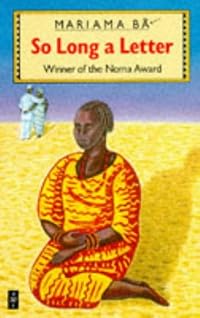
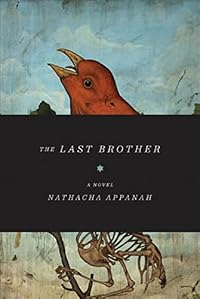
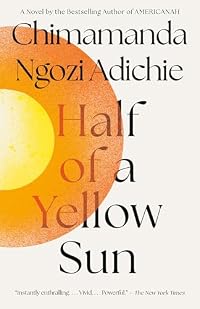
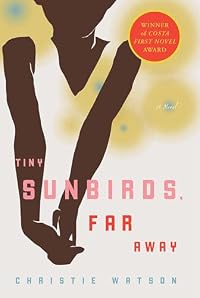
Member Recommendations

Member Reviews
There have been many contemporary books written to enlighten us as to why someone would chose to leave their country and immigrate, legally or illegally, to another country. I'm sure we all could name a few of these books, I could certainly, but [On Black Sisters' Street] tells me a story I have not heard before.
[On Black Sisters' Street] introduces us to Sisi, Efe, Ama and Joyce, four African women working as prostitutes Antwerp, Belgium. Alternating between the present, when the women are emotionally brought together by a traumatic event, and their individual pasts, this story is a searing one of dreams and desperations, hopes and tragedies. As Rachbxl says in her stellar reviewof the book, written for Belletrista last year: "...I show more would have assumed that I myself have nothing in common with a Nigerian prostitute; I can't say that any more because this book has challenged me to question the way I see things." I can't agree more.
The book is written in an easy prose style, sometimes using a vernacular—a Nigerian English—in dialog, which some may find challenging, but it's infrequent and lends authenticity to the story. There is a fairly clear picture of what the women's lives as prostitutes are like and how they navigate and survive such a life. The backstories of the women provide both a general sense of what life is really like for many in Nigeria, and, more specifically, these women. This is a sad and tragic story, certainly a riveting one. But beyond that one cannot help but admire these strong women who struggle to be the heroes of their own lives. show less
[On Black Sisters' Street] introduces us to Sisi, Efe, Ama and Joyce, four African women working as prostitutes Antwerp, Belgium. Alternating between the present, when the women are emotionally brought together by a traumatic event, and their individual pasts, this story is a searing one of dreams and desperations, hopes and tragedies. As Rachbxl says in her stellar reviewof the book, written for Belletrista last year: "...I show more would have assumed that I myself have nothing in common with a Nigerian prostitute; I can't say that any more because this book has challenged me to question the way I see things." I can't agree more.
The book is written in an easy prose style, sometimes using a vernacular—a Nigerian English—in dialog, which some may find challenging, but it's infrequent and lends authenticity to the story. There is a fairly clear picture of what the women's lives as prostitutes are like and how they navigate and survive such a life. The backstories of the women provide both a general sense of what life is really like for many in Nigeria, and, more specifically, these women. This is a sad and tragic story, certainly a riveting one. But beyond that one cannot help but admire these strong women who struggle to be the heroes of their own lives. show less
https://fromtheheartofeurope.eu/on-black-sisters-street-by-chika-unigwe/
A 2009 novel set in Belgium, about four women who have been trafficked from Nigeria for sex work in Antwerp (on Zwartzusterstraat, though in the novel the street name gets an extra ‘e’). Their back stories in Nigeria (and in one case Southern Sudan, as it then was) are well depicted, but the Antwerp sections are inconsistent, sometimes tightly described, but particularly towards the denouement at the end (which is signalled from the beginning) rather under-written in places. It’s important to give the victims of human trafficking their voices, and the novel asks and answers important questions, but I was a bit frustrated by the inconsistencies of structure and show more style. show less
A 2009 novel set in Belgium, about four women who have been trafficked from Nigeria for sex work in Antwerp (on Zwartzusterstraat, though in the novel the street name gets an extra ‘e’). Their back stories in Nigeria (and in one case Southern Sudan, as it then was) are well depicted, but the Antwerp sections are inconsistent, sometimes tightly described, but particularly towards the denouement at the end (which is signalled from the beginning) rather under-written in places. It’s important to give the victims of human trafficking their voices, and the novel asks and answers important questions, but I was a bit frustrated by the inconsistencies of structure and show more style. show less
Brilliantly crafted novel; four African women and their madam live together and work in Antwerp's Red Light district. When one of them is killed early on, the others begin to bond, sharing their very different life experiences that caused them to end up here. The author deftly interweaves the present day with their histories- including that of the dead woman.
Fascinating and moving read.
Fascinating and moving read.
"There were worse things to become, she reminded herself. She was not a robber, not a cheat, not a 419er sending deceitful e-mails to gullible Westerners. She would make her money honestly. Every cent of it would be earned by her sweat. She did not need to enjoy her job, but she would do it well."
i am having trouble rating this novel. the issues unigwe highlights are very important, and telling these stories is important. we are given four women who have been trafficked from lagos, nigeria to antwerp, belgium, in order to work as prostitutes. three of the women are nigerian. one is sudanese. they are saddled with a nearly insurmountable debt ($30,000 euros) they must repay and it seems a vicious cycle from which they will never escape. show more three of the four women go into the agreement aware of what is expected of them. the fourth woman believes she will be working as a nanny. of course the reality of their lives in antwerp is horrible. but as we are given the women's backstories, their realities at home were incredibly hard. atrocious. these women - sisi, ama, efe, and alek - are survivors. the dreams each of these women had was powerful. their desires to get to europe or north america so strong. so when given an offer from dele - the man running the operation in lagos - each woman grabs for the escape, and then endures the work as prostitutes. i feel as though the question of what makes a victim is a large part of this story. sisi, ama, efe, and joyce seem to refuse to characterize themselves as such, no matter how tragic the circumstances that pushed them to choose life as prostitutes. (and, of course, the question of choice for these women is also an interesting idea for discussion and consideration.)
i found, though, that unigwe was not consistent in her storytelling. some moments we are given quite deep looks into the lives of the characters. but at other times ideas, places, or characters, are just barely skimmed. and i found the writing could be quite thin at moments, then weirdly overwritten at other moments - the use of language, from the very simple (precise, straightforward), to the dialects, was interesting to me. but every now and then a $20 word would stick out like a sore thumb. so i felt like there was a bit of a struggle for voice going on with the author. by the end of the book, i felt like unigwe had presented stories of four interesting women.... but she didn't really give us the women - if that makes sense? in their strength and defiance we have some pretty fierce (in a good way) female characters. but they never developed, for me, to their full potential. and the men of the book served as a huge fault for me. they are so contemptible and they come off as stereotypes. they are pimps, johns, drunks, rapists, adulterers, murderers, and one (white) jealous saviour.
i read that unigwe did a lot of research with women working in antwerp's red-light district. and i am glad that she was compelled to fictionalize these lives and situations. it's an unsettling novel she's given readers - and it should be! but it is not a story devoid of hope. that, in itself, is a rather remarkable achievement. i just wish i felt the writing to be stronger. show less
i am having trouble rating this novel. the issues unigwe highlights are very important, and telling these stories is important. we are given four women who have been trafficked from lagos, nigeria to antwerp, belgium, in order to work as prostitutes. three of the women are nigerian. one is sudanese. they are saddled with a nearly insurmountable debt ($30,000 euros) they must repay and it seems a vicious cycle from which they will never escape. show more three of the four women go into the agreement aware of what is expected of them. the fourth woman believes she will be working as a nanny. of course the reality of their lives in antwerp is horrible. but as we are given the women's backstories, their realities at home were incredibly hard. atrocious. these women - sisi, ama, efe, and alek - are survivors. the dreams each of these women had was powerful. their desires to get to europe or north america so strong. so when given an offer from dele - the man running the operation in lagos - each woman grabs for the escape, and then endures the work as prostitutes. i feel as though the question of what makes a victim is a large part of this story. sisi, ama, efe, and joyce seem to refuse to characterize themselves as such, no matter how tragic the circumstances that pushed them to choose life as prostitutes. (and, of course, the question of choice for these women is also an interesting idea for discussion and consideration.)
i found, though, that unigwe was not consistent in her storytelling. some moments we are given quite deep looks into the lives of the characters. but at other times ideas, places, or characters, are just barely skimmed. and i found the writing could be quite thin at moments, then weirdly overwritten at other moments - the use of language, from the very simple (precise, straightforward), to the dialects, was interesting to me. but every now and then a $20 word would stick out like a sore thumb. so i felt like there was a bit of a struggle for voice going on with the author. by the end of the book, i felt like unigwe had presented stories of four interesting women.... but she didn't really give us the women - if that makes sense? in their strength and defiance we have some pretty fierce (in a good way) female characters. but they never developed, for me, to their full potential. and the men of the book served as a huge fault for me. they are so contemptible and they come off as stereotypes. they are pimps, johns, drunks, rapists, adulterers, murderers, and one (white) jealous saviour.
i read that unigwe did a lot of research with women working in antwerp's red-light district. and i am glad that she was compelled to fictionalize these lives and situations. it's an unsettling novel she's given readers - and it should be! but it is not a story devoid of hope. that, in itself, is a rather remarkable achievement. i just wish i felt the writing to be stronger. show less
I discovered this book while looking for a Nigerian author for a reading challenge. As with any book set outside of the United States, I liked being transported to two different countries: Nigeria and Belgium, neither of which I had ever visited. I also liked the structure of the book as it moved from the present in Belgium and the mystery surrounding the murder of a fellow sex worker back to the pasts of four different women and their paths from Africa to Europe and to their current trade. This book is dark and the naivete of the characters seems a bit unrealistic at times, but I found myself moving through the story quickly. Men are the aggressors throughout the book but that part of the story seems based on an all-to-often reality show more for many women in many parts of the world. show less
A compassionate novel about four Nigerian women working as prostitutes in Belgium and the situations that led them into that life.
Prostitution is humiliating, grim, and exploitive, but the actual women engaging in it are not dull passive victims. In this novel by a Nigerian woman they are shown as unique individuals caught in situations that seem hopeless, ready to grab at an alternative that seems to offer a path to a better life for themselves and others. Sisi, the major character in the book, has a college degree but is unable to find a job in Lagos. Efe is an unwed mother unable to support her child. Ama grew up in a strictly Christian family where she was regularly raped by her stepfather. She escaped his control, but got caught in show more a dead-end job. Joyce was actually a Sudanese whose family had been killed in the violence there. She had been sent to a refugee camp where she met and fell in love with a Nigerian peacekeeper. He took her home with him, but when his family refused to let him marry her, he sent her abroad to be a prostitute. The four women share an apartment, and when tragedy strikes they share their stories with each other.
READ MORE: http://wp.me/p24OK2-1b1 show less
Prostitution is humiliating, grim, and exploitive, but the actual women engaging in it are not dull passive victims. In this novel by a Nigerian woman they are shown as unique individuals caught in situations that seem hopeless, ready to grab at an alternative that seems to offer a path to a better life for themselves and others. Sisi, the major character in the book, has a college degree but is unable to find a job in Lagos. Efe is an unwed mother unable to support her child. Ama grew up in a strictly Christian family where she was regularly raped by her stepfather. She escaped his control, but got caught in show more a dead-end job. Joyce was actually a Sudanese whose family had been killed in the violence there. She had been sent to a refugee camp where she met and fell in love with a Nigerian peacekeeper. He took her home with him, but when his family refused to let him marry her, he sent her abroad to be a prostitute. The four women share an apartment, and when tragedy strikes they share their stories with each other.
READ MORE: http://wp.me/p24OK2-1b1 show less
Four African women have been lured to Europe to work in the sex trade. Each has had a traumatic childhood and the promise of a better life has led them to accept becoming prostitutes. When one is killed, the other three bond and reveal their real life stories. The difficult subject matter is dealt with in a rather straightforward, almost journalistic, manner.
Members
- Recently Added By
Published Reviews
ThingScore 88
In fact, big dreams are why the women decide to work in the sex trade in exchange for passage to Europe, which they view as a paradise of opportunity and riches, far removed from the crushing squalor and bleak opportunities in Africa. The question of what makes a victim is very much at the core of this chilling piece of fiction. And the women — Sisi, Ama, Joyce and Efe — refuse to show more characterize themselves as such, no matter how tragic the circumstances that pushed them to choose life as prostitutes. show less
added by vancouverdeb
Unigwe conveys both what is miraculous about the West to foreign eyes and what is awful — how people live and die alone, unmourned, without the sustenance of family and neighbors. And she shows us how the women who survive their pact with Dele choose to deploy their hard-won wealth. While Efe stays put, running her own brothel, Joyce and Ama prefer to build their businesses back show more home.
Despite the horrors it depicts, “On Black Sisters Street” is also boiling with a sly, generous humor. Unigwe is as adept at conveying the cacophony of a Nigerian bus as she is at suggesting the larger historical events that propel her characters. “On Black Sisters Street” marks the arrival of a latter-day Thackeray, an Afro-Belgian writer who probes with passion, grace and comic verve the underbelly of our globalized new world economy. show less
Despite the horrors it depicts, “On Black Sisters Street” is also boiling with a sly, generous humor. Unigwe is as adept at conveying the cacophony of a Nigerian bus as she is at suggesting the larger historical events that propel her characters. “On Black Sisters Street” marks the arrival of a latter-day Thackeray, an Afro-Belgian writer who probes with passion, grace and comic verve the underbelly of our globalized new world economy. show less
added by vancouverdeb
Lists

Books Read in 2017
4,249 works; 129 members
Author Information

12+ Works 386 Members
Awards and Honors
Series
Belongs to Publisher Series
Common Knowledge
- Canonical title
- On Black Sisters Street
- Original title
- Fata Morgana
- Original publication date
- 2008
- Important places
- Lagos, Nigeria; Antwerp, Antwerp, Belgium
- Epigraph
- Armed with a vagina and the will to survive, she knew that destitution would never lay claim to her.
-----Brian Chikwava, Seventh Street Alchemy - Dedication
- To Jan and our four sons:
for their incredible capacity
to tolerate my moods
To the ABC Triumverates--
Arac de Nyeko, Monica; Batanda Budesta,
Jackee; and Chikwava, Brian--
for being there from A to Z - First words
- The world was exactly as it should be.
- Last words
- (Click to show. Warning: May contain spoilers.)Sisi's soul bounced down the stairs and began its journey into another world.
- Blurbers
- Jones, Edward P; Siegel, Lee; Abani, Chris; Atta, Sefi
Classifications
- Genres
- Fiction and Literature, General Fiction
- DDC/MDS
- 839.3137 — Literature & rhetoric German & related literatures Other Germanic literatures Netherlandish literatures Dutch Dutch fiction 21st Century
- LCC
- PT6467.31 .N54 .F3813 — Language and Literature German, Dutch and Scandinavian literatures Flemish literature since 1830 Individual authors or works
- BISAC
Statistics
- Members
- 254
- Popularity
- 127,137
- Reviews
- 13
- Rating
- (3.43)
- Languages
- 6 — Dutch, English, French, German, Italian, Swedish
- Media
- Paper, Audiobook, Ebook
- ISBNs
- 14
- ASINs
- 6