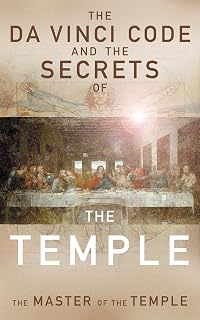
The Da Vinci Code and the Secrets of the Temple
by Robin Griffith-Jones
On This Page
Description
Theories of intertextuality suggest that meaning in a text can only ever be understood in relation to other texts; no work stands alone but is interlinked with the tradition that came before it and the context in which it is produced. This idea of intertextuality is crucial to understanding literary studies today. Graham Allen deftly introduces the topic and relates its significance to key theories and movements in the study of literature. The second edition of this important guide to show more intertextuality: Outlines the history and contemporary use of the term Incorporates a wealth of illuminating examples from literature and culture Includes a new, expanded conclusion on the future of intertextuality Examines the politics and aesthetics of the term Relates intertextuality to global cultures and new media. Looking at intertextuality in relation to structuralism, post-structuralism, deconstruction, postcolonialism, Marxism, feminism and psychoanalytic theory, this is a fascinating and useful guide for all students of literature and culture. show lessTags
Recommendations













Member Reviews
Earlier this week, during a business trip to London, I was able to duck out of my office on my lunch break and walk down the street to visit Temple Church. You turn off Fleet Street down an easy-to-miss alleyway and find yourself in a calm and gentle stone courtyard. Enter the Temple Church itself by pulling the black iron ring on its wooden door and you're in another world, a serene piece of architecture that, considering it's only a stone's throw away from the hustle and bustle of one of London's busiest streets, is remarkably silent.
It's a place I've always wanted to visit; long before The Da Vinci Code introduced some of its features to a wider audience, I had a long-standing interest in its builders, the Knights Templar, due to show more Broken Sword, one of my favourite video games when I was younger. The building itself is impressive, as is the experience of being there, but this review is written to address a book I bought at a gift stall just inside the exit, The Da Vinci Code and the Secrets of the Temple, written by the current 'Master of the Temple', Robin Griffith-Jones.
The book is a short, simple read with a target audience of those sightseers who visit the church because of its Da Vinci Code connection. It seeks to redress some of the misconceptions about the religious conspiracies and historical fantasies Dan Brown's novel plays with, giving a brief overview of some of the main controversies the novel generated, some mythbusting on the Priory of Sion, Opus Dei and Da Vinci's 'The Last Supper', and an abridged history of the Knights Templar. It ends with a discussion of the connection between Jesus and Mary Magdalene that The Da Vinci Code exploits.
It's all interesting stuff – Dan Brown tilled worthy soil – but prospective readers should bear in mind the book is an introduction rather than an exploration. Still less is it a book that titillates with those exciting conspiracies and religious mysteries; Griffith-Jones is even-handed, neutral and patiently tolerant. He knows the readers are here for the mystery and when he throws cold water over some of those mysteries he does so gently and without scorn.
I would have liked more on the Temple Church itself, but then again there were other books on the church's history I could have picked up at the stall if I had wished. Griffith-Jones' book does retain some value even to those of us who've already heard of Jacques de Molay and the orb-less knight's tomb, not least when he points out that Dan Brown's book, and those like it, thrive in no small part because the church and its various orders and sects are often secretive and have often sought power, making religious conspiracies completely plausible in principle. When Griffith-Jones points out that the conspiracies and the suspicion of religious power "still appeal today to those of us who refuse to submit to the arrogance of churches that have simply lost all sight of their founder, his life and ideals" (pg. 12), he makes a very pertinent point, one worthy of being housed in this impressive Templar church. show less
It's a place I've always wanted to visit; long before The Da Vinci Code introduced some of its features to a wider audience, I had a long-standing interest in its builders, the Knights Templar, due to show more Broken Sword, one of my favourite video games when I was younger. The building itself is impressive, as is the experience of being there, but this review is written to address a book I bought at a gift stall just inside the exit, The Da Vinci Code and the Secrets of the Temple, written by the current 'Master of the Temple', Robin Griffith-Jones.
The book is a short, simple read with a target audience of those sightseers who visit the church because of its Da Vinci Code connection. It seeks to redress some of the misconceptions about the religious conspiracies and historical fantasies Dan Brown's novel plays with, giving a brief overview of some of the main controversies the novel generated, some mythbusting on the Priory of Sion, Opus Dei and Da Vinci's 'The Last Supper', and an abridged history of the Knights Templar. It ends with a discussion of the connection between Jesus and Mary Magdalene that The Da Vinci Code exploits.
It's all interesting stuff – Dan Brown tilled worthy soil – but prospective readers should bear in mind the book is an introduction rather than an exploration. Still less is it a book that titillates with those exciting conspiracies and religious mysteries; Griffith-Jones is even-handed, neutral and patiently tolerant. He knows the readers are here for the mystery and when he throws cold water over some of those mysteries he does so gently and without scorn.
I would have liked more on the Temple Church itself, but then again there were other books on the church's history I could have picked up at the stall if I had wished. Griffith-Jones' book does retain some value even to those of us who've already heard of Jacques de Molay and the orb-less knight's tomb, not least when he points out that Dan Brown's book, and those like it, thrive in no small part because the church and its various orders and sects are often secretive and have often sought power, making religious conspiracies completely plausible in principle. When Griffith-Jones points out that the conspiracies and the suspicion of religious power "still appeal today to those of us who refuse to submit to the arrogance of churches that have simply lost all sight of their founder, his life and ideals" (pg. 12), he makes a very pertinent point, one worthy of being housed in this impressive Templar church. show less
This is a scholarly commentary on the Da Vinci Code conspiriacy. It was written by the Master of the Temple, himself. Quite wordy, but informative.
Ratings
Members
- Recently Added By
Author Information

16+ Works 646 Members
Robin Griffith-Jones served as chaplain and taught New Testament for several years at Lincoln College, Oxford University. He was recently named Master of the Temple Church in London.
Classifications
Statistics
- Members
- 47
- Popularity
- 639,439
- Reviews
- 2
- Rating
- (3.00)
- Languages
- English
- Media
- Paper
- ISBNs
- 2