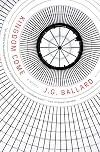
Kingdom Come
by J. G. Ballard
On This Page
Description
An unemployed advertising executive investigates why the deranged man who shot his father in a shopping mall was released without being charged.Tags
Recommendations






Member Reviews
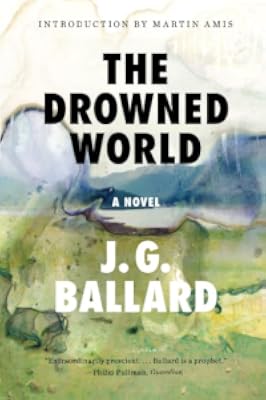
Ballard's final novel, in which a neofascist Little England whose only god is shopping emerges from the late-capitalist "motorway towns" of the London hinterlands may be overtly political, but it's a reminder that politics has always been present between the lines of his personal and psychical dystopias. One of many reasons Ballard fascinates me is the incredible tonal and thematic consistency of his body of work, and the politics of Kingdom Come, as the populace fetishizes the flag of St George and embraces political unreason, seems to me like an extension of the individual fetishes and manias of many an earlier JGB protagonist. The guy was ahead of the game his entire life, writing ecocidal fables like The Drowned World and The show more Drought long before those were global concerns, autopsying mass media celeb culture and the space age while those epochs were still nascent, and anticipating yuppiedom and the social atomisation of the 80's in 1975's High-Rise. Here are a couple of Kingdom Come's cast of maniacs diagnosing our current malaise from 20 years in the past: first the head teacher of the local school, Sangster, a hulking, menacing character:
What's the point of free speech if you have nothing to say? Let's face it, most people haven't anything to say, and they know it. What's the point of privacy if it's just a personalized prison? Consumerism is a collective enterprise. People here want to share and celebrate, they want to come together. When we go shopping we take part in a collective ritual of affirmation.
and, asked by the 1st-person narrator, a typically Ballardian vacant space of a divorced man, if an appeal to reason might rein in the increasingly riotous populace:
Reason, well... It's too close to maths, and most of us are not good at arithmetic. In general I advise people to steer clear of reason. Consumerism celebrates the positive side of the equation. When we buy something we unconsciously believe we've been given a present.
And the psychologist (it's a Ballard novel, of course there's a psychologist) Maxted:
People are deliberately re-primitivizing themselves. They yearn for magic and unreason, which served them well in the past, and might help them again. They're keen to enter a new Dark Age. The lights are on, but they're retreating into the inner darkness, into superstition and unreason. The future is going to be a struggle between vast systems of competing psychopathies, all of them willed and deliberate, part of a desperate attempt to escape from a rational world and the boredom of consumerism.
and more Maxted:
Late capitalism is scratching its piles and trying to figure out where next to shit. All the privy doors are closed except one. Buying a washing machine is a political act — the only real kind of politics left today.
There's only one real giveaway that this is an Old Man Book, this delightfully curmudgeonly dig at the dumbing-down of public culture already well underway in the early aughts:
...they attacked the further-education college near the town square with its irritating posters advertising classes in cordon bleu cooking, archaeology and brass rubbings. The public library was another target, its shelves swept clear of the few books on display, though the huge stock of CDs, videos and DVDs was untouched.
Needless to say, I cheered. show less
What's the point of free speech if you have nothing to say? Let's face it, most people haven't anything to say, and they know it. What's the point of privacy if it's just a personalized prison? Consumerism is a collective enterprise. People here want to share and celebrate, they want to come together. When we go shopping we take part in a collective ritual of affirmation.
and, asked by the 1st-person narrator, a typically Ballardian vacant space of a divorced man, if an appeal to reason might rein in the increasingly riotous populace:
Reason, well... It's too close to maths, and most of us are not good at arithmetic. In general I advise people to steer clear of reason. Consumerism celebrates the positive side of the equation. When we buy something we unconsciously believe we've been given a present.
And the psychologist (it's a Ballard novel, of course there's a psychologist) Maxted:
People are deliberately re-primitivizing themselves. They yearn for magic and unreason, which served them well in the past, and might help them again. They're keen to enter a new Dark Age. The lights are on, but they're retreating into the inner darkness, into superstition and unreason. The future is going to be a struggle between vast systems of competing psychopathies, all of them willed and deliberate, part of a desperate attempt to escape from a rational world and the boredom of consumerism.
and more Maxted:
Late capitalism is scratching its piles and trying to figure out where next to shit. All the privy doors are closed except one. Buying a washing machine is a political act — the only real kind of politics left today.
There's only one real giveaway that this is an Old Man Book, this delightfully curmudgeonly dig at the dumbing-down of public culture already well underway in the early aughts:
...they attacked the further-education college near the town square with its irritating posters advertising classes in cordon bleu cooking, archaeology and brass rubbings. The public library was another target, its shelves swept clear of the few books on display, though the huge stock of CDs, videos and DVDs was untouched.
Needless to say, I cheered. show less
Predizioni (?)
Ballard è sempre uno dei miei più cari amici scrittori cui periodicamente ritorno, perchè è come una necessità, una consolazione, ma non "consolatorio", anzi, tutt'altro. Il terrore che incute te lo sbatte in faccia, senza pietà, e tu sai che non è crudeltà la sua, ma soltanto la pura verità. Quello che esce fuori dalle sue pagine è qualcosa di cui è già intriso il presente, quella mostruosità del quotidiano apparentemente innocua, che tale vogliono farci sembrare. Ma non è così. Il "centro commerciale", questa creatura dei nostri tempi che da un alto anestetizza e dall'altro libera istinti primordiali, un mondo a parte dove si chiude tutto il cerchio delle necessità quotidiane di un essere umano, dallo show more svago al cibo, dalla socializzazione massificata all'individualismo sfrenato, dove si incrociano tutte le categorie sociali realizzando la democrazia dei bisogni indotti. Dove condurrà questa spirale di violenza? Chi tenterà il riscatto di esseri schiavizzati moralmente, mentalmente e fisicamente? Non c'è la luce in fondo al tunnel, ma soltanto brevi interruzioni tra il crollo di un sistema e la rigenerazione di un altro peggiore, in una corsa verso una non improbabile follia autodistruttiva. E se mi guardo intorno, ne vedo tutti i sintomi... show less
Ballard è sempre uno dei miei più cari amici scrittori cui periodicamente ritorno, perchè è come una necessità, una consolazione, ma non "consolatorio", anzi, tutt'altro. Il terrore che incute te lo sbatte in faccia, senza pietà, e tu sai che non è crudeltà la sua, ma soltanto la pura verità. Quello che esce fuori dalle sue pagine è qualcosa di cui è già intriso il presente, quella mostruosità del quotidiano apparentemente innocua, che tale vogliono farci sembrare. Ma non è così. Il "centro commerciale", questa creatura dei nostri tempi che da un alto anestetizza e dall'altro libera istinti primordiali, un mondo a parte dove si chiude tutto il cerchio delle necessità quotidiane di un essere umano, dallo show more svago al cibo, dalla socializzazione massificata all'individualismo sfrenato, dove si incrociano tutte le categorie sociali realizzando la democrazia dei bisogni indotti. Dove condurrà questa spirale di violenza? Chi tenterà il riscatto di esseri schiavizzati moralmente, mentalmente e fisicamente? Non c'è la luce in fondo al tunnel, ma soltanto brevi interruzioni tra il crollo di un sistema e la rigenerazione di un altro peggiore, in una corsa verso una non improbabile follia autodistruttiva. E se mi guardo intorno, ne vedo tutti i sintomi... show less
The last novel by author J.G. Ballard, Kingdom Come is a disturbingly prophetic allegory of the unconscious societal shift towards fascism in affluent nations. The story follows recently fired advertising executive Richard Pearson, who travels to the suburban wastelands along the M25 to handle the estate of his father, who was killed during a shooting at the monolithic domed Brooklands Metro-Centre shopping mall. As Pearson investigates his estranged father's death, he is slowly sucked into cults and conspiracies seemingly centered around a new form of consumer politics and organically free-range fascist movement. Racist sports hooligans and deified cable show hosts grow in power and intensity as Pearson's quest to catch his father's show more killer becomes a crusade to force the societal worship of the Metro-Centre to the next level.
Ballard's prose is poetic and haunting, so much so that it can occasionally feel contrary to the extensive analytical dialogues scattered throughout, as the Ballard's main characters often serve as little more than a loudspeaker for the author's philosophical quandaries. Ballard's fascination is not with the individual as much as it is with society as a whole, and how it can often breathe and flex interdependently from its unsuspecting inhabitants. Kingdom Come is one of the more hopeful apocalyptic dystopian screeds you'll find, primarily because Ballard isn't attempting to condemn mankind, but to understand, and possibly even empathize. show less
Ballard's prose is poetic and haunting, so much so that it can occasionally feel contrary to the extensive analytical dialogues scattered throughout, as the Ballard's main characters often serve as little more than a loudspeaker for the author's philosophical quandaries. Ballard's fascination is not with the individual as much as it is with society as a whole, and how it can often breathe and flex interdependently from its unsuspecting inhabitants. Kingdom Come is one of the more hopeful apocalyptic dystopian screeds you'll find, primarily because Ballard isn't attempting to condemn mankind, but to understand, and possibly even empathize. show less
JG Ballard's thoughts and ideas fascinate me. The model of the western world he held in his head contained more predictive power than anyone else I've read, although that was not his purpose. As he often said, his books are warnings not predictions. So it is with Kingdom Come, an exploration of the connection between consumerism and fascism by way of a whodunnit.
The idea behind this novel is compelling and demonstrably realistic. It's especially haunting for me because it is set in the area I grew up and, in particular, explored as a teenager.
Ultimately, though, I found Kingdom Come unsatisfying because it leads with the idea instead of the story – a problem I find throughout Ballard's novels. And, as always, the characterisation is show more poor. If Ballard had mastered storytelling, then I suspect he'd be better know than Orwell.
Even so, four stars because the idea, and its exploration, is more original and thought provoking than 99% of novels, and I'd rather read this – and did – than a lot of the stuff being deified of late. show less
The idea behind this novel is compelling and demonstrably realistic. It's especially haunting for me because it is set in the area I grew up and, in particular, explored as a teenager.
Ultimately, though, I found Kingdom Come unsatisfying because it leads with the idea instead of the story – a problem I find throughout Ballard's novels. And, as always, the characterisation is show more poor. If Ballard had mastered storytelling, then I suspect he'd be better know than Orwell.
Even so, four stars because the idea, and its exploration, is more original and thought provoking than 99% of novels, and I'd rather read this – and did – than a lot of the stuff being deified of late. show less
This is classic Ballard with all the flaws (contrived and unconvincing dialogue, poorly developed, superficially drawn characters with hackneyed emotional responses, an incomprehension of women, a plot over-extended into spectacle, an inability to refrain from using the novel to put into his characters' mouths observations on every social issue that arises, even where those comments are inconsistent with the characterisation). Despite all this, the novel provides the most incisive literary analysis of underlying contemporary trends in British society and culture over the last two decades, outstripping by far the lumbering attempts of social scientists who remain shackled by ideological and iconic investments in a social justice that is show more inverted by the contemporary conditions Ballard is able to dissect with forensic accuracy. In fact, he is able to do so partly because of the largely literary faults listed above, which function to induce a Brechtian alienation effect, enabling Ballard to engage us in a perspectivalism which amplifies and thereby extrapolates the only-just latent tendencies of majority Britain today. Although it rapidly takes on the spectacle of a sci-fi/alt reality scenario, that merely provides the space for ballard to draw out the implications of ubiquitous creeping fascism in today's Britain, both of the bonhomie form of UKIP and the slick managerialist version of the established political parties after New Labour, with the thuggishness of both white-van-man-BritianFirstism and the old tweeded Mosleyite elite waiting in the wings. But it's also about the irreconcilable contradictions of those projects, contradictions which have so far proved benign, in undoing any attempt to develop any of them as a real force, but which could, as in this novel, prove catastrophic. And now it gets 4 stars! show less
OVERALL 4/5
I did enjoy this book as a metaphor-littered philosophical thriller(?), and it beats the hell out of reading an academic essay on the same topic, but I was a little disappointed in the lack of focus on individual characters/personality.
Plot/Themes 4/5
This was an assigned book in my class on Consumerism, so I read this mainly as a social commentary on the dangers of Consumerism turning into Fascism. However biased it might sound, I regard this book as more focused on the themes it explores than the characters that become entangled within it. The fictional suburb of Brooklands can be seen as a metaphor for any other motorway town/suburb dependent upon a shopping center for its economy and social structure.
We get glimpses of the show more town's slow deterioration into madness as Pearson, the narrator, explores the suburb to try and find answers to his father's murder. The smaller mystery of Pearson's father's death is a consequence of a greater disaster waiting to happen. As Pearson talks to various characters, we get liberally inserted social commentary on the effects of a mall-culture from the perspective of an ad man (Pearson) and the civilians who have to live under its influence. These long conversations on ideologies almost completely make up the "personalities" of the minor characters, either making it a very interesting read (if you like social commentary) or tedious (if you're looking for character development).
The entire story is both surreal and terrifyingly prophetic in a way, like watching a trainwreck heading straight for your neighbour's house, you are not in immediate danger (it is slightly exaggerated), but it is too close a call (it is based on the modern models of Consumerist society).
The "mystery" isn't really that thrilling. The revealing was anti-climatic in my opinion since it was made clear pretty early on who the main players were. In other words, this isn't to be read as a mystery novel, more so a psychological debate with consequences in death.
Characters 3/5
The main character/narrator, Richard Pearson, is a recently-fired ad man who uses the many ideas and marketing strategies going through his head to manipulate and experiment on the mass psychology of the town of Brooklands. Sometimes he seems a little too passive, letting the story carry him instead of the other way around, like he is an observer watching events unfold rather than an active participant. He also has a bad habit of denying his responsibility to anything, making narrative observations that are unreliable at best. This becomes apparent to the reader pretty early on, and might frustrate some people, though I believe it is a fundamental part of his embodiment of the Consumerist ideology - hiding the truth behind shiny lies.
Many of the minor characters (the ones not clumped in with mobs) are paranoid, crazy, and disgusted with their state of being. They are all emotionally distant, even when they're shouting or crying, kind of like they are muffled behind the oppressive atmosphere of the plot. This makes it hard to sympathize with any of them, and perhaps that is Ballard's intention: to make us focus on the larger themes at work rather than the individual agents.
Writing 4/5
Ballard's writing is very poetic and romanticized, often using metaphors with monsters and apocalyptic imagery. Like the plot, it is slightly surreal in this sense, but not to the extent of Shakespearean poetry. In terms of dialogue, most of it is made up of Ballard's social commentary by proxy of the characters, or plot-driving exposition, so there is not much personality, but at least it's intellectual. show less
I did enjoy this book as a metaphor-littered philosophical thriller(?), and it beats the hell out of reading an academic essay on the same topic, but I was a little disappointed in the lack of focus on individual characters/personality.
Plot/Themes 4/5
This was an assigned book in my class on Consumerism, so I read this mainly as a social commentary on the dangers of Consumerism turning into Fascism. However biased it might sound, I regard this book as more focused on the themes it explores than the characters that become entangled within it. The fictional suburb of Brooklands can be seen as a metaphor for any other motorway town/suburb dependent upon a shopping center for its economy and social structure.
We get glimpses of the show more town's slow deterioration into madness as Pearson, the narrator, explores the suburb to try and find answers to his father's murder. The smaller mystery of Pearson's father's death is a consequence of a greater disaster waiting to happen. As Pearson talks to various characters, we get liberally inserted social commentary on the effects of a mall-culture from the perspective of an ad man (Pearson) and the civilians who have to live under its influence. These long conversations on ideologies almost completely make up the "personalities" of the minor characters, either making it a very interesting read (if you like social commentary) or tedious (if you're looking for character development).
The entire story is both surreal and terrifyingly prophetic in a way, like watching a trainwreck heading straight for your neighbour's house, you are not in immediate danger (it is slightly exaggerated), but it is too close a call (it is based on the modern models of Consumerist society).
The "mystery" isn't really that thrilling. The revealing was anti-climatic in my opinion since it was made clear pretty early on who the main players were. In other words, this isn't to be read as a mystery novel, more so a psychological debate with consequences in death.
Characters 3/5
The main character/narrator, Richard Pearson, is a recently-fired ad man who uses the many ideas and marketing strategies going through his head to manipulate and experiment on the mass psychology of the town of Brooklands. Sometimes he seems a little too passive, letting the story carry him instead of the other way around, like he is an observer watching events unfold rather than an active participant. He also has a bad habit of denying his responsibility to anything, making narrative observations that are unreliable at best. This becomes apparent to the reader pretty early on, and might frustrate some people, though I believe it is a fundamental part of his embodiment of the Consumerist ideology - hiding the truth behind shiny lies.
Many of the minor characters (the ones not clumped in with mobs) are paranoid, crazy, and disgusted with their state of being. They are all emotionally distant, even when they're shouting or crying, kind of like they are muffled behind the oppressive atmosphere of the plot. This makes it hard to sympathize with any of them, and perhaps that is Ballard's intention: to make us focus on the larger themes at work rather than the individual agents.
Writing 4/5
Ballard's writing is very poetic and romanticized, often using metaphors with monsters and apocalyptic imagery. Like the plot, it is slightly surreal in this sense, but not to the extent of Shakespearean poetry. In terms of dialogue, most of it is made up of Ballard's social commentary by proxy of the characters, or plot-driving exposition, so there is not much personality, but at least it's intellectual. show less
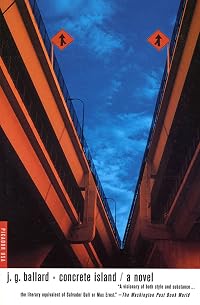
Ballard's affectless style is used to good effect in this story of a man investigating the disturbing death of his father in a west London shopping mall. His search uncovers an emerging sub-culture of consumerism and atavistic violence combining to generate a new mode of English cultural identity far from the civility we would ordinarily like to profess. In many ways this follows on from the morality tales of the seventies - "Concrete Island", "Crash" and "High Rise". It does not add much more to the dystopian vision of these books but in its curious mixture of detective fiction, anthropology and aphoristic meditation on contemporary mores "Kingdom Come" does provide timely satire and forms a sad farewell from a modern master.
Members
- Recently Added By
Published Reviews
ThingScore 50
The narrator comes alive as everything begins dying. No doubt it's what he was waiting for all along.
added by Diabolical_DrZ
A lot of fun is being had here. The old satirist bares and snaps his teeth as energetically as ever, and if you don’t pay attention you are likely to find them in your own leg as well as in that of his straw man. But beneath the ironic reversals and one-liners, there is a suggestion of autumn cannibalism. J. G. Ballard begins to seem like his own victim.
added by Diabolical_DrZ
Lists

Best Dystopias
280 works; 271 members
Author Information

290+ Works 37,663 Members
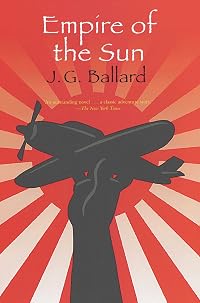
J. G. Ballard was born to British parents in Shanghai, China on November 15, 1930. While a child during World War II, he spent four years in a Japanese POW camp. This experience was the basis for the emotionally moving novel Empire of the Sun, which he adapted into a successful movie, directed by Steven Spielberg. Before becoming a full-time show more writer, he studied medicine at Cambridge University and served as a pilot in the British Royal Air Force. Ballard is best known for his science fiction writings. His early works were heavily influenced by surrealism. Most of his novels deal with death and destruction of the human spirit. Novels such as Crash, Concrete Island, and High Rise portray a society that is devolving into barbaric chaos. Crash was made into a movie by David Cronenberg in 1996. The Drowned World describes an apocalyptic society, with a hero that ushers in the destruction of the world. His novel Empire of the Sun was shortlisted for the Booker Prize and awarded the Guardian Fiction Prize and James Tait Black Memorial Prize for fiction. Empire of the Sun was filmed by Steven Spielberg in 1987, starring a young Christian Bale as Jim (Ballard). Ballard moved away from science fiction, but he is still considered one of the leading authors of the genre. He died on April 19, 2009 at the age of 78. (Bowker Author Biography) show less
Some Editions
Awards and Honors
Distinctions
Series
Belongs to Publisher Series
Gallimard, Folio (4808)
Common Knowledge
- Canonical title
- Kingdom Come
- Original title
- Kingdom Come
- Original publication date
- 2006 (Fourth Estate) (Fourth Estate)
- First words
- The suburbs dream of violence.
- Last words
- (Click to show. Warning: May contain spoilers.)In time, unless the sane woke and rallied themselves, an even fiercer republic would open the doors and spin the turnstiles of its beckoning paradise.
- Blurbers
- Self, Will; Flusfeder, David; Daniels, Anthony; Welsh, Louise
Classifications
Statistics
- Members
- 792
- Popularity
- 35,015
- Reviews
- 19
- Rating
- (3.24)
- Languages
- 8 — English, French, German, Italian, Polish, Portuguese, Slovenian, Spanish
- Media
- Paper, Audiobook, Ebook
- ISBNs
- 20
- ASINs
- 7