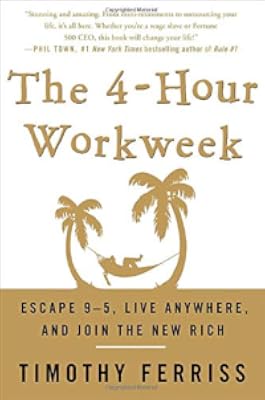
The 4-Hour Work Week
by Tim Ferriss
On This Page
Description
Forget the old deferred life plan that has you working hard through the best of years of your life only to retire at the end. There is no need to wait, and every reason not to.Whether your dream is escaping the rat race, experiencing high-end world travel, earning a monthly five-figure income with zero management, or just living more and working less, this book is the blueprint.
In this step-by-step guide to luxury lifestyle design, Tim Ferris explains how he went from working eighty hours show more per week for $40,000 per year to earning $40,000 per month in just four hours per week, allowing him to travel the world and fulfill his dreams—and how you can, too. With more than one hundred pages of new, cutting-edge content, this expanded edition offers new tools and tricks for living like a millionaire vagabond, even in unpredictable economic times.
Added features include templates for eliminating email and negotiating with bosses and clients, plus real case studies from readers who have doubled their income and reinvented themselves by following Tim's revolutionary paradigm.
. show less
Tags
Recommendations
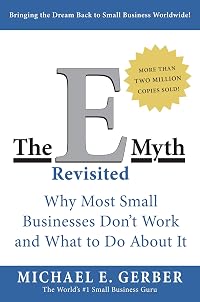
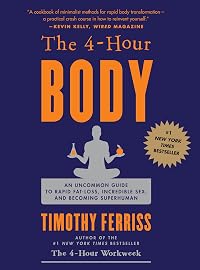
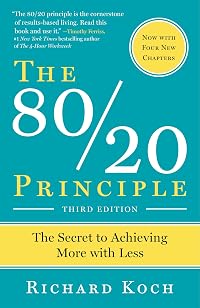
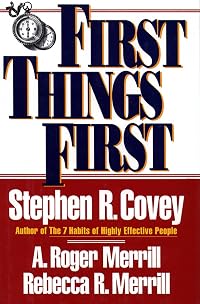
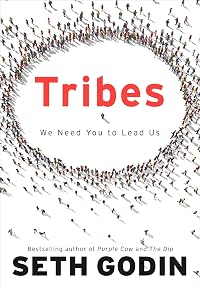
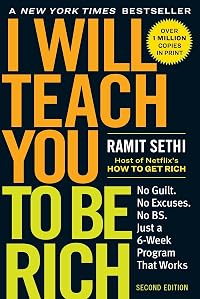
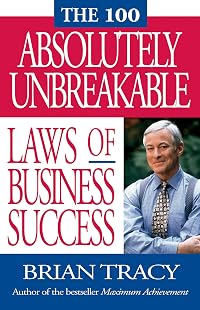
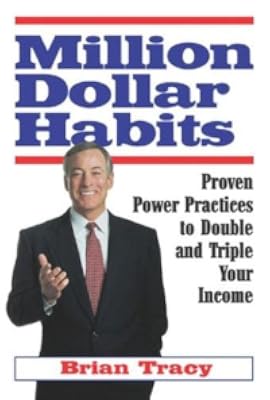
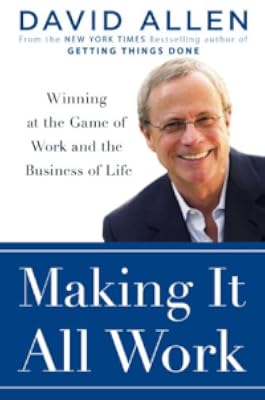
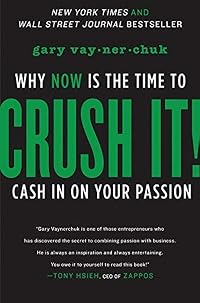
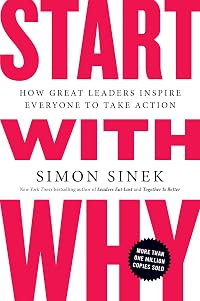
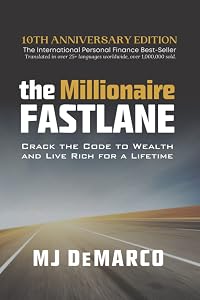
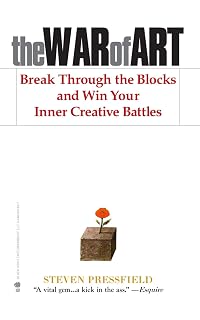
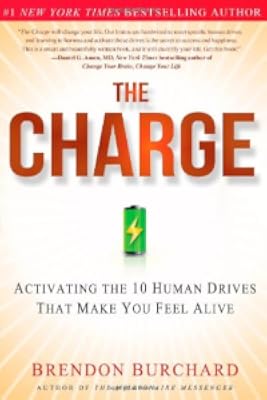
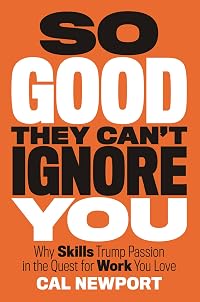
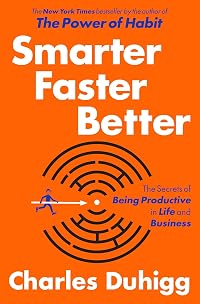

Member Recommendations
Member Reviews
I listen to Ferriss' podcast and have often been amused at the "living life hacker." I also hear his confessions about his habits, struggles, addictions, and how sometimes he gets razzed by his friends for still working a 60 hour week. The point of the book, he said recently, is that you can get 40 hours worth of work done in a time closer to four hours than 40. After reading the book I'd say the main thesis is that you can gain "freedom from what you dislike, freedom to pursue your dreams without reverting to work for work's sake (W4W)." You can be among the "New Rich" that gave up their high-paying desk jobs and commutes and found ways to delegate and automate their activities and now travel the world, partying and learning languages show more or whatever strikes their fancy.
"Less is not laziness...doing less meaningless work, so that you can focus on things of greater personal importance, is NOT laziness." Ferriss stresses doing the "minimum necessary for maximum effect ('minimum effective load')." This type of thinking is missing from the theology of work literature. How about a theology of productivity and efficiency?
Ferriss gives plenty of tips for how to get this done. Find ways to automate routine tasks, like responding to emails or processing orders. Outsource some menial activities to virtual assistants in India (I followed his tip and outsourced a menial task to someone in Pakistan this week, was a good decision). Schedule your day--focus on accomplishing two separate tasks and do not allow distractions during their completion. Compress your tasks with tight deadlines so that you rev up your effort (if you had a gun to your head, you would do everything faster and more effeciently). Check email once or twice a day, never answer voicemails. Follow the 80/20 rule: Elminate the 20% of your customers that create 80% of your headaches, focus on the 20% that generate 80% of your revenue.
Give free lectures on your local university campus, put that on your CV, list yourself places where journalists can find you, give interviews and write books and articles that will lead to greater fame and income. Don't invent things and make yourself busy to feel important. Busyness is not productivity or desirable. Stop reading the news and be selectively ignorant. If you do read, follow his tips for reading faster. Find ways to get out of meetings, don't hold them yourselves, and negotiate with your boss for permission to work remotely.
Once you go remote, make it abroad. Learn languages, party, and enjoy life.
"Retirement is worst-case scenario insurance." People work hard, save up, and then retire hoping to do activities to "enjoy life" when it would have been much more enjoyable in their 20s and 30s when they had health. Why not do it now, is his point.
There is a great deal of selfishness is Ferriss' thinking. While he gives examples of people who have kids, most examples--including his own-- do not; there appear to be no considerations of love in his life other than to satisfy his own physical desires. He has never had to wake up at 3am to change a diaper or sacrifice his time to sit with a sick daughter-- you can't delegate or outsource those activities, and they have a major impact on all else that you do. He does not appear curious about the meaning of his work, or the purpose of life. I believe everyone looks to be part of a cause greater than themselves in some way, which is why we respond to leadership. There is no aspect of that in this book, it is basically how to lead yourself into being an island (albeit a very productive one) to one's self. While Ferriss fills his time with accomplishments in martial arts, cooking, language, and dancing one wonders if he's not just trying really hard to fill a void in his soul that others fill with relationships, family, and community.
I have read 90 books so far this year because I've found ways to make my day more efficient. But I free up time for personal enjoyment in activities-- like reading the news-- that Ferriss says I should avoid. I also have a family that is dependent on my success for health insurance but is also demanding/deserving of a large chunk of my time that I would love to selfishly spend elsewhere. That's what love is, and that's what is missing from this book.
So, I enjoyed the book and recommend it with the above paragraph as my caveat. 3 stars out of 5.I will check out his other books on fitness and cooking for some tips. show less
"Less is not laziness...doing less meaningless work, so that you can focus on things of greater personal importance, is NOT laziness." Ferriss stresses doing the "minimum necessary for maximum effect ('minimum effective load')." This type of thinking is missing from the theology of work literature. How about a theology of productivity and efficiency?
Ferriss gives plenty of tips for how to get this done. Find ways to automate routine tasks, like responding to emails or processing orders. Outsource some menial activities to virtual assistants in India (I followed his tip and outsourced a menial task to someone in Pakistan this week, was a good decision). Schedule your day--focus on accomplishing two separate tasks and do not allow distractions during their completion. Compress your tasks with tight deadlines so that you rev up your effort (if you had a gun to your head, you would do everything faster and more effeciently). Check email once or twice a day, never answer voicemails. Follow the 80/20 rule: Elminate the 20% of your customers that create 80% of your headaches, focus on the 20% that generate 80% of your revenue.
Give free lectures on your local university campus, put that on your CV, list yourself places where journalists can find you, give interviews and write books and articles that will lead to greater fame and income. Don't invent things and make yourself busy to feel important. Busyness is not productivity or desirable. Stop reading the news and be selectively ignorant. If you do read, follow his tips for reading faster. Find ways to get out of meetings, don't hold them yourselves, and negotiate with your boss for permission to work remotely.
Once you go remote, make it abroad. Learn languages, party, and enjoy life.
"Retirement is worst-case scenario insurance." People work hard, save up, and then retire hoping to do activities to "enjoy life" when it would have been much more enjoyable in their 20s and 30s when they had health. Why not do it now, is his point.
There is a great deal of selfishness is Ferriss' thinking. While he gives examples of people who have kids, most examples--including his own-- do not; there appear to be no considerations of love in his life other than to satisfy his own physical desires. He has never had to wake up at 3am to change a diaper or sacrifice his time to sit with a sick daughter-- you can't delegate or outsource those activities, and they have a major impact on all else that you do. He does not appear curious about the meaning of his work, or the purpose of life. I believe everyone looks to be part of a cause greater than themselves in some way, which is why we respond to leadership. There is no aspect of that in this book, it is basically how to lead yourself into being an island (albeit a very productive one) to one's self. While Ferriss fills his time with accomplishments in martial arts, cooking, language, and dancing one wonders if he's not just trying really hard to fill a void in his soul that others fill with relationships, family, and community.
I have read 90 books so far this year because I've found ways to make my day more efficient. But I free up time for personal enjoyment in activities-- like reading the news-- that Ferriss says I should avoid. I also have a family that is dependent on my success for health insurance but is also demanding/deserving of a large chunk of my time that I would love to selfishly spend elsewhere. That's what love is, and that's what is missing from this book.
So, I enjoyed the book and recommend it with the above paragraph as my caveat. 3 stars out of 5.I will check out his other books on fitness and cooking for some tips. show less
I love this book because it completely challenges conventional ideas about work and lifestyle. The 4-Hour Work Week by Timothy Ferriss is an eye-opening guide to redesigning life for freedom, mobility, and productivity. Ferriss shares strategies for outsourcing, automating, and prioritizing effectively, encouraging readers to focus on what truly matters while escaping the endless grind of the traditional 9-to-5.
What resonated most with me is Ferriss’s bold, unconventional approach and the practical tools he provides. From creating passive income streams to negotiating remote work arrangements, the book feels both aspirational and actionable. It inspires you to rethink assumptions about time, money, and success while providing show more step-by-step guidance for reclaiming your life.
If there’s a critique, it’s that some strategies may feel extreme or unrealistic for everyone, especially those in careers that require physical presence or strict schedules. Additionally, the book was first published over a decade ago, so some examples feel dated. Yet, the underlying principles of lifestyle design, efficiency, and prioritization remain highly relevant. I recommend this book to anyone seeking more freedom, creative control, and smarter ways to work without sacrificing life’s pleasures. show less
What resonated most with me is Ferriss’s bold, unconventional approach and the practical tools he provides. From creating passive income streams to negotiating remote work arrangements, the book feels both aspirational and actionable. It inspires you to rethink assumptions about time, money, and success while providing show more step-by-step guidance for reclaiming your life.
If there’s a critique, it’s that some strategies may feel extreme or unrealistic for everyone, especially those in careers that require physical presence or strict schedules. Additionally, the book was first published over a decade ago, so some examples feel dated. Yet, the underlying principles of lifestyle design, efficiency, and prioritization remain highly relevant. I recommend this book to anyone seeking more freedom, creative control, and smarter ways to work without sacrificing life’s pleasures. show less
Helping people to leave the rat race, express themselves, etc. is a noble aim - helping them to bum around the workd while on their employer's time quite another. I had picked up this book from Mozfest and then read about it in A.J. Jacobs' "My Experimental Life", where Ferriss asks to - and ineed does - lift an entire chapter on outsourcing straight into his book, and this is seemingly typical behaviour. Ferriss boasts of using loopholes to "achieve", but is pushing people off a platform really achieving in Chinese wrestling? - I found this generally a bit unsavoury, to be honest. He does admit that one of his case studies was not keen on some of his methods, which is honest and fair enough. And I have taken an interest in some of the show more milder versions of his efficiency measures, such as checking email less often (but telling people you are going to do this: used today when I have a big work project in). I'm glad I didn't buy this book - but then the author would probably approve of that! show less
Be an Eloi, not a Morlock. Let other people do the drudge work (at least, the things that machines can't do yet).
I'm not sure I agree with that hard interpretation of letting go, bit living a good life now rather than waiting for retirement is a good message. You don't have to let go of all work for that, just minimise what you can't do, or what doesn't bring you joy.
I'm not sure I agree with that hard interpretation of letting go, bit living a good life now rather than waiting for retirement is a good message. You don't have to let go of all work for that, just minimise what you can't do, or what doesn't bring you joy.
WOW!
I don't know how I can possibly explain this book without getting into what will sound like hyperbole.
Let me first explain why I read it - It was a free audio book lying out on a table in the library. I was feeling particularly overwhelmed and frustrated - especially regarding my profession (public school teacher) that day, so the title appealed to me. Plus - the price was right up my alley!
To be honest, I expected to hear a lot of "bumpersticker-bullshit" early on and figured I'd quit after the first 15 minutes.
It was like nothing I've heard/read before.
Ferris gets into DETAIL. SPECIFICALLY explaining how to get away from the grind.
Ferris also speaks from experience - he's done and is doing what he teaches in the book and is more show more than happy to share his methods.
You want the quickie summary? Here it is - think of your time as money. Are you living the life you want? Are you maximizing your talents? We are ALL very good at something - why not get paid to do it? Why not LIVE YOUR LIFE?
Oops - there I go - getting excited and over the top - so let me bring it back to a plain closer to the average reality.
If anything, this book will cause you to RADICALLY re-think what you do with your time every day, what things you have and activities you engage in that are not helping you succeed - and taking away from precious TIME you should be spending with family, friends, and doing what you love.
And yes - we all have excuses why we can't make changes right now. Ferris confronts all of them and dissects and destroys them all.
Get this book. show less
I don't know how I can possibly explain this book without getting into what will sound like hyperbole.
Let me first explain why I read it - It was a free audio book lying out on a table in the library. I was feeling particularly overwhelmed and frustrated - especially regarding my profession (public school teacher) that day, so the title appealed to me. Plus - the price was right up my alley!
To be honest, I expected to hear a lot of "bumpersticker-bullshit" early on and figured I'd quit after the first 15 minutes.
It was like nothing I've heard/read before.
Ferris gets into DETAIL. SPECIFICALLY explaining how to get away from the grind.
Ferris also speaks from experience - he's done and is doing what he teaches in the book and is more show more than happy to share his methods.
You want the quickie summary? Here it is - think of your time as money. Are you living the life you want? Are you maximizing your talents? We are ALL very good at something - why not get paid to do it? Why not LIVE YOUR LIFE?
Oops - there I go - getting excited and over the top - so let me bring it back to a plain closer to the average reality.
If anything, this book will cause you to RADICALLY re-think what you do with your time every day, what things you have and activities you engage in that are not helping you succeed - and taking away from precious TIME you should be spending with family, friends, and doing what you love.
And yes - we all have excuses why we can't make changes right now. Ferris confronts all of them and dissects and destroys them all.
Get this book. show less
Much more interesting than I originally thought, although a good chunk of the book I skimmed, as it comprised a lot of testimonials about the methodology. Also, a number of the tips and tricks in the book are either outdated (sites have disappeared) or directly relate to the form of business that Timothy Ferriss built (which isn't terribly interesting to me). I did find some reaffirmations of advice (cut down on the crap you're reading), and it's a good kick-in-the-pants for folks that want to adopt the Noveau Rich lifestyle espoused in the book. Whether or not I adopt it fully is yet to be determined, but regardless of your thoughts on the book, it's at least worth a borrow from the library.
I simultaneously want to shake his hand and punch him in the throat. Good thing I punch with my left. There's wisdom in here, that's for sure. A lot of it is just applying lean manufacturing principles to your own life and business. It's also, however, got some evil. Most of these ideas seem to work only if you keep everyone else fooled into not doing them. How do you write a chapter where you tell people to use false testimonials and then end it with testimonials? God forbid if the people that thought Dale Carnegie was manipulative should read this book.
Members
- Recently Added By
Published Reviews
ThingScore 75
Forget “follow your dreams.” Ferriss recommends creating intellectual property by searching Writer’s Market for obscure magazines with 15,000-plus circulations whose readers spend money in the same consumer patterns as, say, bass fishermen, then asking the magazines’ advertising directors to e-mail you rate cards while you search back issues for repeat advertisers who sell directly to show more consumers via 1-800 numbers and Web sites. I’m not kidding. That’s Step 1. show less
added by Shortride
The book's essential premise is that what Ferriss calls the "deferred-life plan" -- the path of working for 40 years to fund a 20-year retirement -- is both escapable and worth escaping.
added by mikeg2
Lists

Best Self Help Books
87 works; 18 members

The Joe Rogan Experience Library
254 works; 3 members

Mind Expanding Books by hackerkid
581 works; 8 members

r/GetMotivated's Recommended Books
27 works; 1 member

Books & Films Referenced by Cal Newport's Deep Work
43 works; 1 member

Books Read in 2017
4,249 works; 130 members

If Books Could Kill Podcast
52 works; 1 member

My List
302 works; 1 member

BitLife
212 works; 4 members
Author Information

26+ Works 12,300 Members
Timothy Ferriss is an American author and public speaker. In 2007, he published The 4-Hour Workweek: Escape 9-5, Live Anywhere, and Join the New Rich, which was a New York Times, Wall Street Journal and USA Today bestseller. Ferriss grew up in East Hampton, NY and graduated from St. Paul's School. He received a degree in Neuroscience and East show more Asian Studies from Princeton University. Before the release of the 4HWW, Ferriss was an unknown. He marketed the book heavily through bloggers with whom he created personal relationships. He has since been praised for this technique. He has also taken the position that technology such as email, instant messaging and internet-enabled PDAs complicate life rather than simplify it. His teachings fit under the umbrella of what he calls "Lifestyle Design," which he positions as an alternative to the "deferred-life" career path where one would work a 9 to 5 job until retirement in their 60s. (Bowker Author Biography) show less
Some Editions
Awards and Honors
Awards
Distinctions
Common Knowledge
- Canonical title
- The 4-Hour Work Week
- Original title
- The 4-Hour Work Week
- Original publication date
- 2007
- Dedication
- For my parents, Donald and Frances Ferriss, who taught a little hellion that marching to a different drummer was a good thing. I love you both and owe you everything.
- First words
- Is lifestyle design for you?
- Quotations
- Just because you are embarrassed to admit that you're still living the consequences of bad decisions made 5, 10, or 20 years ago shouldn't stop you from making good decisions now. If you let pride stop you, you will hate life... (show all) 5, 10, or 20 years from now for the same reasons. I hate to be wrong and sat in a dead-end trajectory with my own company until I was forced to change directions or face total breakdown -- I know how hard it is.
Now that we're on a level playing field: Pride is stupid. - Last words
- (Click to show. Warning: May contain spoilers.)Hear the music / Before the song is over.
- Blurbers
- Canfield, Jack; Friedman, Stewart D.; Town, Phil; Gerber, Michael E.; Foremski, Tom; Jacobs, A.J. (show all 18); Maples, Mike; Pope, Albert; Burlingham, Bo; Kerlin, Michael D.; Brock, Charles L.; Kulkarni, Vivek; Partland, Dan; Lusk, John; Roden, Laura; Draper, Tim; Potts, Rolf; Key, Stephen
Classifications
- Genres
- Business, General Nonfiction, Nonfiction
- DDC/MDS
- 650.1 — Applied science & technology Management & public relations Business Skills & Management Personal success in business
- LCC
- HD6955 .F435 — Social sciences Industries. Land use. Labor Industries. Land use. Labor Labor. Work. Working class Industrial sociology. Social conditions of
- BISAC
Statistics
- Members
- 5,445
- Popularity
- 2,462
- Reviews
- 106
- Rating
- (3.55)
- Languages
- 18 — Chinese, Czech, Dutch, English, Estonian, Finnish, French, German, Hungarian, Italian, Lithuanian, Polish, Russian, Serbian, Croatian, Spanish, Swedish, Portuguese (Portugal)
- Media
- Paper, Audiobook, Ebook
- ISBNs
- 88
- ASINs
- 51