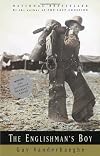
On This Page
Description
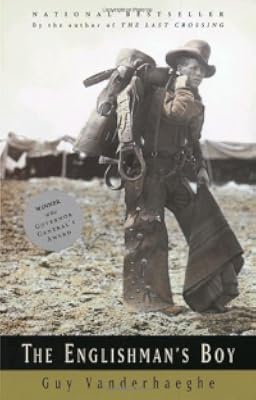
As a youth, Shorty McAdoo participated in a massacre of Indians. Fifty years later, still suffering from guilt, he is approached by a filmmaker to tell his story. A chance to make amends--or get exploited.Tags
Recommendations


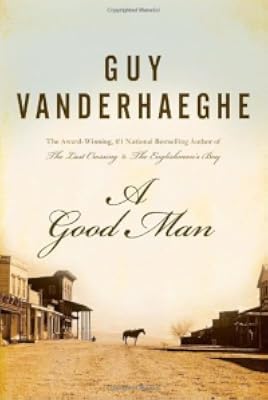













Member Reviews
It's the 1920s, and an eccentric Hollywood megalomaniac (Damon Chance) is determined to create an epic "great American film" about the American wild west. To this end, he hires Harry Vincent, a down-on-his-luck scenarist (the guy who writes the cards for silent movies), to interview Shorty McAdoo, a genuine wild west relic, to extract an "authentic" recounting of how Americans tamed the west.
The first thing that hits you is the quality of Vanderhaege's writing. It's lyric and original and swollen with authentic period detail - he doesn't just describe the Canadian/US frontier in detail: he challenges his readers to smell it, taste it, touch it, feel it, employing language that's stunning in its lack of anachronism.
The next thing you show more notice is Chance's objective isn't as straightforward as it first appears. Your first clue (assuming we overlook the fact that the guy's name is, literally, "Chance") is that this eccentric studio boss venerates D.W. Griffith's "Birth of a Nation" - a horrific example of self-aggrandizing mythmaking if there ever was one. Over the course of the novel, you come to realize that Chance isn't looking for authenticity - he's looking to galvanize American ruthlessness by propagating the message that America is besieged ("Besieged" being the literal name of the movie he is making) by enemies, especially Europe's revolutionaries and the Jews, who deserve to be destroyed. "The enemy is never human," he tells our scenarist, creating a confounding ethical dilemma for poor Vincent who is coming to realize, through his interactions with McAdoo and a comely Jewish colleague (Rachel) that in the real world - unlike black & white "shorties" he writes for - good and evil are, at best, ambiguous concepts.
This is a provocative novel of ideas cleverly embedded in a ripping yarn that embraces both the birth of Hollywood and the birth of our frontier, conveyed in vivid, affecting prose. Feel free to enjoy this for the terrific action/characters/ambiance, but for those who enjoy digging deeper, this novel offers ample opportunity to "invite argument, invite reconsideration, invite thought" - as Chance notes in one of his epic philosophical streams-of-consciousness. Is America's spiritual identity/native art form "motion," as Chance suggests? Should the goal of history-telling be to preserve the past (as Vincent supposes) or to secure the future (as Chance advocates)? Is empathy for the proletariat a strength (as Vincent believes) or a weakness (as Chance argues)? Is using movies to facilitate cultural assimilation appropriate - or dangerous propagandizing? So much great fodder here for book group discussion! show less
The first thing that hits you is the quality of Vanderhaege's writing. It's lyric and original and swollen with authentic period detail - he doesn't just describe the Canadian/US frontier in detail: he challenges his readers to smell it, taste it, touch it, feel it, employing language that's stunning in its lack of anachronism.
The next thing you show more notice is Chance's objective isn't as straightforward as it first appears. Your first clue (assuming we overlook the fact that the guy's name is, literally, "Chance") is that this eccentric studio boss venerates D.W. Griffith's "Birth of a Nation" - a horrific example of self-aggrandizing mythmaking if there ever was one. Over the course of the novel, you come to realize that Chance isn't looking for authenticity - he's looking to galvanize American ruthlessness by propagating the message that America is besieged ("Besieged" being the literal name of the movie he is making) by enemies, especially Europe's revolutionaries and the Jews, who deserve to be destroyed. "The enemy is never human," he tells our scenarist, creating a confounding ethical dilemma for poor Vincent who is coming to realize, through his interactions with McAdoo and a comely Jewish colleague (Rachel) that in the real world - unlike black & white "shorties" he writes for - good and evil are, at best, ambiguous concepts.
This is a provocative novel of ideas cleverly embedded in a ripping yarn that embraces both the birth of Hollywood and the birth of our frontier, conveyed in vivid, affecting prose. Feel free to enjoy this for the terrific action/characters/ambiance, but for those who enjoy digging deeper, this novel offers ample opportunity to "invite argument, invite reconsideration, invite thought" - as Chance notes in one of his epic philosophical streams-of-consciousness. Is America's spiritual identity/native art form "motion," as Chance suggests? Should the goal of history-telling be to preserve the past (as Vincent supposes) or to secure the future (as Chance advocates)? Is empathy for the proletariat a strength (as Vincent believes) or a weakness (as Chance argues)? Is using movies to facilitate cultural assimilation appropriate - or dangerous propagandizing? So much great fodder here for book group discussion! show less
Guy Vanderhaeghe's novel, THE ENGLISHMAN'S BOY, has been around for twenty years, and has probably by now achieved the status of a Canadian classic. I enjoyed the hell out of it. On the one hand, it's an old-time sort of western, with one plot line following a group of ruthless wolf hunters in 1873 on the trail of a couple Indians who stole their horses (loosely based on actual historical events). On the other hand, a second plot line is an in-depth look at 1920s Hollywood, with a backdrop of stars like Chaplin, Keaton, Arbuckle, Fairbanks, Pickford, and countless others, as wells as the top cowboy stars of the era - Tom Mix, Hoot Gibson, William S. Hart, Tim McCoy and others. But these are only background, local color. The Hollywood show more narrator is a young writer named Harry Vincent, hired by a reclusive and eccentric studio mogul, Damon Ira Chance, to assist him in making the Great American Western Movie. To do this, Harry must track down an aging stunt man, Shorty McAdoo, whose dark and mysterious past is key to making Chance's film. The novel unfolds in alternating chapters, moving between the brutal events of the 1870s and 1920s Tinseltown, with all of its shiny surfaces and dark underside, until the two narratives gradually merge.
I could write a standard sort of review here, but instead I'm going to indulge my booklover's side, because the whole time I was reading this book, I kept remembering and making mental comparisons to a number of other books I have read over the past forty years or more, both fiction and non-fiction. Here they are, first a few older ones -
LITTLE BIG MAN, by Thomas Berger
BUTCHER'S CROSSING, by John Williams
TOM MIX DIED FOR YOUR SINS, by Darryl Ponicsan
OF MICE AND MEN, by John Steinbeck
THE SEARCHERS, by Alan Le May.
And then, a few more contemporary ones -
DOC and EPITAPH, by Mary Doria Russell
THE OUTLANDER, by Gil Adamson
FALLING FROM HORSES (and THE HEARTS OF HORSES), by Molly Gloss
HE WAS SOME KIND OF A MAN, by Roderick McGillis.
If I thought more about it, I could probably add to this list, but I've indulged myself enough, I think. I do love reading a good western now and then, and THE ENGLISHMAN'S BOY is a damn good one. In it, Damon Ira Chance dreamed of making the Great American Movie. I think author Guy Vanderhaeghe dreamed of writing the Great Canadian Western. He may well have succeeded.
But I may suspend judgement on that for the time being. Because, if I have any complaints about this book - and it's very minor - it's that it tends to 'lumber' just a bit here and there. But here's another factor. This is only book one in what became a trilogy. The other two books are A GOOD MAN and THE LAST CROSSING. And I hope to get around to them eventually. This one's plenty good though, and I will highly recommend it.
- Tim Bazzett, author of the memoir, BOOKLOVER show less
I could write a standard sort of review here, but instead I'm going to indulge my booklover's side, because the whole time I was reading this book, I kept remembering and making mental comparisons to a number of other books I have read over the past forty years or more, both fiction and non-fiction. Here they are, first a few older ones -
LITTLE BIG MAN, by Thomas Berger
BUTCHER'S CROSSING, by John Williams
TOM MIX DIED FOR YOUR SINS, by Darryl Ponicsan
OF MICE AND MEN, by John Steinbeck
THE SEARCHERS, by Alan Le May.
And then, a few more contemporary ones -
DOC and EPITAPH, by Mary Doria Russell
THE OUTLANDER, by Gil Adamson
FALLING FROM HORSES (and THE HEARTS OF HORSES), by Molly Gloss
HE WAS SOME KIND OF A MAN, by Roderick McGillis.
If I thought more about it, I could probably add to this list, but I've indulged myself enough, I think. I do love reading a good western now and then, and THE ENGLISHMAN'S BOY is a damn good one. In it, Damon Ira Chance dreamed of making the Great American Movie. I think author Guy Vanderhaeghe dreamed of writing the Great Canadian Western. He may well have succeeded.
But I may suspend judgement on that for the time being. Because, if I have any complaints about this book - and it's very minor - it's that it tends to 'lumber' just a bit here and there. But here's another factor. This is only book one in what became a trilogy. The other two books are A GOOD MAN and THE LAST CROSSING. And I hope to get around to them eventually. This one's plenty good though, and I will highly recommend it.
- Tim Bazzett, author of the memoir, BOOKLOVER show less
I have the CBC to thank for turning me on to this wonderful book. Earlier this year, they aired a jaw-droppingly brilliant adaptation of it as a two-part miniseries. Guy Vanderhaeghe himself adapted it, so I came to the book confident that the story had held up well.
Indeed it had. The story is told in mostly alternating chapters, shifting between the late 1880s (or thereabouts) and the early 1930s (pre-Second World War, at any rate). The past storyline is about a young man, known only as "the Englishman's boy" because of his being a servant for one. After his employer dies, the boy falls in with a gang of wolfers hunting down the Indians who stole their horses. The things he witnesses and is forced to do haunt him even into old age.
The show more Englishman's boy, now an old man named Shorty McAdoo, is being pursued in the 1930s by Harry Vincent, an up-and-coming scenarist who has been specially employed by a movie mogul to write "the great American picture". Harry's story alternates with Shorty's/the Englishman's boy's story, edging ever closer to the most traumatizing events of Shorty's life.
The story is beautifully written, descriptive without being flowery. Vanderhaeghe's dialogue also rings true, with each character easily identifiable. If you've seen the CBC adaptation, you'll find a different ending, but both endings work for their respective media. However, I must say I preferred the book ending slightly, if only because it made me less sad than the TV ending did.
This book comes highly recommended for those who enjoy Westerns, stories set in Canada, or just generally excellent literary works. show less
Indeed it had. The story is told in mostly alternating chapters, shifting between the late 1880s (or thereabouts) and the early 1930s (pre-Second World War, at any rate). The past storyline is about a young man, known only as "the Englishman's boy" because of his being a servant for one. After his employer dies, the boy falls in with a gang of wolfers hunting down the Indians who stole their horses. The things he witnesses and is forced to do haunt him even into old age.
The show more Englishman's boy, now an old man named Shorty McAdoo, is being pursued in the 1930s by Harry Vincent, an up-and-coming scenarist who has been specially employed by a movie mogul to write "the great American picture". Harry's story alternates with Shorty's/the Englishman's boy's story, edging ever closer to the most traumatizing events of Shorty's life.
The story is beautifully written, descriptive without being flowery. Vanderhaeghe's dialogue also rings true, with each character easily identifiable. If you've seen the CBC adaptation, you'll find a different ending, but both endings work for their respective media. However, I must say I preferred the book ending slightly, if only because it made me less sad than the TV ending did.
This book comes highly recommended for those who enjoy Westerns, stories set in Canada, or just generally excellent literary works. show less
“I’ve been knocking around this country ten years – it changes a man. But I’m not all the way there yet … I’m betwixt and between – half civilized, half uncivilized. A centaur.” (Ch 19)
Vanderhaeghe tells two stories, past and present, in alternating chapters in The Englishman’s Boy. In the past, the eponymous protagonist finds himself adrift in Fort Benton, Montana when his employer dies unexpectedly. He hooks up with a group of wolfers, hot in pursuit of the Assiniboine whom they believe to have stolen several of their horses. The wolfers are harsh, savage men, lusting for a fight with their enemies. The pursuit leads the pack north into Canada to the site of the 1873 Cypress Hills Massacre in Saskatchewan. The show more Englishman’s boy, himself a tough and hardened case, is not abjectly cruel. He is irreparably changed by his experience. In Vanderhaeghe’s signature plush description, we meet the “boy”:
“Dawe’s boy had the gaunt, cadaverous look of the rural poor, of the runt who has sucked the hint tit, who has been whupped with horse-halters and stove-wood, anything hard and hurting that came to hand. His anthracite eyes did his talking for him. They said: Expect no quarter. Give none. He owned a face white and cold as a well-digger’s ass. He didn’t string more than five words together at a time and no one could place his accent. He was seventeen but looked fifteen, stunted by a diet of bread and lard and strong tea. Everyone took him for a runaway from some hard-scrabble, heartbreak farm. Out West, his kind were thick as ticks on a dog.” (Ch 3)
Fast forward to 1920s Hollywood, and scenarist Harry Vincent is hired by plutocrat Damon Ira Chance of Best Chance Pictures to track down aged cowboy, Shorty McAdoo, the Englishman’s boy. Chance is looking to make the quintessential American Western, based on the “truth.” McAdoo has the reputation of an “Indian fighter,” and Chance wants his story. Writer Vincent has his work cut out for him: McAdoo is reclusive and cantankerous. Haunted by his past at Cypress Hills, he’s not in a mood to relive that history, particularly not to a Hollywood writer claiming to be in search of the “truth.” McAdoo is right, of course: Chance wants his “vision” of the truth, not the facts. So the greed and superficiality of early Hollywood meets the unrest of a bloodbath in the old West.
The Englishman’s Boy is the first of a loose trilogy by Vanderhaeghe, though having read all three novels, each is easily a stand alone read. While I did not enjoy The Englishman’s Boy as much as The Last Crossing and A Good Man, I’ve said before that I find Vanderhaeghe irresistibly readable, and that remains true here. Recommended! show less
Vanderhaeghe tells two stories, past and present, in alternating chapters in The Englishman’s Boy. In the past, the eponymous protagonist finds himself adrift in Fort Benton, Montana when his employer dies unexpectedly. He hooks up with a group of wolfers, hot in pursuit of the Assiniboine whom they believe to have stolen several of their horses. The wolfers are harsh, savage men, lusting for a fight with their enemies. The pursuit leads the pack north into Canada to the site of the 1873 Cypress Hills Massacre in Saskatchewan. The show more Englishman’s boy, himself a tough and hardened case, is not abjectly cruel. He is irreparably changed by his experience. In Vanderhaeghe’s signature plush description, we meet the “boy”:
“Dawe’s boy had the gaunt, cadaverous look of the rural poor, of the runt who has sucked the hint tit, who has been whupped with horse-halters and stove-wood, anything hard and hurting that came to hand. His anthracite eyes did his talking for him. They said: Expect no quarter. Give none. He owned a face white and cold as a well-digger’s ass. He didn’t string more than five words together at a time and no one could place his accent. He was seventeen but looked fifteen, stunted by a diet of bread and lard and strong tea. Everyone took him for a runaway from some hard-scrabble, heartbreak farm. Out West, his kind were thick as ticks on a dog.” (Ch 3)
Fast forward to 1920s Hollywood, and scenarist Harry Vincent is hired by plutocrat Damon Ira Chance of Best Chance Pictures to track down aged cowboy, Shorty McAdoo, the Englishman’s boy. Chance is looking to make the quintessential American Western, based on the “truth.” McAdoo has the reputation of an “Indian fighter,” and Chance wants his story. Writer Vincent has his work cut out for him: McAdoo is reclusive and cantankerous. Haunted by his past at Cypress Hills, he’s not in a mood to relive that history, particularly not to a Hollywood writer claiming to be in search of the “truth.” McAdoo is right, of course: Chance wants his “vision” of the truth, not the facts. So the greed and superficiality of early Hollywood meets the unrest of a bloodbath in the old West.
The Englishman’s Boy is the first of a loose trilogy by Vanderhaeghe, though having read all three novels, each is easily a stand alone read. While I did not enjoy The Englishman’s Boy as much as The Last Crossing and A Good Man, I’ve said before that I find Vanderhaeghe irresistibly readable, and that remains true here. Recommended! show less
This is an excellent book. A wonderful juxtaposition of harsh life on the American frontier that leads to a massacre of Indians in Saskatchewan, set against a strange assignment for an aspiring screen writer from an eccentric owner of a major studio in Hollywood in the 1920s. The two come together in the person of Shorty McAdoo, who is the Englishman's Boy. Set loose by the untimely death of the Englishman, Shorty joins with a group of wolf hunters on the trail of Indians who stole their horses. This is the story of harsh lives, and unthinking brutality that holds life very cheaply, and the lives of Indians as not even worth that much. But even if as a group they would be thought of as the dregs of society, Vanderhaeghe shows the show more differences in the men; some are weak, some are strong and lead by that strength and force, some are clearly misplaced in the group and pay for it with either their lives or their sanity. The studio owner wants to produce the quintessential movie about the freedom and spirit of the frontier which, in his view, provide the defining characteristics of the American people and the American experience. A not-so-thin vein of anti-semitism also lurks beneath the owner's approach and presents Harry Vincent, the writer, with some unease and moral dilemmas.
I also liked the juxtaposition of the hard, harsh life on the frontier against the flickering images of film that ostensibly portray that life, but where is fact truth is victim to myth. Chance (the owner) argues that the myth is all-important, but in the end, the "myth" embodied in the real person of Shorty McAdoo, kills the myth-maker (Chance) because of the latter's distortions of what McAdoo knew to be the truths of his life. But what becomes the "truth"? Is it the life of Shorty McAdoo, known basically to him and Harry Vincent to whom he tells it, or is it the cinematic version seen and accepted by thousands and the one that will endure in time?
Vanderhaeghe is an excellent writer: a panoply of characters, complex and differentiated, and wonderful powers of description. He brings to life the sense of life in the "old west", a cruise on a Mississippi steamboat, life on the frontier, and the falseness and greed of tinseltown while nevertheless retaining a love of the cinema and what it can do. show less
I also liked the juxtaposition of the hard, harsh life on the frontier against the flickering images of film that ostensibly portray that life, but where is fact truth is victim to myth. Chance (the owner) argues that the myth is all-important, but in the end, the "myth" embodied in the real person of Shorty McAdoo, kills the myth-maker (Chance) because of the latter's distortions of what McAdoo knew to be the truths of his life. But what becomes the "truth"? Is it the life of Shorty McAdoo, known basically to him and Harry Vincent to whom he tells it, or is it the cinematic version seen and accepted by thousands and the one that will endure in time?
Vanderhaeghe is an excellent writer: a panoply of characters, complex and differentiated, and wonderful powers of description. He brings to life the sense of life in the "old west", a cruise on a Mississippi steamboat, life on the frontier, and the falseness and greed of tinseltown while nevertheless retaining a love of the cinema and what it can do. show less
I am always searching for a good Western and was encouraged by good reviews to give this one a whirl. What a disappointment! There are some fatal flaws at work in this book : a fair amount of expository dialogue that feels awkwardly wedged in, many tiresome and redundant diatribes or exchanges that should have been considerably whittled down, a penchant by the author to insert numbing lists of things into otherwise evocative descriptive passages, rendering them clunky, and finally the heroes (Shorty , the Narrator and even Wiley, the avenging hand) are predictably and irritatingly infused with inherent goodness. Why do we have to witness the Narrator's anguish over his ailing mother in the nursing home? Why does he refuse to sleep with show more the prostitute? Why is he so passively lovelorn? So that the reader and Vanderhaeghe can comfortably wallow in what is ultimately a very banal wholesomeness of stock variety. This is a good guys vs bad guys story and remains deadeningly so as Vanderaeghe's attempts to instill any moral ambiguity or complexity in his characters seem perfunctory. This causes the character's struggles to seem artificial and boring. Even the main character's metaphoric vulnerability via his "bum leg" falls flat. As readers we have already been there in Hemingway territory and here, it stinks of affect and worse, cliche.
There is a persistent staleness wafting through these pages. This is sad, because many of the passages are eloquent and surprising. Also, the vernacular dialogue is really great, throughout the book I felt as if I were discovering gems in the form of wonderful forgotten idioms and turns of phrase. Too bad this book is such a dodo. show less
There is a persistent staleness wafting through these pages. This is sad, because many of the passages are eloquent and surprising. Also, the vernacular dialogue is really great, throughout the book I felt as if I were discovering gems in the form of wonderful forgotten idioms and turns of phrase. Too bad this book is such a dodo. show less
A haunting tale, cleverly mixing the early years of Hollywood with the earlier years of the Wild West. I enjoyed the portrayal of the conflicts between the director's politically-motivated 'vision' and the eyewitness's need for the 'truth' to be told.
Members
- Recently Added By
Lists

The Best of Canadian Literature
235 works; 33 members
CBC Books - Canada's 100 (+ bonus 10): Which have you read?
110 works; 23 members

International IMPAC Dublin Literary Award
179 works; 6 members

Governor General of Canada's English Fiction Awards
89 works; 3 members

Canadian Historical Fiction 🇨🇦
157 works; 8 members
Author Information

14+ Works 2,446 Members
Guy Vanderhaeghe was born in Esterhazy, Saskatchewan, Canada on April 5, 1951. He received a Bachelor of Arts degree in history and a Master of Arts degree in history from the University of Saskatchewan and a Bachelor of Education degree from the University of Regina. His works include Man Descending, which won the Governor General's Award for show more English fiction and the Geoffrey Faber Memorial Prize in Great Britain; My Present Age; The Englishman's Boy, which won the Governor General's Award for English fiction, the Saskatchewan Book Award Fiction prize, and the Saskatchewan Book of the Year Award; Homesick, which was a co-winner of the City of Toronto Book Award; and Daddy Lenin and Other Stories, which won the Governor General's Award for English fiction. His first play, I Had a Job I Liked. Once., won the Canadian Authors Association prize for the best drama published in 1993. (Bowker Author Biography) show less
Awards and Honors
Awards
Series

Common Knowledge
- Canonical title
- The Englishman's Boy
- Original title
- The Englishman's Boy
- Original publication date
- 1996
- Important places
- Hollywood, Los Angeles, California, USA; Cypress Hills, Alberta/Saskatchewan, Canada; Alberta, Canada; Saskatchewan, Canada
- Dedication
- To Montana Dan Shapiro, a true-blue man to ride the river with
- First words
- Even from a distance Fine Man could smell their camp, the fried-pig stink of white men.
- Last words
- (Click to show. Warning: May contain spoilers.)Then the blue horse stopped. And Fine Man did too.
- Original language*
- Englisch
*Some information comes from Common Knowledge in other languages. Click "Edit" for more information.
Classifications
- Genres
- Fiction and Literature, General Fiction, Historical Fiction
- DDC/MDS
- 813.54 — Literature & rhetoric American literature in English American fiction in English 1900-1999 1945-1999
- LCC
- PR9199.3 .V384 .E54 — Language and Literature English English Literature English literature: Provincial, local, etc.
- BISAC
Statistics
- Members
- 798
- Popularity
- 34,806
- Reviews
- 18
- Rating
- (3.66)
- Languages
- English, French, Italian
- Media
- Paper, Audiobook, Ebook
- ISBNs
- 23
- UPCs
- 1
- ASINs
- 5