On This Page
Description
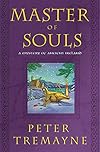
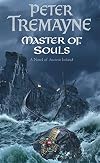
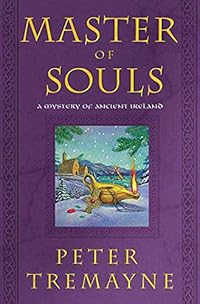
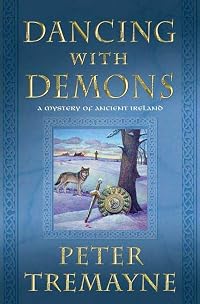
In January of 668 A.D., Fidelma of Cashel - sister to the king of Muman, an advocate of the Brehon law courts and a religieuse in the Celtic Church - is called to investigate the brutal murder of Abbess Faife and the mysterious disappearance of six young female religieuse accompanying her on a short pilgrimage away from her abbey. When Sister Fidelma and her husband, Brother Eadulf, arrive they find that there has been another death under mysterious circumstances, one of the senior scholars show more of the abbey has been bludgeoned to death. These two seemingly unrelated deaths - and the further mysteries of the trade ship lured to its doom on the rocky western shore of Ireland and the rumored figure of "The Master of Souls" wrecking havoc and raising rebellion - combine to create on the the most perplexing mysteries ever faced by the redoubtable Fidelma. show lessTags
Recommendations




Member Reviews
I do recommend NOT studying the list of principal characters too closely before reading the book, although I don't know that it really spoiled much for me. This volume picks up after the events The Leper's Bell, and the series as a whole seems to have more continuity now. Unfortunately, my own read of The Leper's Bell was a good long time ago, so I probably should have reread it...it isn't totally necessary, but I would have had a stronger connection to some of the characters, such as Gannica. I'll leave off too much plot description because it could very easily lead to spoilers, but the political strife between the Uí Fidgente and Cashel continues, despite the fragile peace under Donennach.
On the whole, the character development show more continues to mature. Tremayne uses Fidelma and Eadulf to show varying perspectives on Christianity--Fidelma is tolerant of the old ways, making space for "finding God in his own way" (203) in deference to the proud Pagan Gáeth. Eadulf, on the other hand, has the fervor of a young convert, and tends to be judgmental and one-dimensional in his thinking (occasionally).
I was particularly interested in some continuity of what seemed to be minutiae. Tremayne revisits a chant "Regem regnum rogamus in nostris sermonibus" which is sung in two languages to a "Gallic" chant melody, and this same song also appears in The Monk who Vanished, supposedly composed by one Colmán moccu Clusaif/mac Uí Clusaim who helped his people during the threat of the Yellow Plague. I was unable to find an actual historical person by this name, but my guess is that there is a model here for Tremayne. These little details, however, keep me coming back for more. I've started a list of concordances that I may turn into a wiki at some point.
The copyediting and editing is still not great, however (some library patron took to the copy I read with a pencil, thankfully). We also get unnecessary repetition, such as when we are told "Eadulf, who knew something of the healing arts..." (193) when that has already been on display earlier in the book. There does seem to be a little less repetition of Fidelma's status as a dalaigh, qualified to the level of anruth, and when she can sit in the presence of a king, etc. etc within a single volume now, so that is an improvement.
The development was slow in this one, but things get moving rather quickly once Fidelma, Conrí, and Eadulf set sail for an island. The details regarding the scriptorium and copying are interesting, and there are some more colorful characters including Slébéne, chief of the Corco Duibhne. I'm very glad that Conrí, who we first meet in Badger's Moon, I believe, seems to have a returning presence in the series. He is one of the more complex characters in the narrative of the Uí Fidgente.
Overall a really good installment and I'll looking forward to learning more as the political intrigue is bound to return. show less
On the whole, the character development show more continues to mature. Tremayne uses Fidelma and Eadulf to show varying perspectives on Christianity--Fidelma is tolerant of the old ways, making space for "finding God in his own way" (203) in deference to the proud Pagan Gáeth. Eadulf, on the other hand, has the fervor of a young convert, and tends to be judgmental and one-dimensional in his thinking (occasionally).
I was particularly interested in some continuity of what seemed to be minutiae. Tremayne revisits a chant "Regem regnum rogamus in nostris sermonibus" which is sung in two languages to a "Gallic" chant melody, and this same song also appears in The Monk who Vanished, supposedly composed by one Colmán moccu Clusaif/mac Uí Clusaim who helped his people during the threat of the Yellow Plague. I was unable to find an actual historical person by this name, but my guess is that there is a model here for Tremayne. These little details, however, keep me coming back for more. I've started a list of concordances that I may turn into a wiki at some point.
The copyediting and editing is still not great, however (some library patron took to the copy I read with a pencil, thankfully). We also get unnecessary repetition, such as when we are told "Eadulf, who knew something of the healing arts..." (193) when that has already been on display earlier in the book. There does seem to be a little less repetition of Fidelma's status as a dalaigh, qualified to the level of anruth, and when she can sit in the presence of a king, etc. etc within a single volume now, so that is an improvement.
The development was slow in this one, but things get moving rather quickly once Fidelma, Conrí, and Eadulf set sail for an island. The details regarding the scriptorium and copying are interesting, and there are some more colorful characters including Slébéne, chief of the Corco Duibhne. I'm very glad that Conrí, who we first meet in Badger's Moon, I believe, seems to have a returning presence in the series. He is one of the more complex characters in the narrative of the Uí Fidgente.
Overall a really good installment and I'll looking forward to learning more as the political intrigue is bound to return. show less
As always excellent insights into life in 7th century Eire. Interesting story with a good mystery to be resolved. Fidelma is a force within the surprising rule of laws that existed in this era.
Sister Fidelma is back with Brother Eadulf and once again the Ui Fidgente seem to be causeing problems. Things are started off when the Abbess Faife is found murdered and her 6 young companions are missing. By the time Sister Fidelma shows up there has been another murder apparently unrelated other than the 2 were good friends.
Overall this was a good book but I don't think it quite measures up to the rest of the series. Hopfully this is just a dip in an otherwise great series of mysteries.
Overall this was a good book but I don't think it quite measures up to the rest of the series. Hopfully this is just a dip in an otherwise great series of mysteries.
#16 in the Sister Fidelma historical mystery series set in 7th century Ireland. Fidelma and Eadulf have traveled to a small Abbey on the coast to investigate the brutal murder of the Abbess who was stabbed while on pilgrimage with some other nuns. The abbess’s body was left where it was, but the nuns have disappeared. Fidelma was summoned by the leader of the local Ui Fidgente clan, former enemies now at peace with Muman, the kingdom of which Fidelma’s brother is king. Upon arriving at the Abbey, they learn of another death, as one of the elderly venerable scholars who resides at the abbey was bludgeoned to death on the altar.
Is there a connection between the two deaths? Of course there is! The struggle is to find it, and that’s show more no easy task when most of the people questioned by Fidelma and Eadulf are lying or at least not telling the whole truth. When they set out the follow the trail that the Abbess would have taken for the pilgrimage in hopes of finding the missing nuns as well as some clues, their lives are put into mortal danger as they unravel a complicated political plot that plays on old clan rivalries and demands a knowledge of the ancient Irish laws of succession and ancestry. Very enjoyable visit to ancient Ireland as usual—it’s been over a year since my last visit so I always cherish these books. I do have the next in series here—we’ll see how long I’ll be able to resist it. show less
Is there a connection between the two deaths? Of course there is! The struggle is to find it, and that’s show more no easy task when most of the people questioned by Fidelma and Eadulf are lying or at least not telling the whole truth. When they set out the follow the trail that the Abbess would have taken for the pilgrimage in hopes of finding the missing nuns as well as some clues, their lives are put into mortal danger as they unravel a complicated political plot that plays on old clan rivalries and demands a knowledge of the ancient Irish laws of succession and ancestry. Very enjoyable visit to ancient Ireland as usual—it’s been over a year since my last visit so I always cherish these books. I do have the next in series here—we’ll see how long I’ll be able to resist it. show less
A ship has run aground, an abbess has been killed, the nuns traveling with her disappeared and an elderly scholar has been killed. Although at peace, some members of the Ui Figente seem to be rebellious, several scholarly text are missing and destroyed. It is up to Fidelma, with Aedulf's help, to understand these mysteries and weave them into a single tapestry.
This is book 16 in the Sister Fidela mysteries.
This is book 16 in the Sister Fidela mysteries.
Une intrigue dans la pure tradition des enquêtes de soeur Fidelma, bien construite, bien dosée.. Juste un peu dommage que l'histoire de fond devienne un peu répétitive, guerre de clan et de pouvoir, et donc un peu prévisible. L'épisode manque sans doutes un peu d'originalité et n'appprte pas beaucoup d'éléments neufs dans l'histoire de Fidelma et de son moine Saxon.
Apr 11, 2010French
Members
- Recently Added By
Author Information

148+ Works 14,975 Members
Peter Tremayne is the fiction writing pseudonym of the Celtic scholar and author Peter Berresford Ellis, who was born in Coventry, Warwickshire, England on March 10, 1943. Even though he received a BA and an MA in Celtic Studies, he decided to become a journalist and worked at numerous weekly newspapers throughout England and Ireland. In 1968, he show more published is first book, Wales: A Nation Again, about the Welsh struggle for political independence. He became a full-time writer in 1975 and has published over 90 books under his own name and the pseudonyms Peter Tremayne and Peter MacAlan. One of his best known works under his real name is The Cornish Language and its Literature, which is considered the definitive history of the language. In 1988, he received an Irish Post Award in recognition of his services to Irish historical studies. Under the pseudonym Peter Tremayne, he writes the Sister Fidelma Mystery series. He received the French Prix Historia for the best historical mystery novel of 2010 for Le Concile des Maudits (The Council of the Cursed). (Bowker Author Biography) show less
Awards and Honors
Awards
Series

Common Knowledge
- Canonical title
- Master of Souls
- Original title
- Master of Souls
- Original publication date
- 2005-09-05 (Headline Book Publishing|London) (Headline Book Publishing | London)
- People/Characters
- Sister Fidelma (dálaigh | anruth | religieuse); Brother Eadulf (Saxon); Brother Benen (student); Sister Buan; Coros (sailor | first mate); Conri (warlord | Ui Fedgente) (show all 28); Brother Cillin (stiuirtheoir canaid | master of music); Cinaed (The Venerable Cinaed | scholar); Brother Cu Mara (rechtaire); Sister Easdan; Brother Eolas (librarian | leabhar coimedach); Abbot Erc; Esumaro (ship captain); Abbess Faife; Brother Faolchair; Brother Feolaigid (butcher); Gaeth (smith); Gaimredan; Ganicca; Iobcar; Mac Faosma (The Venerable Mac Faosma | scholar); Mugron (merchant); Olcan; Slebene (chief); Sister Sinnchene; Socht (warrior); Tadcan; Sister Uallann (physician)
- Important places
- Ireland
Classifications
Statistics
- Members
- 306
- Popularity
- 103,472
- Reviews
- 8
- Rating
- (3.82)
- Languages
- Dutch, English, French, German
- Media
- Paper, Audiobook, Ebook
- ISBNs
- 16
- ASINs
- 10