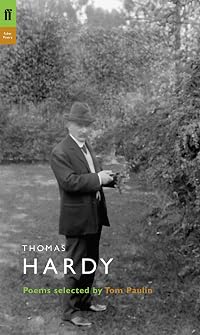
Thomas Hardy: Poems Selected by Tom Paulin
by Thomas Hardy
On This Page
Description
In this series, a contemporary poet advocates a poet of the past or present whom they have particularly admired. By their selection of verses and by the personal and critical reactions they express, the selectors offer intriguing insight into their own work.Tags
Recommendations











Member Reviews
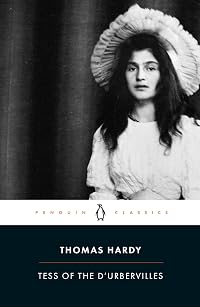
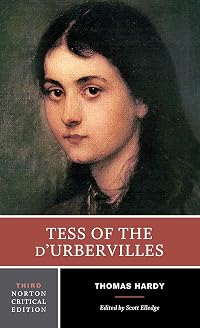
Of course, Thomas Hardy (1840-1928) is best known for his prose work, with superb novels such as The Mayor of Casterbridge, Far From the Madding Crowd, Tess of the d'Urbervilles, and Jude the Obscure. I did not know that he also had an extensive poetic oeuvre. This booklet contains a selection. Compiler Tom Paulin makes it clear that his poetic work was just as important to Hardy, especially in the second half of his life. It shows: the most appealing poems date from after 1900. They are rather nostalgic and elegiac in nature, often musing about the inexorability of Time, or yearning for a lost loved one. In any case, they testify to a formal mastery of metrics and imagination. Paulin also makes it clear that also Hardy’s prose work show more had a clear poetic flavour. I am going to read his masterpieces with different eyes now.
As an example of this, the poem "Regret not me", published in 1914
Regret not me;
Beneath the sunny tree
I lie uncaring, slumbering peacefully.
Swift as the light
I flew my faery flight;
Ecstatically I moved, and feared no night.
I did not know
That heydays fade and go,
But deemed that what was would be always so.
I skipped at morn
Between the yellowing corn,
Thinking it good and glorious to be born.
I ran at eves
Among the piled-up sheaves,
Dreaming, "I grieve not, therefore nothing grieves."
Now soon will come
The apple, pear, and plum
And hinds will sing, and autumn insects hum.
Again you will fare
To cider-makings rare,
And junketings; but I shall not be there.
Yet gaily sing
Until the pewter ring
Those songs we sang when we went gipsying.
And lightly dance
Some triple-timed romance
In coupled figures, and forget mischance;
And mourn not me
Beneath the yellowing tree;
For I shall mind not, slumbering peacefully. show less
As an example of this, the poem "Regret not me", published in 1914
Regret not me;
Beneath the sunny tree
I lie uncaring, slumbering peacefully.
Swift as the light
I flew my faery flight;
Ecstatically I moved, and feared no night.
I did not know
That heydays fade and go,
But deemed that what was would be always so.
I skipped at morn
Between the yellowing corn,
Thinking it good and glorious to be born.
I ran at eves
Among the piled-up sheaves,
Dreaming, "I grieve not, therefore nothing grieves."
Now soon will come
The apple, pear, and plum
And hinds will sing, and autumn insects hum.
Again you will fare
To cider-makings rare,
And junketings; but I shall not be there.
Yet gaily sing
Until the pewter ring
Those songs we sang when we went gipsying.
And lightly dance
Some triple-timed romance
In coupled figures, and forget mischance;
And mourn not me
Beneath the yellowing tree;
For I shall mind not, slumbering peacefully. show less
Ratings
Members
- Recently Added By
Lists

In Our Time books
4,934 works; 2 members
Author Information

476+ Works 85,026 Members
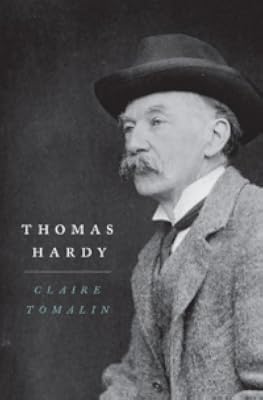
Thomas Hardy was born on June 2, 1840, in Higher Bockhampton, England. The eldest child of Thomas and Jemima, Hardy studied Latin, French, and architecture in school. He also became an avid reader. Upon graduation, Hardy traveled to London to work as an architect's assistant under the guidance of Arthur Bloomfield. He also began writing poetry. show more How I Built Myself a House, Hardy's first professional article, was published in 1865. Two years later, while still working in the architecture field, Hardy wrote the unpublished novel The Poor Man and the Lady. During the next five years, Hardy penned Desperate Remedies, Under the Greenwood Tree, and A Pair of Blue Eyes. In 1873, Hardy decided it was time to relinquish his architecture career and concentrate on writing full-time. In September 1874, his first book as a full-time author, Far from the Madding Crowd, appeared serially. After publishing more than two dozen novels, one of the last being Tess of the d'Urbervilles, Hardy returned to writing poetry--his first love. Hardy's volumes of poetry include Poems of the Past and Present, The Dynasts: Part One, Two, and Three, Time's Laughingstocks, and The Famous Tragedy of the Queen of Cornwall. From 1833 until his death, Hardy lived in Dorchester, England. His house, Max Gate, was designed by Hardy, who also supervised its construction. Hardy died on January 11, 1928. His ashes are buried in Poet's Corner at Westminster Abbey. (Bowker Author Biography) show less
All Editions
Some Editions
Series
Belongs to Publisher Series
Common Knowledge
- Canonical title
- Thomas Hardy: Poems Selected by Tom Paulin
Classifications
Statistics
- Members
- 52
- Popularity
- 583,350
- Reviews
- 1
- Rating
- (3.88)
- Languages
- English
- Media
- Paper
- ISBNs
- 2