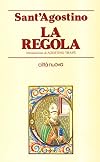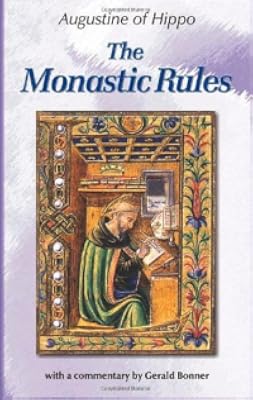
The Rule of Saint Augustine
by Saint Augustine
On This Page
Description
The four documents that make up the Rule of Saint Augustine with two introductory essaysTags
Recommendations
















Member Reviews
An interesting bit of historical trivia, but nothing more. No sign of the brilliance of Augustine shows through in this work; this is Augustine the bureaucrat, concerned with making sure that no one in his monastery has any fun or any trace of independent thought or action. It is debated whether this was actually Augustine, as it does not appear on his list of works, but the editors make a case for it being simply an internal document that he would not have listed because it was never intended for publication. The jury is apparently still out with historians, but it is printed with his name in spite of its dubious origin. Not a page turner; just dos and don't s of daily life. Again, an interesting piece of trivia to demonstrate how the show more godly were expected to live. How many of them lived up to it? I would suspect not all, for sure. show less
all as the 1984 edn
Ratings
Members
- Recently Added By
Lists

Shaykh Hamza's Book Recommendations
439 works; 3 members

Works Cited in The Life and Death of Democracy by John Keane
278 works; 1 member
Author Information

1,927+ Works 57,726 Members
Saint Augustine was born to a Catholic mother and a pagan father on November 13, 354, at Thagaste, near Algiers. He studied Latin literature and later taught rhetoric in Rome and Milan. He originally joined the Manicheans, a religious sect, but grew unhappy with some of their philosophies. After his conversion to Christianity and his baptism in show more 387, Augustine developed his own approach to philosophy and theology, accommodating a variety of methods and different perspectives. He believed that the grace of Christ was indispensable to human freedom, and he framed the concepts of original sin and just war. His thoughts greatly influenced the medieval worldview. One of Augustine's major goals was a single, unified church. He was ordained a priest in 391 and appointed Bishop of Hippo, in Roman Africa, in 396. Augustine was one of the most prolific Latin authors in terms of surviving works, and the list of his works consists of more than one hundred separate titles. His writings and arguments with other sects include the Donatists and the Pelagians. On the Trinity, The City of God, and On Nature and Grace are some of his important writings. Confessions, which is considered his masterpiece, is an autobiographical work that recounts his restless youth and details the spiritual experiences that led him to Christianity. Many of Augustine's ideas, such as those concerning sin and predestination, became integral to the doctrines of the Roman Catholic Church. In the Catholic Church he is a saint and pre-eminent Doctor of the Church, and the patron of the Augustinians. He is the patron saint of brewers, printers, and theologians. Augustine died on August 28, 430. (Bowker Author Biography) show less
Some Editions
Series
Belongs to Publisher Series
Classifications
- Genres
- Religion & Spirituality, Nonfiction, History
- DDC/MDS
- 255.406 — Religion Christian pastoral practice & religious orders Religious congregations and orders Augustinians
- LCC
- BX2904 .E5 — Philosophy, Psychology and Religion Christian Denominations Christian Denominations Catholic Church Monasticism. Religious orders Religious orders of men
- BISAC
Statistics
- Members
- 214
- Popularity
- 152,563
- Reviews
- 2
- Rating
- (3.17)
- Languages
- 5 — Dutch, English, Finnish, Italian, Spanish
- Media
- Paper
- ISBNs
- 11
- ASINs
- 3