
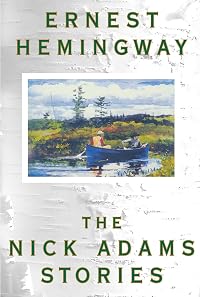
The Nick Adams Stories
by Ernest Hemingway 
On This Page
Description
From one of the 20th century's greatest voices comes the complete volume of his short stories featuring Nick Adams, Ernest Hemingway's memorable character, as he grows from child to adolescent to soldier, veteran, writer, and parent--a sequence closely paralleling the events of Hemingway's life. The complete collection of Ernest Hemingway's Nick Adams two dozen stories are gathered here in one volume, grouped together according to the major time periods in the protagonist's life. Based on show more Hemingway's own experieces as a boy and as a member of the Red Cross ambulance corps in World War I. The collection follows Nick's life as a child to parent, along with soldier, veteran, and writer and feature some of Hemingway's earliest work such as "Indian Camp" and some of his best known short stories, including "Big Two-Hearted River." Perfect for longtime Hemingway fans and as an introduction to one of America's most famous writers. show lessTags
Recommendations






Member Recommendations

by anonymous user
Member Reviews
It can be unsettling, unnerving to revisit an author embraced during one's teenage years. Reader reaction can have less to do with literature than with memory and passion. I read all of Hemingway when I was in high school, and I had quite a crush on him. He became the first version of my Jungian "animus." Now, four decades later, I reread these stories and am stunned by the powerful feelings they generate - adolescent yearning, glorious self-confidence, a naive sense of ownership of all that is significant - yes, the world does revolve around me and why not? look at how marvelous it is to be young and alive. But emotion aside, the older reader in me was pleased to find well-crafted passages and true-to-the-ear dialog. A rewarding show more book.
--from "The Last Good Country" pg. 84
"Mr. John liked Nick Adams because he said he had original sin. Nick did not understand this but he was proud.
"'You're going to have things to repent, boy,' Mr. John had told Nick. 'That's one of the best things there is. You can always decide whether to repent them or not. But the thing is to have them.'"
-- on insomnia after a war wound, from "Now I Lay Me" pg.126 & 130
"I myself did not want to sleep because I had been living for a long time with the knowledge that if I ever shut my eyes in the dark and let myself go, my soul would go out of my body. I had been that way for a long time, ever since I had been blown up at night and felt it go out of me and go off and then come back. I tried never to think about it, but it had started to go since, in the nights, just at the moment of going off to sleep, and I could only stop it by a very great effort. So while now I am fairly sure that it would not really have gone out, yet then, that summer, I was unwilling to make the experiment.....
"If I could have a light to sleep I was not afraid to sleep, because I knew my soul would only go out of me if it were dark. So, of course, many nights I was where I could have a light and then I slept because I was nearly always tired and often very sleepy. And I am sure many times, too, that I slept without knowing it - but I never slept knowing it..."
-- the opening of "In Another Country" pg. 149
"In the fall the war was always there, but we did not go to it any more. It was cold in the fall in Milan and the dark came very early. Then the electric lights came on, and it was pleasant along the streets looking in the windows. There was much game hanging outside the shops, and the snow powdered in the fur of the foxes and wind blew their tails. The deer hung stiff and heavy and empty, and small birds blew in the wind and the wind turned their feathers. It was a cold fall and the wind came down from the mountains." show less
--from "The Last Good Country" pg. 84
"Mr. John liked Nick Adams because he said he had original sin. Nick did not understand this but he was proud.
"'You're going to have things to repent, boy,' Mr. John had told Nick. 'That's one of the best things there is. You can always decide whether to repent them or not. But the thing is to have them.'"
-- on insomnia after a war wound, from "Now I Lay Me" pg.126 & 130
"I myself did not want to sleep because I had been living for a long time with the knowledge that if I ever shut my eyes in the dark and let myself go, my soul would go out of my body. I had been that way for a long time, ever since I had been blown up at night and felt it go out of me and go off and then come back. I tried never to think about it, but it had started to go since, in the nights, just at the moment of going off to sleep, and I could only stop it by a very great effort. So while now I am fairly sure that it would not really have gone out, yet then, that summer, I was unwilling to make the experiment.....
"If I could have a light to sleep I was not afraid to sleep, because I knew my soul would only go out of me if it were dark. So, of course, many nights I was where I could have a light and then I slept because I was nearly always tired and often very sleepy. And I am sure many times, too, that I slept without knowing it - but I never slept knowing it..."
-- the opening of "In Another Country" pg. 149
"In the fall the war was always there, but we did not go to it any more. It was cold in the fall in Milan and the dark came very early. Then the electric lights came on, and it was pleasant along the streets looking in the windows. There was much game hanging outside the shops, and the snow powdered in the fur of the foxes and wind blew their tails. The deer hung stiff and heavy and empty, and small birds blew in the wind and the wind turned their feathers. It was a cold fall and the wind came down from the mountains." show less
Aside from a few other short stories, this was my introduction to Hemingway. It's easy to see why he's so often placed at the laconic end of the writers' spectrum. I often found myself pausing to ponder what was meant by a character's remark or action. Hemingway also positions the reader in various perspectives, helping them see through a given character's eyes based on what is observed and how the other characters are referenced.
The compilation of stories not originally appearing together demonstrates a cohesiveness of character development. Hemingway clearly knew these people well. Much of it is autobiographical. We get a sense that it's very personal.
I especially enjoyed "On Writing," including this excerpt: "Talking about anything show more was bad. Writing about anything actual was bad. It always killed it. The only writing that was any good was what you made up, what you imagined. That made everything come true." show less
The compilation of stories not originally appearing together demonstrates a cohesiveness of character development. Hemingway clearly knew these people well. Much of it is autobiographical. We get a sense that it's very personal.
I especially enjoyed "On Writing," including this excerpt: "Talking about anything show more was bad. Writing about anything actual was bad. It always killed it. The only writing that was any good was what you made up, what you imagined. That made everything come true." show less
It was an interesting idea to combine in one collection all the stories, published and unpublished, that have Nick Adams as the protagonist, but the result is a mixed bag. Some of the manuscripts discovered after Hemingway’s death are mere fragments, while the longest of the previously unknown texts, “The Last Good Country,” reads more like a passage from a novel than a story that can stand on its own. Yet there are sentences and paragraphs that are impeccable, the opening paragraph of “In Another Country,” for instance. Max Perkins held that a person who could remember and describe the way the sky looked decades ago was a writer; there are passages here that show what he meant. One is the account in “Fathers and Sons” of show more Nick recalling the various ways the ground along a trail he took through the woods as a child felt underfoot. Another story, “Alpine Idyll,” is reminiscent of Turgenev. All in all, a good read. show less
I have read most of these stories but not 'The Last Good Country". That and Big Two Hearted River get to the early soul of Hemingway, as a boy in the northern Michigan woods. The writing is clean and clear and only occasionally too simple. I read these stories and thought about wandering the woods of northern Vermont as a child and remembering what a good place it was. And of course short stories don't get much better than The Big Two-Hearted River.
My attention has been elsewhere lately, mostly on NaNoWriMo and my own writing, so I wasn't sure if I would do any more than choose a star rating and move on after finishing The Nick Adams Stories. However, I want to throw some of the blame for my current state of disinterest in Hemingway's direction, or at least towards those who posthumously pieced together this volume. I understand the need and desire for a collection like this, with works both finished and unfinished, polished and trashed, all thrown together in some sort of chronological Nick Adams life-order. Still, only about half of the stories held my interest to the end. Much of this collection drives home Hemingway's good judgement -- he knew better than to publish every show more scrap of beautiful prose he penned. show less
The Nick Adams Stories by Ernest Hemingway
Really enjoyed the stories from the younger years as they remind me of Huck Finn and Tom Sawyer.
Interesting how the stories parallel the author's life, good to hear them in chronical order rather than in bits and pieces as I have over the years.
I received this book from National Library Service for my BARD (Braille Audio Reading Device).
Really enjoyed the stories from the younger years as they remind me of Huck Finn and Tom Sawyer.
Interesting how the stories parallel the author's life, good to hear them in chronical order rather than in bits and pieces as I have over the years.
I received this book from National Library Service for my BARD (Braille Audio Reading Device).
Beautiful stripped down language. Great vivid setting depiction. Great characters and dialogue Great story arcs that leave you thinking. Great control of tone and mood. Great.
Members
- Recently Added By
Published Reviews
"'The Nick Adams Stories' neither add nor detract from Hemingway's memory, and it is good to have a collection of the good ones, but this present arrangement does not create any new synergism."
added by GYKM
Lists

Books recommended by Calgary Public Library staff
1,588 works; 4 members
Author Information

659+ Works 173,660 Members
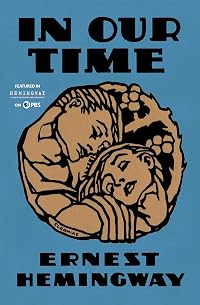
Ernest Miller Hemingway was born in the family home in Oak Park, Ill., on July 21, 1899. In high school, Hemingway enjoyed working on The Trapeze, his school newspaper, where he wrote his first articles. Upon graduation in the spring of 1917, Hemingway took a job as a cub reporter for the Kansas City Star. After a short stint in the U.S. Army as a show more volunteer Red Cross ambulance driver in Italy, Hemingway moved to Paris, and it was here that Hemingway began his well-documented career as a novelist. Hemingway's first collection of short stories and vignettes, entitled In Our Time, was published in 1925. His first major novel, The Sun Also Rises, the story of American and English expatriates in Paris and on excursion to Pamplona, immediately established him as one of the great prose stylists and preeminent writers of his time. In this book, Hemingway quotes Gertrude Stein, "You are all a lost generation," thereby labeling himself and other expatriate writers, including F. Scott Fitzgerald, T.S. Eliot, and Ford Madox Ford. Other novels written by Hemingway include: A Farewell To Arms, the story, based in part on Hemingway's life, of an American ambulance driver on the Italian front and his passion for a beautiful English nurse; For Whom the Bell Tolls, the story of an American who fought, loved, and died with the guerrillas in the mountains of Spain; and To Have and Have Not, about an honest man forced into running contraband between Cuba and Key West. Non-fiction includes Green Hills of Africa, Hemingway's lyrical journal of a month on safari in East Africa; and A Moveable Feast, his recollections of Paris in the Roaring 20s. In 1954, Hemingway won the Nobel Prize in Literature for his novella, The Old Man and the Sea. A year after being hospitalized for uncontrolled high blood pressure, liver disease, diabetes, and depression, Hemingway committed suicide on July 2, 1961, in Ketchum, Idaho. (Bowker Author Biography) show less
Ernest Hemingway has a Legacy Library. Legacy libraries are the personal libraries of famous readers, entered by LibraryThing members from the Legacy Libraries group.
Some Editions
Awards and Honors
Awards
Series
Belongs to Publisher Series
Work Relationships
Is contained in
Ernest Hemingway Book-of-the-Month-Club Set of 6: A Farewell to Arms, A Moveable Feast, For Whom the Bell Tolls, The Sun Also Rises, The Old Man and the Sea, The Complete Short Stories by Ernest Hemingway (indirect)
Has as a study
Common Knowledge
- Canonical title
- The Nick Adams Stories
- Original title
- The Nick Adams Stories
- Original publication date
- 1925 - 1933 (original stories) (original stories); 1972
- People/Characters
- Nick Adams
- First words
- Nick was undressing in the tent. (Three Shots)
- Last words
- (Click to show. Warning: May contain spoilers.)"We'll have to go," Nick said. " I can see we'll have to go."
- Original language
- English
Classifications
Statistics
- Members
- 1,441
- Popularity
- 16,270
- Reviews
- 10
- Rating
- (3.98)
- Languages
- 9 — Dutch, English, Finnish, French, German, Hungarian, Italian, Norwegian (Bokmål), Portuguese (Brazil)
- Media
- Paper, Audiobook, Ebook
- ISBNs
- 36
- ASINs
- 25