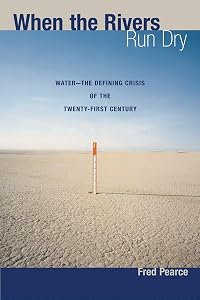
When the Rivers Run Dry: Water-The Defining Crisis of the Twenty-First Century
by Fred Pearce
On This Page
Description
A new edition of the veteran science writer's groundbreaking work on the world's water crisis, featuring all-new reporting from the most recent global flashpointsThroughout history, rivers have been our foremost source of fresh water for both agriculture and individual consumption, but looming water scarcity threatens to cut global food production and cause conflict and unrest. In this visionary book, Fred Pearce takes readers around the world on a tour of the world's rivers to provide our show more most complete portrait yet of the growing global water crisis and its ramifications for us all. With vivid on-the-ground reporting, Pearce deftly weaves together the scientific, economic, and historic dimensions of the water crisis, showing us its complex origins—from waste to wrong-headed engineering projects to high-yield crop varieties that have saved developing countries from starvation but are now emptying their water reserves. Pearce argues that the solution to the growing worldwide water shortage is more efficiency and a new water ethic based on managing the water cycle for maximum social benefit rather than narrow self-interest. show less
Tags
Recommendations







Member Reviews
Written in 2006, Fred Pearces's book "When the Rivers Run Dry", seems somewhat prophetic to those of us living in the Southwest United States. The Colorado River, the lifeblood of the Southwest, is severely overused, and upstream demands means it no longer flows to the sea. With reduced river flows and diminished snow pack in the Rockies and Sierra Nevada mountains, water supplies in the Southwestern states are severely stretched. As 2015 news accounts describe, California has been in a drought for several years, and significant water restrictions have been issued statewide. But water issues reach well beyone just the Southwest United states. Many other regions are suffering similar impacts, as Fred Pearce describes in his show more book.
Locally, Southern California's Salton Sea, as well as Lake Mead and Lake Powell in the U.S. Southwest, are shrinking rapidly. On a more global scale, the Aral Sea in Asia, once the world's 4th largest lake, has all but disappeared. Southwest Brazil is undergoing a terrible drought, as are parts of China, Australia, Spain, Syria, Iraq, Africa, etc. And as leaders have tried to solve the problems by damming rivers, creating man-made lakes, creating huge irrigation projects, matters seem to just be getting worse. Water is wasted through inadequate water infrastructure, groundwater aquifers are incapable of being replenished, wells are running dry world-wide, and what water which does reach groundwater sources often is so polluted as to be useless for consumption or agriculture. Dams created to prevent flooding prove incapable of fulfilling their mission, resulting in devastation to towns, villages, and downstream population. We hear of some of these situations, over time, but the totality and impact of the problem often doesn't register. But this book certainly drives the point home.
In addition to the various places around the world suffering from water shortages, Pearce describes numerous and well detailed examples of failed water infrastructure projects, increased pollution of fresh water supplies, and the folly of a number of gone-bad water resource improvement policies. As world population increases, water resources are being over used, and it only takes a few years of lower rainfall, lower snowpack in mountains, shrinking glaciers, or poor water management decisions to push regions into crisis. The beauty of the book is that the chapters are very short, examples are clear and to the point, and extremely easy to read. It's truly a book for the layman, easy to understand without being superficial.
It may be an exaggeration to compare this book and its impact to Rachel Carson's "Silent Spring", but as Carson's book highlighted the problems of pesticides and DDT, kickstarting the environmental movement at the end of the 20th century, Pearce's book highlights water pollution and shortages as the defining crisis of the twenty-first century. Hopefully, this book and others like it will raise attention and resources to address the water crises around the world.
When beginning the book, the examples make you feel that the earth can barely supply enough water for its current population. But Pearce leaves us with some hopeful prospects for the future. The good news is that water is the ultimate renewable resource. We never destroy water. We may mismanage it, pollute it, waste it, but sooner or later, it will return one day. The difficulty is in ensuring that the water we need will be there, when and where we need it. Pearce shows where we mismanage water, and where we have the potential for doing better. The solution in most cases is not more and bigger engineering schemes, giant desert canals or megadams. These projects tend to be hugely expensive, and cause as many problems as the solve.
Recreating flood plains, recovering ancient water delivery systems, selected dam removals, drip irrigation techniques, porous pavement initiatives in major cities, natural steps to refill aquifers, capturing monsoonal rains, rooftop rain capture, etc. are all effective tools to improve our precious water supplies. But of course, fixing the problem requires being AWARE of the problem, and "When the Rivers Run Dry" brings the problems, along with some solutions (and a promise for more intelligent water usage in the future), to light. show less
Locally, Southern California's Salton Sea, as well as Lake Mead and Lake Powell in the U.S. Southwest, are shrinking rapidly. On a more global scale, the Aral Sea in Asia, once the world's 4th largest lake, has all but disappeared. Southwest Brazil is undergoing a terrible drought, as are parts of China, Australia, Spain, Syria, Iraq, Africa, etc. And as leaders have tried to solve the problems by damming rivers, creating man-made lakes, creating huge irrigation projects, matters seem to just be getting worse. Water is wasted through inadequate water infrastructure, groundwater aquifers are incapable of being replenished, wells are running dry world-wide, and what water which does reach groundwater sources often is so polluted as to be useless for consumption or agriculture. Dams created to prevent flooding prove incapable of fulfilling their mission, resulting in devastation to towns, villages, and downstream population. We hear of some of these situations, over time, but the totality and impact of the problem often doesn't register. But this book certainly drives the point home.
In addition to the various places around the world suffering from water shortages, Pearce describes numerous and well detailed examples of failed water infrastructure projects, increased pollution of fresh water supplies, and the folly of a number of gone-bad water resource improvement policies. As world population increases, water resources are being over used, and it only takes a few years of lower rainfall, lower snowpack in mountains, shrinking glaciers, or poor water management decisions to push regions into crisis. The beauty of the book is that the chapters are very short, examples are clear and to the point, and extremely easy to read. It's truly a book for the layman, easy to understand without being superficial.
It may be an exaggeration to compare this book and its impact to Rachel Carson's "Silent Spring", but as Carson's book highlighted the problems of pesticides and DDT, kickstarting the environmental movement at the end of the 20th century, Pearce's book highlights water pollution and shortages as the defining crisis of the twenty-first century. Hopefully, this book and others like it will raise attention and resources to address the water crises around the world.
When beginning the book, the examples make you feel that the earth can barely supply enough water for its current population. But Pearce leaves us with some hopeful prospects for the future. The good news is that water is the ultimate renewable resource. We never destroy water. We may mismanage it, pollute it, waste it, but sooner or later, it will return one day. The difficulty is in ensuring that the water we need will be there, when and where we need it. Pearce shows where we mismanage water, and where we have the potential for doing better. The solution in most cases is not more and bigger engineering schemes, giant desert canals or megadams. These projects tend to be hugely expensive, and cause as many problems as the solve.
Recreating flood plains, recovering ancient water delivery systems, selected dam removals, drip irrigation techniques, porous pavement initiatives in major cities, natural steps to refill aquifers, capturing monsoonal rains, rooftop rain capture, etc. are all effective tools to improve our precious water supplies. But of course, fixing the problem requires being AWARE of the problem, and "When the Rivers Run Dry" brings the problems, along with some solutions (and a promise for more intelligent water usage in the future), to light. show less
This book takes a mad rush through the water stressed regions of the world, stopping briefly at each point on the tour for a short look at the water issues of the area. This extensive geographical area is actually a downside of the book; while the author manages to cover all (or most) of the crucial areas (South America seems a bit shorted, though he does give a very brief nod to the Atacama desert), most of them are covered superficially because of the sheer brevity of the treatment. He also is a bit inconsistent in terms of looking at the different things people are doing around the world to solve their problems. In one place, he will note the downside of the newer methods being considered or used; in other areas, he will praise the show more efforts to the skies without taking much time to ask what the long term effects will be. This seems to be related to the relative wealth or poverty of the region, with wealthy western countries given the skeptical treatment while lesser developed nations are assumed to be having no long term negative impact with their solutions. It's possible they aren't; but not probable. Also, in addressing solutions, he fails to look at the one problem that runs inexorably throughout the book, snaking its way unspoken through every paragraph...no, every line. At no time does he consider the fact that his own data point to the inconvenient truth that these problems are probably not soluable until we get the population under control. He does recognize the problem of large populations in the deserts of the southwestern US; but he ignores that issue in the large African and Asian deserts. Even in the US, he assumes the answer is simply to achieve more efficient use of the water, not to try and reduce the number of people relying on the limited water supplies. This lost the book at least a star. show less
"Water, water, everywhere, Nor any drop to drink." Rime of the Ancient Mariner – Samuel Taylor Coleridge
Fred Pearce has been writing and consulting on environmental issues for decades. A highly respected and internationally acclaimed science writer, his newest book, When the Rivers Run Dry: Journeys into the Heart of the World's Water Crisis , addresses the issue that many scientists contend will be the cause of future world conflicts – the world is running out of water. Earth is awash with water; however, usable water is at a premium. The last sentence of Pearce's introduction states: "Water, after all, is the ultimate renewable resource." The question therefore becomes: How is it possible that we are using more water than can be show more renewed?
Pearce's contention is that the Western water "footprint" on the rest of the world is a major problem. On average, the water used to feed and clothe most of us for a year takes between 1,500 and 2,000 tonnes, more than half the contents of an Olympic-sized swimming pool. As most of what we eat and wear is grown and manufactured in other countries, we are importing vast quantities of what economists refers to as "virtual water." What we wear and eat influences the hydrology of producer regions, resulting in a yearly global trade estimated at a thousand cubic kilometers - twenty River Niles.
The small measures we take each day, using low flush toilets or turning off the water while we brush our teeth, while useful on a local scale, have little influence on the majority of water usage. In a system where 11,000 litres are needed to produce the patty used in a McDonald's Quarter-Pounder, a global solution must be found.
Pearce suggests that the countries currently undertaking massive irrigation projects for food production must reconsider their water usage, weighing the environmental impact of transportation against water depletion. Instead of turning deserts into agricultural land to grow wheat, in some cases using three times as much water as the global norm, countries need to consider importing wheat and other food crops from countries with a lower water cost. New economic models must be developed to consider the true cost of producing food.
When the Rivers Run Dry is an unflinching look at current water situation in more than 30 countries. Just three countries - India, China and Pakistan – account for the usage of more than half the world's total use of underground water, one-sixth of the world's usable water. Some of the world's largest aquifers are under desert sands; however, these aquifers cannot be replaced by rain and in some cases the water being drawn from deep within the earth is thousands of years old. This water is a bank account we are draining dry, dooming the aquifers to extinction: "When a river runs dry, it is very visible. But underground water is invisible…and few in the corridors of power talk…about a slow-burning disaster that will one day affect hundreds of millions of people." When the water in the world's aquifers fails, food shortages will follow, undermining the world's ability to feed itself.
Pearce puts forward that "water flows uphill to money." If we hope to weather a global climate certain to become more extreme with shifting patterns of precipitation, the world's governments must stop focusing on the money and instead look at the best interests of the world's rivers, wetlands and aquifers. Attention must be paid to deteriorating municipal water systems and investments made to fix the potable water leaking into the ground; in some cities, as much as 40% of a city's potable water disappears this way. New attention must be paid to traditional methods of living in harmony with the world's rivers rather than attempting to tame the rivers through dams and man-made irrigation channels. Desalination of water from the oceans, for agricultural use is still an incredibly cost-prohibitive undertaking.
As David Suzuki states in the foreword: "This...is an urgent warning and a call for action that we must not ignore." Pearce has delivered a difficult message that should be required reading for all concerned citizens.
Fred Pearce is an environmental and development consultant at New Scientist. Writing about environmental and water issues for more than twenty years, his next book, With Speed and Violence: Why Scientists Fear Tipping Points in Climate Change, is scheduled for release in February 2007.
See the review at ReadySteayBook - http://www.readysteadybook.com/BookReview.aspx?isbn=1903919576 show less
Fred Pearce has been writing and consulting on environmental issues for decades. A highly respected and internationally acclaimed science writer, his newest book, When the Rivers Run Dry: Journeys into the Heart of the World's Water Crisis , addresses the issue that many scientists contend will be the cause of future world conflicts – the world is running out of water. Earth is awash with water; however, usable water is at a premium. The last sentence of Pearce's introduction states: "Water, after all, is the ultimate renewable resource." The question therefore becomes: How is it possible that we are using more water than can be show more renewed?
Pearce's contention is that the Western water "footprint" on the rest of the world is a major problem. On average, the water used to feed and clothe most of us for a year takes between 1,500 and 2,000 tonnes, more than half the contents of an Olympic-sized swimming pool. As most of what we eat and wear is grown and manufactured in other countries, we are importing vast quantities of what economists refers to as "virtual water." What we wear and eat influences the hydrology of producer regions, resulting in a yearly global trade estimated at a thousand cubic kilometers - twenty River Niles.
The small measures we take each day, using low flush toilets or turning off the water while we brush our teeth, while useful on a local scale, have little influence on the majority of water usage. In a system where 11,000 litres are needed to produce the patty used in a McDonald's Quarter-Pounder, a global solution must be found.
Pearce suggests that the countries currently undertaking massive irrigation projects for food production must reconsider their water usage, weighing the environmental impact of transportation against water depletion. Instead of turning deserts into agricultural land to grow wheat, in some cases using three times as much water as the global norm, countries need to consider importing wheat and other food crops from countries with a lower water cost. New economic models must be developed to consider the true cost of producing food.
When the Rivers Run Dry is an unflinching look at current water situation in more than 30 countries. Just three countries - India, China and Pakistan – account for the usage of more than half the world's total use of underground water, one-sixth of the world's usable water. Some of the world's largest aquifers are under desert sands; however, these aquifers cannot be replaced by rain and in some cases the water being drawn from deep within the earth is thousands of years old. This water is a bank account we are draining dry, dooming the aquifers to extinction: "When a river runs dry, it is very visible. But underground water is invisible…and few in the corridors of power talk…about a slow-burning disaster that will one day affect hundreds of millions of people." When the water in the world's aquifers fails, food shortages will follow, undermining the world's ability to feed itself.
Pearce puts forward that "water flows uphill to money." If we hope to weather a global climate certain to become more extreme with shifting patterns of precipitation, the world's governments must stop focusing on the money and instead look at the best interests of the world's rivers, wetlands and aquifers. Attention must be paid to deteriorating municipal water systems and investments made to fix the potable water leaking into the ground; in some cities, as much as 40% of a city's potable water disappears this way. New attention must be paid to traditional methods of living in harmony with the world's rivers rather than attempting to tame the rivers through dams and man-made irrigation channels. Desalination of water from the oceans, for agricultural use is still an incredibly cost-prohibitive undertaking.
As David Suzuki states in the foreword: "This...is an urgent warning and a call for action that we must not ignore." Pearce has delivered a difficult message that should be required reading for all concerned citizens.
Fred Pearce is an environmental and development consultant at New Scientist. Writing about environmental and water issues for more than twenty years, his next book, With Speed and Violence: Why Scientists Fear Tipping Points in Climate Change, is scheduled for release in February 2007.
See the review at ReadySteayBook - http://www.readysteadybook.com/BookReview.aspx?isbn=1903919576 show less
This is a frightening book. It is also an extremely well researched and well-written book.
We have a lot of knowledge. We have a lot of data, and yet we continue to do things that endanger our planet.
His case studies are presented without any emotion, yet they should arouse fear in all of us.
It is a book that is timely and should serve as a warning of what will happen to us when the rivers do indeed run dry
We have a lot of knowledge. We have a lot of data, and yet we continue to do things that endanger our planet.
His case studies are presented without any emotion, yet they should arouse fear in all of us.
It is a book that is timely and should serve as a warning of what will happen to us when the rivers do indeed run dry
Essential reading for anyone interested in the future of the planet.
Pearec is a reporter and this is a reporter's book (he visits places) rather than a work of theory, but he's been following the subject for long enough to have a strong understanding of the issues.
In three or four lines:
- we are a heavily water intensive society globally, which has passed the point of having enough water, on current patterns of usage, for everyone.
- engineering solutions (usually dams, reservoirs and canals) usually produce short term gains and serious long-term problems; and most reservoir schemes don't get close to meeting their promised energy and/or irrigation targets. Eventually, silt does for the river scheme and salt for the land.
- the show more traditional benefits of natural rivers systems (flooding, fertilisation etc) aren't well priced by planners and therefore are overlooked.
- the 'green revolution' has enabled us to feed most of our expanding global population but the water intensity has been high; agriculturalists are moving to a 'more crop per drop' model.
- the outlook is not good - already many areas are reverting to desert - but the most promising approaches involve simple local (and often traditional) solutions about harnessing and harvesting rainwater. show less
Pearec is a reporter and this is a reporter's book (he visits places) rather than a work of theory, but he's been following the subject for long enough to have a strong understanding of the issues.
In three or four lines:
- we are a heavily water intensive society globally, which has passed the point of having enough water, on current patterns of usage, for everyone.
- engineering solutions (usually dams, reservoirs and canals) usually produce short term gains and serious long-term problems; and most reservoir schemes don't get close to meeting their promised energy and/or irrigation targets. Eventually, silt does for the river scheme and salt for the land.
- the show more traditional benefits of natural rivers systems (flooding, fertilisation etc) aren't well priced by planners and therefore are overlooked.
- the 'green revolution' has enabled us to feed most of our expanding global population but the water intensity has been high; agriculturalists are moving to a 'more crop per drop' model.
- the outlook is not good - already many areas are reverting to desert - but the most promising approaches involve simple local (and often traditional) solutions about harnessing and harvesting rainwater. show less
Essential reading for anyone interested in the future of the planet.
Pearec is a reporter and this is a reporter's book (he visits places) rather than a work of theory, but he's been following the subject for long enough to have a strong understanding of the issues.
In three or four lines:
- we are a heavily water intensive society globally, which has passed the point of having enough water, on current patterns of usage, for everyone.
- engineering solutions (usually dams, reservoirs and canals) usually produce short term gains and serious long-term problems; and most reservoir schemes don't get close to meeting their promised energy and/or irrigation targets. Eventually, silt does for the river scheme and salt for the land.
- the show more traditional benefits of natural rivers systems (flooding, fertilisation etc) aren't well priced by planners and therefore are overlooked.
- the 'green revolution' has enabled us to feed most of our expanding global population but the water intensity has been high; agriculturalists are moving to a 'more crop per drop' model.
- the outlook is not good - already many areas are reverting to desert - but the most promising approaches involve simple local (and often traditional) solutions about harnessing and harvesting rainwater. show less
Pearec is a reporter and this is a reporter's book (he visits places) rather than a work of theory, but he's been following the subject for long enough to have a strong understanding of the issues.
In three or four lines:
- we are a heavily water intensive society globally, which has passed the point of having enough water, on current patterns of usage, for everyone.
- engineering solutions (usually dams, reservoirs and canals) usually produce short term gains and serious long-term problems; and most reservoir schemes don't get close to meeting their promised energy and/or irrigation targets. Eventually, silt does for the river scheme and salt for the land.
- the show more traditional benefits of natural rivers systems (flooding, fertilisation etc) aren't well priced by planners and therefore are overlooked.
- the 'green revolution' has enabled us to feed most of our expanding global population but the water intensity has been high; agriculturalists are moving to a 'more crop per drop' model.
- the outlook is not good - already many areas are reverting to desert - but the most promising approaches involve simple local (and often traditional) solutions about harnessing and harvesting rainwater. show less
A really great current overview of the world today in terms of water depletion. Offers a limited strategy on what can be done starting today, and provides worldwide examples.
Members
- Recently Added By
Lists

Books Read in 2018
4,360 works; 110 members
Author Information

45+ Works 1,776 Members
Fred Pearce was born and educated in the UK. He studied Geography at Cambridge University and has since reported on environment, science and development issues from 54 countries. He is a regular broadcaster on radio and TV, with interview credits from Today to Richard and Judy to the Open University. Fred is married with two children and lives in show more London. show less
Some Editions
Common Knowledge
- Canonical title
- When the Rivers Run Dry: Water-The Defining Crisis of the Twenty-First Century
- Alternate titles
- When the Rivers Run Dry: Journeys into the Heart of the World's Water Crisis; When the Rivers Run Dry: What Happens When Our Water Runs Out?
- First words
- Few of us realize how much water it takes to get us through the day.
- Last words
- (Click to show. Warning: May contain spoilers.)And to do it before the rivers finally run dry.
Classifications
- Genres
- Science & Nature, Nonfiction, General Nonfiction, Economics
- DDC/MDS
- 333.91 — Society, government, & culture Economics Economics of land and energy Other natural resources Water energy - Hydrologic
- LCC
- TC405 .P43 — Technology Hydraulic engineering. Ocean engineering Hydraulic engineering River, lake, and water-supply engineering
- BISAC
Statistics
- Members
- 401
- Popularity
- 77,644
- Reviews
- 8
- Rating
- (3.88)
- Languages
- English, German
- Media
- Paper, Audiobook, Ebook
- ISBNs
- 10
- UPCs
- 2
- ASINs
- 7